


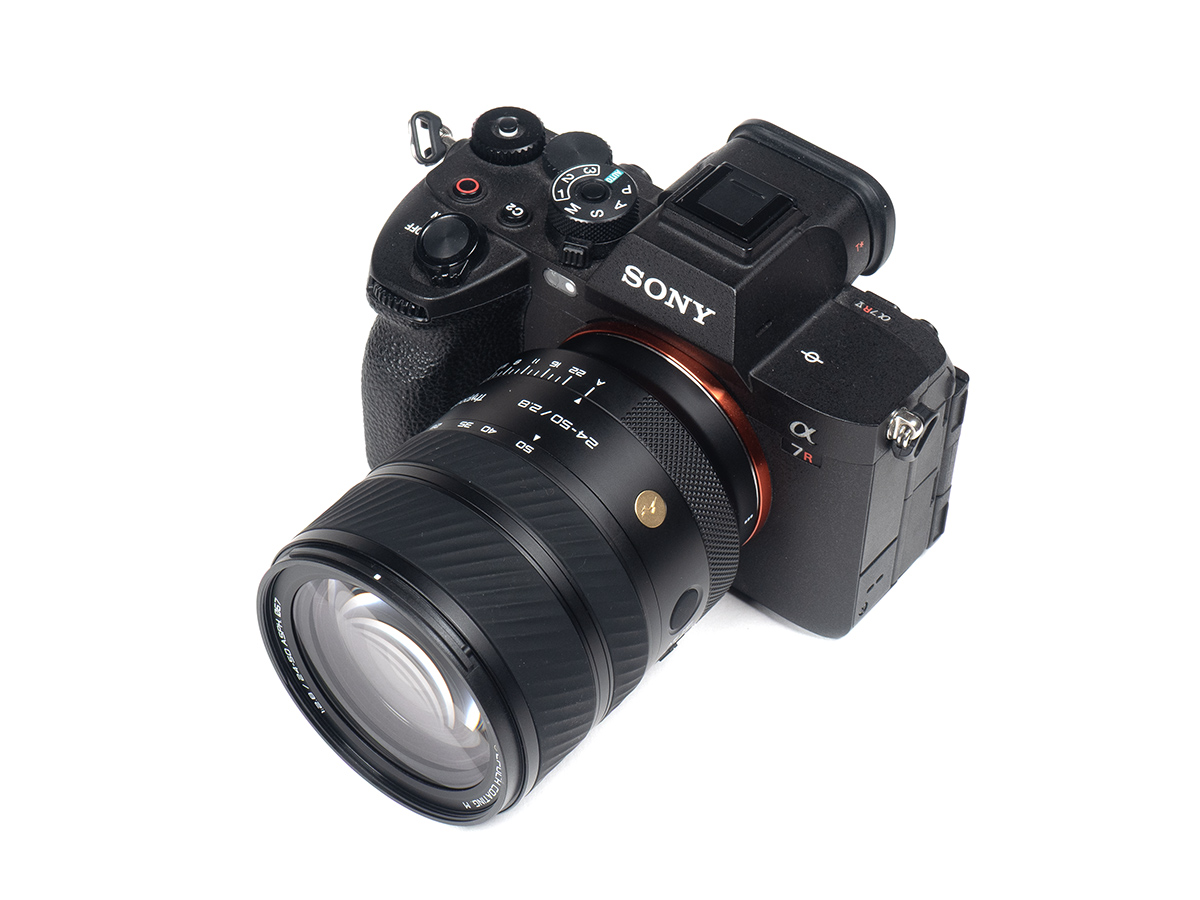
Thypoch (derived from “Thy” = “your” and “Epoch” = “era”) is a fairly recent addition to the fleet of Chinese lens manufacturers. They debuted back in 2023 with a set of interesting prime lenses inspired by some classic European designs. Thypoch belongs to the DZO group, which also owns DZO Film, a manufacturer of CINE lenses so despite being a newcomer in the mirrorless lens market, they got some history behind them. Normally, you’d expect a new manufacturer to step up from manual focus prime lenses to AF prime lenses. However, Thypoch decided to skip this step and moved straight to an (more complex) AF zoom lens – the first out of China, actually. Thus meet the Thypoch Voyager AF 24-50mm f/2.8, now available in E-mount for $649 USD or $569 EUR.
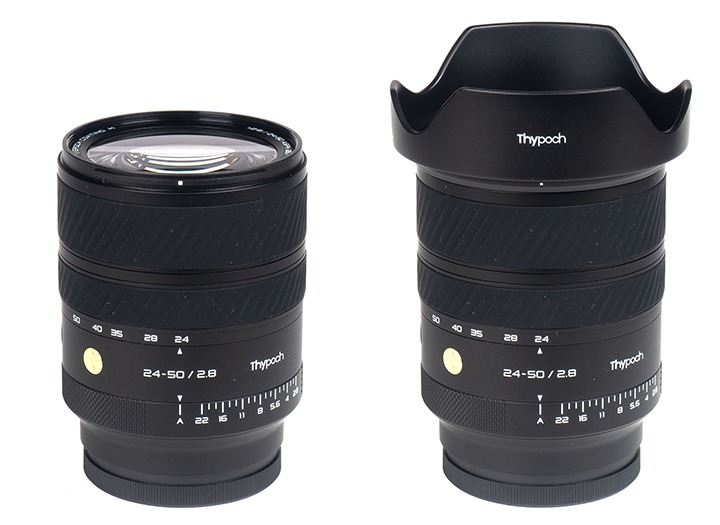
The AF 24-50mm f/2.8 is actually a bit more unusual than you might conclude from the fairly conventional paper specs. It uses an internal zoom mechanism, so unlike e.g. Sony’s own FE 24-50mm f/2.8 G, the physical length doesn’t change during zooming (& focusing). Another surprising aspect is actually the maturity of the construction. It uses a combination of engineering plastic for the lens body and nicely rubberized control rings – just like the big boys – resulting in a very lightweight package of just 432g. It also features a textured aperture ring, ableit only the “click” variant, and it’s fully dust- and moisture-resistant. A petal-shaped lens hood is provided.
The AF is both quick and silent. Manual focusing works by-wire, as usual. Firmware updates are possible via an USB-C port on the mount.
| Specifications | |
|---|---|
| Optical construction | 16 elements in 13 groups (3x aspherical. 2x ED, 3x HRI) |
| Number of aperture blades | 10 (rounded) |
| min. focus distance | 0.3m (max magnification 0.216x) |
| Dimensions | φ 70×92.8mm |
| Weight | 432g |
| Filter size | φ 67mm |
| Hood | petal-shaped, bayonet mount, supplied |
| Other features | Aperture ring Fn custom button USB-C port for firmware updates Weather sealing |
Distortions
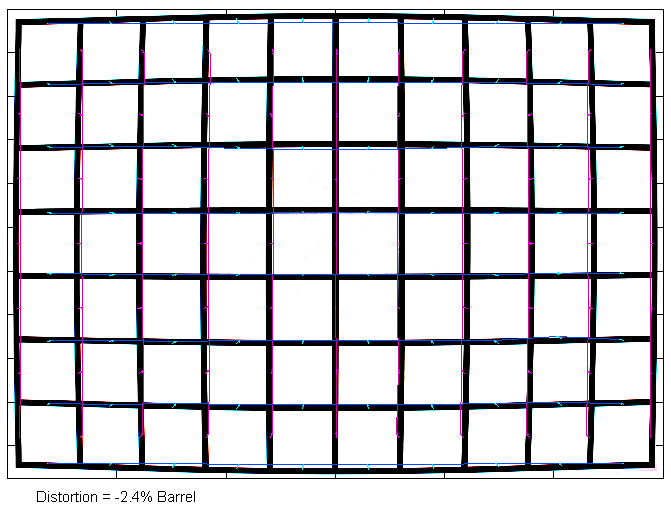
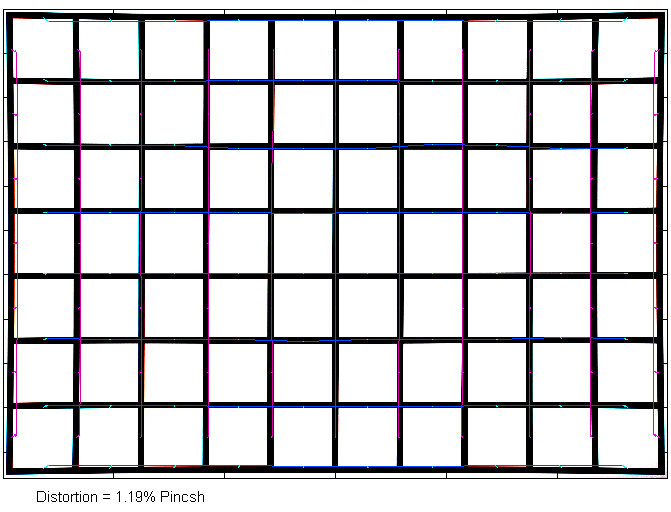
Image distortions in RAW files are comparatively moderate. At 24mm, the barrel distortion reaches a medium 2.4%. As usual, this switches to pincushion distortions when zooming out. They peak at 50mm but stay below the 2% mark here.
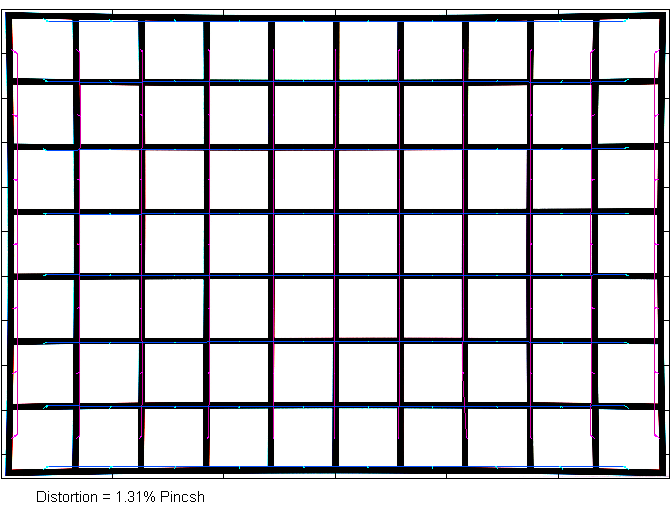
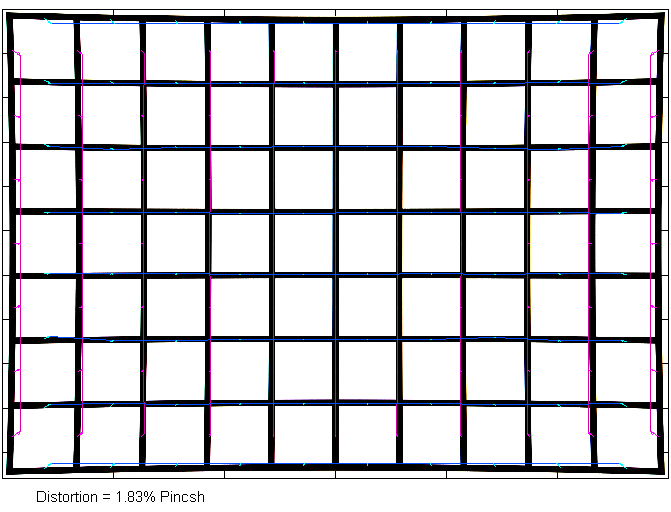
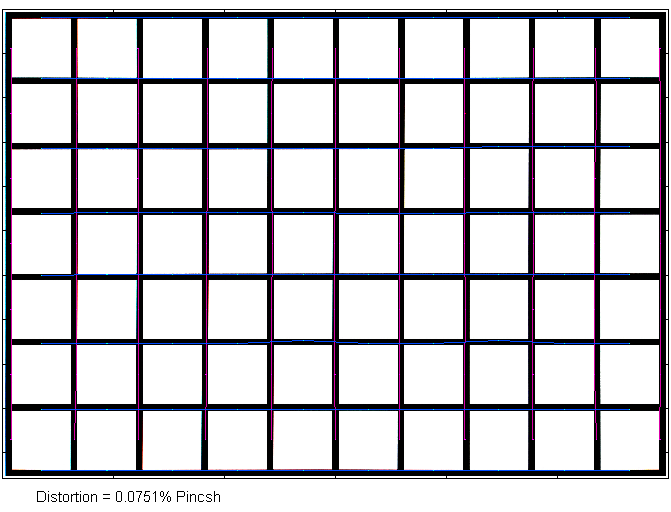
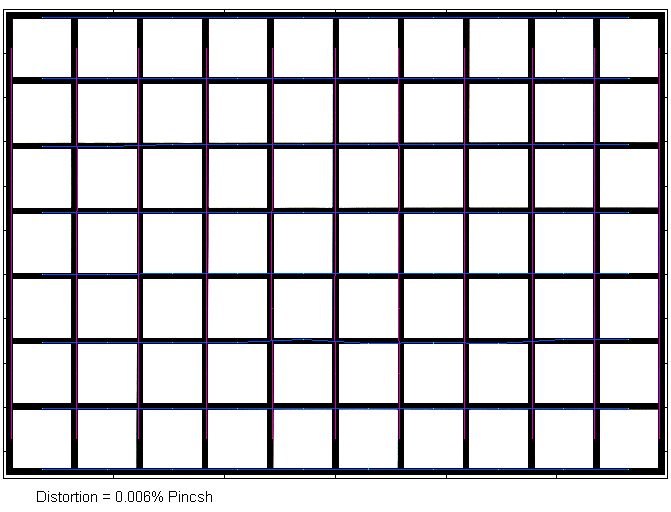
With activated auto-correction, the distortions are perfectly corrected at 35mm and 50mm. However, it overshoots to a mild pincushion distortion at 24mm. This may relate to the short focus distance used in this test.
Vignetting
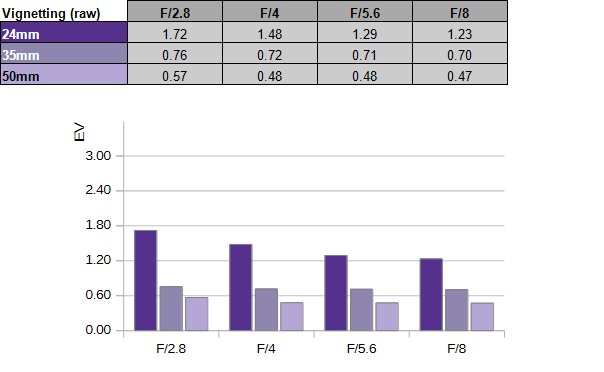
The RAW vignetting is surprisingly low. Unsurprisingly, it peaks at 24mm f/2.8. However, at ~1.8 EV (f-stops), it’s fairly well managed. Stopping down reduces this a bit. At longer focal lengths, the issue is much reduced and usually not relevant anymore.
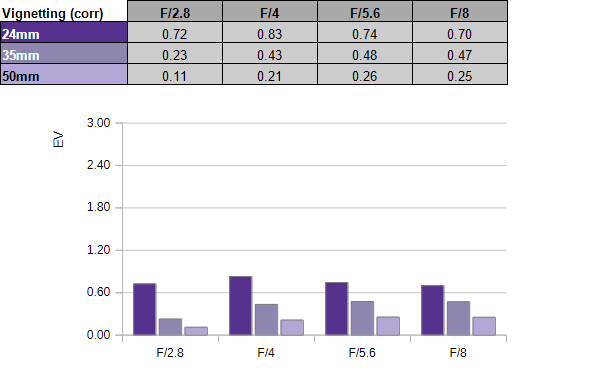
Auto-correction is most effective at 24mm where it shaves off a stop at f/2.8. The overall reduction is comparatively minor, but that’s because the vignetting is fairly low anyway.
MTF (resolution) at 45 megapixels
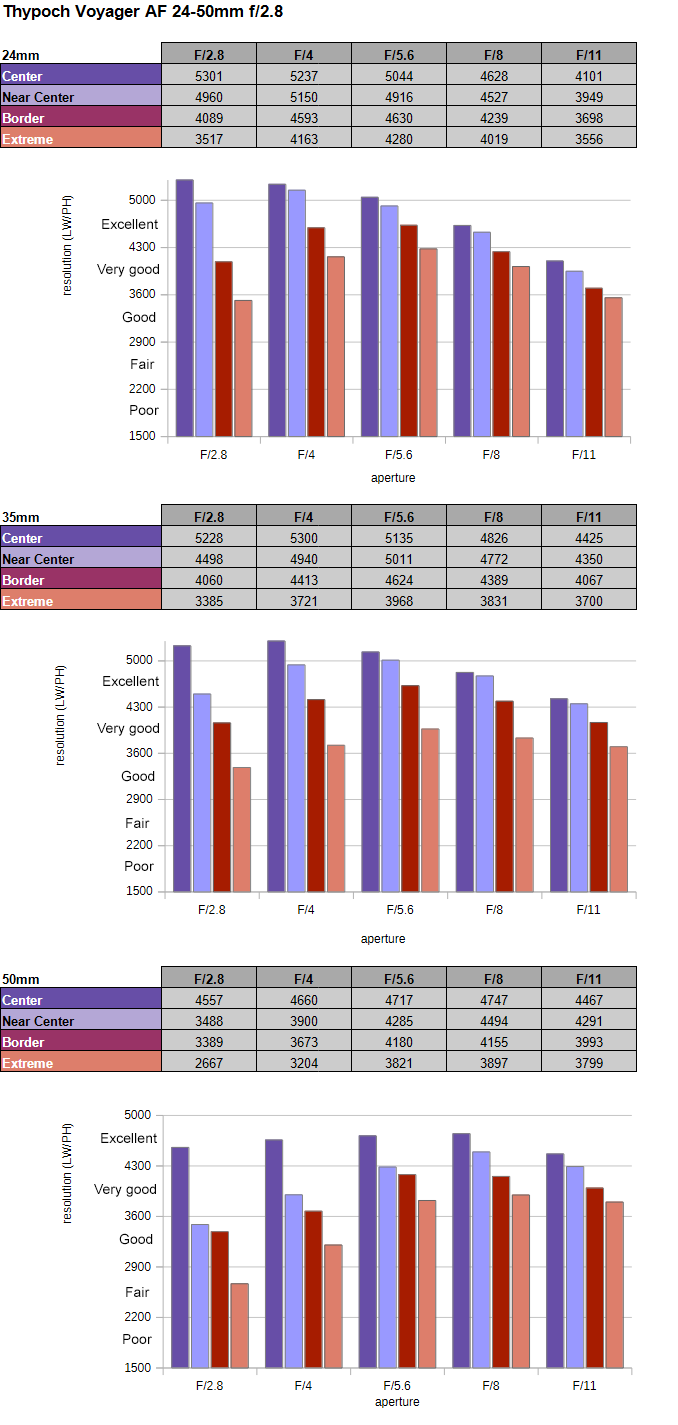
The Thypoch Voyagar AF 24-50mm f/2.8 has a low zoom ratio which should, on paper, result in good sharpness. This is mostly the case. The broader center performance is superb at 24mm and 35mm. The border & corner quality takes a hit at f/2.8 but recovers nicely when stopping down. At medium aperture settings the lens is indeed very sharp here. This changes a bit at 50mm. The dead center is still excellent at maximum aperture, but the quality drops rapidly. It’s still good at the borders but the corners are quite soft. Stopping down to f/4 boosts the quality substantially, and it’s sharp across the image field at f/5.6 and f/8. Diffraction has a higher impact from f/11 as usual.
The centering quality of the tested sample was good. The field curvature is low.
Please note that the MTF results are not directly comparable across the different systems!
Below is a simplified summary of the formal findings. The chart shows line widths per picture height (LW/PH) which can be taken as a measure of sharpness. If you would like to know more about the MTF50 figures, you may check out the corresponding Imatest Explanations.
Chromatic Aberrations (CAs)
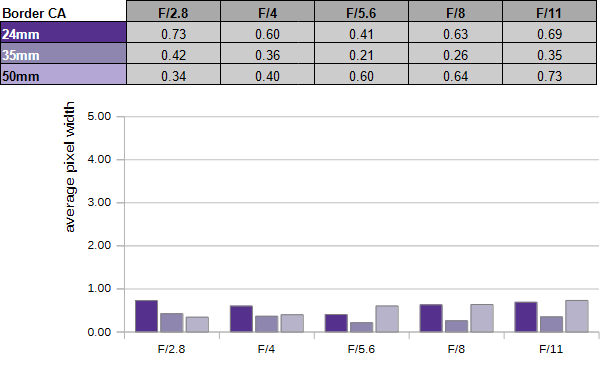
Lateral CAs stay well below an average size of 0.8px at the image borders. This is pretty low.
Bokeh Fringing / LoCA
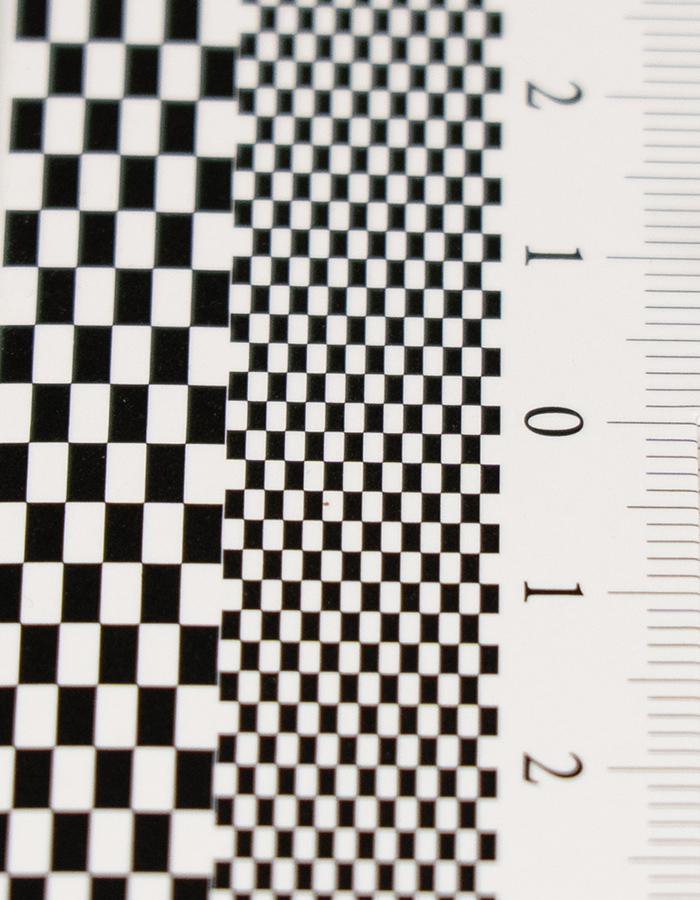
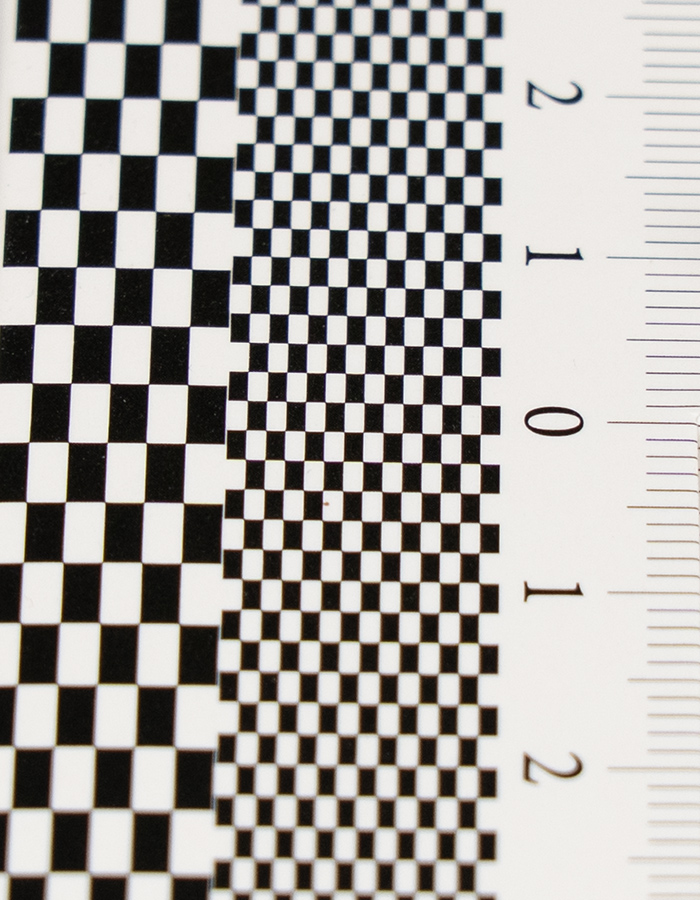
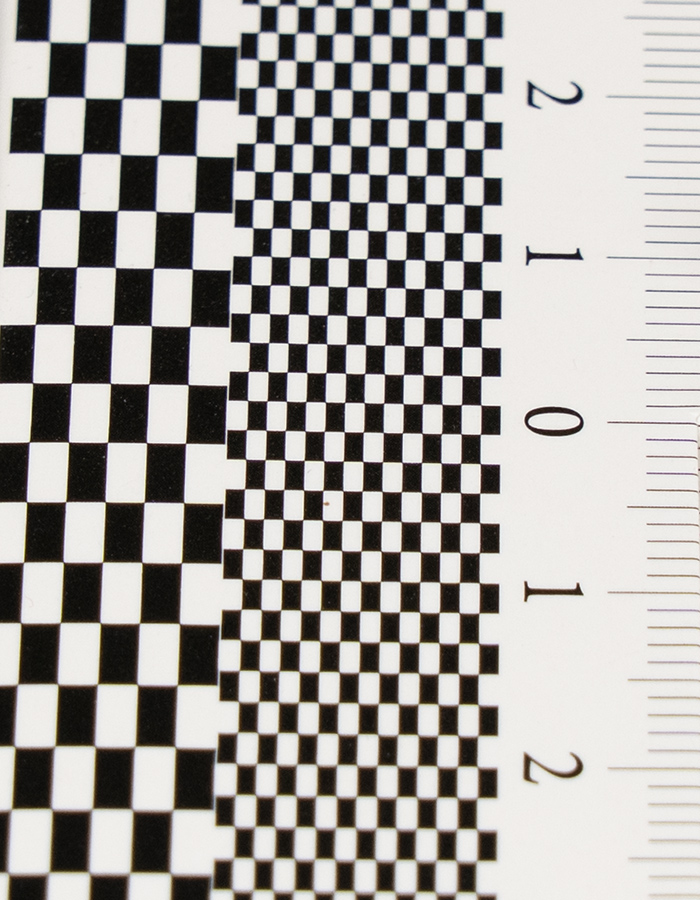
LoCAs, aka bokeh fringing, aka axial CAs is a color fringing effect on the Z-axis. It shows up with a purplish tint in front of the focus point and a greenish tint behind, and it’s nearly impossible to fully correct in post.
The Thypoch Voyagar AF 24-50mm f/2.8 produces some axial CAs at f/2.8 and f/4, but it’s in line with other lenses in this class.
There’s no relevant focus shift when stopping down.
Bokeh
The Thypoch lens is comparatively fast for a standard zoom lens, but keep in mind its shallow depth-of-field potential is limited due to the rather short “tele” setting. Regardless, let’s check out the bokeh.
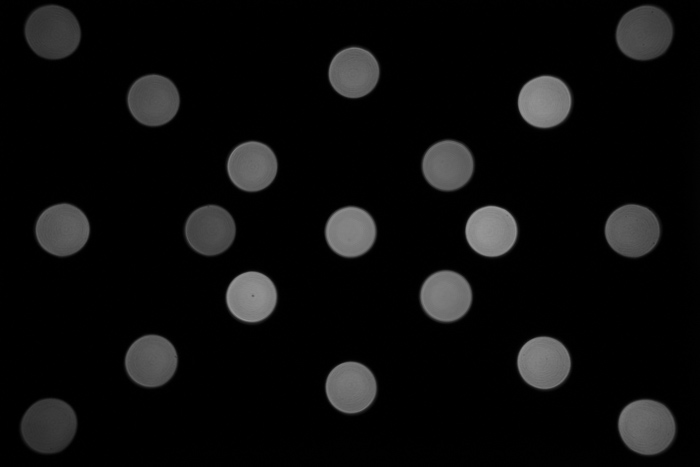
The lens has no less than 10 rounded aperture blades, so out-of-focus highlight discs are nicely circular at f/2.8 and f/4. A bit of edginess from the aperture shape is creeping in from the f/5.6. The inner zone of the discs is slightly nervous, probably due to the aspherical elements in the optics. There’s also a bit of an outlining effect.
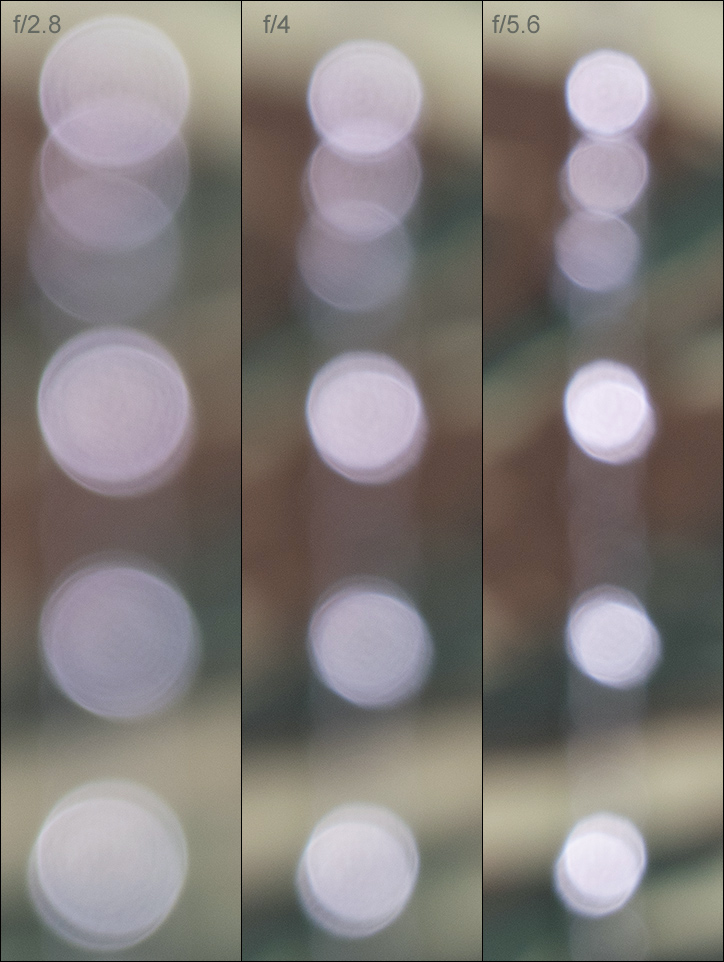
Surprisingly, the circular shape of the highlight discs remains pretty much intact across the image field as you can see below. We haven’t seen this in many lenses. Stopping down doesn’t improve this anymore nor is this needed here.


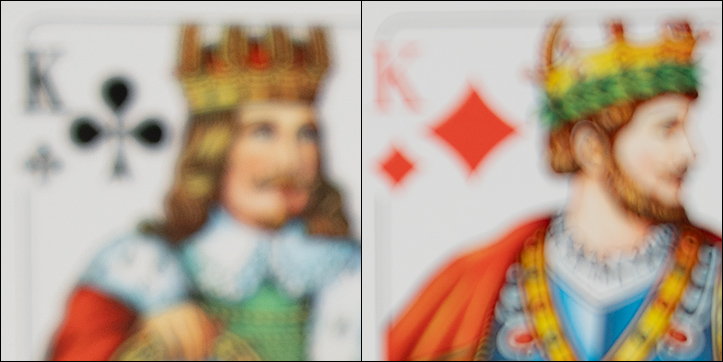
The rendering quality in the focus transition zone is a bit of a mixed bag. As so often, the less important foreground blur (shown to the right below) is rough. The background blur (to the left) is smoother but a bit smeary.
Sun-Stars
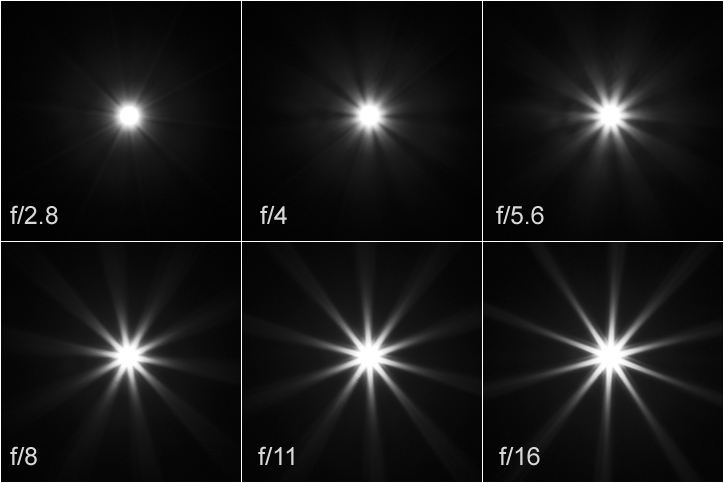
Sun stars (diffraction spikes) are an aperture effect that occurs at strong light sources – such as streetlamps in nighttime city scenes. In our standardized test scene, we are mimicing this with an LED light.
The 24-50mm f/2.8 has 10 aperture blades which can produce 10 diffraction spikes. The aperture is perfectly circular at f/2.8, so there’s just a “blob” visible in this case. Hints of these rays show up at f/4, but you should stop down to at least f/8, better f/11 or even f/16 if you are after this effect. The rays are “fan-like” until f/11. The rendering at f/16 is best in this respect.
Competition
The Thypoch Voyager 24-50mm f/2.8 has two main competitors: the Sony FE 24-50mm f/2.8 G and the LK-Samyang AF 24-60mm f/2.8 FE. We haven’t tested these lenses yet. They are similar in size and weight. However, neither offers an internal zoom mechanism, and both are more expensive.
Sample Images


So how's the first-ever Chinese zoom lens? Overall, it's pretty good, although it has its flaws as well. In terms of sharpness, it's very decent in the low to mid range. At 50mm, the border and corner performance drops quite a bit at f/2.8. However, if you stop down a bit it recovers nicely. Lateral CAs quite low and axial CAs are in line with others. Vignetting and distortions are fairly well controlled in RAW images already, and auto-correction handles most although not all of it. The quality of the bokeh is a bit mixed. The blur isn't silky smooth, but out-of-focus highlights remain nicely circular even in the image corners which is quite unusual. Flare effects can be an issue if there's a strong lightsource within or just out of the image field. Using the supplied lens hood is a good idea.
The mechanical quality of the Thypoch Voyager AF 24-50mm f/2.8 is impressively high and on par with what we've seen from the OEM players. It feels very well made and the internal zoom mechanism is a remarkable feat. We also liked the rubberized zoom- and focus-control rings instead of the usual plastic rings in cheaper lenses. The AF is very snappy and silent.
As the "Voyager" in the name implies the Thypoch Voyager 24-50mm f/2.8 is an interesting choice for those looking for a compact, lightweight, mechanically balanced, standard zoom lens. Videographers or street photographers come to mind as target user groups. Optically, it's in the middle of the pack which is also reflected in its affordable price.
The Good
- Internal zoom mechanism (!)
- Small and lightweight
- Fully weather-sealed
- Affordable
- Very sharp when stopped down a little
The Bad
- Prone to flare
- Distortion autocorrection needs a bit of fine-tuning
- The bokeh is a bit rough
- The corners are a bit soft at 50mm f/2.8
-
Optical Quality6.5
-
Build Quality9
-
Price / Performance8