


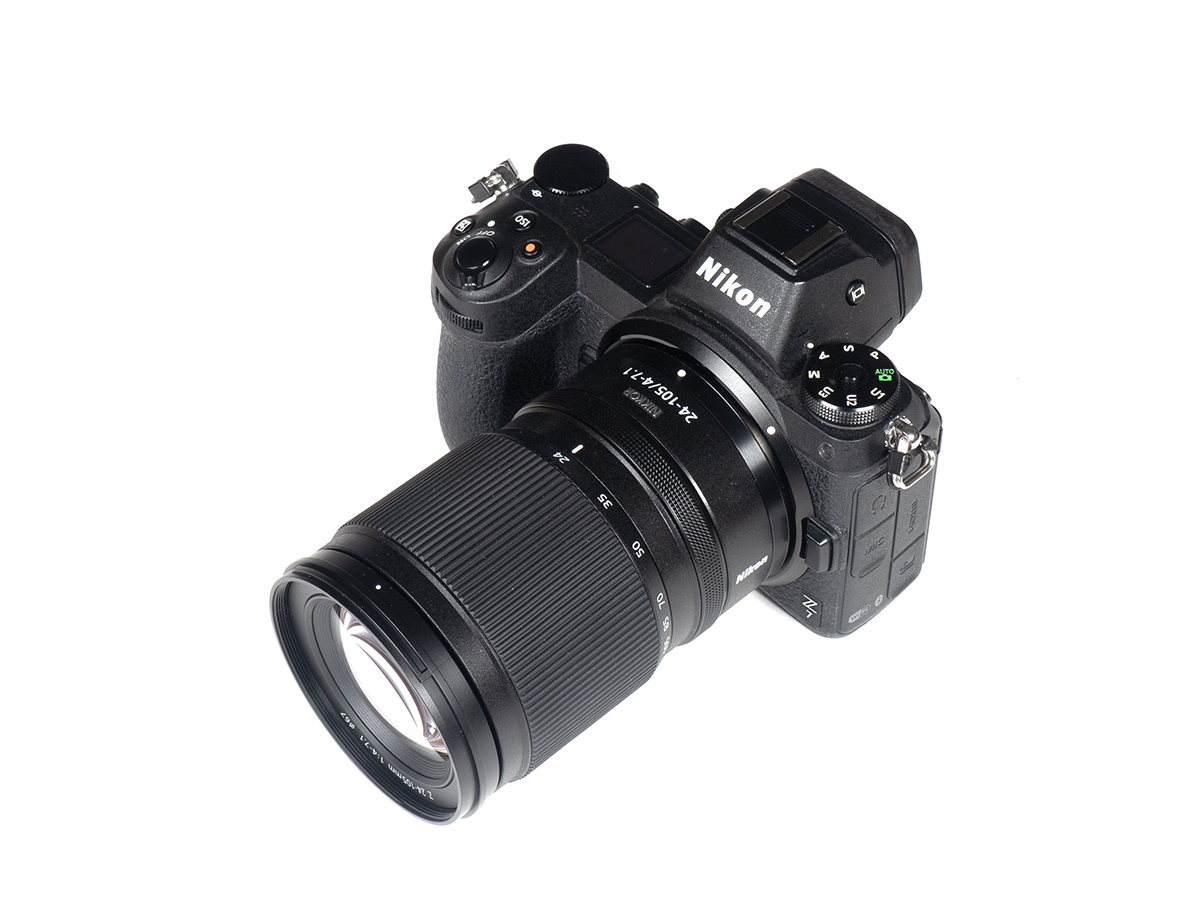
There aren’t too many budget zoom lenses available for Nikon Z cameras. It appears that Nikon felt the same, so they released the Nikkor Z 24-105mm f/4-7.1 with a much more attractive zoom range compared to the Z 24-50mm f/4-6.3 kit lens. It’s a very slow lens, obviously, but Nikon had to keep some distance to the Z 24-120mm f/4 S. At just $500, it’s nicely matched with the more affordable Z-mount cameras, so let’s take a closer look.
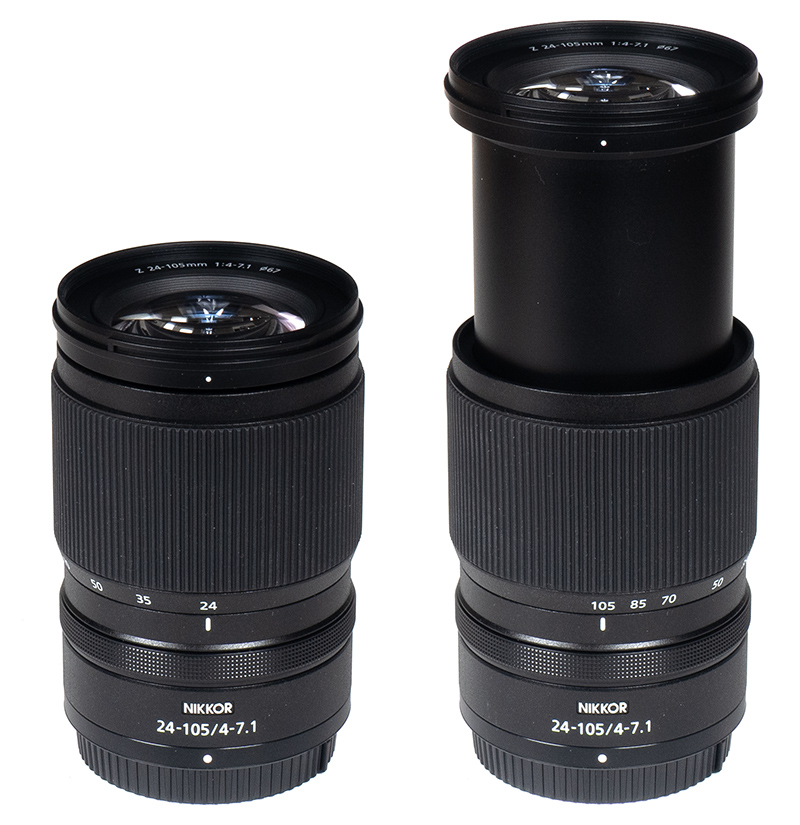
The build quality is clearly consumer-grade. The lens body is made of rather thin engineering plastics down to the mount. One has to wonder why Nikon wasn’t able to spend a few cents more for a metal mount at least. They don’t supply a lens hood, either. As you can see below, the lens extends quite a bit when zooming towards the long end of the range. There is no dedicated aperture ring. However, the customizable control ring at the rear can be configured for this purpose. By default it serves as a, rather cheap-feeling, focus ring. Switching between AF and MF has to be selected in the camera – there is no switch for this on the lens. So a number of cost-cutting spots are fairly obvious here. On the positive side Nikon claims that the construction is dust- and drip-resistant.
The Z 24-105mm f/4-7.1 uses a STM (stepping motor) for focusing. It’s moderately fast and quiet. An interesting aspect is the ability to focus down to a magnification ratio of 0.5x. This is macro territory but don’t expect a performance that can match true macro lenses here.
| Specifications | |
|---|---|
| Optical construction | 12 elements in 10 groups (1x ED, 2x aspherical) |
| Number of aperture blades | 7 (rounded) |
| min. focus distance | 0.2m (max. magnification 0.5x) |
| Dimensions | φ 73.5 × 106.5mm |
| Weight | 350g |
| Filter size | φ 67mm |
| Hood | petal-shaped, optional (Nikon HB-93B) |
| Other features | dust- and drip-resistance control ring |
| Compatible mounts | Nikon Z |
Distortion
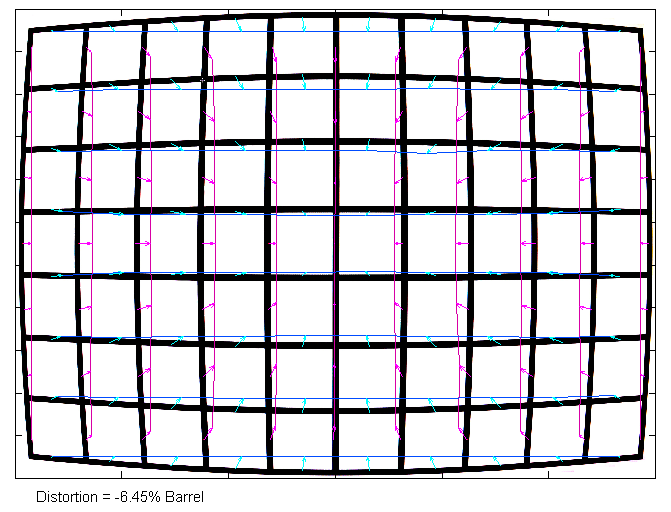
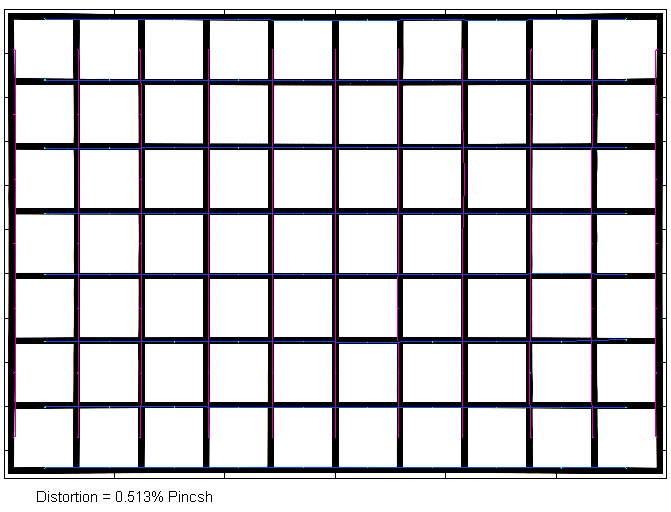
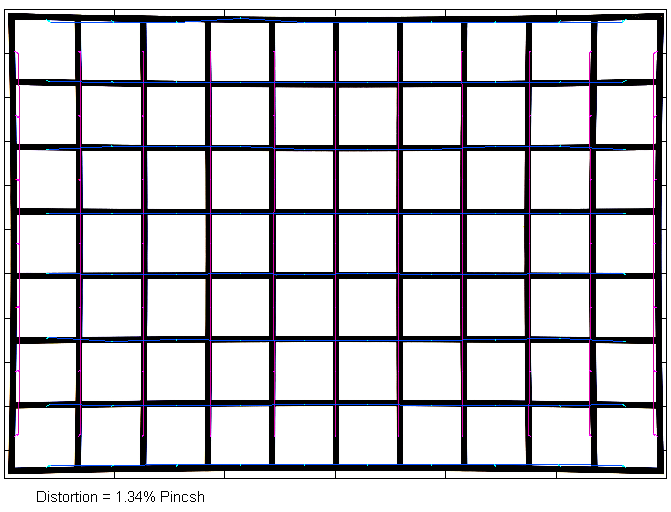
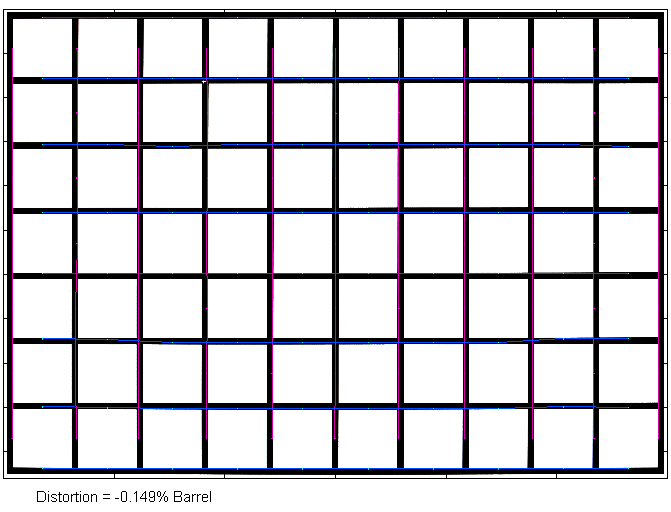
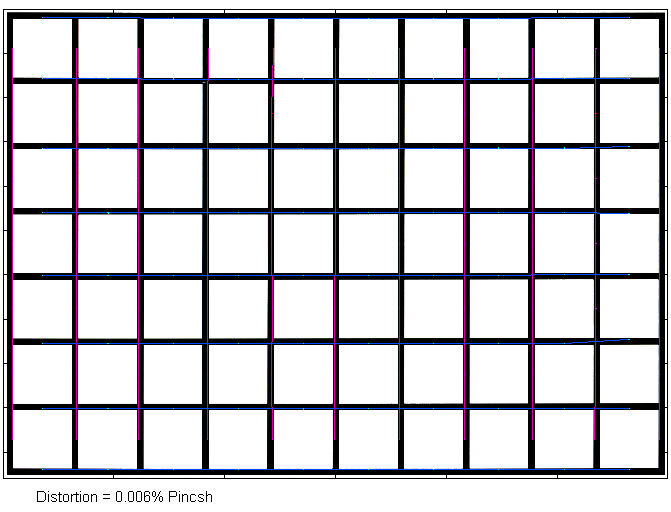
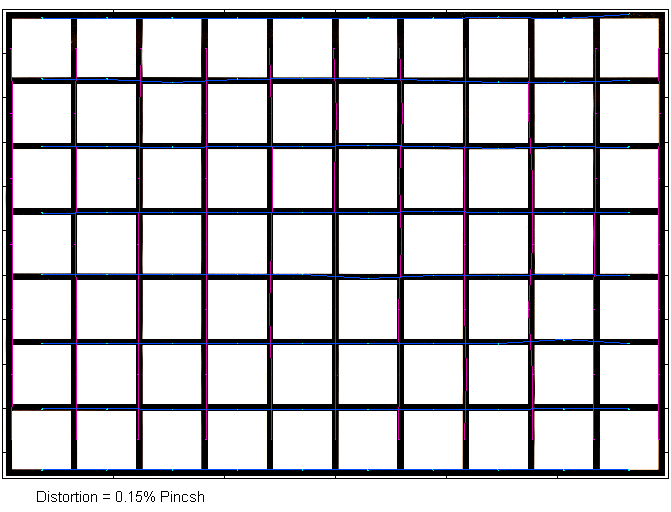
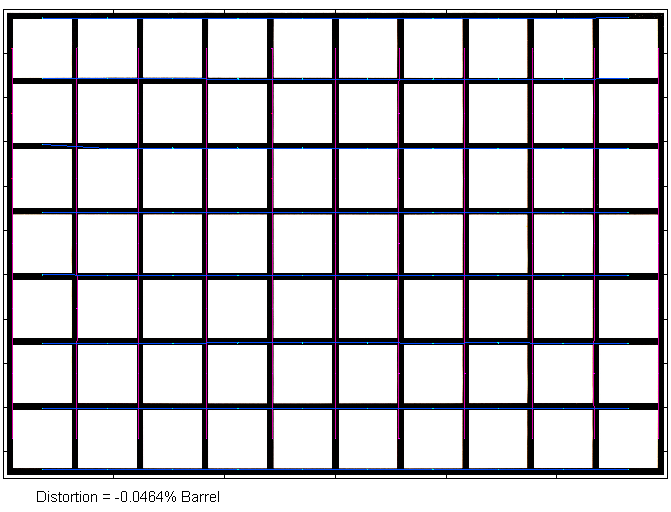
As you may have guessed, Nikon didn’t develop a fully corrected lens here. RAW images reveal a very heavy barrel distortion of more than 6% at 24mm, thus auto-correction is basically a must here. The barrel distortion eases at 40mm before switching to pincushion distortions at longer focal lengths with a fairly mild peak at 105mm.
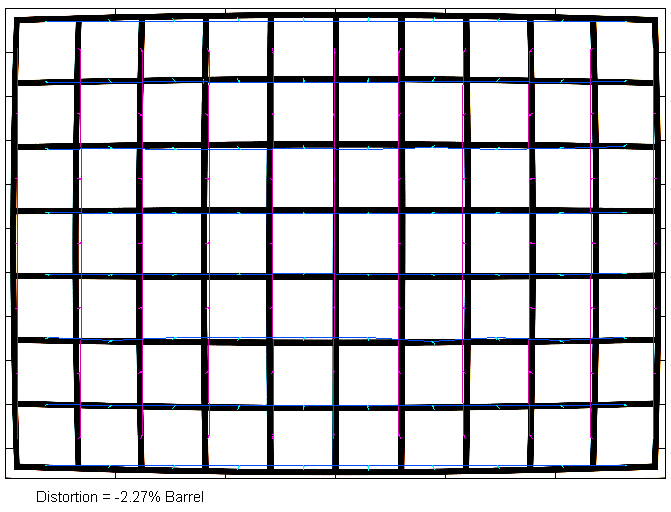
Auto-correction reduces this to a negligible degree, so this works just fine here.
Vignetting
The rather extreme distortion at 24mm results in excessive vignetting in RAW files – even when stopped down to f/11. This eases the more you zoom out and it’s not a major issue from 70mm anymore.
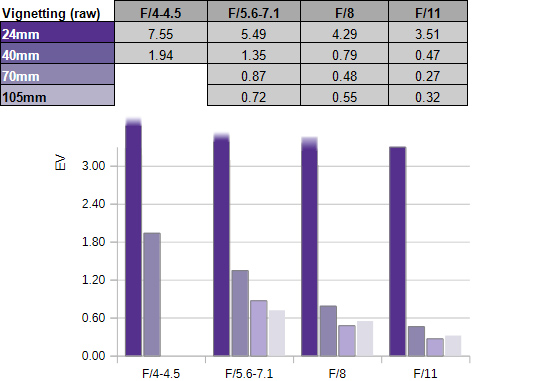
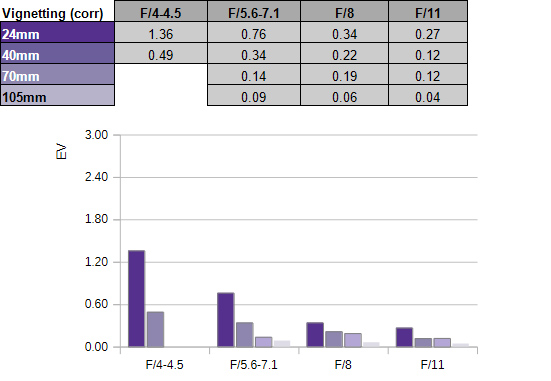
Combined distortion and vignetting correction reduces the light falloff to a reasonable ~1.4 EV (f-stop) at 24mm f/4. One stop down, the vignetting is not disturbing anymore and it’s very well corrected at other settings.
MTF (resolution at 45 mp)
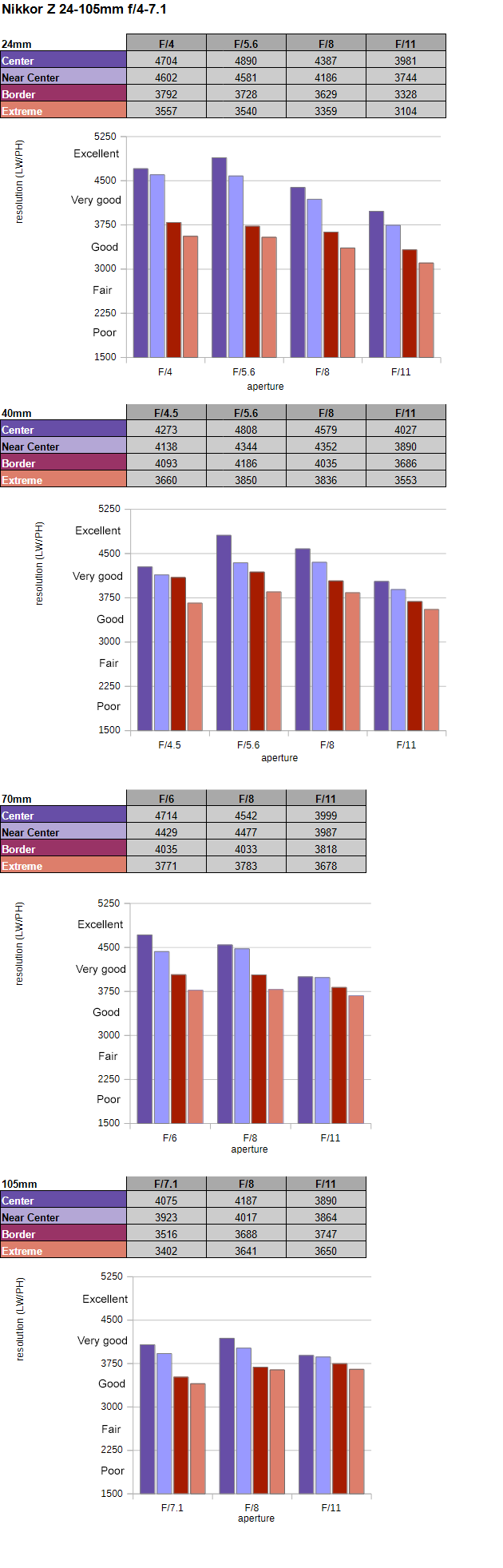
The lens is actually quite sharp at most settings. The broader center is excellent at 24mm f/4 already and the outer image field is good to very good. The quality improves slightly at f/5.6 before diffraction reduces the quality again. This is mostly maintained at 40mm and 70mm. There is, however, a general drop in sharpness at 105mm – also because f/7.1 is already diffraction-limited. The broader center is still very good with good borders and corners here.
The centering quality of the tested sample was Okay. Field curvature is moderate.
Please note that the MTF results are not directly comparable across the different systems!
Below is a simplified summary of the formal findings. The chart shows line widths per picture height (LW/PH), which can be taken as a measure of sharpness. If you would like to know more about the MTF50 figures, you may check out the corresponding Imatest Explanations.
Chromatic Aberrations (CAs)
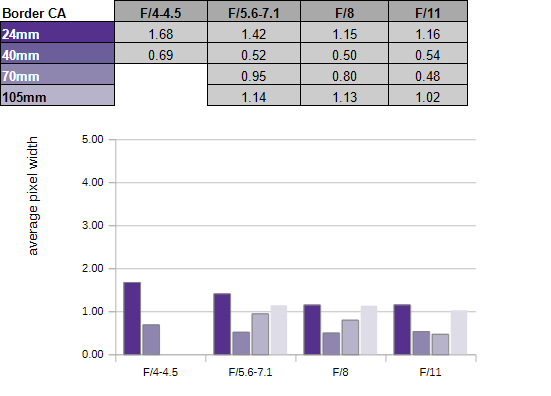
Lateral CAs are fairly well corrected. They are most pronounced at 24mm with a peak width of 1.7px at 24mm f/4. although the increase further into the corners from here. Stopping down reduces the CAs a bit. They aren’t an issue in the middle of the zoom range. The CAs increase again at the very long end but they remain reasonably low here.
However, keep in mind that lateral CAs are losslessly autocorrected in JPEGs and most RAW converters so it’s not a big deal in real life.
Bokeh
A lens with an f/4-7.1 aperture is hardly aligned to shallow depth-of-field photography. However, if your subject is close enough you can still produce some object separation. Thus let’s take a brief look at the bokeh.
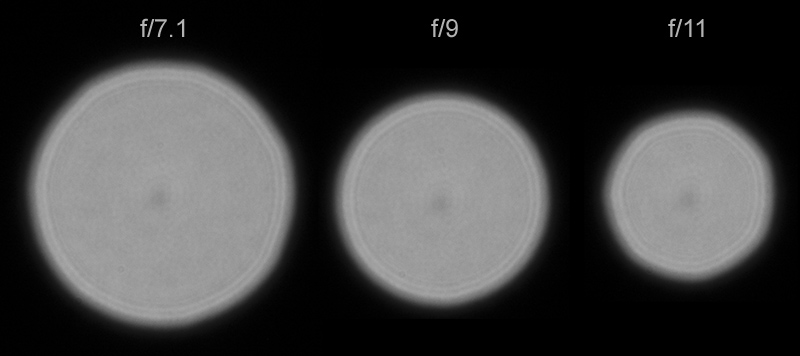
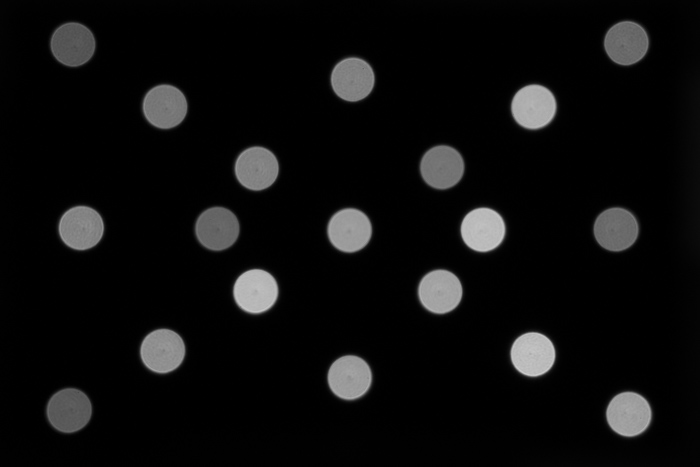
Out-of-focus highlights show a relatively clean inner zone near the image center. There is, however, some outlining that is intensifying a bit the more you stop down. The center discs are circular at f/7.1 and f/9 (here at 105mm). The edgy aperture shape creeps in at f/11 but that’s hardly a setting used for shallow depth-of-field photography anyway (…). Curiously, there is a darker spot in the dead center of the discs.
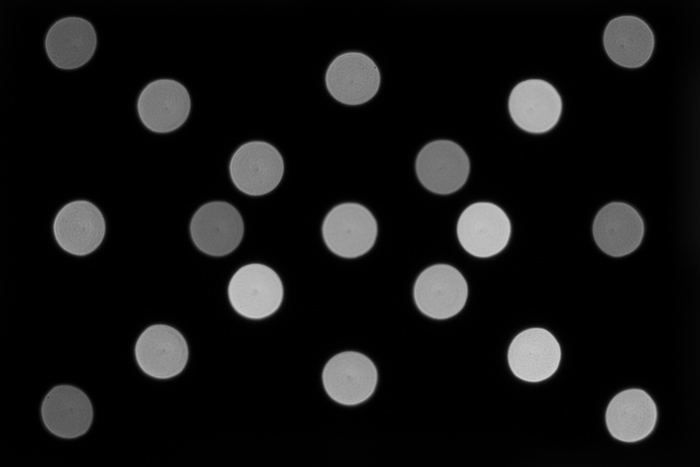
Surprisingly, the disc shape is mostly maintained across the whole image frame at maximum aperture already, and the corner discs are perfectly circular from f/9.
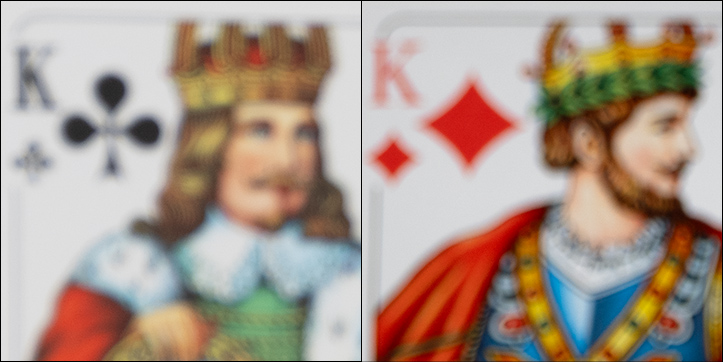
The background rendering is surprisingly smooth in the focus transition zone (shown to the left below). The less important foreground blur (to the right) is busy (double edged) in comparison.
Sun Stars
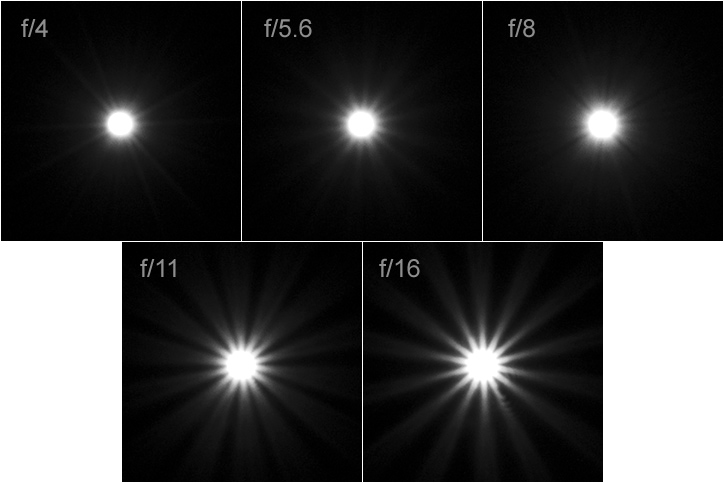
Below is a sequence of 100% cropped images from f/4 all the way up to f/16 (at 24mm) – illustrating the sun star behavior. Sun stars are diffraction spikes from the aperture that show up if a bright light source is part of the scene (usually in night shots or if the sun is part of your scene).
As usual, there’s just a light “blob” at f/4 due to the circular aperture shape, and it’s barely different at f/5.6 and f/8. The first really noticeable rays appear at f/11 with the best results achieved at f/16. The rays are “fan-like” instead of the more desirable pointy rays, though.
Competition / Alternatives
As of the time of writing this article, there aren’t too many alternatives available in this price class. The Nikon Z 24-50mm f/4-6.3 is also very affordable but it’s not quite as versatile due to its very limited zoom range. If you want a little extra punch, it may be worth checking the used market for a Nikkor Z 24-70mm f/4 S. It’s a very expensive lens when purchased new, but the used market is actually full of these at very reasonable prices that come close to a new Z 24-105mm f/4-7.1. You’d gain better build quality and a faster max aperture at 70mm. If you can squeeze your budget a bit further, there’s the Tamron 28-75mm f/2.8 Di III VXD G2 which is quite an attractive budget option. None of these come close in terms of zoom ratio, though.
Sample Images


The Nikkor Z 24-105mm f/4-7.1 may not be the most exciting lens around, but it does a good job relative to its price tag. It's quite sharp across most of the range except at the long end where it loses a bit of bite. The lens relies heavily on autocorrection especially at the wide end. However, it fixes most of the issues except for some remaining vignetting at 24mm f/4. The Nikkor is, of course, not the fastest lens around which limits its depth-of-field capabilities to isolate objects. You can still achieve this to some degree as long as you keep your main subject close to you and the -technical- bokeh quality is pretty good for a standard zoom lens actually. The sun star rendering is a bit underdeveloped but that's a fringe case for most users anyway.
In terms of build quality you have to notice that the lens was produced to a price. The plastic feels a bit cheap and "hollow". And a plastic mount? Nikon - was this really necessary? On the positive side, this results in a significant weight reduction. At just 350g, it almost qualifies as a featherweight. And Nikon still incorporated some weather sealing.
If you are running on a moderate budget the Nikon Z 24-105mm f/4-7.1 is actually a reasonable offer.
If you'd like to support our work, please consider shopping for this or other lenses via one of the following partners:
* Amazon US
* Amazon Europe
* B&H
* Adorama
The Good
- Good value
The Bad
- Feels a bit cheap
-
Optical Quality6
-
Build Quality5
-
Price / Performance7