


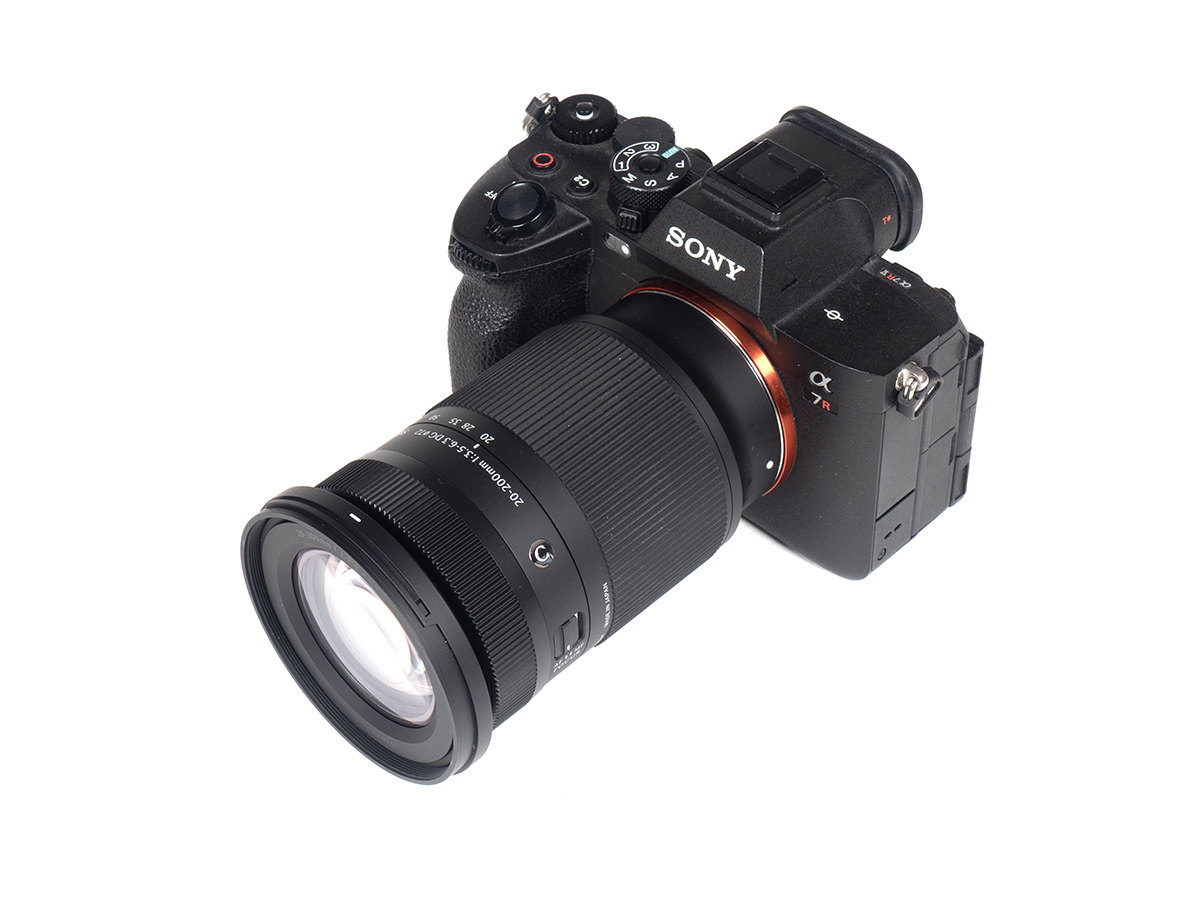
Over the last decades there has always been a war raging between Tamron and Sigma in providing the best “super zoom” lenses around. Usually, Tamron prevailed – also because it’s their home turf—whereas for Sigma it was just one of many lenses. As of this writing, the latest battle is between the Tamron 25-200mm f/2.8-5.6 Di III VXD G2 and the Sigma 20-200mm f/3.5-6.3 DG Contemporary. Just from the paper spec, it’s clear that Tamron is betting to win via an extra bit in speed whereas Sigma added some more range at the interesting wide end. Both are typically offered for around $900 USD or 849 EUR. We’ve reviewed the Tamron recently, so let’s check out the Sigma this time.
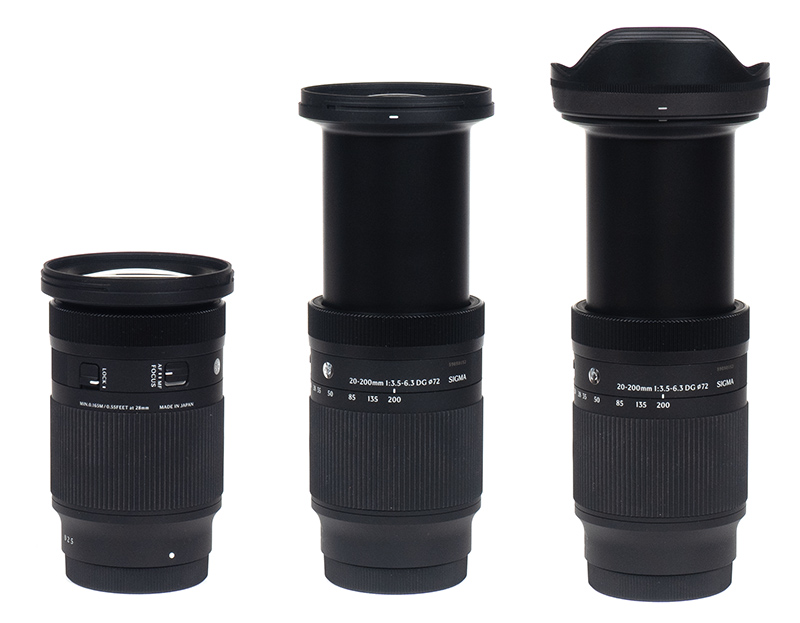
The 20-200mm f/3.5-6.3 DG follows Sigma’s usual recipe for their Contemporary lenses. The outer shell is made of decent quality plastics based on a metal mount. Sigma has incorporated dust- and splash-resistant sealing, so that’s good to know because such travel zoom lenses often take a beating. The quality of the front lens cap is quite pathetic, though. It comes off way too easily. The lens extends quite a bit when zooming towards 200mm with marginal wobbling of the inner tube, but it avoids having a secondary inner tube at least (unlike the mentioned Tamron). The broad rubberized zoom ring is a bit stiff – which is good – we didn’t experience any zoom creeping during our field testing. However, there is also a zoom lock switch just in case. The focus ring turns smoothly. A small petal-shaped lens hood is included in the package.
The lens uses Sigma’s HLA (High-response Linear Actuator) AF motor which is both fast and silent. They also managed to provide an extremely close minimal focus distance allowing a maximum object magnification of 1:2 between the 28mm and 85mm settings. That’s macro territory although don’t expect a similar quality level. An image stabilizer has not been incorporated which is both a good and bad thing here. It’s good because the optical design is already complex enough as is and an optical image stabilizer would only add more complexity to it. However, while Sony’s (and Panasonic’s) in-camera image stabilizer is pretty good you can feel that it reaches its limits at 200mm.
| Specifications | |
|---|---|
| Optical construction | 18 elements in 14 groups (1x FLD, 3x SLD, 4x aspherical) Fluorine coating on the front element |
| Number of aperture blades | 9 (rounded) |
| min. focus distance | 0.25m (W) – 0.65m (T), 0.165m at 28mm max. magnification: 1:2 between 28-85mm |
| Dimensions | φ 77.2 × 117.5mm |
| Weight | 540g |
| Filter size | φ 72mm |
| Hood | petal-shaped, bayonet mount, supplied |
| Other features | Dust- and splash-resistant Zoom-lock |
| Mounts | Sony E, L-mount |
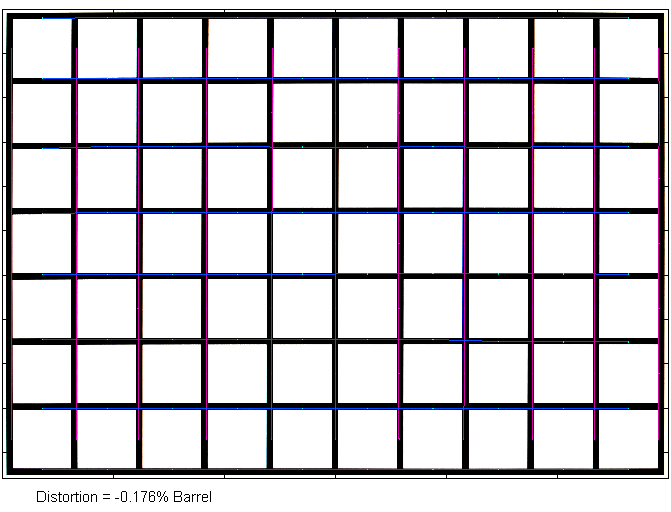
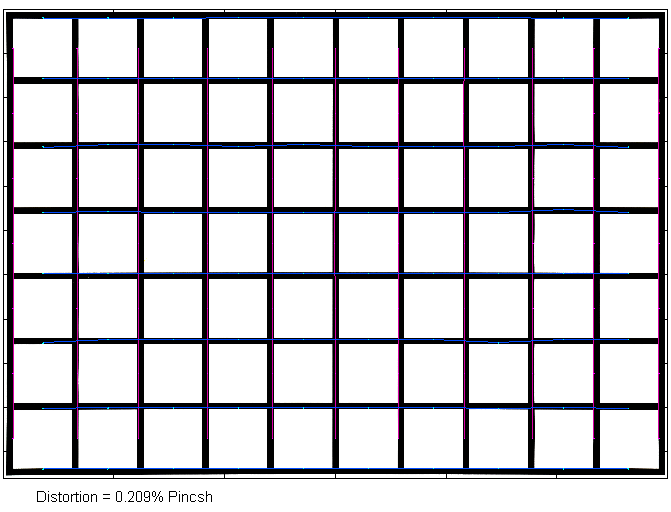
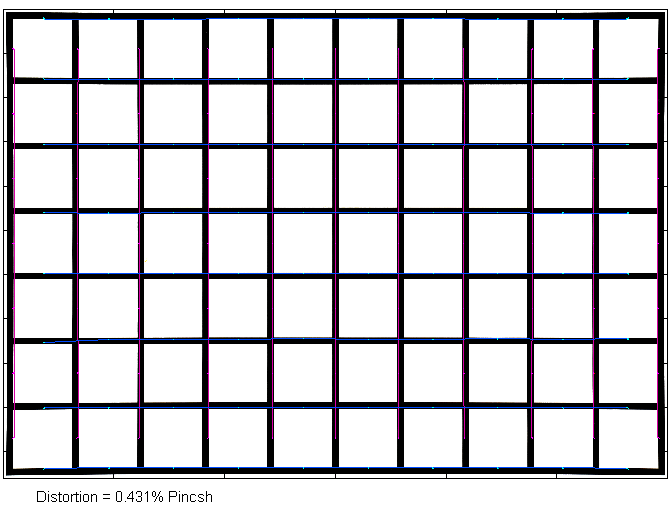
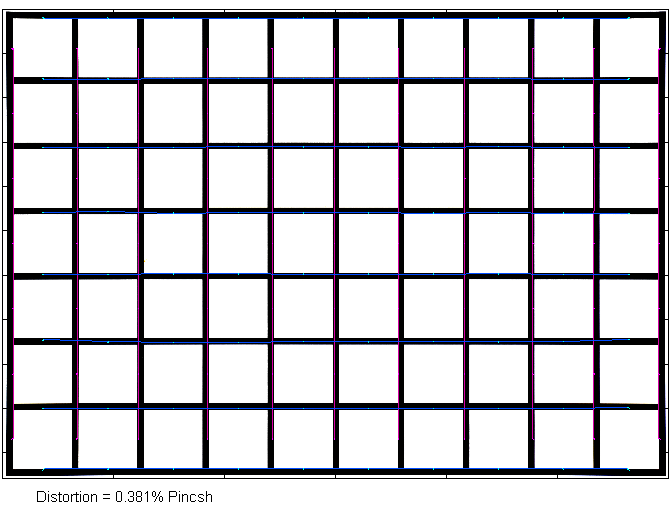
Distortion
Manufacturers like to let distortions “float” and fix this via autocorrection. And you might expect that a 20-200mm is especially bad in this respect. However, the Sigma lens is relatively moderate in this respect. At 20mm, there are strong barrel distortions but at ~3.5% they are just half of what we’ve seen from the worst offenders. The distortion should be neutral around the 35mm mark but switch to pincushion type beyond. At 50mm, they are worse than 2% already and reach roughly 3% at long focal lengths.
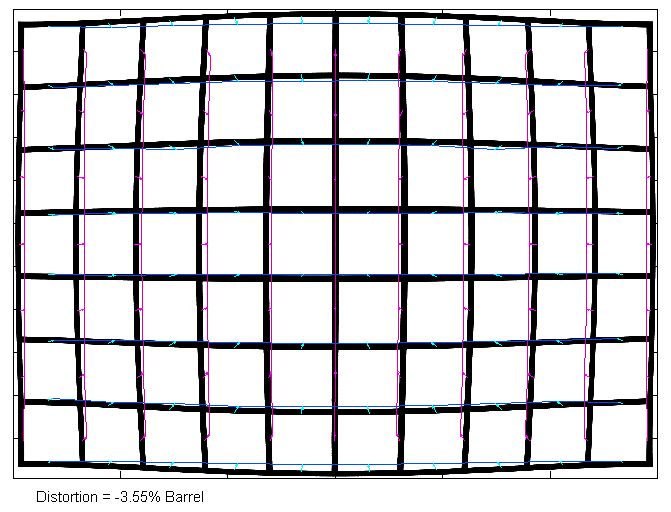
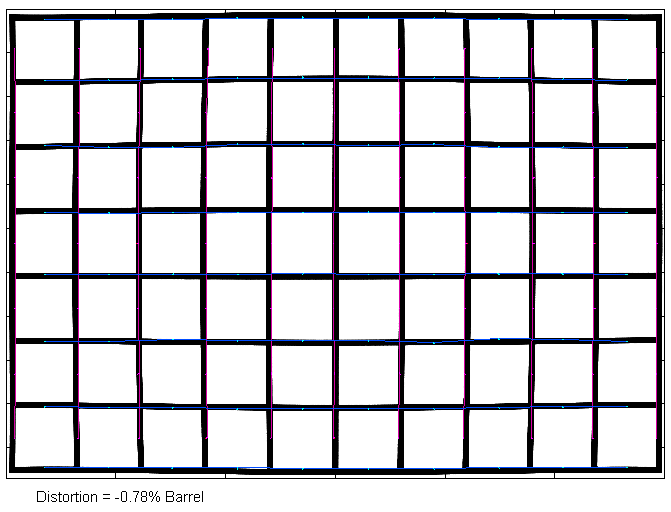
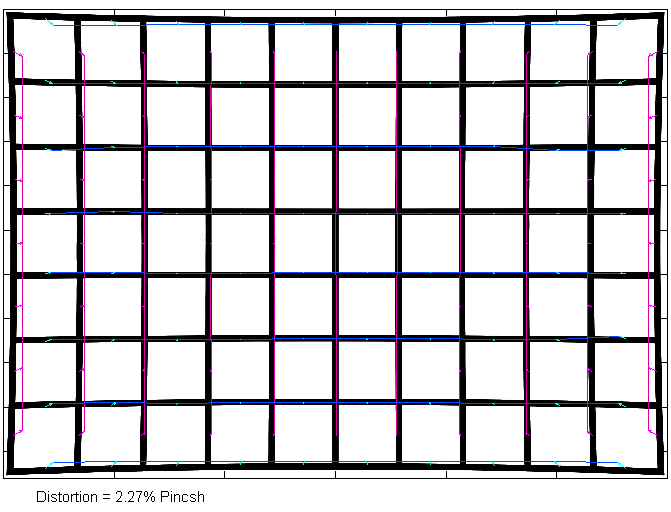
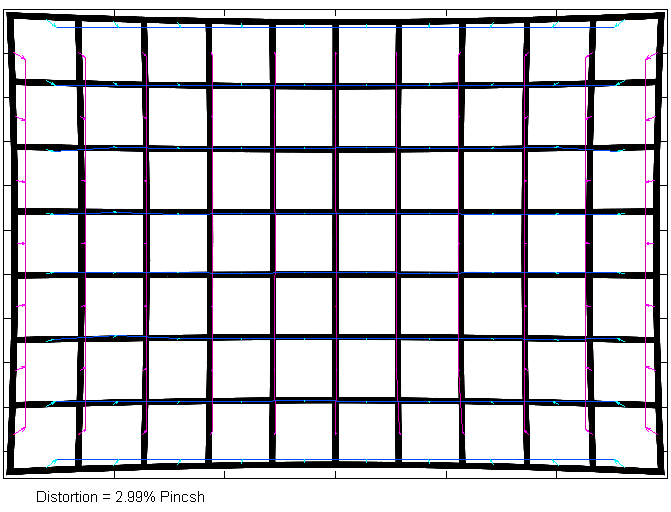
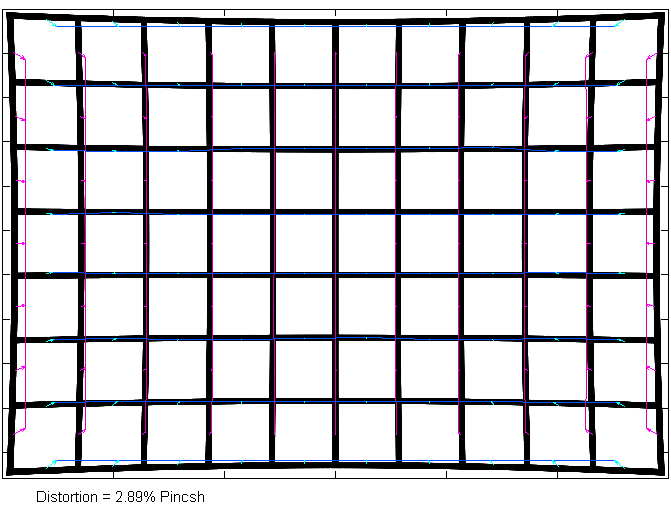
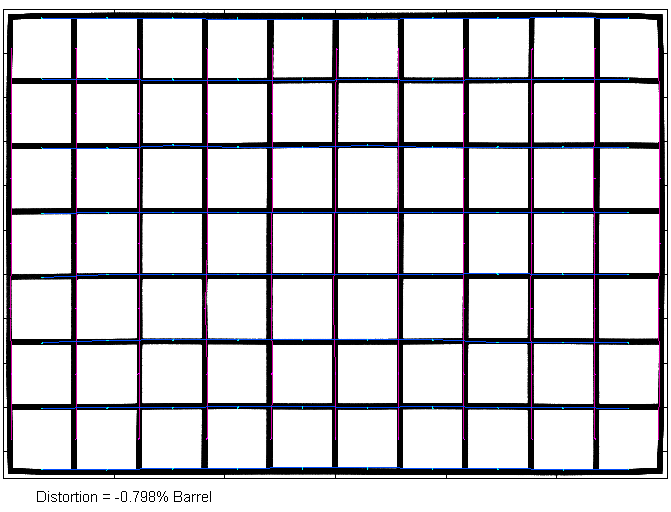
Auto-correction reduces the native distortions substantially, of course. They are never fully gone but not objectionable in most scenes anymore.
Vignetting
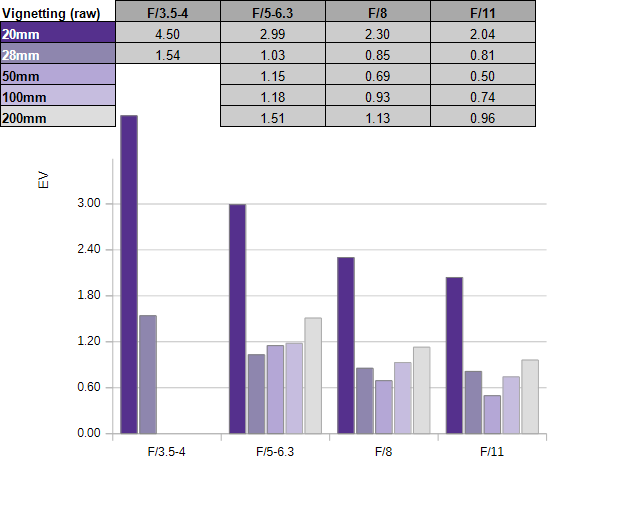
The RAW vignetting is extremely high at the 20mm setting. A light falloff of 4.5 EV (f-stops) isn’t quite black but pretty far along the way. Even at f/11, the vignetting is still very high at 2 EV. It’s not quite as extreme at other focal lengths. At 28mm and 200mm the light falloff is a relatively moderate 1.5 EV wide-open, and it’s a bit less so in the middle part of the zoom range. Stopping down helps with reducing this somewhat again.
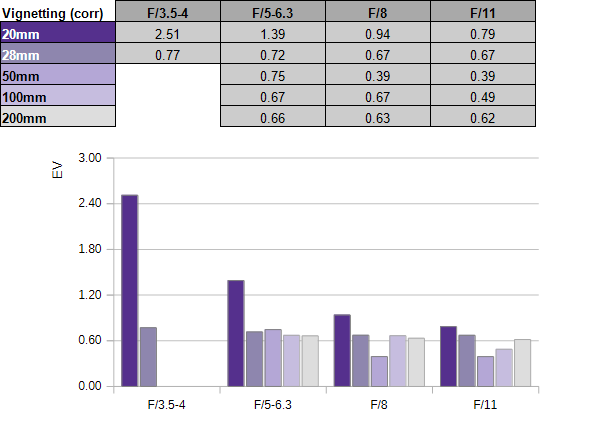
The combined distortion and vignetting correction reduce this drastically at 20mm. The vignetting is still very obvious at f/3.5 but it’s acceptable from f/8 here. At longer focal lengths, the vignetting is moderate wide-open already.
MTF (resolution at 42 mp)
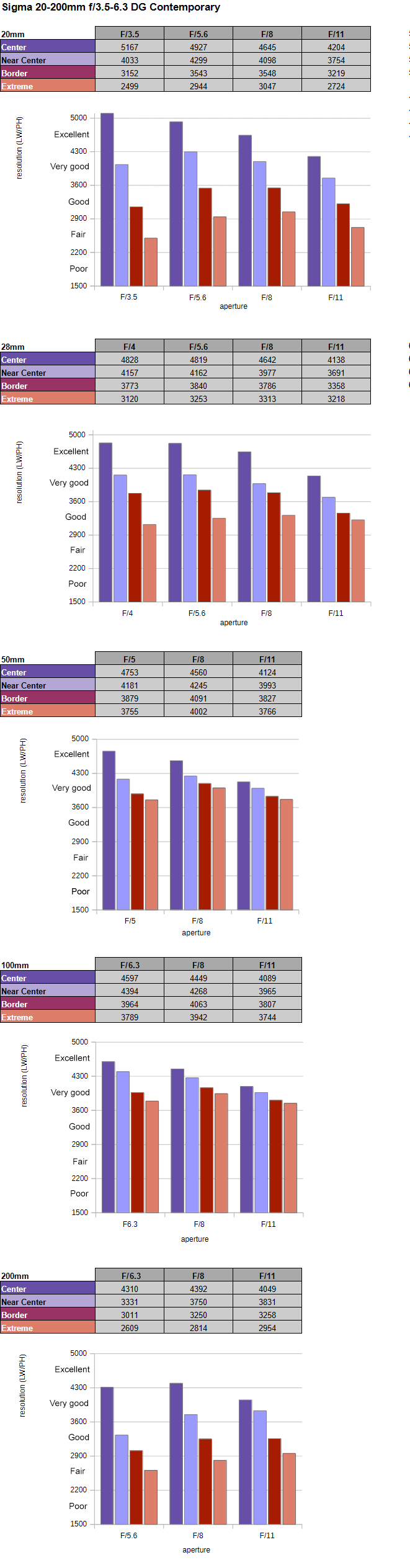
As you might expect, the resolution characteristic varies a lot throughout the zoom range. The weakest spots are at the very wide and long end. At 20mm, the dead center quality is great. At f/3.5 the drop in quality from there is substantial. The near center is still very good and the borders aren’t bad either but the corners are soft. You should stop down to at least f/5.6 here. The mid field improves and the corners regain some quality. They are still best at f/8 with good results (albeit only just). The quality is better at 28mm where the corners are consistently good and the borders are pretty sharp. The peak quality of the lens is between 50mm and 100mm where it can achieve very good quality across the frame. This changes towards the long end. At 200mm the center quality is still fine but the outer image field is soft again. The best overall results are only achieved at f/11 here despite the impact from diffraction.
The centering quality of the tested sample was fine with only a slight misalignment creeping in at the long end (which is normal for super zoom lenses). Field curvature was surprisingly minimal.
Please note that the MTF results are not directly comparable across the different systems!
Below is a simplified summary of the formal findings. The chart shows line widths per picture height (LW/PH), which can be taken as a measure of sharpness. If you would like to know more about the MTF50 figures, you may check out the corresponding Imatest Explanations.
Chromatic Aberrations (CAs)
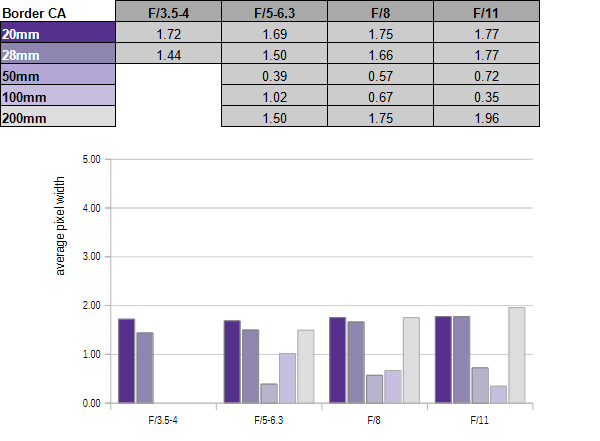
Lateral CAs are high in the 20-28mm range and the very long end. At below 2px on average at the image borders, they are obvious in RAW images here. However, keep in mind that lateral CAs are losslessly autocorrected in JPEGs and most RAW converters so this is mostly a technicality.
Bokeh
The Sigma 20-200mm f/3.5-6.3 is a slow lens by most standards. However, at long focal lengths combined with fairly close focus distances you can still achieve a decent object separation, so let’s check the bokeh.
Out-of-focus highlights have a quite clean inner zone of the discs (in the image center). We can spot two rings at the edges of the discs, though. The disc shape is only slightly degraded at f/8 but the more edgy aperture shape is obvious at f/11.
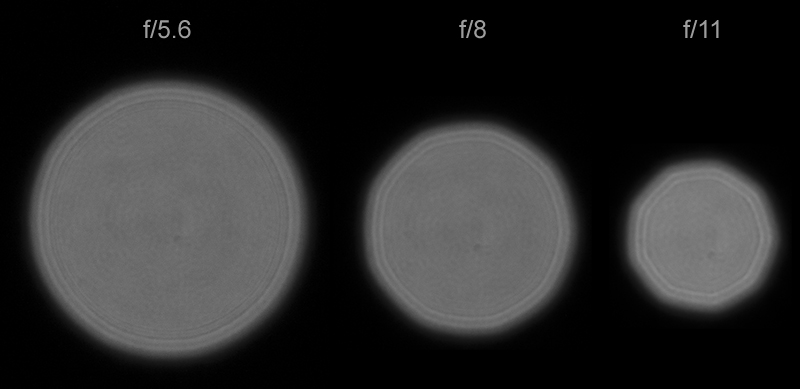
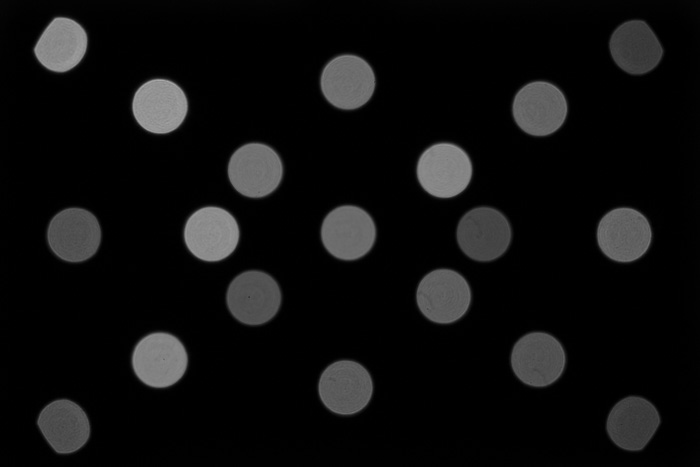
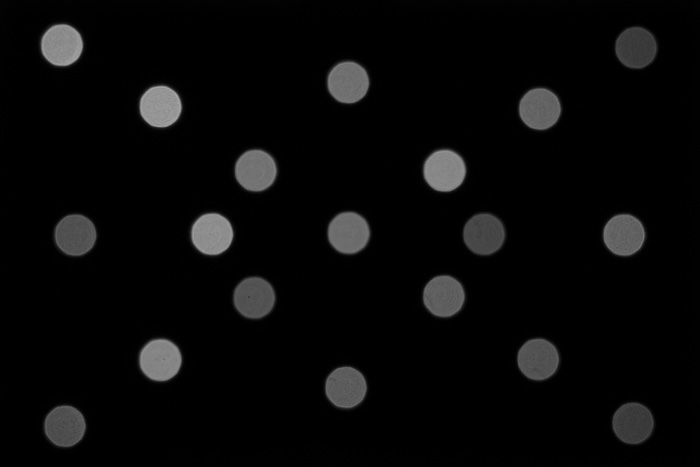
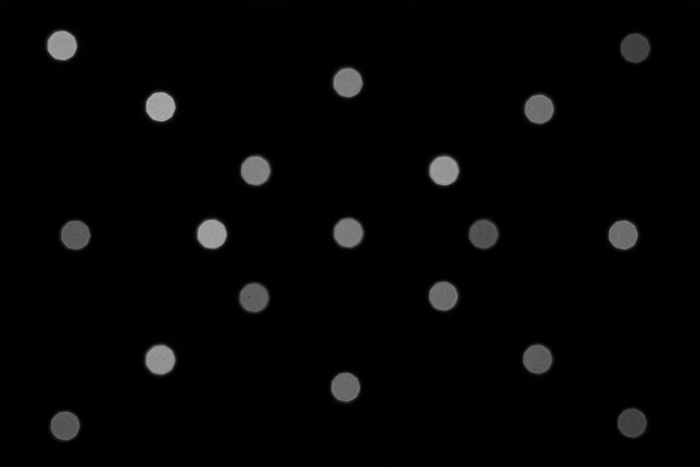
The disc shape is mostly maintained from the center to the borders of the image frame at maximum aperture already (here: at 85mm). Only the corner discs are “cut”. Stopping down to f/8 restores them to their circular shape.
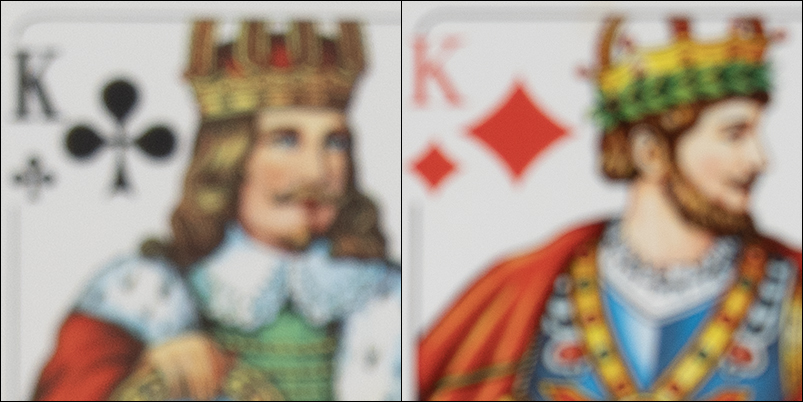
The out-of-focus rendering in the focus transition zone is surprisingly good for such a lens. The more important background blur (shown to the left below) is smooth. The foreground blur (to the right) is only slightly more nervous.
Sun Stars
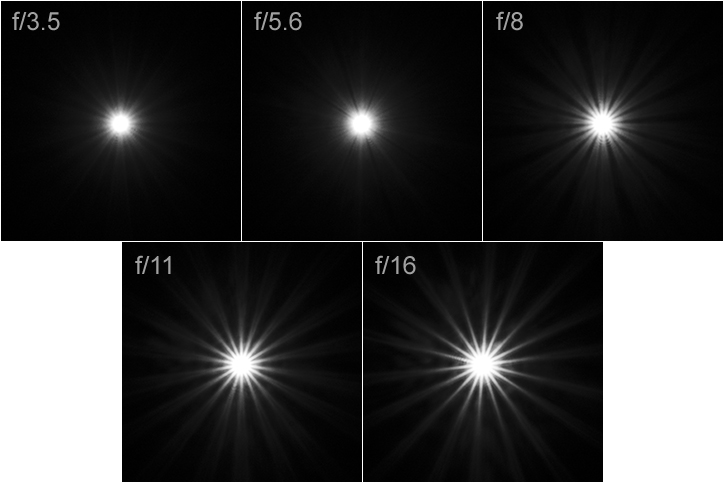
Below is a sequence of cropped images from f/3.5 all the way up to f/16 (here: at 20mm) – illustrating the sun star behavior. Sun stars are diffraction spikes from the aperture that show up if a bright light source is part of the scene (usually in night shots or if the sun is part of your scene).
As always the effect is basically non-existent at large aperture settings. The first really noticeable rays appear at f/8. The rays are more obvious at f/11 and best at f/16. The rays are nicely pointy although relatively “short”.
Competition / Alternatives
As already mentioned, the main competitor of the Sigma 20-200mm f/3.5-6.3 DG Contemporary is the Tamron 25-200mm f/2.8-5.6 Di III VXD G2 with marginally different specs. In E-mount there is also the Sony FE 24-240mm f/3.5-6.3 OSS which doesn’t have the best reputation around (but we haven’t tested the Sony lens yet).
Sample Images


When it comes to purchasing a "super zoom lens", you should manage your expectations. Such lenses are never going to be as good as shorter zoom lenses or even primes - obviously. This also applies to the Sigma 20-200mm f/3.5-6.3 DG Contemporary. Having said this, it's not terrible either. Sigma has spent decades improving the designs over and over again. For the best results, you should still stop down to at least f/8 where the overall quality is actually quite decent. If possible avoid the maximum aperture at the very wide and very long end of the zoom range if corner quality means something to you. Autocorrection is also needed to tame the high vignetting and high CAs at 20mm and 200mm. The native image distortions are actually lower than you might expect but even so autocorrection should be used to mask the increasing corner softness.
The build quality is pretty good which is something we got used to with modern Sigma lenses. The plastic quality is fine and there's only a hint of wobbling of the inner lens tube despite the long extension when zooming out towards 200mm. Some degree of weather sealing is also reassuring. The AF is perfectly fine. Some may miss a dedicated optical image stabilizer but the camera's IBIS is mostly "good enough".
So what does this mean regarding the battle between the Sigma 20-200mm f/3.5-6.3 and the Tamron 25-200mm f/2.8-5.6 then? We'd say it's mostly a tie in the overlapping range as well as build quality. The Tamron offers a bit of extra speed whereas the Sigma has the 20mm setting on its side so this comes down to personal preferences. Both are best used on lower-megapixel cameras where the compromises in sharpness are less obvious.
If you'd like to support our work, please consider shopping for this or other lenses via one of the following partners:
* Amazon (US)
* Amazon (EU)
* B&H (US)
* Adorama (US)
The Good
- 20mm at the wide end is cool
- Good bokeh for such a lens (within limits)
- Lightweight and good build quality
- Fast AF
The Bad
- Not great at the extreme ends of the zoom range
- Should only be used with autocorrection (obviously)
- Sigma, please fix your front caps
-
Optical Quality5.5
-
Build Quality7
-
Price / Performance8