


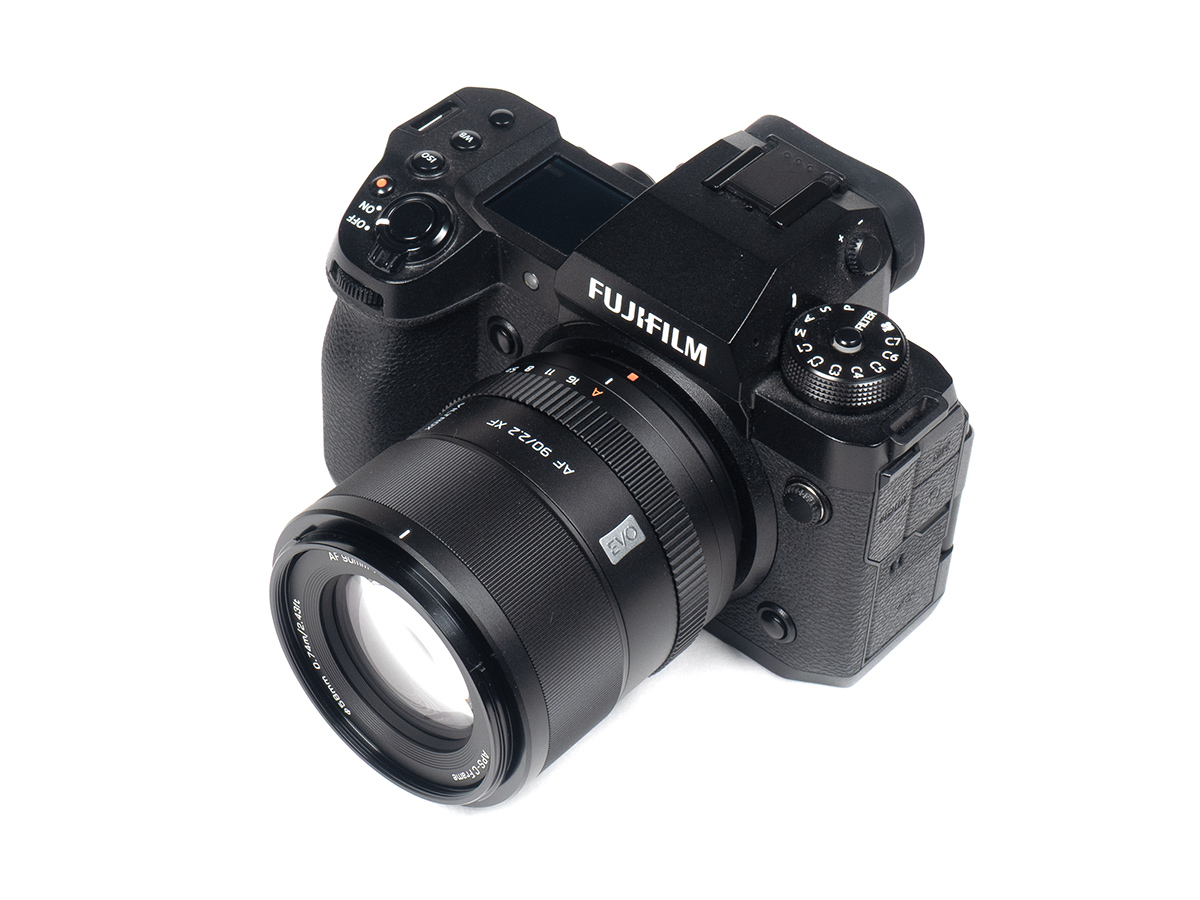
Viltrox is busy filling all the prime lens niches that they can find. This time they found the 90mm focal length for APS-C format cameras. So let’s meet the Viltrox AF 90mm f/2.2 EVO, equivalent to an 137mm f/3.3 lens in full format terms. It’s available in Sony E, Nikon Z as well as Fujifilm X mount with the latter version being discussed here. In Fujifilm X mount, it’s placed directly against the Fujinon XF 90mm f/2 R LM WR, one of the highest-rated lenses that we ever tested (albeit that was back in the day on 16 megapixels). While the Viltrox lens is marginally slower, it has a substantially lower price tag of just 369 USD (429 EUR, 359 GBP, 539 CAD, 68400 JPY). That’s less than half of the costs of the Fujinon. So let’s see whether the affordable price comes with compromises.
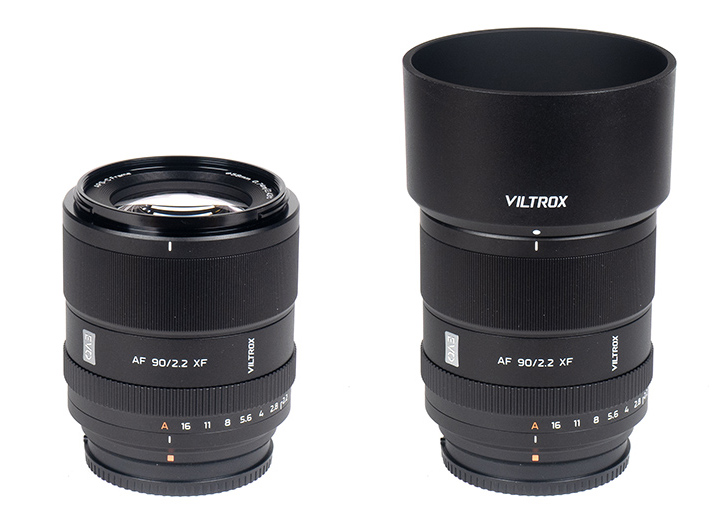
We’ve reviewed some “EVO”-grade lenses in the past already, so the build quality of the AF 90mm f/2.2 EVO doesn’t come as a surprise. It strikes a nice balance between simple consumer and professional-grade lenses. The build quality is very high based on a lens body made of metal with a very smooth metal focus ring and the clicked aperture ring (de-clickable on the E-/Z-mount version). We’d wish for a more distinctive click for the “A” mode which slips too easily, though. Unlike the E- & Z-mount versions, the X-mount version doesn’t have an AF/MF or a Fn-button. One of the differences to a pro lens is the weather sealing which is limited to a mount gasket. A barrel-shaped lens hood is part of the package.
The 90mm f/2.2 uses an STM (stepping) motor for focusing. It’s not as sophisticated as Viltrox’s VCM, but it works fine regarding both speed and quietness.
| Specifications | |
|---|---|
| Optical construction | 10 elements in 8 groups (2x ED, 2x HR) |
| Number of aperture blades | 9 |
| min. focus distance | 0.74m (max magnification: 0.14x) |
| Dimensions | φ 69×76mm |
| Weight | 325g |
| Filter size | φ 58mm |
| Hood | barrel-shaped (bayonet mount, supplied) |
| Other features | Aperture ring (clicked in X-mount, de-clickable in E-/Z-mount) Fn button (only in E- & Z-mount) Firmware updates via USB-C/Bluetooth Mount gasket |
| Mounts | E/Z/X |
Distortions
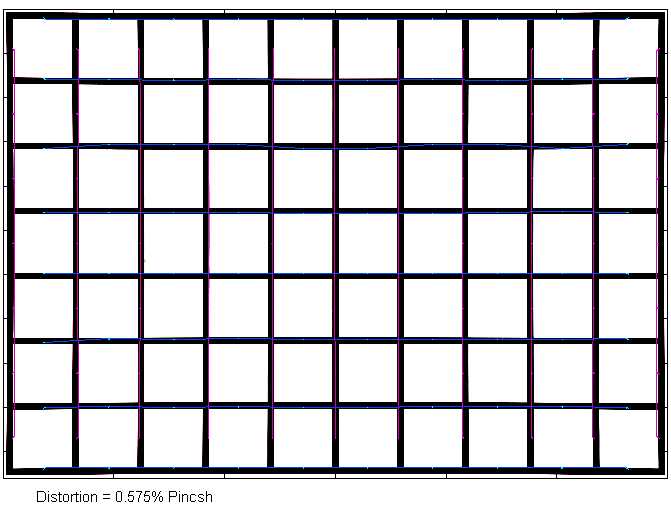
The lens produces a native image distortion of ~0.6% pincushion-style. This is quite low and usually not an issue. The AF 90mm f/2.8 EVO doesn’t have an autocorrection profile (in X-mount) so if you still want to correct this you have to do it manually or wait for your RAW converter to support this.
Vignetting
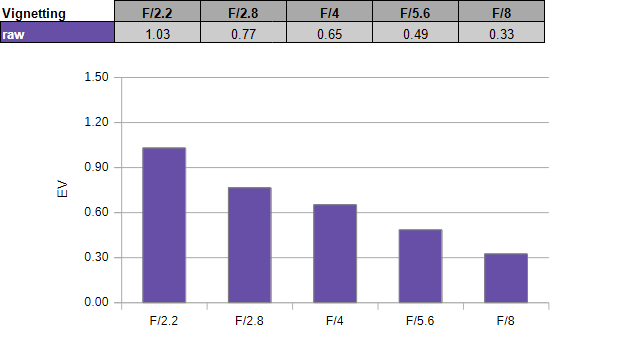
The Fujifilm X-mount version doesn’t come with vignetting autocorrection either. The native vignetting is reasonably good, though. At f/2.2, the light falloff peaks at just over 1 EV (f-stop). This decreases gradually the more you stop down, and the issue is mostly negligible at less than 0.5 EV from f/5.6 onward.
MTF (resolution) at 26 megapixels
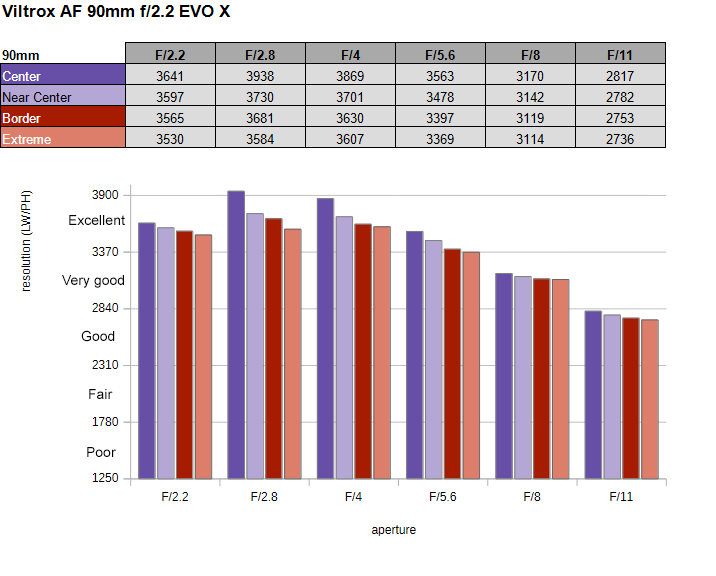
The Viltrox AF 90mm f/2.2 EVO XF has an easy time at 26 megapixels (yes, we’ll update to 40 mp soon). The results are excellent at f/2.2 – and that’s across the image field. The center still improves a little when stopping down to f/2.8 which is also where the peak performance is reached. The quality is mostly maintained until f/5.6. Diffraction kicks in at f/8, and a bit of softness is creeping in at f/11.
The field curvature is low. The centering quality of the tested sample was good.
Please note that the MTF results are not directly comparable across the different systems!
Below is a simplified summary of the formal findings. The chart shows line widths per picture height (LW/PH) which can be taken as a measure of sharpness. If you are keen to know more about the MTF50 figures, you may check out the corresponding Imatest Explanations.
Chromatic Aberrations (CAs)
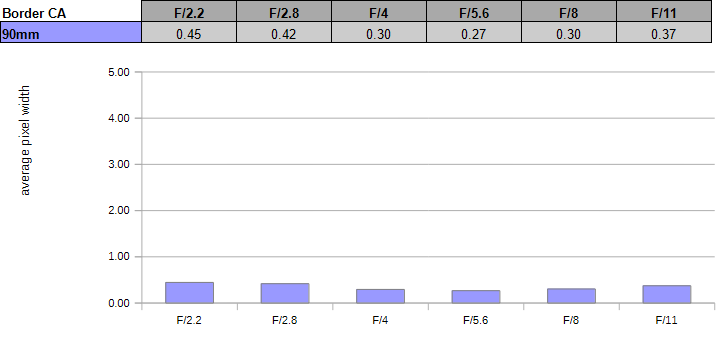
Lateral CAs are very low at all aperture settings and not relevant from a user perspective.
Bokeh
A fast medium tele lens isn’t just about sharpness but also about the out-of-focus rendering, aka the bokeh, so let’s take a look.
Out-of-focus highlights are nicely rendered in the image center. The inner zone of the discs is very clean. There’s just a tiny bit of outlining. The circular shape of discs remains intact up to f/4. A slightly more edgy aperture shape creeps in at f/5.6.
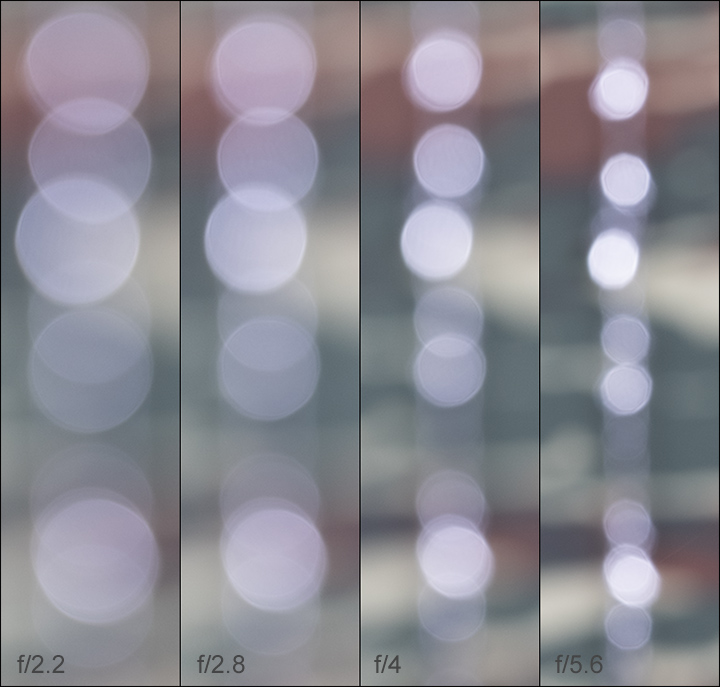
The above applies to the broader center. However, the highlights deteriorate to “cat eyes” the more they are positioned towards the borders/corners – this is a mechanical vignetting effect related to the size of the front opening of a lens. This is, as usual, most obvious at maximum aperture. Stopping down to f/2.8 broadens the zone with circular discs a but it doesn’t change something fundamentally. The border discs are restored at f/4, but the corners are only back to a circular shape at f/5.6




The general rendering of the out-of-focus blur is also very similar to what we’ve seen with the 85mm f/2 EVO or 75mm f/1.8 EVO. The background blur (to the left below) is smooth although quite “contrasty”. The less important foreground blur (to the right) is a bit “shadowy” gain.
In real life (see the gallery below), we’ve noticed that a scene with harsh contrast may still render a bit rough, but this applies to most lenses.

Bokeh Fringing / LoCA
LoCAs, or bokeh fringing, is a color fringing effect on the Z-axis. It shows up with a purplish tint in front of the focus point and a greenish tint behind, and it’s nearly impossible to fully correct in post.
As you can see below, the effect is subdued on the Viltrox lens. There’s a greenish halo towards the rear, but the foreground LoCAs are minimal. This is slightly improved at f/2.8 and, as so often, mostly restored at f/4.
If you scroll through the images below, you may also notice that the focus point shifts very slightly to the rear when stopping down. However, this has no practical relevance because the initial focus point at f/2.2 remains sharp.


Competition
The competition depends on the specific system.
- In Fujifilm X mount, the Viltrox AF 90mm f/2.2 EVO competes, of course, against the Fujinon XF 90mm f/2 R LM WR. Given the performance of the Viltrox lens, the case for the Fujinon becomes a bit slim. There’s the marginally faster maximum aperture and better weather sealing, but that’s not much for a lot more money.
- In Sony E- or Nikon Z-mount, the situation is a bit different. You can get the superb Viltrox AF 85mm f/2 EVO. It has almost the same specs but is full frame. On APS-C, the bokeh (highlights) will be a bit better. Then there’s the full-format Sony FE 85mm f/1.8 & Nikkor Z 85mm f/1.8 S respective which are slightly faster again but also more expensive.
Depending on the mount there are also 85mm f/1.8 lenses from Samyang, Meike, TTArtisan, 7Artisans, Brightin Star, AstrHori and more. Too many to mention and too many to test really. This is a busy battleground …
Sample Images


Designing a high-quality, (fairly) fast medium tele prime lens isn't rocket science, but even so, you have to make it happen. So we have to commend Viltrox for providing us - or at least APS-C users - with another option in this lens class. The Viltrox AF 90mm f/2.2 EVO delivers extremely sharp results with minimal lateral and moderate axial CAs. Image distortions can be mostly ignored and vignetting characteristic is decent for a lens in this speed class. Having said that an autocorrection profile would have been nice for these two aspects. The quality of the bokeh is good in most scenes.
The AF 90mm f/2.2 XF has an all-metal construction, including the control rings. The aperture ring cannot be de-clicked which may not be loved by videographers. This is possible on the E-mount version at least. The AF speed is also snappy (on the X-H2). There's only basic weather sealing at the rear of the lens so that the area where cost-cutting is noticeable.
And then there's the price tag. You are getting a lot of goodness for your bucks here. The Viltrox AF 90mm f/2.2 EVO is an easy value recommendation!
Support us by shopping at:
* Amazon US
* Amazon Europe
* Adorama
* Viltrox
The Good
- Great sharpness straight from f/2.2
- Superb value proposition
- Very good build quality
The Bad
- No auto-correction profile (in X-mount)
- Aperture ring can't be de-clicked (X-mount)
-
Optical Quality9
-
Build Quality8
-
Price / Performance10