


Introduction
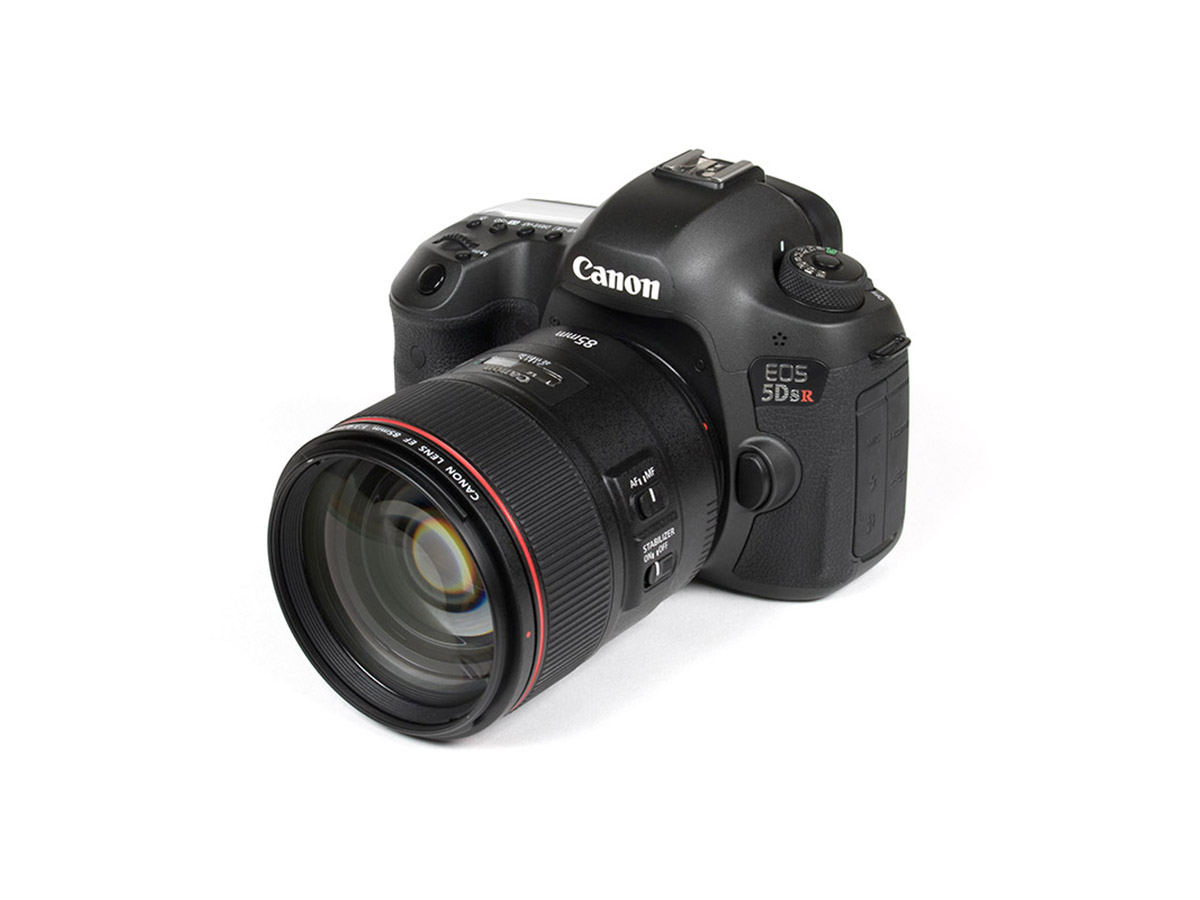
Canon has always had a superb reputation when it comes to tele lenses. That’s most obvious during sports events when looking at the press sector – white Canon L class lenses are dominating the scene here. Things are somewhat more balanced regarding medium tele lenses – traditionally many fashion photographers prefer Nikon – but Canon wouldn’t be Canon if they didn’t have something special here as well. The Canon EF 85mm 1.2 USM L II is the fastest (mass produced) 85mm lens around. In terms of bokeh, it is quite a beast but it’s much less impressive in terms of sharpness. Canon just released an alternative that is a little less ambitious optically – the Canon EF 85mm f/1.4 USM L IS. It is, obviously, a bit slower – although f/1.4 is as fast as it gets over at Nikon and Sony. As such it’s not quite as difficult to correct optical flaws which increase exponentially the faster you design a lens. At least on paper. That being said, it is the first of its kind featuring an image stabilizer so it may even surpass the 85mm f/1.2 in low light capabilities. Price-wise, it is not exceedingly expensive which is almost surprising these days. However, you still need to have some deep pockets thanks to a price tag of around 1600USD / EUR.
The build quality of the Canon EF 85mm f/1.4 USM L IS is superb as you can expect from a Canon L class lens. The lens body doesn’t seem to be made of metal but Canon’s high-quality plastic based on a metal mount. That size of the lens remains constant throughout the focus range and it does, of course, feature weather-sealing. The focus ring operates smoothly. The supplied lens hood is a bit disappointing – it is barrel-shaped but comparatively short.
The older Canon EF 85mm 1.2 USM L II has a comparatively slow AF motor. Fortunately, Canon was able to fix this on the EF 85mm f/1.4 USM L IS. The focus ring is manually coupled unlike on the f/1.2 lens which uses a focus-by-wire system. Full-time manual focusing (FTM) is, of course, available.
That brings us to the image stabilizer. Most users seem to be impressed by it and Canon claims a whopping gain of 4 f-stops. Maybe our sample was defective – despite showing a clearly stabilized view – but there wasn’t too much in it. Shots taken at 1/20sec were not critically sharp.
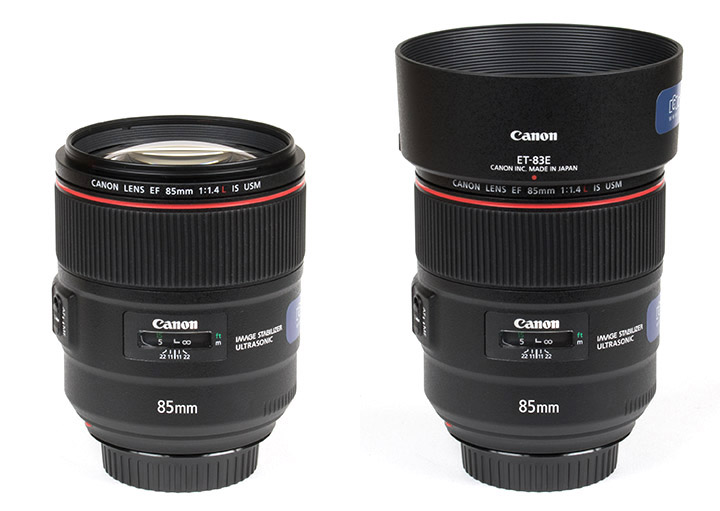
| Specifications | |
|---|---|
| Optical construction | 14 elements in 10 groups including 1x GMo aspherical element |
| Number of aperture blades | 9 (rounded) |
| min. focus distance | 0.85m (max. magnification ratio 1:8.3) |
| Dimensions | 88.6 x 105.4mm |
| Weight | 950g |
| Filter size | 77mm |
| Hood | barrel-shaped (bayonet mount, supplied) |
| Other features | image stabilizer weather sealing |
| Mounts | Canon EF |
Distortion
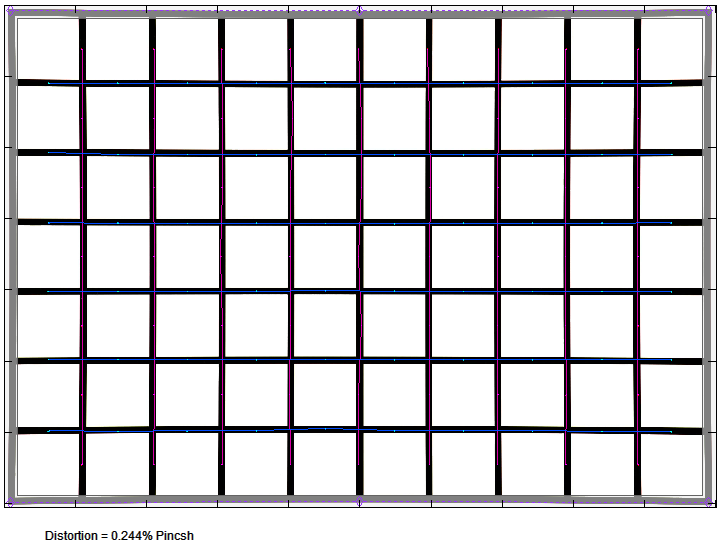
The Canon EF 85mm f/1.4 USM L IS produces a very slight pincushion-type distortion as you can see below.
Vignetting
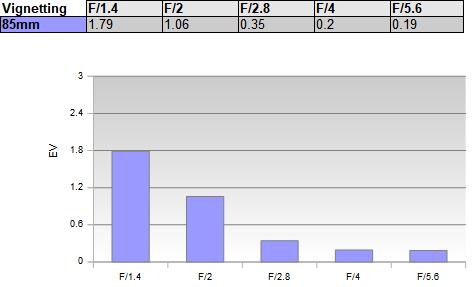
The vignetting characteristic is typical for such a lens. Thus there’s some substantial light falloff at fully open aperture (1.8EV). Stopping down to f/2 reduces the issue and the vignetting is pretty much gone from f/2.8 onward.
MTF (resolution at 50 megapixels)
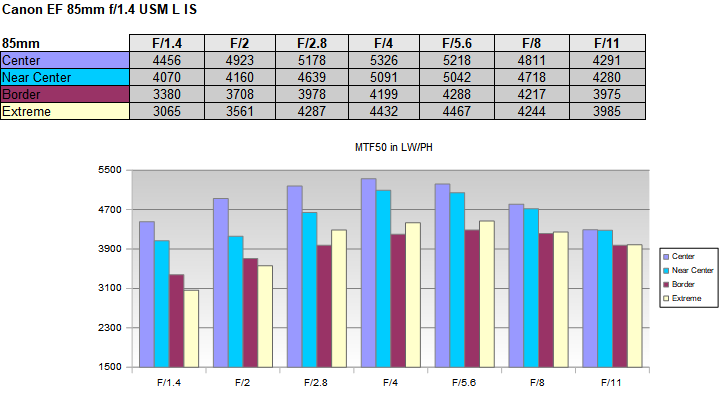
50 megapixels are quite a hammer for most lenses but the Canon EF 85mm f/1.4 USM L IS managed nicely. The center and near-center quality are very good at f/1.4 and the outer image region is at least decent. Stopping down to f/2.8 increases the quality substantially and it’s best around the f/4 to f/5.6 mark with a bitingly sharp center and very good borders/corners. Diffraction effects are getting somewhat more obvious from f/11 onward.
The centering quality of the tested lens was good. The field curvature is low.
Please note that the MTF results are not directly comparable across the different systems! Below is a simplified summary of the formal findings. The chart shows line widths per picture height (LW/PH) which can be taken as a measure of sharpness. If you would like to know more about the MTF50 figures, you may check out the corresponding Imatest Explanations.
Chromatic Aberrations (CAs)
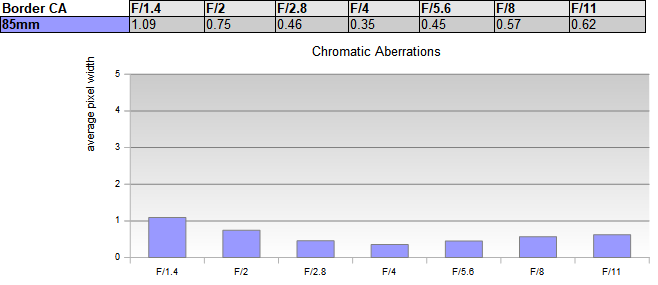
Lateral CAs are low across the aperture range. They peak at f/1.4 with an average pixel width of 1.1px at the image borders. From there on they are decreasing towards medium aperture settings.
Bokeh
Sharpness is one thing but you really invest in such a lens for its bokeh capabilities (out-of-focus rendering). The results are – mostly – great again here.
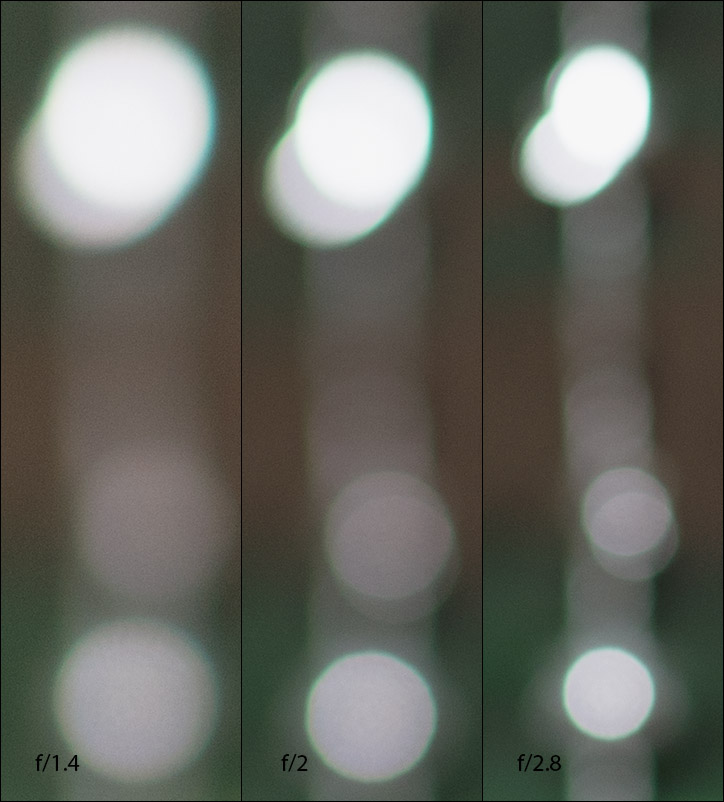
Let’s take a look at the quality of out-of-focus highlights first. In the image center they are nicely rendered with a smooth inner disc and a perfectly circular shape until about f/2.8. This is about as good as it gets on a conventional lens at least.
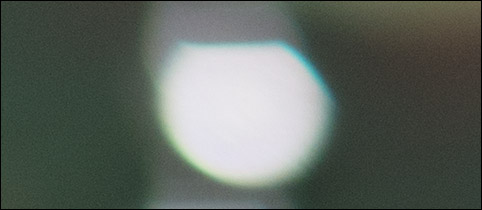
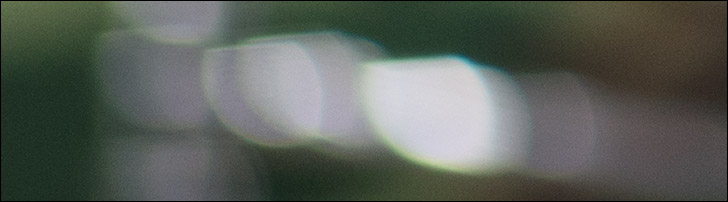
That being said, the discs deteriorate quickly. Below is a sample crop that was taken mid field at f/1.4. You can easily spot that the disc has been “cut” there – a vignetting effect that can be reduced by stopping down.
The effect is emphasized the further you look into the image corners – see below. Please note that this is not unusual although it’s somewhat more pronounced on the Canon lens possibly because the front element of the lens is relatively small. The Sigma 85mm f/1.4 DG HSM ART is showing more pleasing highlights in the image corners and it has a much bigger front element.
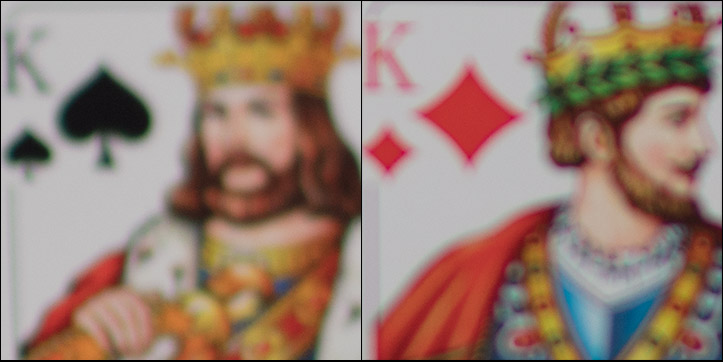
As far as the general blur is concerned, it’s smooth in the image foreground (to the right below) and even more silky in the image background (to the left).
Bokeh Fringing / LoCA
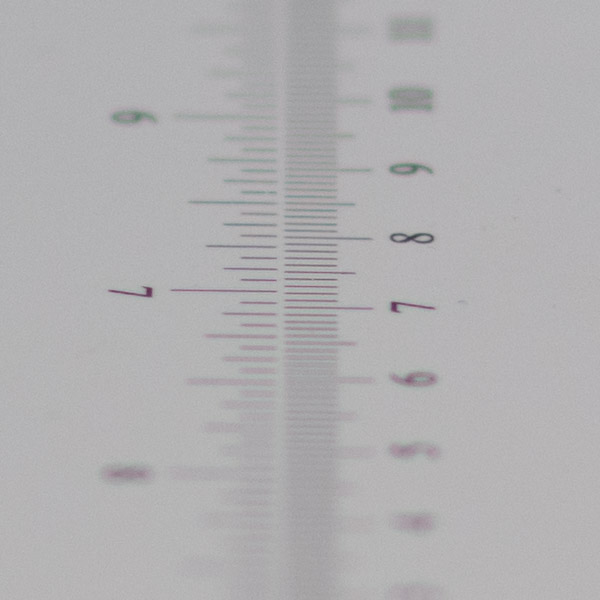
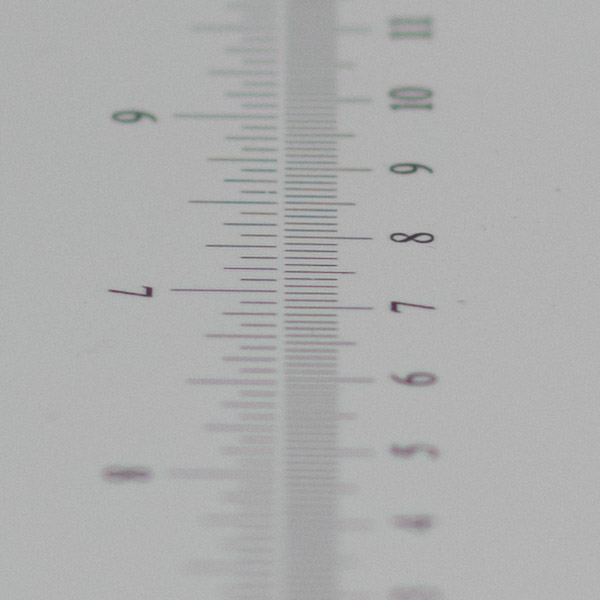
In a perfect world scenario, you won’t see any axial CAs thus color fringing on the Z-axis. However, only a handful of fast lenses are correcting the issue effectively and the Canon EF 85mm f/1.4 USM L IS is not among them. When scrolling through the provided sample crops below, you should be able to spot the usual purplish color fringing in front of the focus point and a greenish halo beyond. The fringing is most pronounced at f/1.4 and decreases from there. However, you can still spot traces at f/4.
You should also be able to notice that the focus point does NOT shift when stopping down. Many high-speed lenses have difficulties keeping the focus point spot on – focus-shifts or so-called Residual Spherical Aberrations (RSA).

Sample Shots


Competition
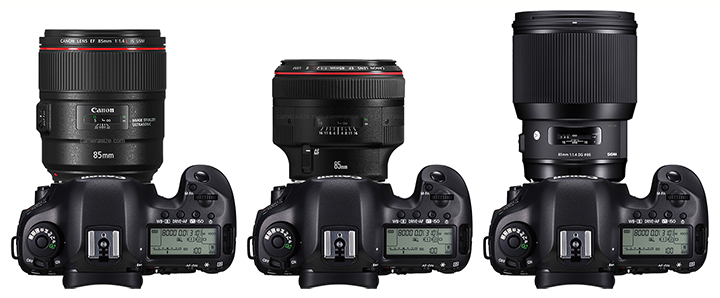
Most users will decide between three different lenses in this class – the Canon EF 85mm f/1.4 USM L IS (to the left below), the EF 85mm f/1.2 USM L II (center) and the Sigma 85mm f/1.4 DG HSM ART (right). There are further fast 85mm f/1.4 lenses from e.g. Zeiss and Samyang but these are manual focus lenses and therefore usually in the exotics realm. In terms of sheer optical qualities, the EF 85mm f/1.2 USM L II is certainly inferior but it is faster still and the bokeh is also a tad better. Interestingly the old lens is much shorter. The Sigma 85mm f/1.4 DG HSM ART gives the Canon lenses a run for the money and it is the sharpest of the gang. On the downside, it struggles a bit in terms of focus accuracy and it’s an even bigger brick to carry.
We weren't overly thrilled by the characteristics of the Canon EF 85mm f/1.2 USM L II. While being a bokeh monster, it has issues e.g. in terms of sharpness and AF speed. The Canon EF 85mm f/1.4 USM L IS does fix these shortcomings. It is quite sharp at f/1.4 and reaches great results at medium aperture settings. That's on a 50mp sensor = at 21mp the quality is generally superb. Lateral CAs and distortions are low. The amount of vignetting sticks to the common characteristics in the class - reads: it's visible at f/1.4 but not extreme. The quality of the bokeh is generally excellent except for highlight discs that deteriorate a little too "early" in the image field in our book. Bokeh fringing is a common issue in this lens class and the Canon lens can't hide from this either.
Mechanically, the lens shows no real weakness. It is built to professional standards including weather sealing. Some may raise an eyebrow due to the use of (high-quality) plastics on the lens barrel but it's a non-issue really. It also helps in keeping the lens weight at a sane level. For whatever reason, Canon decided to "shrink" the lens hood. While most users tend to use lenses without a lens hood anyway, those who do will be probably annoyed by this decision. Technically the hood could surely be twice as deep. The (optical) behavior in backlit situations - to be precise, stray light from outside the image field - is better than average though. The image stabilizer didn't really work too well for us (although there was clearly IS action visible in the viewfinder). Given the positive feedback from users, we tend to believe that this was an issue in our specific sample though. The AF is both very fast and silent.
Given the sum of its qualities, it is a no-brainer to give the Canon EF 85mm f/1.4 USM L IS our "highly recommended" badge. It is facing tough competition from the Sigma 85mm f/1.4 ART lens but the Canon lens has the benefit of providing more consistent focusing results.
-
Optical Quality7.5
-
Build Quality9
-
Price / Performance8