


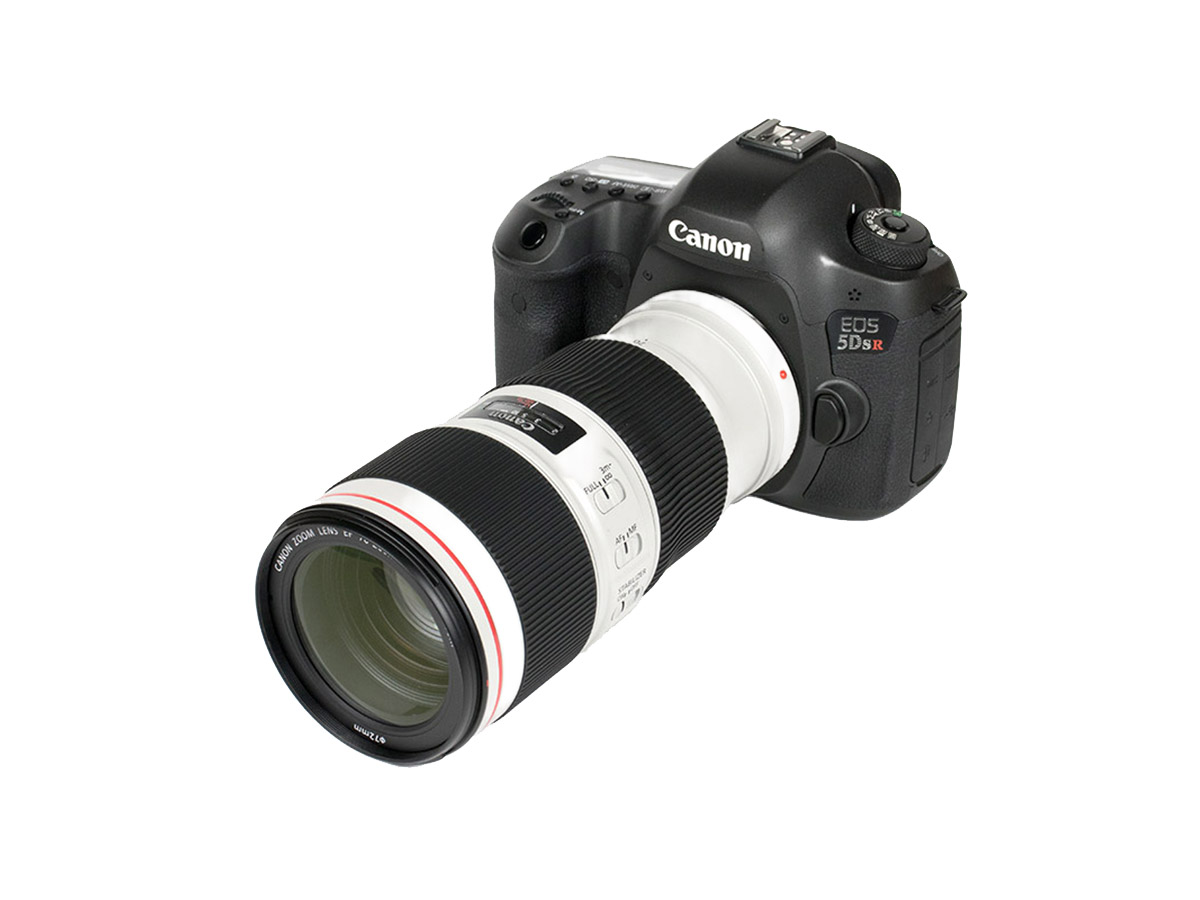
The Canon EF 70-200mm f/4 USM L IS was the sharpest zoom lens that we ever tested on 21 megapixels and it “was” certainly one of the best zoom lenses ever made. However, the king is dead … but there’s a new one around – you guessed it – it’s the Canon EF 70-200mm f/4 USM L IS II. Now some of you may stare in disbelief regarding our statement about sharpness, right? However, a f/2.8 zoom lens is much more difficult to design than the f/4 variant. Optical aberrations increase exponentially the faster the lens. Of course, diffraction plays a role as well but a 70-200mm f/4 is in a sweet spot as far as optical design is concerned. That being said it is a different question whether a 70-200mm f/4 can be “the best” zoom lens because a max. aperture of f/4 is simply a limiting factor when it comes to shallow depth-of-field and that’s combined with a zoom range that isn’t all that broad.
Another side effect of the moderate aperture is the price tag. The Canon EF 70-200mm f/4 USM L IS II is certainly not cheap at around 1300USD/EUR but it is several hundred bucks more affordable than the Canon EF 70-200mm f/2.8 USM L IS III.
The build quality of the 70-200mm f/4 USM L IS II is superb and, of course, up to professional standards. It’s mostly made of tightly assembled metal parts plus improved weather sealing. The rubberized control rings operate smoothly. Just like its predecessors the lens does not extend during zooming or focusing. The lens is very light-weight at just 780g thus it’s almost half as heavy as its f/2.8 counterparts. It does come without a dedicated tripod mount but if needed there is one available for about 170USD/EUR. A deep, barrel-shaped lens hood is part of the package.
Thanks to a new CPU, Canon claims that the Image Stabilizer (IS) is now good enough for a gain of up to 5 f-stops. As usual, we advise you not to exploit this to the max though. Unlike previous IS versions, this one has three modes:
* IS mode 1 for static objects
* IS mode 2 for panning (action photography)
* IS mode 3 – the IS will get active upon pressing the shutter button only. According to Canon, some users may prefer this if the subject moves erratically. This feature is not available on all EOS cameras though.
Typical for most modern EF lenses it features a ring-type USM drive which offers near-silent and very fast AF operations in standard AF mode. Live view AF isn’t all that hot but that depends on the base camera (the EOS 5Ds R doesn’t feature Dual-Pixel AF). The tested sample had a bit of a back-focusing issue, unfortunately. The EF 70-200mm f/4 USM L IS II is compatible with both the EF 1.4x (-> 98-280mm f/5.6) and EF 2x (-> 140-400mm f/8) teleconverters.
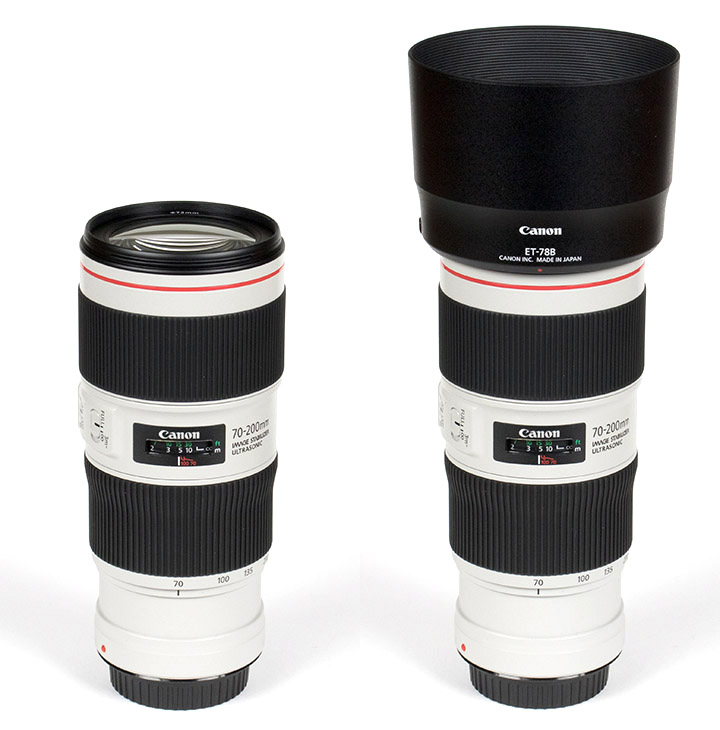
| Specifications | |
|---|---|
| Optical construction | 20 elements in 15 groups including 2x UD and 1xCaF2 element fluorine coating |
| Number of aperture blades | 9 (rounded) |
| min. focus distance | 1m (max. magnification ratio 1:3.7) |
| Dimensions | 80 x 176mm |
| Weight | 780g |
| Filter size | 72mm |
| Hood | barrel-shaped (bayonet mount, supplied) |
| Other features | weather-sealed image stabilizer optional tripod mount |
| Mounts | Canon EF |
Distortion
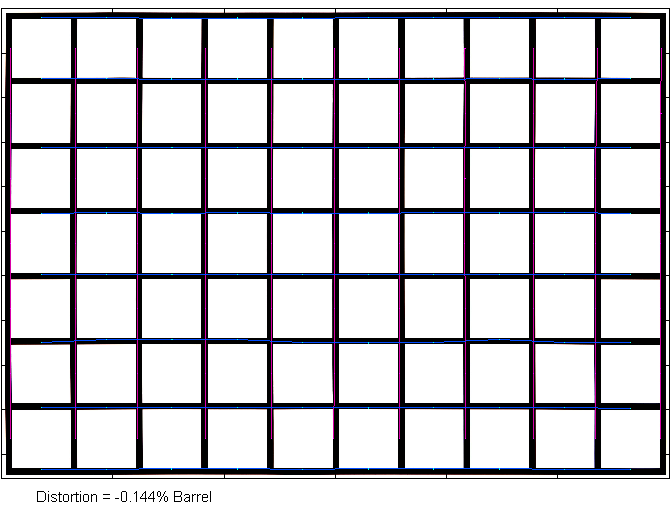
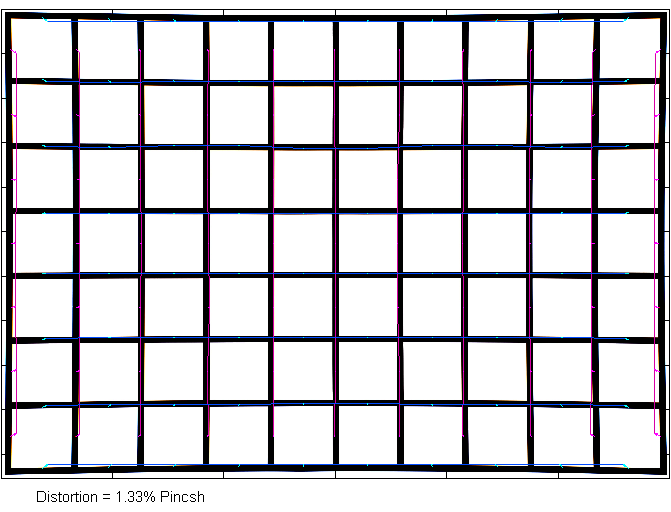
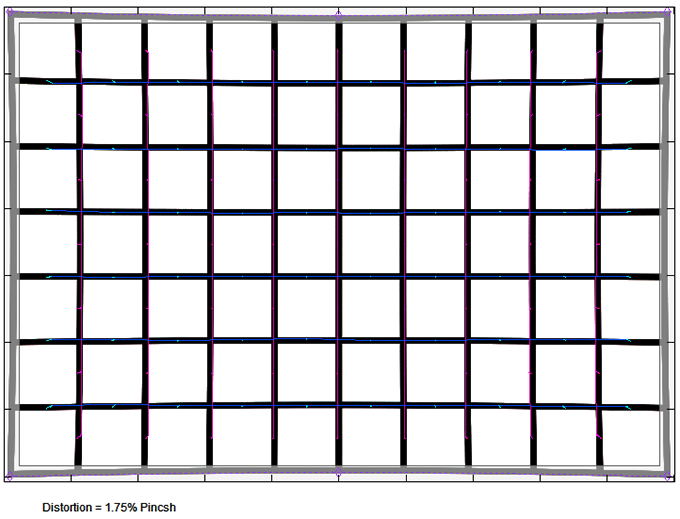
The Canon EF 70-200mm f/4 USM L IS II produces a low to medium degree of image distortion. At 70mm we can spot a mild barrel distortion that switches to pincushion distortions in the upper focal length range. At the far end, they reach 1.75% which is a bit on the high side for this type of lens.
Vignetting
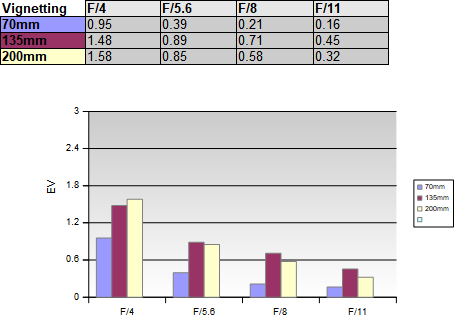
The vignetting characteristic is about typical for a lens in this class. At fully-open aperture, the light falloff varies between 1EV (70mm) and 1.6EV (200mm). Stopping down by 1 f-stop reduces the issue to an almost negligible degree at the wide end whereas you may prefer to stop down a little more at the 135mm and 200mm marks.
MTF (resolution at 50 megapixels)
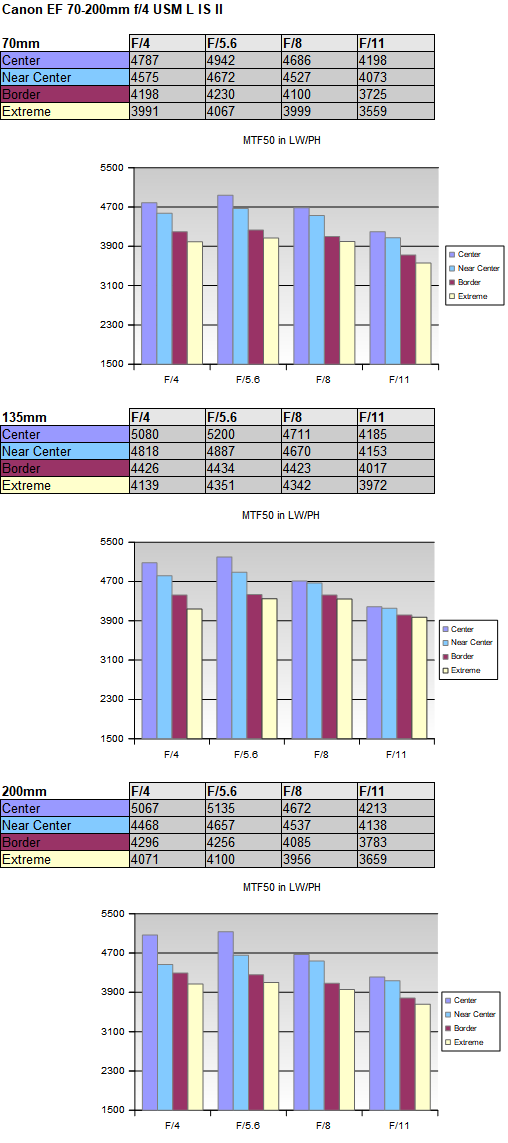
In the introduction, we mentioned that the mk I lens produces stunning sharpness but that was back in the day. So how does the mk II perform at 50 megapixels? Well, we are more than impressed for sure. At 70mm the center reaches excellent levels at f/4 and f/5.6 although there’s still a bit of headroom here. The borders/corners are very good. Stopping down improves the quality only slightly. Diffraction effects limiting the resolution are getting more obvious at f/11. The sweet spot is in the middle range where the center zone is pushed to superb quality and the borders/corners improve a little as well. The center sharpness is maintained at 200mm whereas the quality of the outer image region is slightly reduced albeit it remains on a very high level.
The centering quality of the tested sample was very good. There’s minimal field curvature at 70mm.
Please note that the MTF results are not directly comparable across the different systems! Below is a simplified summary of the formal findings. The chart shows line widths per picture height (LW/PH) which can be taken as a measure of sharpness. If you would like to know more about the MTF50 figures, you may check out the corresponding Imatest Explanations.
Chromatic Aberrations (CAs)
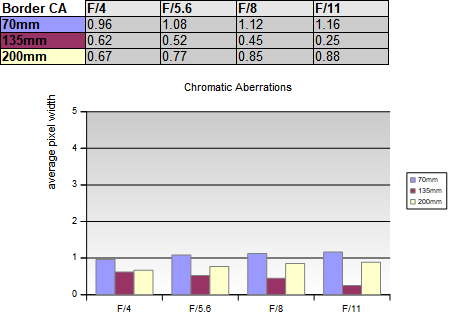
Lateral chromatic aberrations (color shadows at the image borders) are very low. At 70mm, they vary around the 1.1px mark at the image borders. CAs are at their lowest (negligible) level in the middle range and increase just slightly again towards the 200mm end.
Bokeh
Due to its max aperture of f/4, the Canon lens isn’t perfectly aligned to shallow depth-of-field photography but it is, of course, capable of doing so if you stick to fairly short focus distances.
Near-center highlights are nicely circular at f/4 up to f/8. The inner highlight zone is pretty smooth with minimal outlining at the highlight edge.
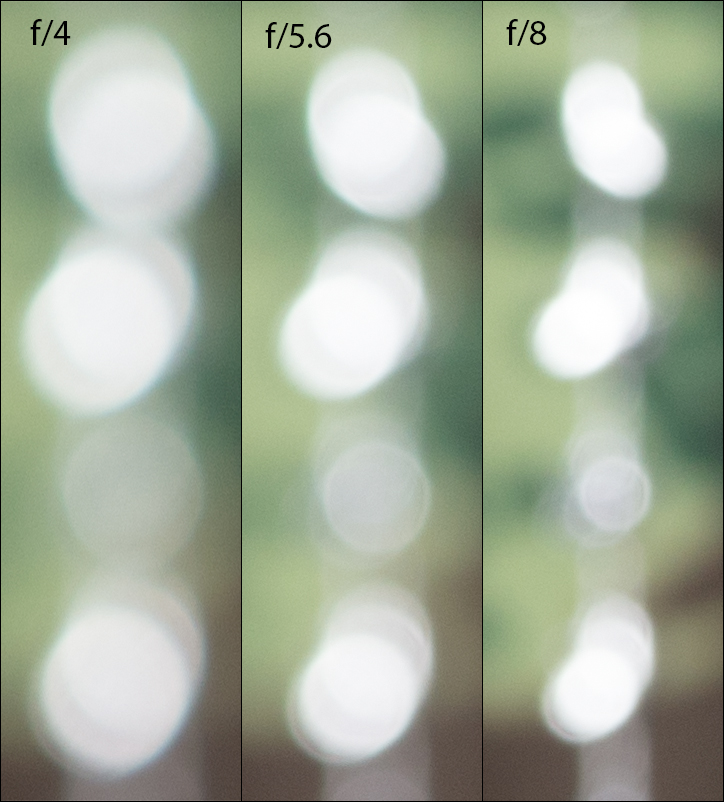
The circular highlights deteriorate to the usual “cat eyes” the more you move to the image corners (see below at f/4). Stopping down helps with this albeit from a real-life perspective you won’t really do so due to the small max aperture anyway.

When looking at the general quality of the blur in the focus transition zone, it’s very smooth in the image foreground (to the right). The image background (left) shows is somewhat rougher though.

Here’s a snap from the real-world showing the background:

Competition
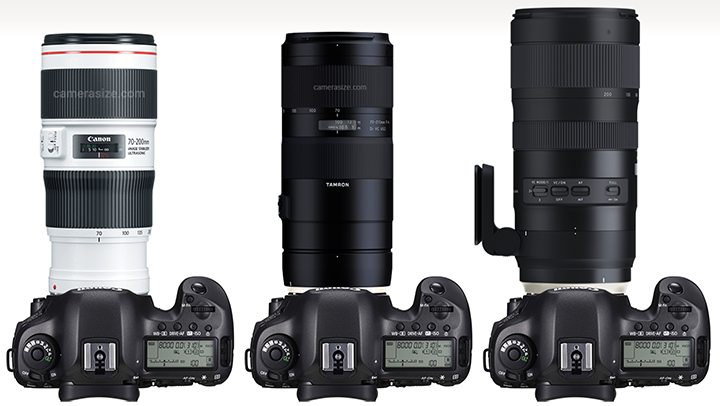
There are various alternatives out there. You should still be able to shop for the mk I for a while and even the ancient Canon EF 70-200mm f/4 USM L (without image stabilizer) is still available here and there – and that’s an oldie but goodie as well at a much lower price point. As far as current production lenses are concerned, the most obvious competitor is the new Tamron 70-210mm f/4 Di VC USD. We haven’t tested this lens yet but Tamron doesn’t classify it as an “SP” lens – their professional grade lineup – so it is very unlikely that it can touch the Canon EF 70-200mm f/4 USM L IS II really. However, it is also much cheaper at just 800USD/EUR. An option that may produce more headaches regarding your preference may be the Tamron SP 70-200mm f/2.8 DI VC USD G2. We haven’t tested this one either but that one is certainly a serious lens and it resides at the same price point as the Canon lens but it is one stop faster. However, as it goes with f/2.8 lenses, it is also much bigger and heavier.
The king is dead and, yes, long live the new king. The Canon EF 70-200mm f/4 USM L IS II is everything that the mk I was plus some. It is the perfect playmate for ultra-resolution Canon cameras. It is mostly tack sharp at mainstream settings with no real weakness across the focal length range. Lateral CAs are low and not really an issue. Image distortions can be visible specifically at the long end though and you can spot some moderate vignetting at f/4. If you use digital auto-correction, that will be a lesser concern, of course. The quality of the bokeh is okay for a zoom lens but it has its shortcomings.
The build quality is excellent but that's hardly a surprise when talking about a Canon L lens. The low weight and small size are certainly welcomed when carrying around your camera gear all day long. Canon's improved image stabilizer is impressive. Funnily the EF 70-200mm f/4 USM L IS II is at least as good as the EF 70-200mm f/2.8 USM L IS III regarding low-light photography because the latter's IS delivers a gain of 3.5 f-stops vs 5 f-stops for the f/4 lens - that is in static scenes. The ring-type USM is fast - as usual - but it doesn't seem to have improved over the mk I lens.
So the final question is whether you have to buy one. 🙂 If you want the ultimate in image quality from a medium tele-zoom lens - maybe. However, you have to live with the moderate max. aperture of f/4. Whether this is a real limitation for you is something only you can answer. The price tag is fairly hefty but then it is aligned to the delivered quality. Therefore - highly recommended!
-
Optical Quality8.5
-
Build Quality9
-
Price / Performance10