


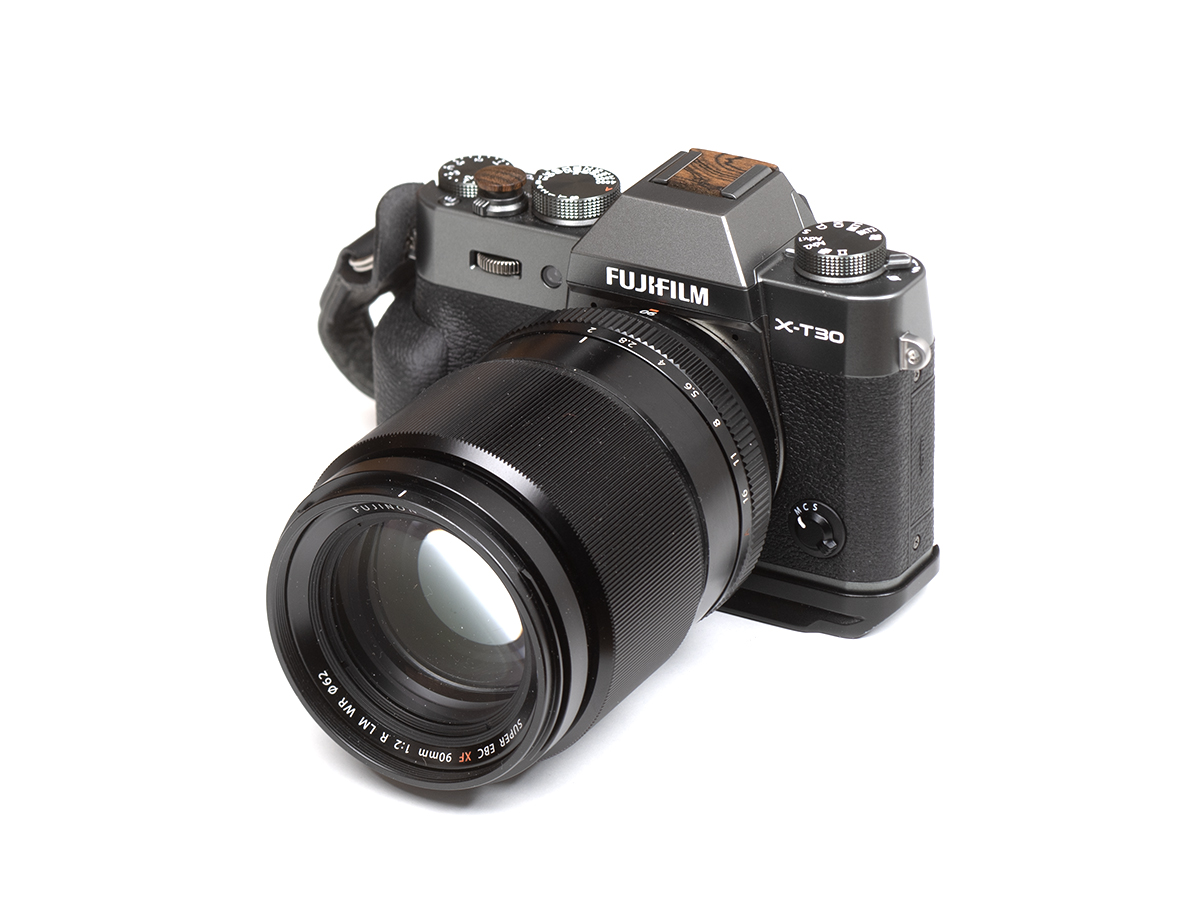
We’ve been big fans of the Fujinon XF 90mm f/2 R LM WR since we tested it more than 10 years ago. It’s still part of Fujifilm’s lens lineup today so let’s verify again whether this old-time favorite can stand the test of time. It has seen a $200 price increase since 2016 and at $1150 USD, it was not exactly a budget offering back then nor is it today.
Fujifilm’s prime lenses are usually very well built and this is also the case for the XF 90mm f/2. The lens body is made of metal with a smoothly turning, broad focus ring and a dedicated aperture ring. It has a weather- and dust-resistant design with seven seals and works in temperatures as low as -10°C. A barrel-shaped lens hood made of plastic is part of the package.
It uses a quad-speed linear motor (“LM”) for autofocusing which is extremely fast and silent. You can feel the focus group moving when “shaking” the lens if the lens is not attached to the camera – this is typical for most “LM” lenses. Manual focusing feels a bit detached.
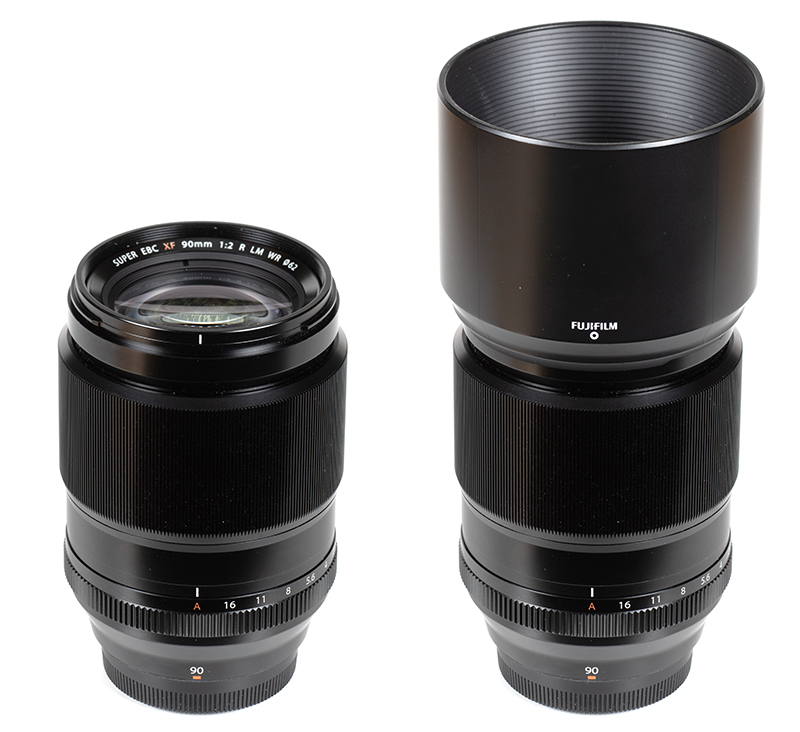
| Specifications | |
|---|---|
| Equiv. focal length | “137mm” (full format equivalent) |
| Equiv. aperture | “f/3.1” (full format equivalent, in terms of depth-of-field) |
| Optical construction | 11 elements 8 groups (3xED) |
| Number of aperture blades | 7 (circular) |
| min. focus distance | 0.6m (max. magnification ratio 1:5) |
| Dimensions | 75 x 105mm |
| Weight | 540g |
| Filter size | 62mm |
| Hood | supplied, barrel-shaped, bayonet mount |
| Other features | weather- sealing aperture ring |
Distortion
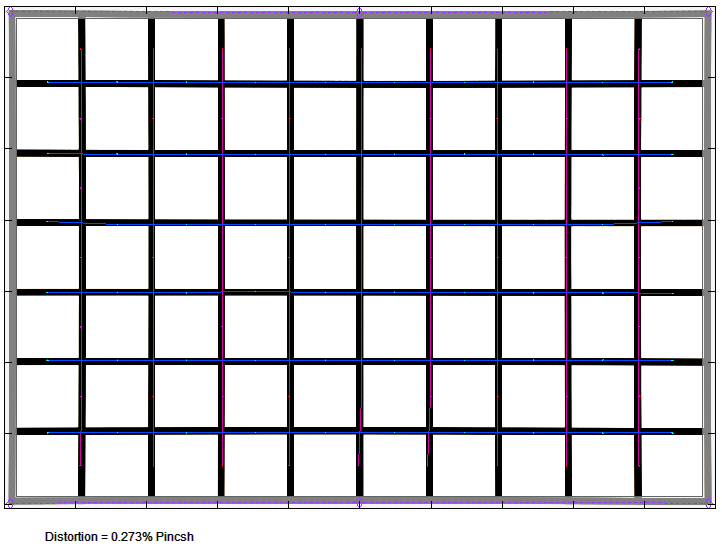
The XF 90mm f/2 R LM WR produces a negligible amount of pincushion distortion – and apparently Fujifilm didn’t even deem it necessary to have an autocorrection profile.
Vignetting
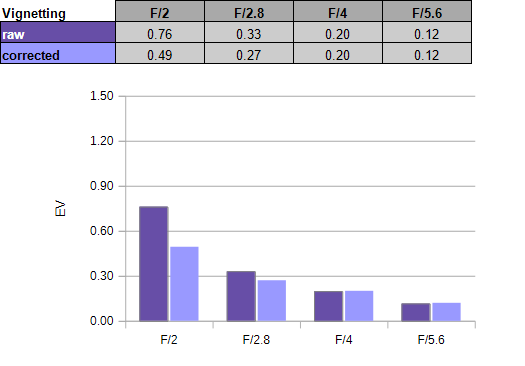
The RAW vignetting is comparatively low at just ~0.8EV at f/2 – which supports the theory that this might be a full-format design. Stopped down to f/2.8, the light falloff is basically gone.
Auto-correction doesn’t have to work hard and reduces the vignetting a bit at f/2.
MTF (resolution at 26 megapixels)
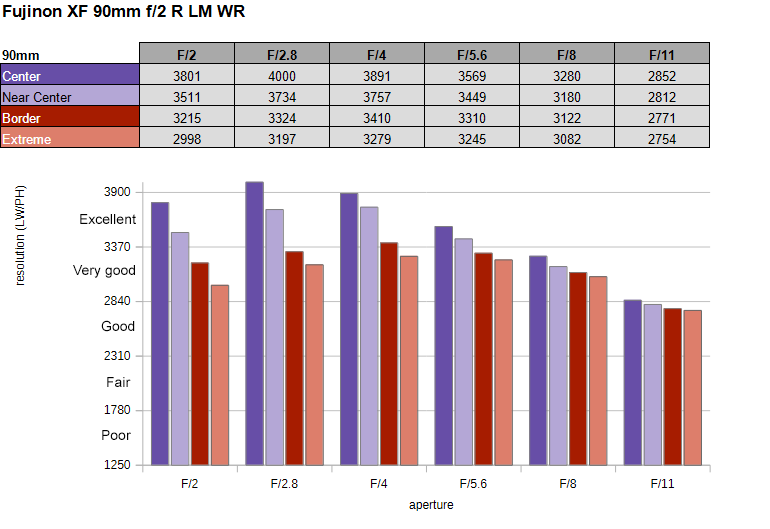
The Fujinon XF 90mm f/2 R LM WR continues to impress. The broader center is already excellent at f/2 and the outer image field still manages very good quality. Stopping down to f/2.8 and f/4 the center reaches greatness and the borders/corners creep up in quality a bit as well. Diffraction sets in at f/5.6 with a slightly visible impact at f/8. f/11 is still okay although no longer tack sharp. f/16 should be avoided as usual.
The centering quality of the tested sample was good. Having said this – we tested 5(!) samples. All slightly different in terms of their centering quality. The field curvature is negligible.
Please note that the MTF results are not directly comparable across the different systems!
Below is a simplified summary of the formal findings. The chart shows line widths per picture height (LW/PH) which can be taken as a measure for sharpness. If you are keen to know more about the MTF50 figures, you may check out the corresponding Imatest Explanations
Chromatic Aberrations (CAs)
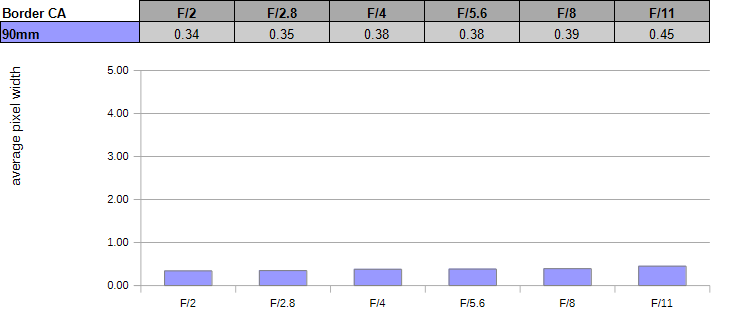
The lateral CAs (color fringing at hard contrast transitions) are very low and nothing to worry about.
Bokeh
The XF 90mm f/2 R LM WR is meant to be used for shallow depth-of-field photography so let’s check the bokeh.
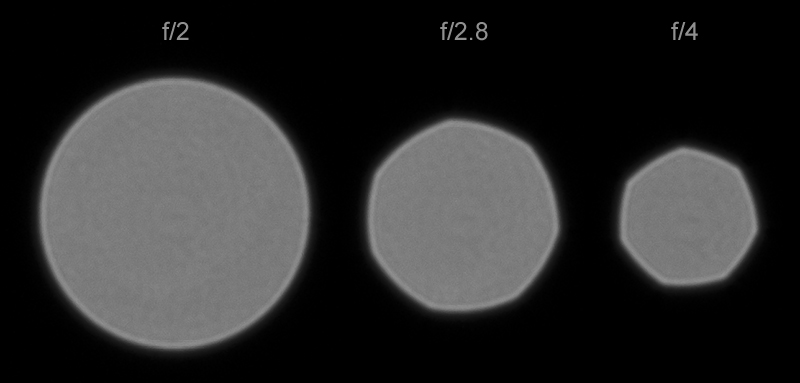
Out-of-focus center highlights have a fairly clean inner zone at f/2 although we can observe an outlining at the disc edge. The more edgy aperture is already visible at f/2.8 and more so at f/4.
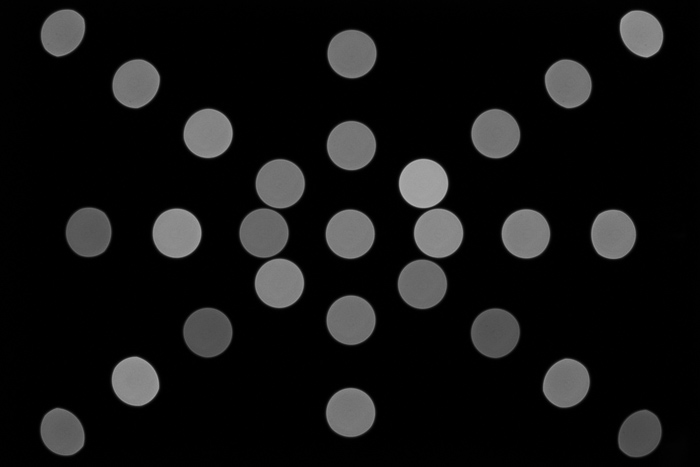
The circular highlight shape is maintained across most of the image field with only a slight deterioration in the borders/corners. The slight imperfections are gone at 2.8, although the more edgy discs don’t make the highlights more pleasing at this setting.
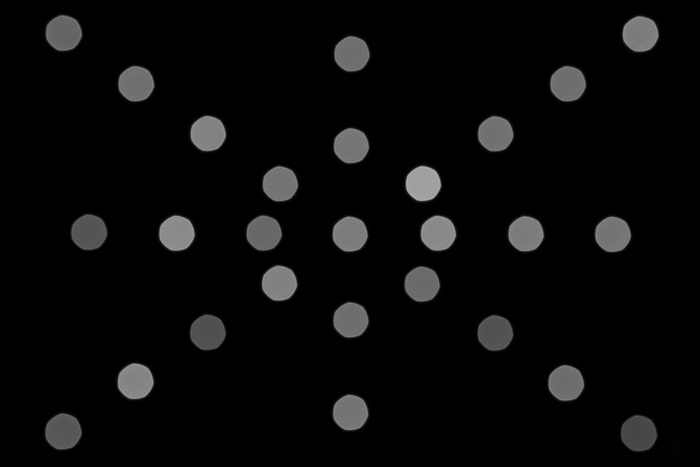
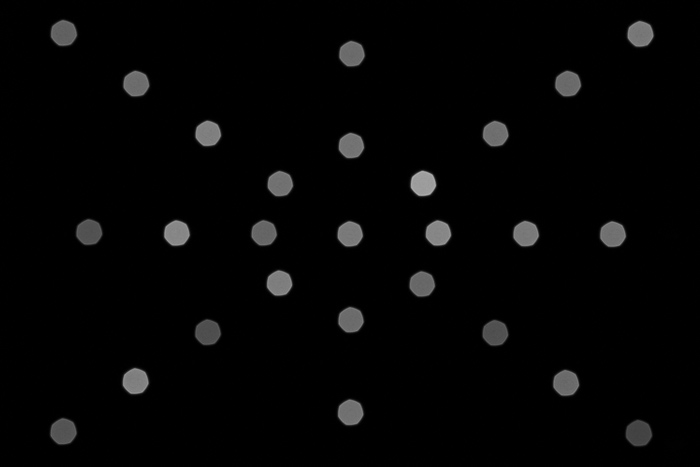
Unfortunately, our usual samples for the focus transition zone weren’t correctly obtained. The real-world image below may provide some guidance. This is a very difficult scene with a very complex background. The Fujinon does a reasonable job here but it’s not perfect. See also our gallery section below.

Bokeh Fringing / LoCA
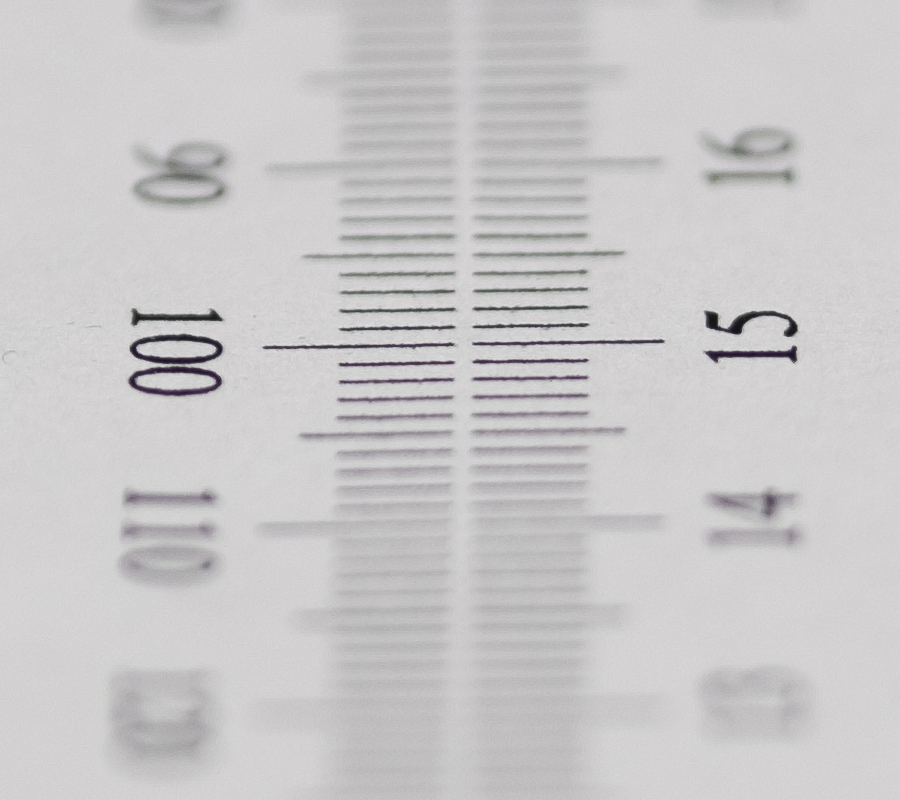
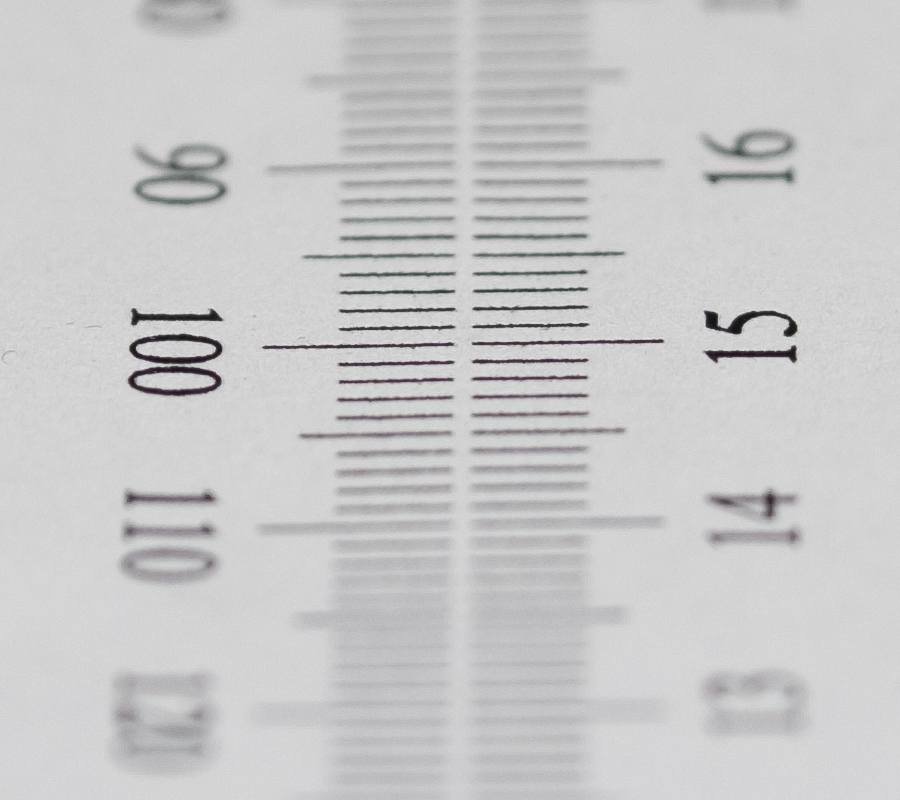
Bokeh fringing is an axial color fringing effect. It can show up as purple halos in front of the focus point and greenish halos in the background. There’s a bit of fringing going on at f/2 and f/2.8. Traces remain at f/4.
The focus point remains spot on – thus there’s no focus shift when stopping down. You may also notice that the in-focus portion is tack sharp meaning that the lens also maintains its performance at close focus distances.
Competition
The XF 90mm f/2 R LM WR is no longer alone in this segment. The most obvious competitor is the Viltrox AF 90mm f/2.2 EVO XF. The Viltrox lens does actually beat the Fujinon in terms of sharpness and that’s at a much lower price tag. It isn’t as weather-sealed, though, and the AF isn’t as fast. And you’d give up a bit of speed. If you prefer a slightly shorter focal length, you could also consider the Viltrox AF 75mm f/1.8 EVO or the Viltrox AF 75mm f/1.2 Pro. Both great lenses by their own right, and the f/1.2 is obviously attractive due to its much faster speed while still costing only about half of the XF 90mm f/2. Another option is the Sirui Sniper 75mm f/1.2 but we haven’t tested this one yet. There’s also the Sirui Aurora 85mm f/1.4, the Samyang AF 75mm f/2 and the TTArtisan AF 75mm f/2. Plenty of choices…
Sample Shots


The Fujinon XF 90mm f/2 R LM WR reconfirmed the results of our initial test from a decade ago. It's darn sharp at f/2 and superb at f/2.8 and f/4 (if you have a good sample ...). Image distortions and lateral CAs are almost non-existent, and the vignetting is low - even in RAW images. The bokeh is decent although it can struggle a bit in difficult scenes.
The build quality has always been a priority for Fujifilm and the XF 90mm f/2 follows this tradition. The lens body is an all-metal construction with extensive weather-sealing and speedy AF. The broad focusing ring turns smoothly although the manual focus action feels a bit detached. While not a brick, it is a bit big for what it is.
The Fujinon XF 90mm f/2 R LM WR may no longer be the undisputed king of the hill in its segment but it's still one of the best buys albeit a very expensive one.
If you'd like to support our work, please consider shopping for this or other lenses via one of the following partners:
* Amazon (US)
* Amazon (EU)
* B&H (US)
* Adorama (US)
* KEH (used gear, US)
The Good
- Very sharp
- Excellent build quality
- Very well corrected
The Bad
- It's very expensive
- Not exactly compact
-
Optical Quality9
-
Build Quality8.5
-
Price Performance5