


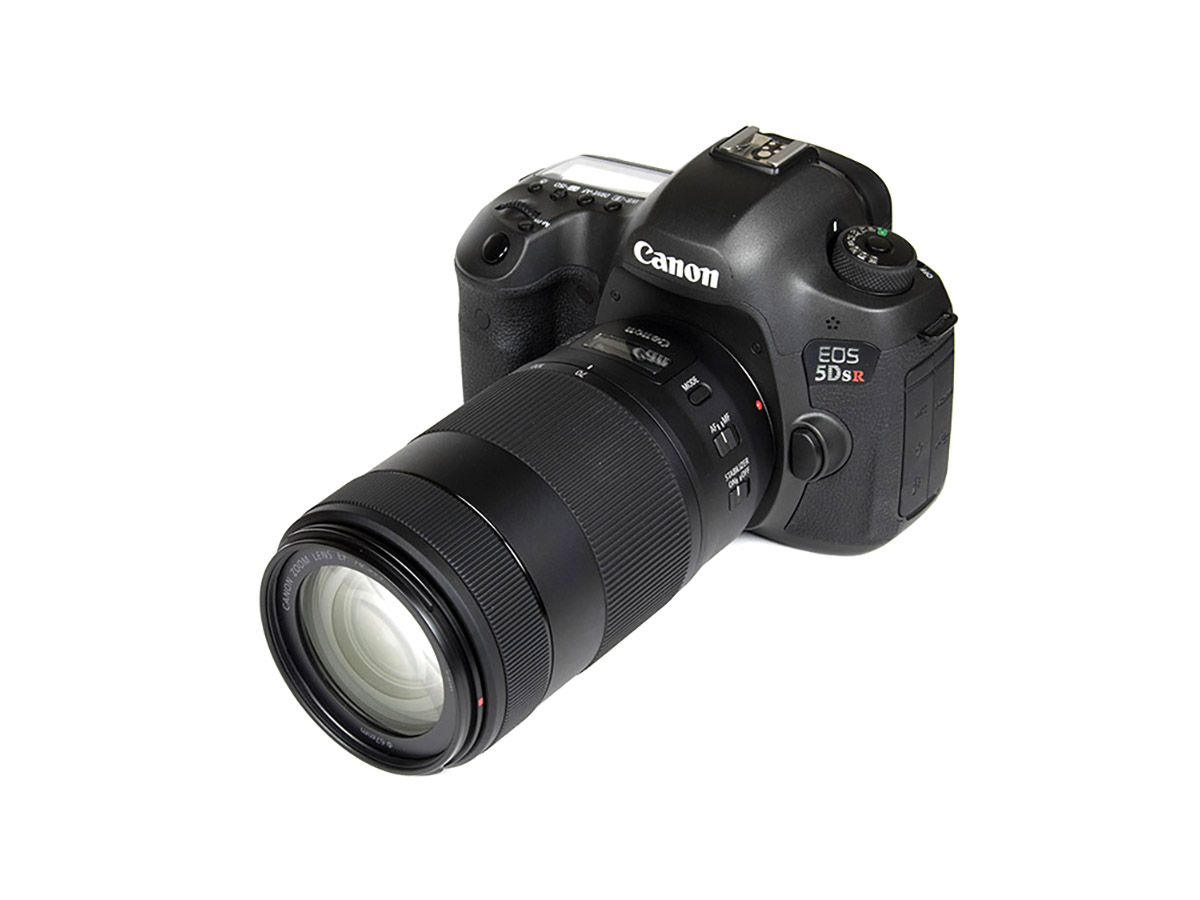
It’s always fun to test (or read about) the latest, high-end lenses but the truth is that most of the market action is still in the bottom- to mid-level segment and, yes, we neglected this here lately. One of the typical representatives in this segment are slow-speed 70-300mm lenses and there are a bunch of them. Among them – the Canon EF 70-300mm f/4-5.6 USM IS. The trusted and surprisingly good fellow has been around since 2005 and that’s quite something. It only had a few issues (relative to its price tag) which explains its long production life but recently, Canon felt the need to fix those in … you guessed it … the Canon EF 70-300mm f/4-5.6 USM IS II. There have been quite some price hikes during the last few years but, surprisingly, the Canon EF 70-300mm f/4-5.6 USM IS II remains very moderate in this respect at just under 450USD/550EUR.
The build quality of the lens is pretty good for a consumer-grade lens. It follows the same new (outer) design philosophy that we have seen in the EF-S 18-135mm f/4.5-5.6 USM IS. It doesn’t look overly exciting in our opinion but your mileage may vary. Anyway, the lens body is made of good quality plastic based on a metal mount. The zoom and focus rings are rubberized and offer quite smooth action. The lens extends when zooming towards the long end of the range. However, unlike its predecessor, the inner tube does not rotate during focusing. A transport lock is provided. A curious little new feature is an LCD on the lens. First seen on Zeiss Batis lenses (albeit in OLED variant here), it provides information about focal length, focus-distance or depth of field. Whether this is useful on this specific lens … well … it doesn’t hurt anyway.
Another very obvious difference compared to the mk I is the focusing speed. It is BLISTERINGLY fast and easily as fast as the fastest Canon lenses that we have tested to date (yes, believe it or not). The AF motor changed from a slow micro-USM to Canon’s brand new Nano-USM. Nano-USM is also dead-silent. Nano-USM has one side-effect though – in manual focusing mode there’s no mechanical coupling anymore thus you are driving the AF motor when turning the focus ring. However, we don’t consider this to be a drawback. A further improvement relates to the image stabilizer. The new one has an efficiency of up to 4 f-stops. Whether you can reach that depends on your coffee saturation which is costing me one stop at least.
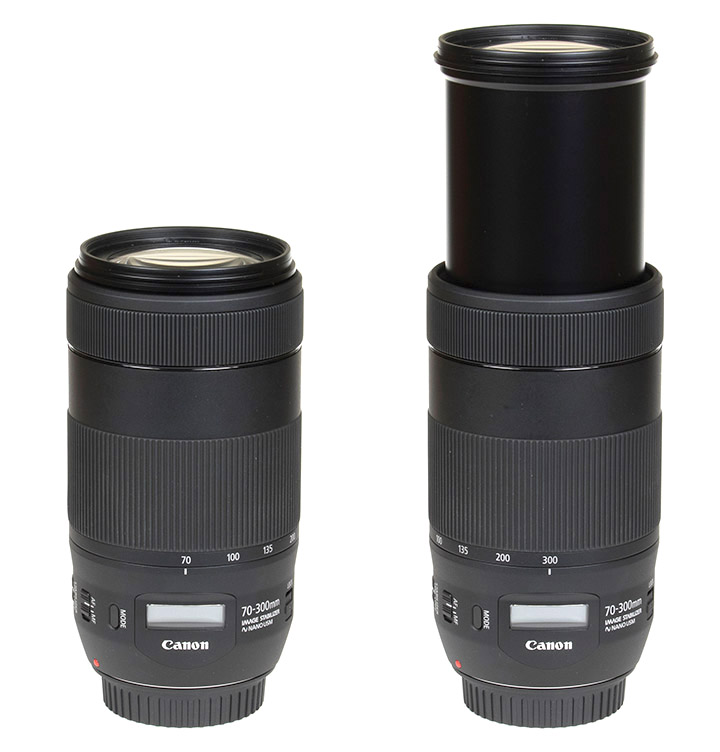
| Specifications | |
|---|---|
| Optical construction | 17 elements in 12 groups including 1x UD element |
| Number of aperture blades | 9 (rounded) |
| min. focus distance | 1.2m (max. magnification 1:4) |
| Dimensions | 80 x 145.5mm |
| Weight | 710g |
| Filter size | 67mm |
| Hood | barrel-shaped (bayonet mount, optional) |
| Other features | image stabilizer |
| Mounts | Canon EF |
Distortion
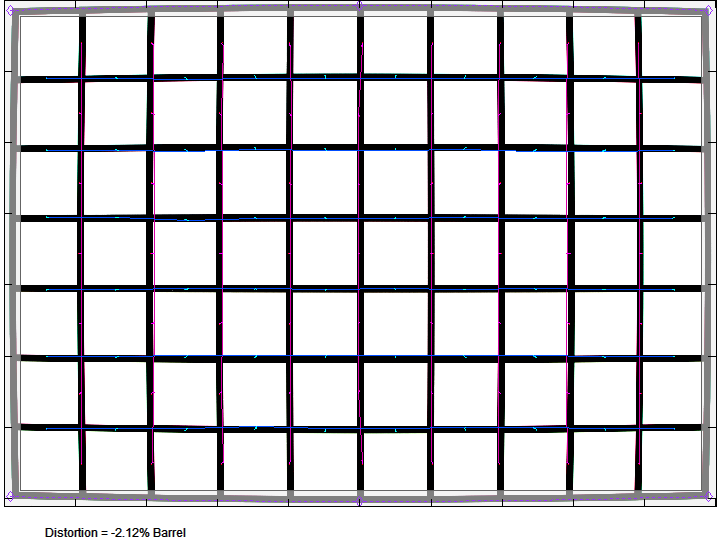
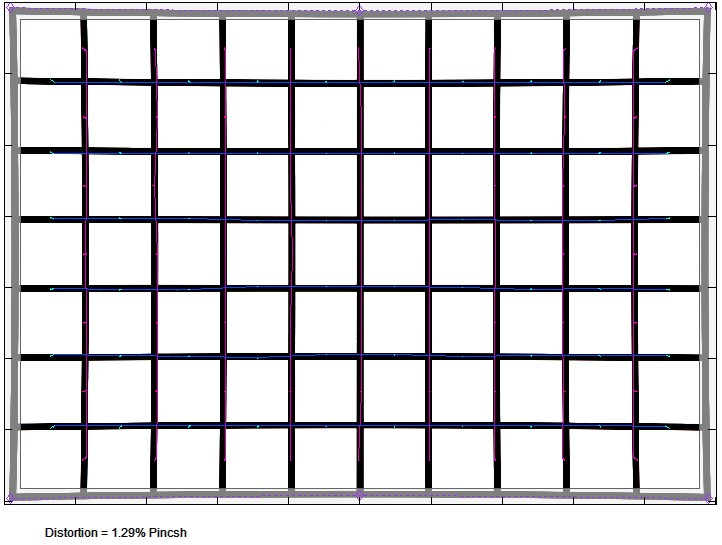
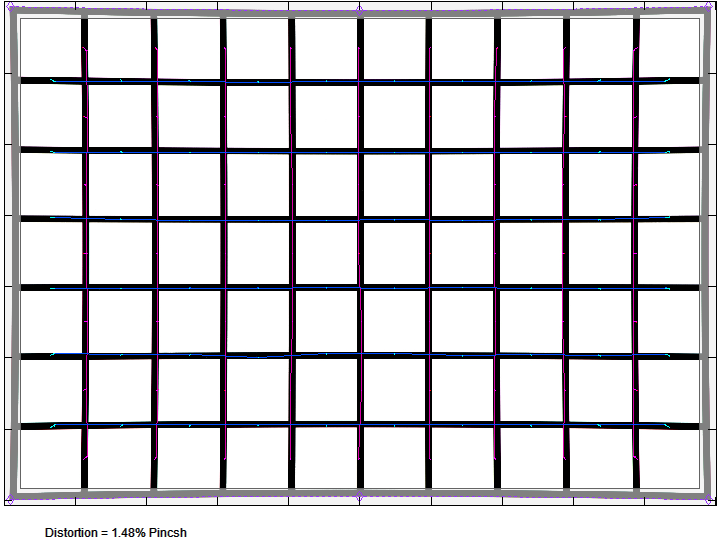
The Canon EF 70-300mm f/4-5.6 USM IS II produces a fairly high amount of image distortions for a tele lens. At 70mm you will have to live with a medium barrel distortion (2.1%) switching to medium pincushion distortion at 200mm to 300mm. This is nothing extreme but it’s visible in scenes with straight lines (i.e. architecture).
Vignetting
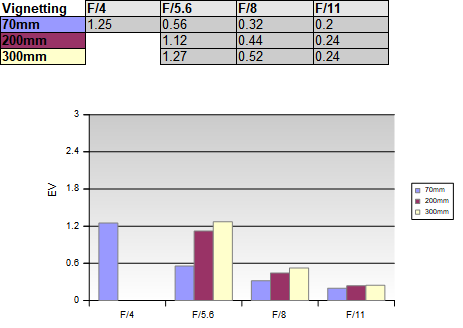
The vignetting characteristic is about typical for a lens in this class. At fully-open aperture, the light falloff varies between 1EV (70mm) and 1.6EV (200mm). Stopping down by 1 f-stop reduces the issue to an almost negligible degree at the wide end whereas you may prefer to stop down a little more at the 135mm and 200mm marks.
MTF (resolution at 50 megapixels)
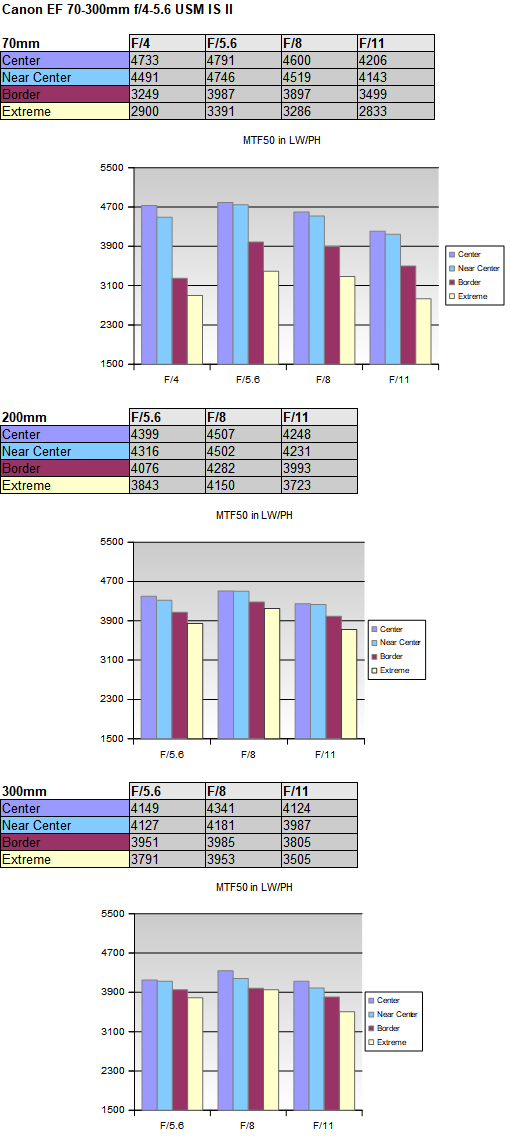
In the introduction, we mentioned that the mk I lens produces stunning sharpness but that was back in the day. So how does the mk II perform at 50 megapixels? Well, we are more than impressed for sure. At 70mm the center reaches excellent levels at f/4 and f/5.6 although there’s still a bit of headroom here. The borders/corners are very good. Stopping down improves the quality only slightly. Diffraction effects limiting the resolution are getting more obvious at f/11. The sweet spot is in the middle range where the center zone is pushed to superb quality and the borders/corners improve a little as well. The center sharpness is maintained at 200mm whereas the quality of the outer image region is slightly reduced albeit it remains on a very high level.
The centering quality of the tested sample was very good. There’s minimal field curvature at 70mm.
Please note that the MTF results are not directly comparable across the different systems! Below is a simplified summary of the formal findings. The chart shows line widths per picture height (LW/PH) which can be taken as a measure of sharpness. If you would like to know more about the MTF50 figures, you may check out the corresponding Imatest Explanations.
Chromatic Aberrations (CAs)
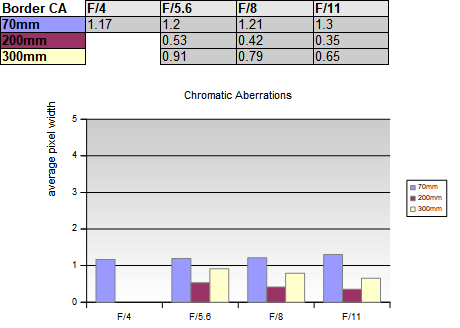
Lateral chromatic aberrations (color shadows at the image borders) are very low. At 70mm, they vary around the 1.1px mark at the image borders. CAs are at their lowest (negligible) level in the middle range and increase just slightly again towards the 200mm end.
Bokeh
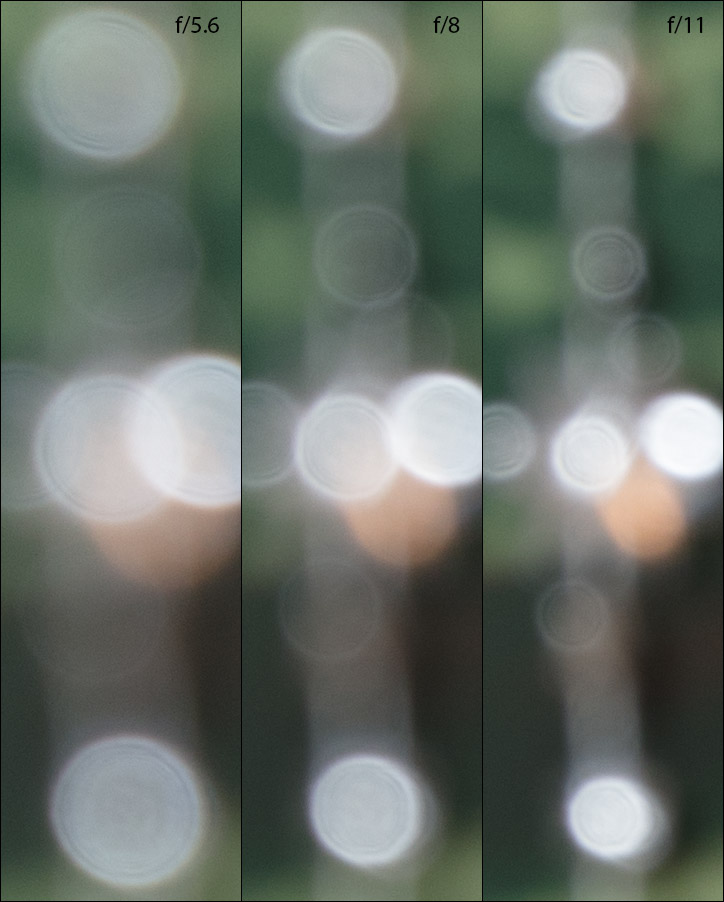
Due to its max aperture of f/4-5.6, the Canon lens is hardly a bokeh monster but you can easily produce shallow depth-of-field images when shooting at short to medium focus distances. We didn’t do our full analysis this time but let’s at least have a look at the characteristic of out-of-focus highlights.
Thanks to the 9 aperture blades the (near-center) highlights are nicely circular at f/5.6 and even at f/11. However, they show a bit of outlining as well as an onion-like sub-structure, which is emphasized the more you stop down. The circular highlights deteriorate to the usual “cat eyes” the more you move to the image corners. As usual stopping down helps with this albeit from a real-life perspective you won’t really do so due to the small max aperture anyway.
Competition
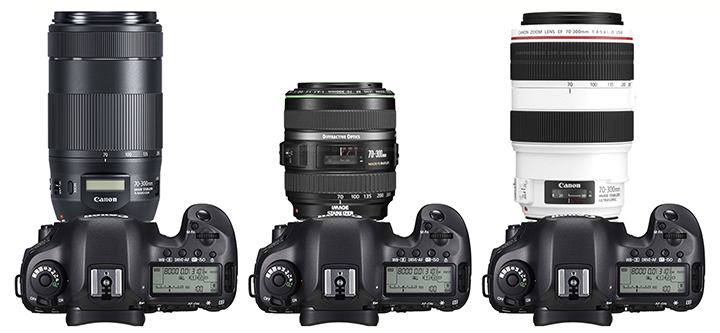
In the 70-300mm class, you have various options. If you’d like to stick to Canon, there’s the EF 70-300mm f/4.5-5.6 DO IS (center) as well as the EF 70-300mm f/4-5.6 USM L IS (right). The “DO” lens is obviously much shorter thanks to its diffractive optics element. However, in mechanical and optical terms it isn’t really any better and it’s a much more expensive lens. The EF 70-300mm f/4-5.6 USM L IS has, of course, a superior build quality. Optically it has an evener performance characteristic across the range and it is a tad better in the image center. That being said, its price tag is at 1350USD/EUR vs 450USD/550EUR for the EF 70-300mm f/4-5.6 USM IS II (to the left below). A more realistic competitor is the Tamron SP AF 70-300mm f/4-5.6 USD VC Di. However, the Canon lens is superior in most respects and it costs only a little more.
Sample Gallery


Usually you can bank on Canon for delivering some of the best tele lenses across all classes and that also applies to the Canon EF 70-300mm f/4-5.6 USM IS II. Canon managed to improve the lens in many aspects compared to its predecessor. As far as the optical characteristic is concerned, Canon shifted the priority more to the long end of the zoom range - which is generally a good thing. The image quality doesn't reach professional levels but for a consumer lens, it's certainly impressive with a generally very good quality at 200mm and 300mm. At 70mm the image corners aren't that hot (combined with a bit of field curvature) but from a real-life perspective that's usually a lesser issue. Lateral CAs are very low. Image distortions and vignetting are about typical for such a lens.
In terms of build quality, it can't hide that fact that it is a consumer-grade lens thus you have to live with a fair amount of plastic. However, it doesn't feel cheap and it's very well assembled. Upon first shooting, the most surprising aspect is the AF speed. The mk I lens was rather slow in this respect but the Canon EF 70-300mm f/4-5.6 USM IS II is really exceedingly fast . Usually we aren't getting overly excited by this topic but the performance is quite stunning really. Canon's new Nano USM clearly makes all the difference here. Whether you like the "focus-by-wire" system for manual focusing is up to your personal taste - we think it's perfectly fine on this lens at least. A rather unusual feature is the LCD information display on the lens. You may debate whether this is really useful but if you require distance information etc. it's there when you need it.
Of course, a Canon tele lens wouldn't be complete without an image stabilizer. Its efficiency has been improved to 4 f-stops (official figure). As usual, we recommend to expect less than that but it comes close in real life.
Given the sum of its qualities, the Canon EF 70-300mm f/4-5.6 USM IS II is a very obvious choice in this lens class. For the money, it's a steal really and that's quite a rare occurrence these days.
-
Optical Quality6
-
Build Quality7
-
Price / Performance10