


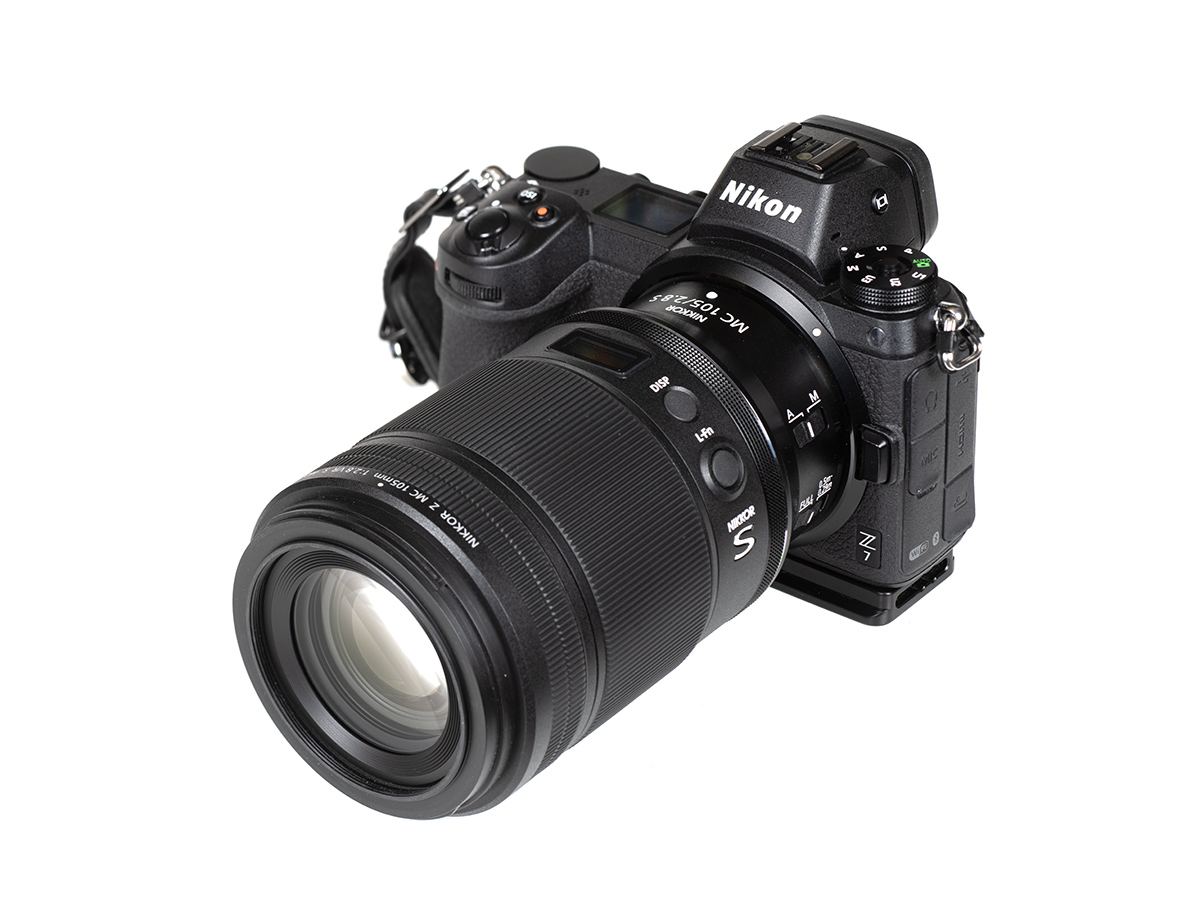
A system is incomplete without some macro lenses and Nikon does have two in its lineup. One of them is the Nikkor Z MC 105mm f/2.8 VR S. As a member of the “S”-class family it promises professional-grade performance. This may sound scary in terms of pricing but it’s not too bad at just over $1000 USD.
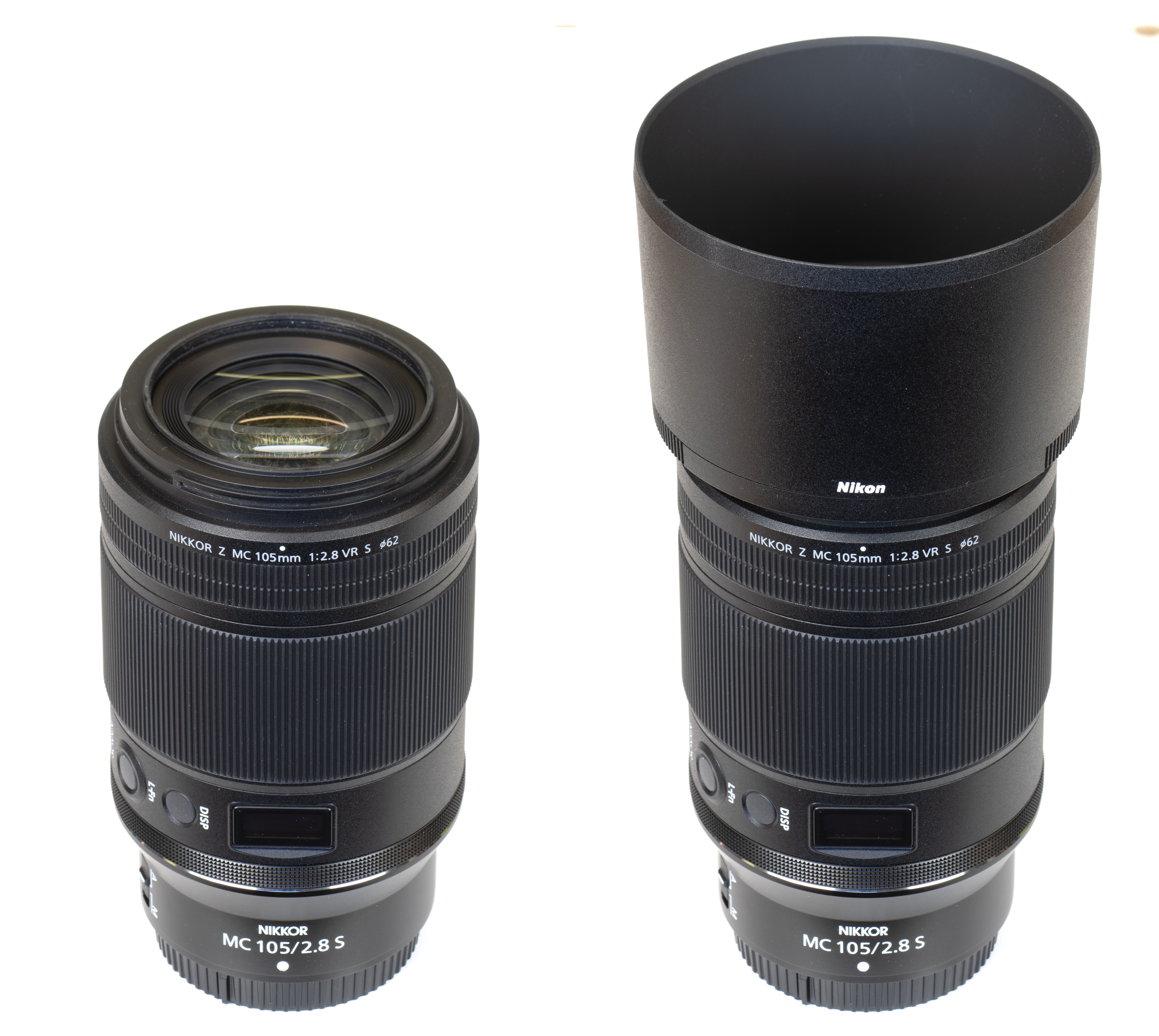
The lens body is mostly made of high-quality engineering plastics except for the metal rear portion and the mount. This results in a comparatively low weight of 630g. The control rings turn smoothly. It combines internal focusing with extensive weather sealing and a water-repellent coasting on the front element so you should be good to go outdoors. There’s also an OLED info display, a customizable function button and the important 2-step focus-limiter. A barrel-shaped lens hood is part of the package.
For autofocusing the Nikkor uses a dual-motor multi-focus STM (stepping motor) system. It is quiet and pretty fast at conventional focus distances. However, you should take advantage of the focus limiter when shooting macro images to avoid focus hunting – unless you prefer to focus manually which is often a better idea for macros anyway. Focus breathing is minimal, so that’s good news for videographers. Please note that the effective aperture drops to f/4.5 at high magnification. This is normal for most macro lenses. At 1:1, the working distance is about 13cm from the front element to your subject. That’s not much but again in line with other lenses of this class.
Nikon also implemented an optical image stabilizer with a potential gain of 4.5 f-stops.
| Specifications | |
|---|---|
| Optical construction | 16 elements in 11 groups (3x ED, 1x aspherical) Nano Crystal Coat ARNEO Coat Fluorine-coated front lens element Floating system |
| Number of aperture blades | 9 (rounded) |
| min. focus distance | 0.29m (max. magnification: 1x) |
| Dimensions | 85 x 140mm |
| Weight | 630g |
| Filter size | 62mm |
| Hood | barrel-shaped, bayonet mount, supplied |
| Other features | focus limiter control ring dust- and drip-resistant Fn button OLED Display Image stabilizer w/ up to 4.5 stops gain |
Distortion
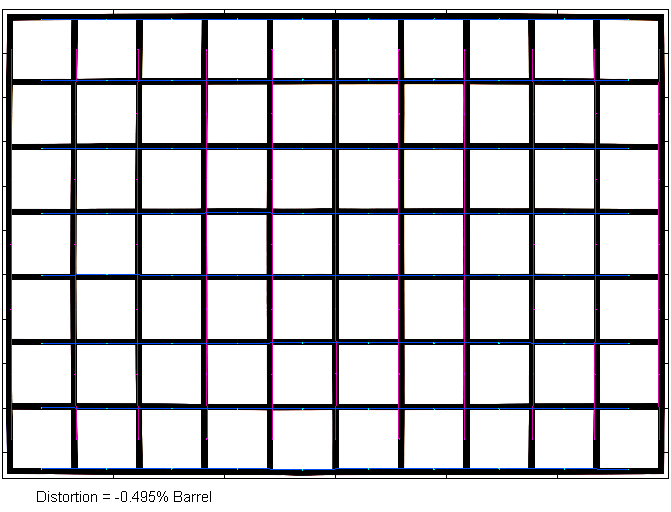
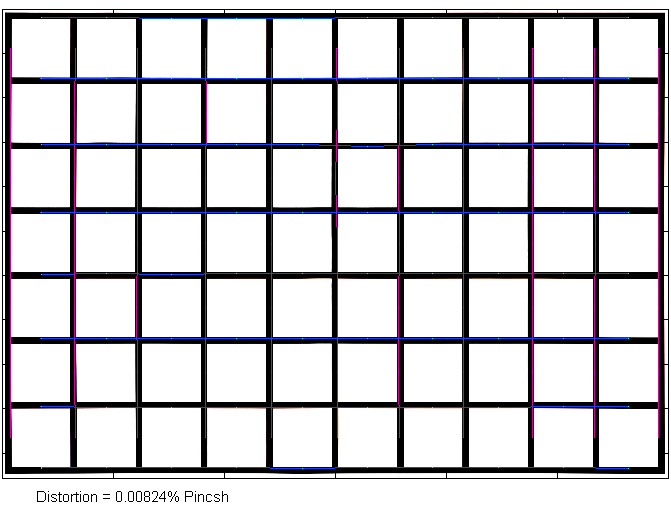
The Nikkor Z MC 105mm f/2.8 VR S produces a slight barrel distortion in RAW images. Auto-correction handles this nicely if needed.
Vignetting
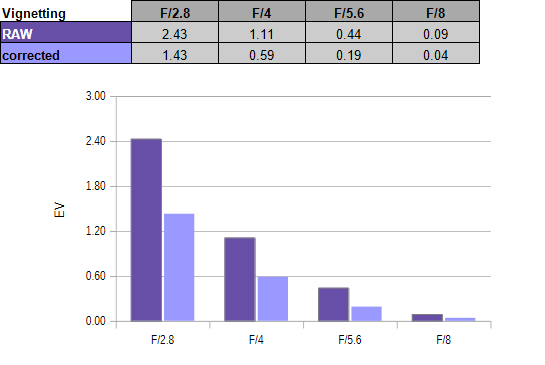
The RAW vignetting is a bit on the high side at ~2.4 EV (f-stops) at f/2.8. It is acceptable at f/4 and negligible from f/5.6 onward. Auto-correction reduces the light falloff by 1 EV (f-stop) at maximum aperture. This is still visible. The issue is mostly gone from f/4 in this case.
MTF (resolution at 45 mp)
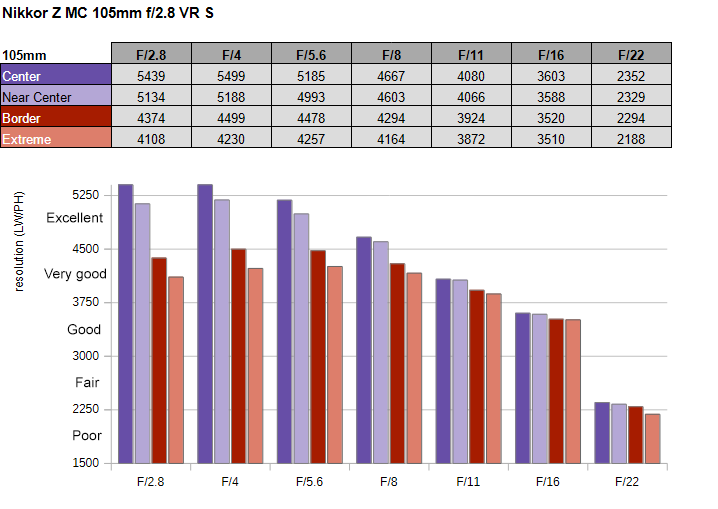
Macro lenses tend to be excellent optically and the Nikkor is no exception here. Images are brutally sharp in the broader center straight from f/2.8. The outer image field is easily on a very good level here. There’s a minor improvement when stopping down to f/4. Diffraction sets in from about f/8. f/11 is still very usable. f/16 is softer still, and forget about f/22 unless you aren’t after high-megapixel images. Diffraction is a physical limitation so it is what it is here.
Please note that the resolution figures were obtained at “normal” focus distances. We can’t realistically perform MTF checks at 1:1 object magnification. However, the Nikkor does have a floating focusing system so it should be able to maintain the quality at macro distances.
Please note that the MTF results are not directly comparable across the different systems!
Below is a simplified summary of the formal findings. The chart shows line widths per picture height (LW/PH), which can be taken as a measure of sharpness. If you would like to know more about the MTF50 figures, you may check out the corresponding Imatest Explanations.
Chromatic Aberrations (CAs)
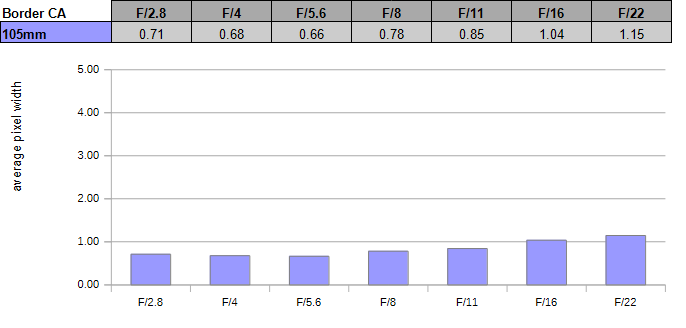
Lateral CAs are low with an average pixel width between 0.7 and 1.1px at the borders. Auto-correction should handle this without any loss in image quality.
Bokeh
When using a macro lens in its natural habitat, it’s not just about sharpness but also about the bokeh.
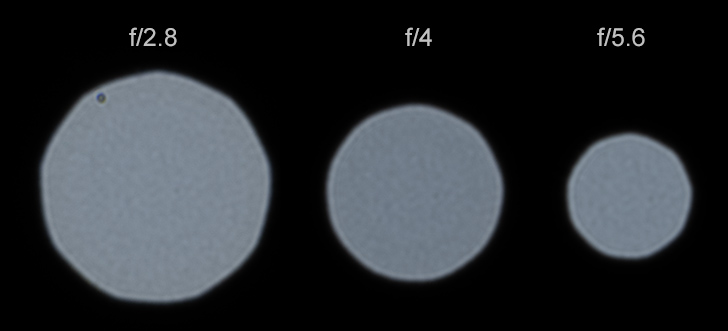
Out-of-focus highlights are just slightly grainy in the inner zone (apart from the dust spot there) and there’s only a mild outlining. Surprisingly, the center discs aren’t totally circular at f/2.8, but it’ll be difficult to notice in real-world images. f/4 even appears to be slightly more circular than f/2.8. The discs remain mostly circular at f/5.6.
When looking at the whole image, the circular highlight shape is maintained in the broader center but there is the usual deterioration to “cat eyes” towards the corners – more so than usual – which probably relates to the smallish front opening of the lens which causes mechanical vignetting. The “perfect” zone is broadening at f/4. However, the corner discs aren’t fully restored until f/8.
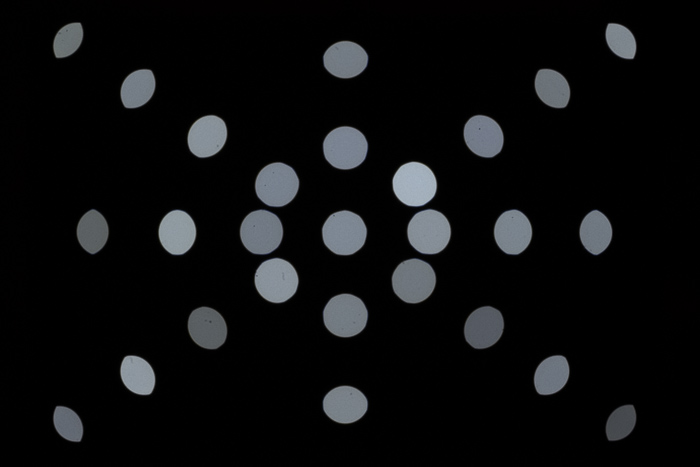
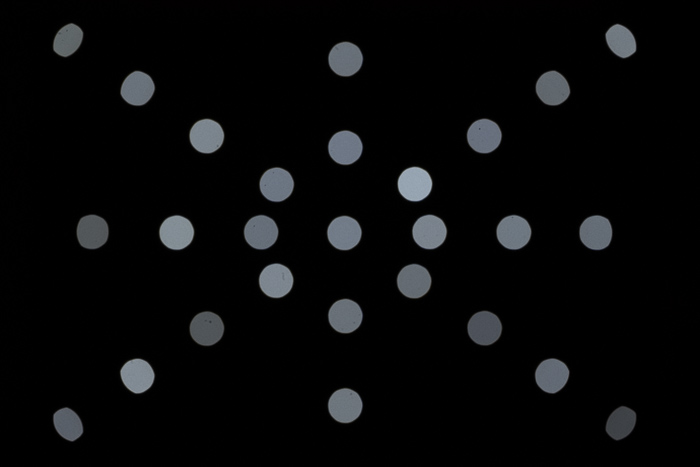
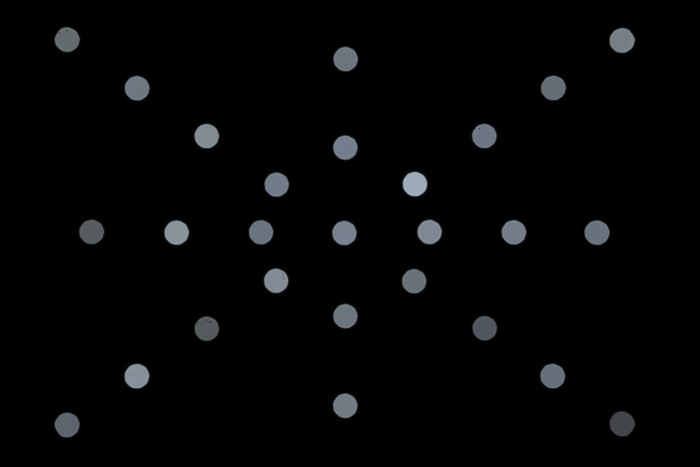
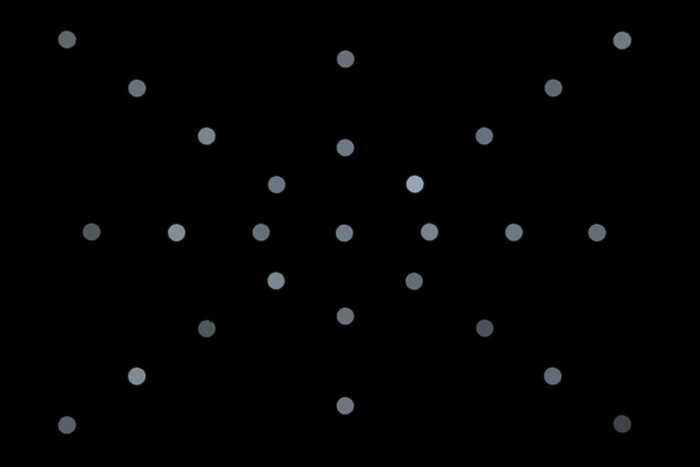
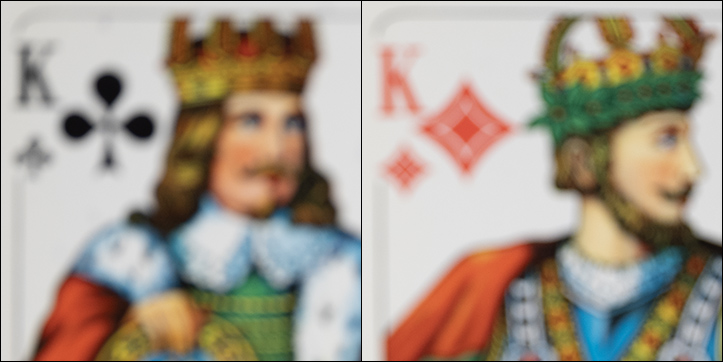
The general blur in the focus transition zone is very smooth in the image background (shown to the left below). The foreground blur (to the right) is a bit more busy.
Bokeh Fringing (LoCA)
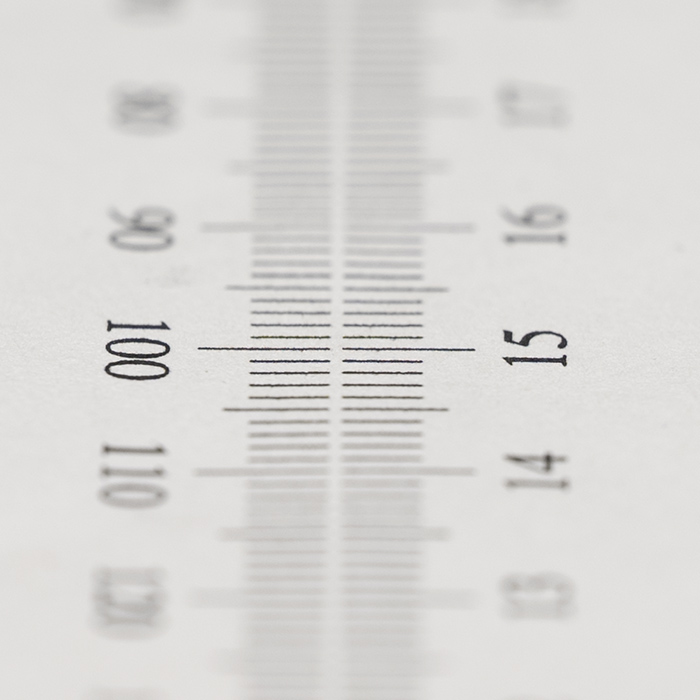
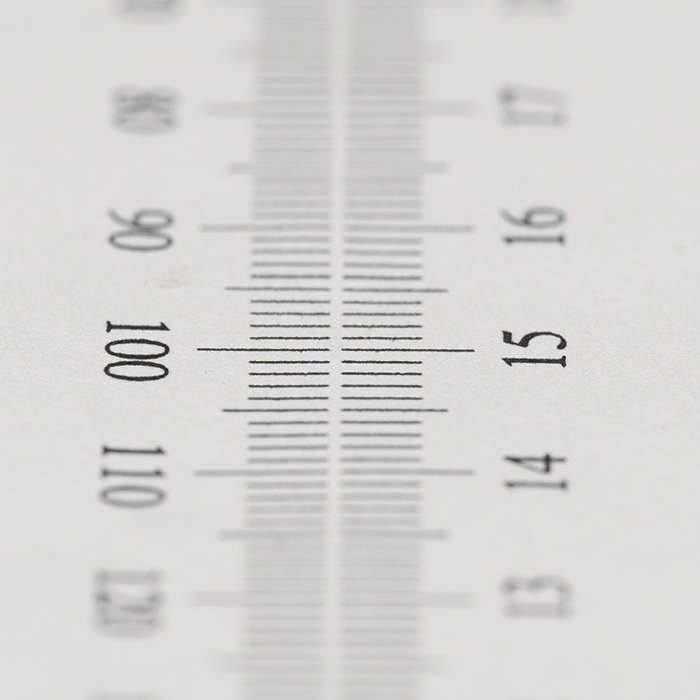
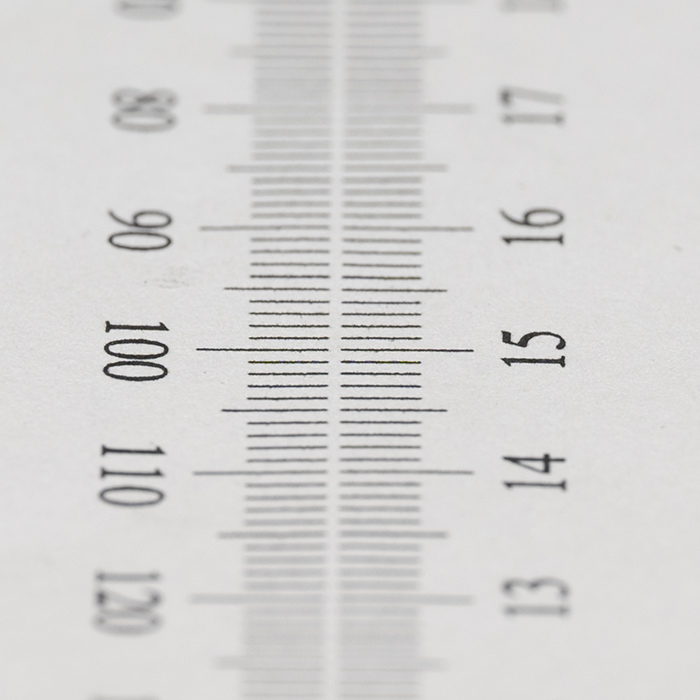
LoCAs (axial CAs) are a color-fringing effect on the Z-axis. They show up as purplish/yellowish halos in front of the in-focus zone and greenish/bluish beyond.
The Nikkor Z MC 105mm f/2.8 VR S isn’t exceedingly fast, so LoCAs aren’t a big issue to start with. However, the Nikkor is still better than most at f/2.8.
Also note that there’s no focus shift when stopping down which is important for a macro lens.
Competition
The Nikkor Z MC 105mm f/2.8 VR S has one direct competitor at the time of this writing – the Tamron 90mm f/2.8 Di III VXD Macro. We have yet to test this Tamron lens but historically Tamron macro lenses have been impressive performers so if you want to save a couple of hundred bucks this may be worth a look.
Nikon also has a 50mm macro in its line up but it’s not the most desirable lens (as you will soon see in this theater). If you prefer something longer, there’s the Laowa AF 180mm f/4.5 1.5x Ultra Macro APO at half the price. It’s not as sharp as the Nikkor but if you want to shoot some tiny critters, the increased working distances can come in handy – and it offers a max magnification of 1.5:1 instead of “just” 1:1.
Sample Images
Countryside Germany here rather than the usual sights of Australia.


Nikon has a long tradition with delivering high-performance macro lenses - and this history continues with the Nikkor Z MC 105mm f/2.8 VR S. It is an exceptionally sharp lens even at maximum aperture. The bokeh is smooth and axial CAs are basically absent. The vignetting is a bit high at f/2.8 but it's not a showstopper really.
Just like most of the competition, Nikon relies on high-quality engineering plastics on a metal mount for the lens body. Extensive weather-sealing has been incorporated, of course. The large focus ring is rubberized thus nicely grippy. The AF is fast at standard focus distances but you should take advantage of the focus limiter for close-ups. Similarily, the VR is efficient at longer focus distances, but keep in mind that this drops due to the increased angular movement at macro distances.
Overall, Nikon has a winner here, thus ... "Highly Recommended!".
Support us by shopping at:
* Amazon US
* Amazon Europe
* B&H
* Adorama
* KEH (used gear)
The Good
- Superb optical quality
- Smooth Bokeh
- Negligible LoCAs
The Bad
- Not compatible with tele-converters
- A max. object magnification of 1:1 is a bit conservative
- Highlight rendering (cat eyes) not ideal at f/2.8
-
Optical Quality
-
Build Quality
-
Price / Performance