


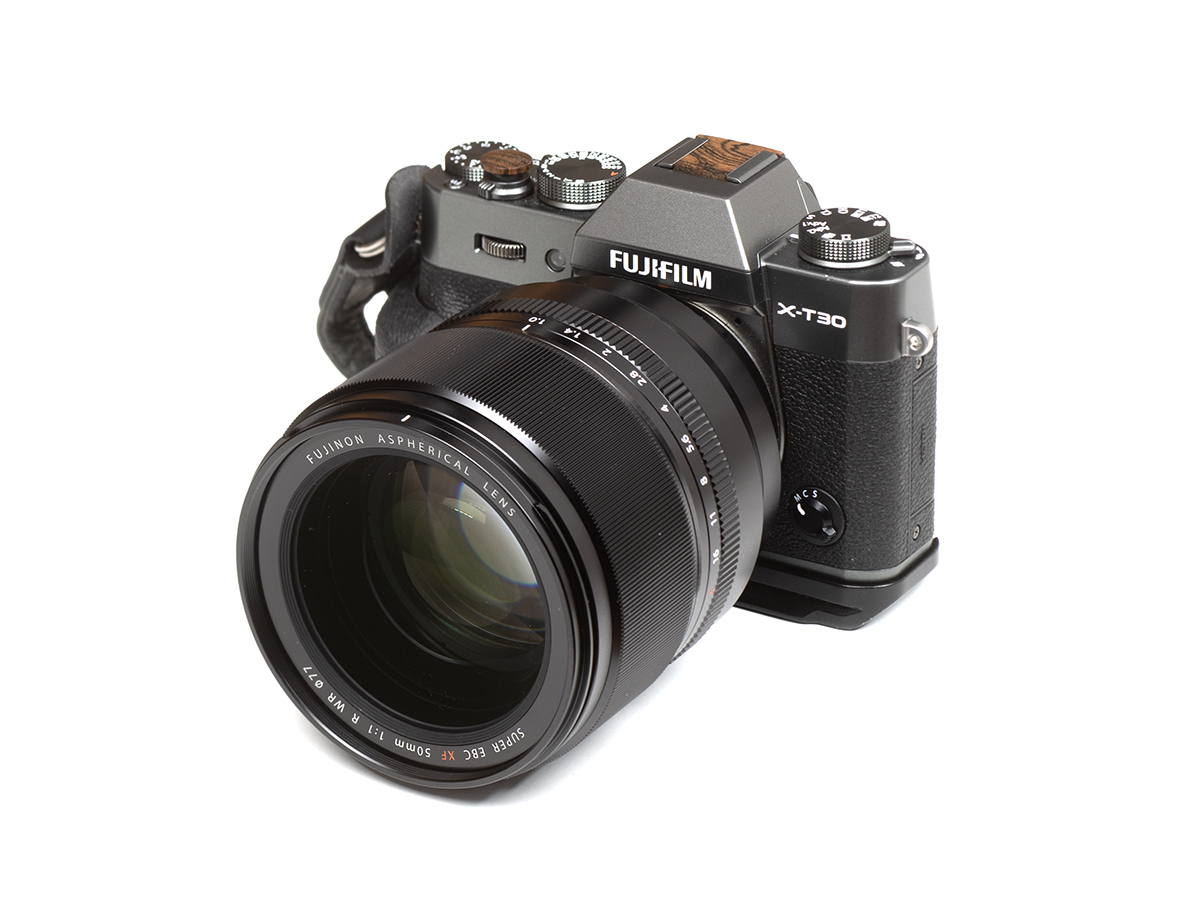
Every once in a while, manufacturers produce something that is more like a tech statement rather than a product that they expect to sell in volumes. For Fujifilm the Fujinon XF 50mm f/1 R WR does certainly fall into this category – more so for an APS-C system. If you require lenses this fast for your workflow, you should probably have a deep look into full-format options where equivalent lenses are far more common and also more affordable. Speaking in terms of dreadful equivalency, the XF 50mm f/1 resembles a full-format “76mm f/1.5” thus it’s a moderate tele lens in this scope. Fujifilm’s asking price is relatively moderate for such a design at $1800 USD.
And you are getting quite a bit for your money – 845 grams of metal. The lens feels exceptionally well-made. Fujifilm also incorporated no less than 11 seals for weather sealing. The wide, rubberized focus ring turns smoothly and the aperture ring has a nice click-action to it. The heavy weight means that it doesn’t really balance well on small cameras (such as the X-T30 that Markus used for testing), but chances are that users with such cameras aren’t exactly the target audience anyway. A barrel-shaped lens hood is part of the package.
The AF system is a bit of a weird choice here. The Fujinon still uses a DC motor from the deep dark past and despite rear-focusing, the AF speed can best be described as ” leisurely”. The humming noise is also not ideal for videos. However, focusing breathing is minimal.
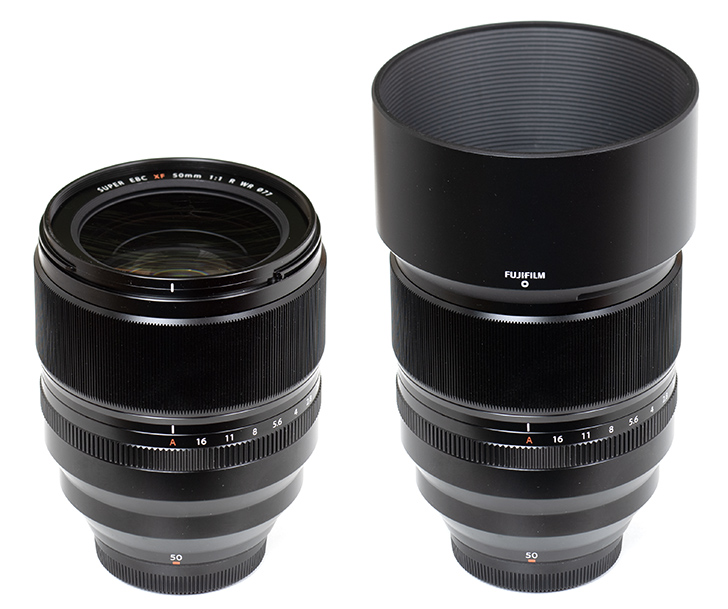
| Specifications | |
|---|---|
| Optical construction | 12 elements 9 groups (1x aspherical, 2x ED) |
| Equivalent on FF | “76mm f/1.5” |
| Number of aperture blades | 9 (rounded) |
| min. focus distance | 0.7m (max magnification: 0.08x) |
| Dimensions | ø 87 × 103.5mm |
| Weight | 845g |
| Filter size | ø 77mm |
| Hood | barrel-shaped (bayonet-mount, supplied) |
| Other features | Aperture ring Weather-resistant |
Distortions
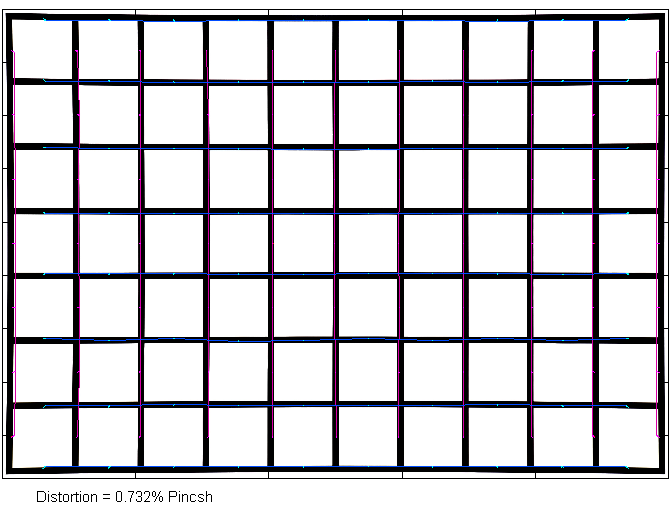
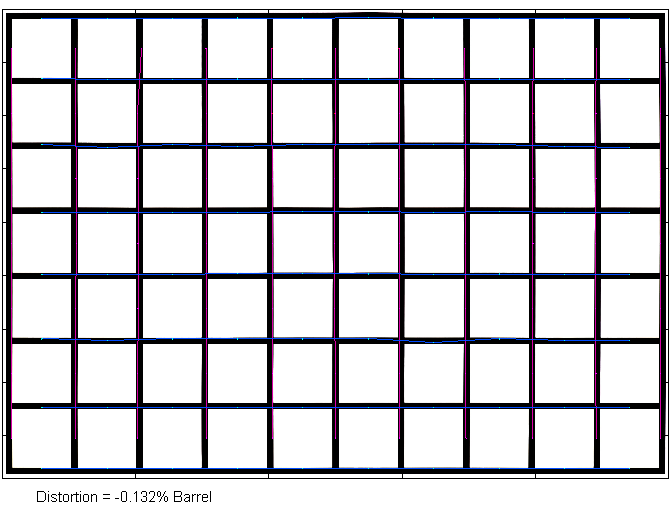
The Fujinon XF 50mm f/1 R WR produces a slight pincushion distortion in RAW files. This is usually not disturbing and autocorrection takes care of the rest.
Vignetting
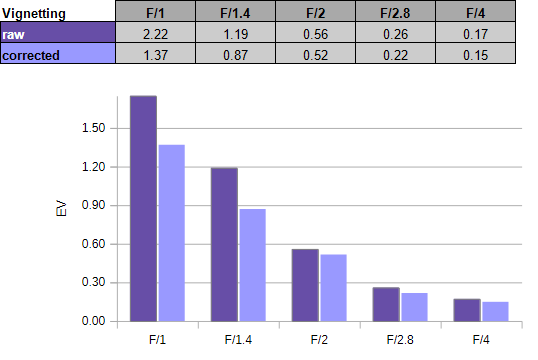
Ultra-fast lenses vignette a lot and despite the big front element, the Fujinon isn’t shielded against this. RAW images reveal an original light falloff of 2.2 EV (f-stops) at f/1. This may be moderate by full-format standards but it’s beyond our usual scale for APS-C lenses. Stopping down to f/1.4 reduces this by one stop and the issue is tamed from f/2. Autocorrection shaves off about 0.8 EV at f/1 which is a little less than expected here.
MTF (resolution) at 26 megapixels
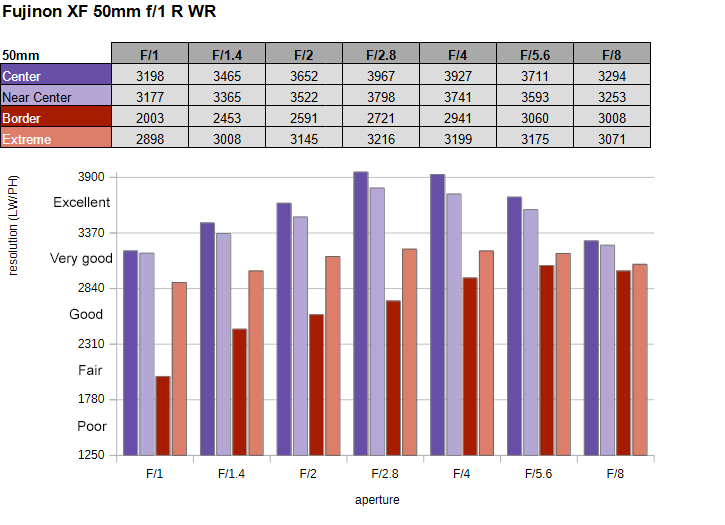
When designing a f/1 lens the optical problems are immense. The primary goal is to deliver some degree of quality at maximum aperture because that’s what such a lens is about after all. And this sacrifices peak performance to some degree. We can see this in the chart below. The Fujinon XF 50mm f/1 R WR manages very good center performance at f/1 but the quality gets wavy from the midfield. The borders are rather soft although the corners recover nicely – an odd characteristic here indeed. Stopping down gradually improves the quality. The borders are good at f/1.4 and even reach very good results from f/4. The overall peak quality is reached between f/4 and f/5.6 where it can match most 50s. Diffraction reduces the sharpness from f/8 onward.
Please note that the MTF results are not directly comparable across the different systems!
Below is a simplified summary of the formal findings. The chart shows line widths per picture height (LW/PH) which can be taken as a measure of sharpness. If you are keen to know more about the MTF50 figures, you may check out the corresponding Imatest Explanations.
Chromatic Aberrations (CAs)
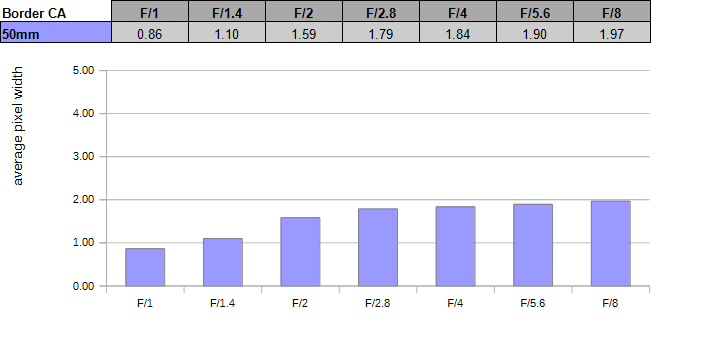
Lateral CAs are moderate at large aperture settings but increase to a quite high average width near 2px at the image borders. Autocorrection should still be able to handle this.
Bokeh
A 50mm f/1 is all about shallow depth-of-field photography, really, so let’s see how it goes here.
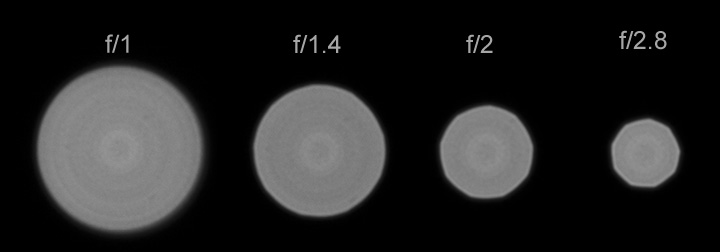
Out-of-focus hightlights are nicely rendered at f/1 and f/1.4. The shape is perfectly circular, of course. While there is a subtle inner substructure in the discs, you probably won’t notice this in real-world images. There’s also no outlining. At f/1 the edge of the disc is even a bit “feathered” (soft). The more edgy aperture creeps in at f/2 here.
The above applies to the broader center. However, the highlights deteriorate to “cat eyes” the more they are positioned towards the borders/corners—this is a mechanical vignetting effect. As usual, stopping down broadens the “perfect” zone and the corner discs are restored to their circular shape from f/2 onward.
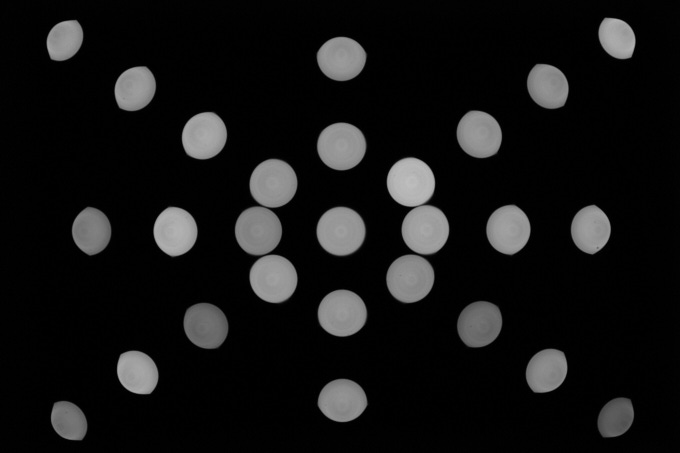
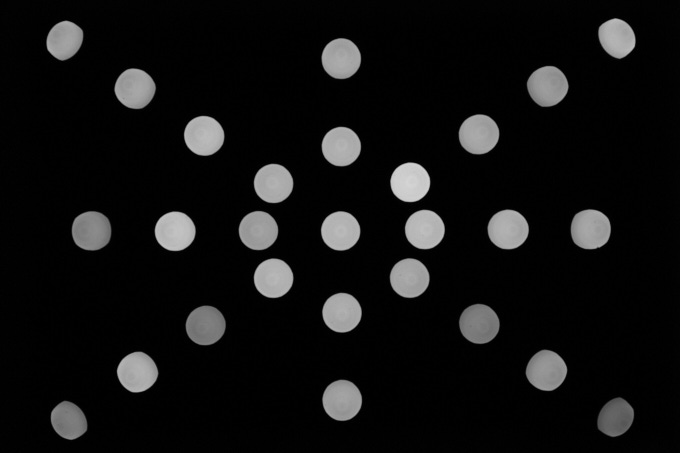
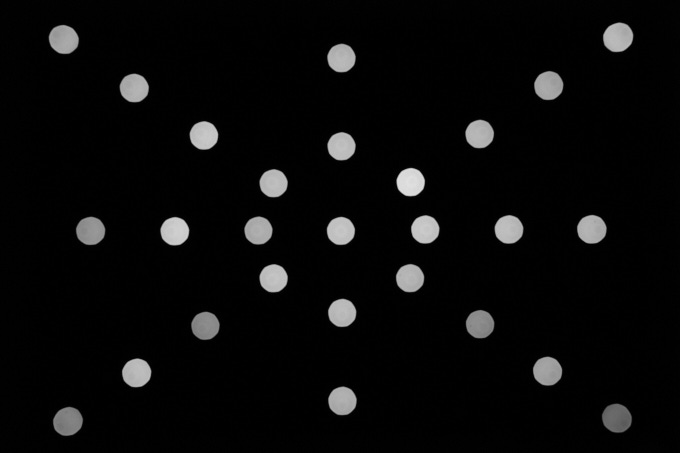
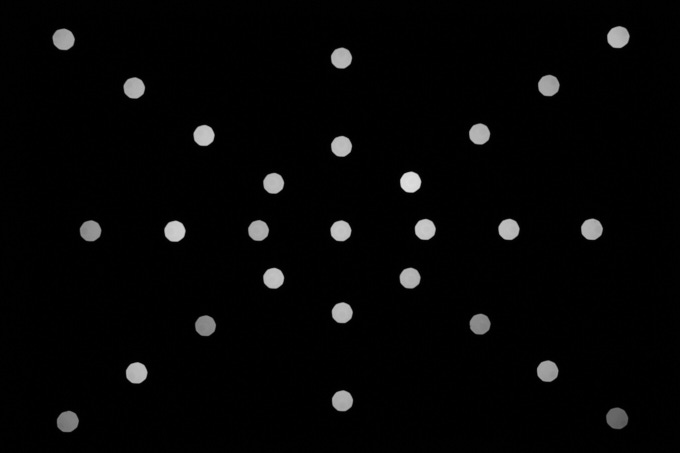
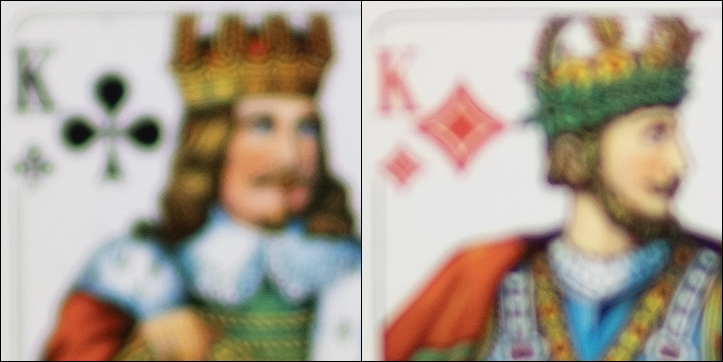
The general rendering of the out-of-focus blur is smmoth in the critical background (to the left below). The foreground blur is okay, but it is a bit “shadowy” (to the right below).
Bokeh Fringing / LoCA
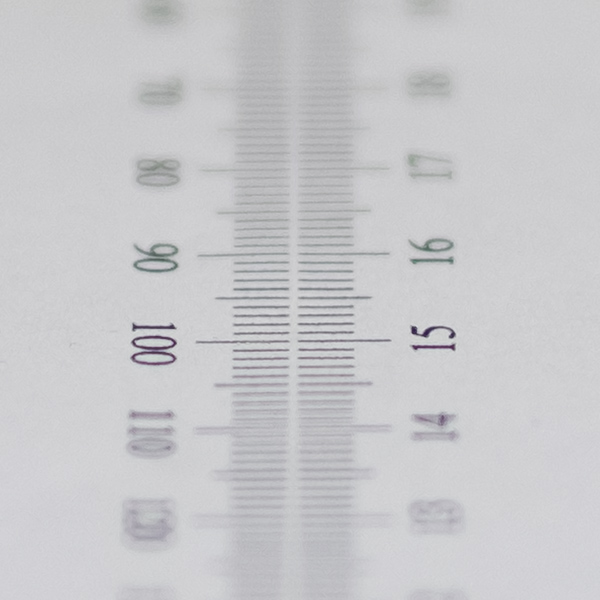
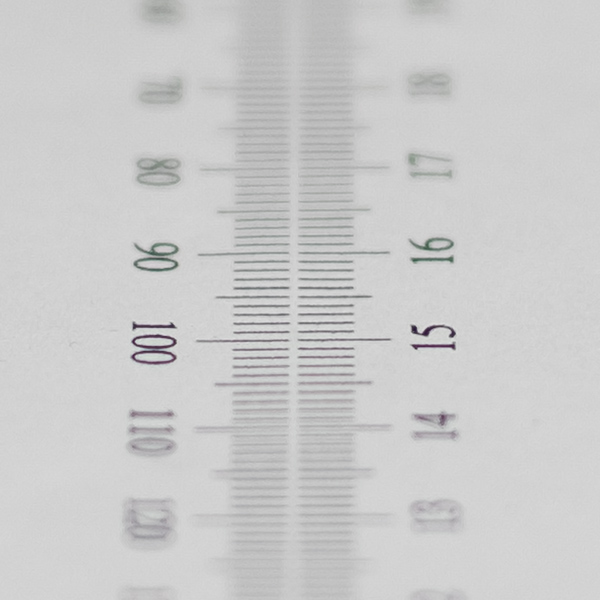
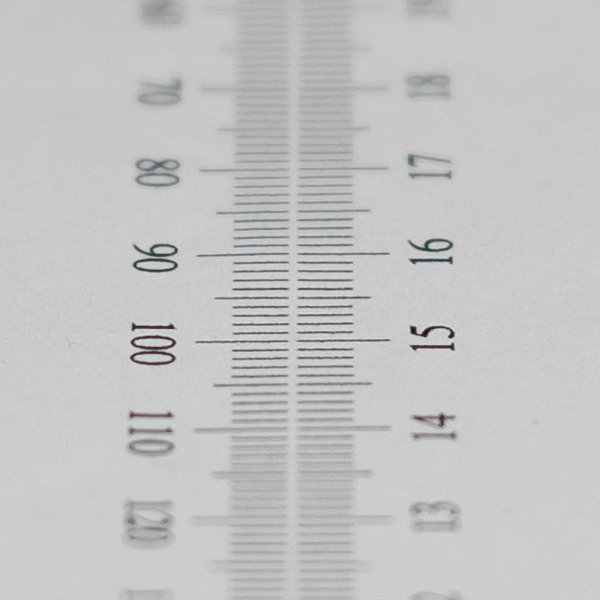
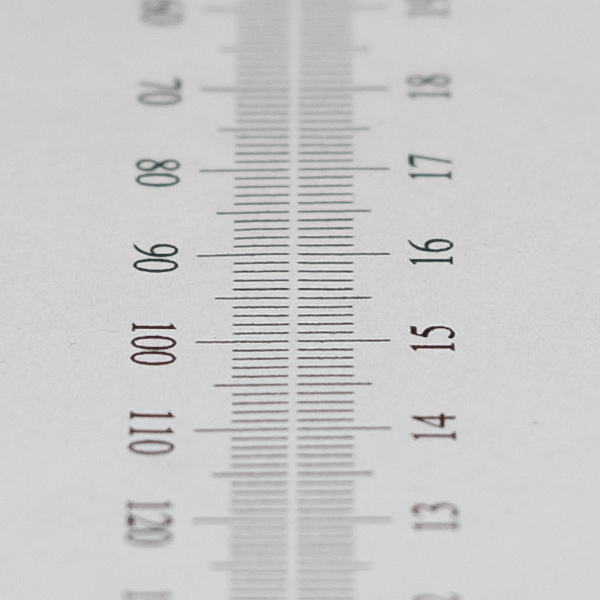
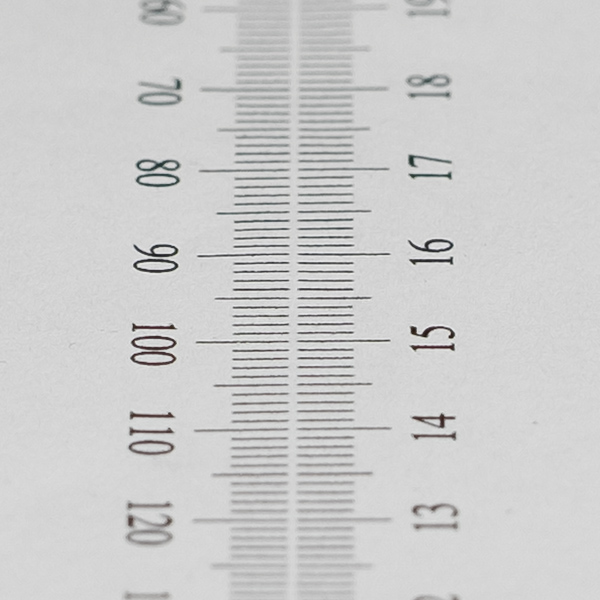
LoCAs, or bokeh fringing, is a color fringing effect on the Z-axis. It shows up with a purplish tint in front of the focus point and a greenish tint behind, and it’s nearly impossible to fully correct in post.
Designing a f/1 lens without LoCAs is probably next to impossible so yes, there is some obvious fringing visible at large aperture settings up to f/2.8. Traces remain at f/4.
Competition
There are no other mainstream standard primes with a max aperture of f/1. However, there are still options if you are willing to compromise a little bit. There’s the Fujinon XF 56mm f/1.2 R WR. It’s slower but a little longer so you barely give up something. It’s also better and quite a bit more lightweight. If you aren’t religious about owning a Fujifilm lens, the Viltrox AF 56mm f/1.2 Pro XF is another option. It’s basically as good as the XF 56mm f/1.2 R WR but much more affordable. More exotic and also even more affordable is the Sirui Sniper 56mm f/1.2. We haven’t tested this one, though.
Sample Images


You have to commend Fujifilm for delivering such a lens. The design problems were probably hellish here. From a real-world perspective, the Fujinon XF 50mm f/1 R WR is very usable at f/1 because the center quality is actually plenty sharp. The outer image field field is a different story but the use cases for corner-to-corner sharpness are rather exotic at this setting. If you require very sharp results, the lens is still capable of doing so from f/4 onward. The vignetting is a tad high at f/1 although you can argue that this is of artistic benefit here. Image distortions are not a big deal. The (background-)bokeh is buttery at large apertures. You may spot some LoCAs in critical scenes, though.
The build quality is exceptionally high as you can expect from a lens in this price category. However, Fujifilm should really work on its AF motors. Both this XF 50mm f/1 R WR as well as the XF 56mm f/1.2 R WR still rely on a dated DC motor. They have delivered linear AF motors (LM) in other lenses, so it's about time to leave the past behind here.
As engineering showcases go, the Fujinon XF 50mm f/1 R WR certainly delivers. However, in the real world it's surely an overkill for most users. Yes, it has some unique characteristics but you can get almost the same results with a much more affordable 56mm f/1.2 lens. Still, there's no substitution for speed other than more speed.
Support us by shopping at:
* Amazon US
* Amazon Europe
* B&H
* Adorama
* KEH (used gear)
The Good
- f/1 (!)
- Good center sharpness at maximum aperture
- Nice bokeh
- Great build quality
The Bad
- Dated AF motor
- Heavy
- Some LoCAs (unsurprisingly)
- Wavy sharpness distribution
-
Optical Quality6
-
Build Quality8
-
Price / Performance7