


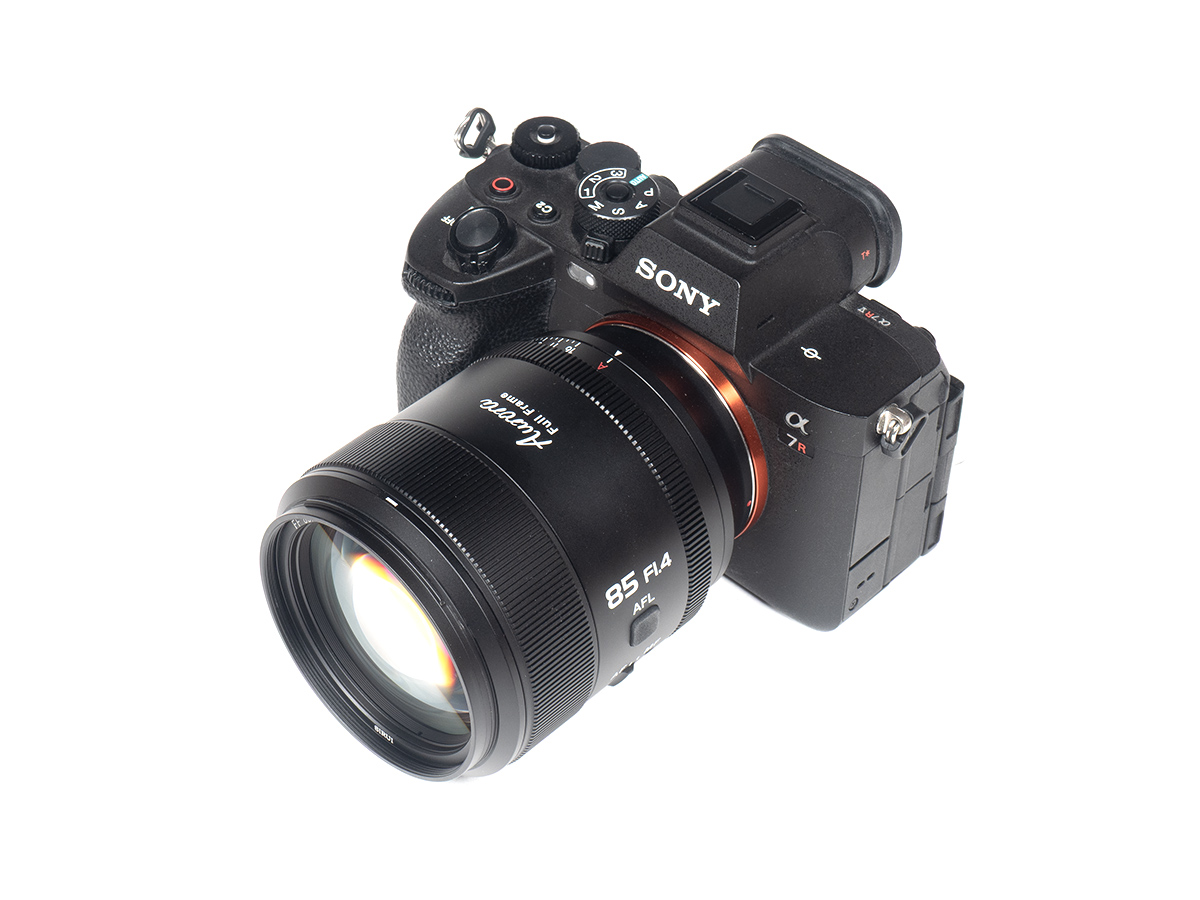
Sirui may not be a household name among photographers yet, but the company has been a player with the cinema lenses for more than a decade. They are well-known for the anamorphic cine lenses. However, they also released some more photography-centric AF lenses with their Aurora (full-format) and Sniper (APS-C) lineups. One of them is the Sirui Aurora 85mm f/1.4. It is available in Sony, Nikon, Fujifilm X, and L-mount and retails for around $449-549 USD which is an amazing value assuming that it performs adequately, so let’s find out.
Upon first contact, you are surprised by the compact dimensions and low weight. It’s actually the most lightweight 85mm f/1.4 that we’ve tested so far. This is actually a little surprising because the build quality is impressively high. It feels very substantial with an outer shell made of metal. The broad focus ring turns smoothly. Sirui claims that the lens is dust- and waterproof (probably more like “resistant”). The lockable aperture ring can be de-clicked, and there’s an AF lock button. A deep, barrel-shaped lens hood is provided. Firmware updates are possible via a USB-C port on the mount.
The lens uses a STM (stepping motor) for autofocusing. It’s noiseless and quite snappy, although not super fast. EXIF data is provided, of course.
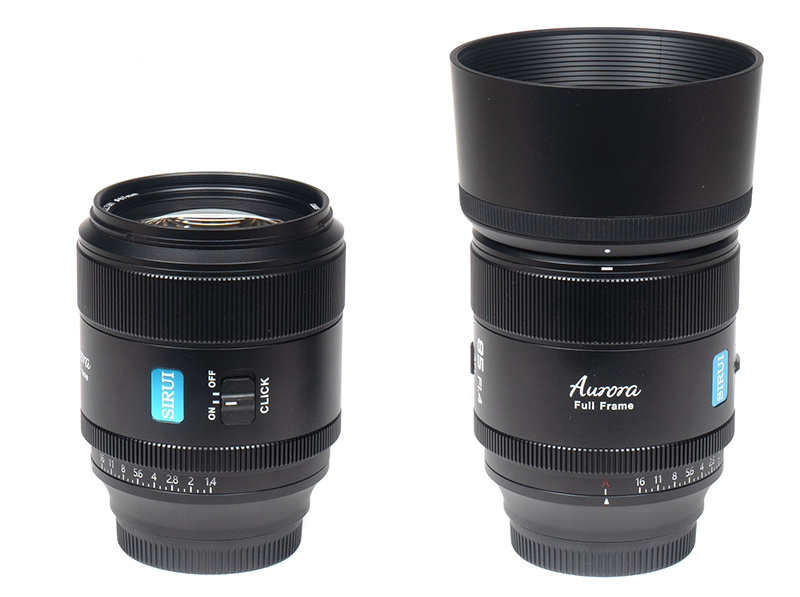
| Specifications | |
|---|---|
| Optical construction | 14 elements in 9 groups (2x ED, 3x HRI, 1x aspherical) Fluoride coating |
| Number of aperture blades | 15 |
| min. focus distance | 0.85m (max. magnification ?) |
| Dimensions | Ø 80.3 x 101.7mm |
| Weight | 540g |
| Filter size | Ø 67mm |
| Hood | barrel-shaped (bayonet mount, supplied) |
| Other features | dust- & waterproof de-clickable aperture ring aperture lock AF lock button USB-C port for firmware updates |
| Mounts | Sony E, Fujifilm X, L-mount, Nikon Z |
Distortions
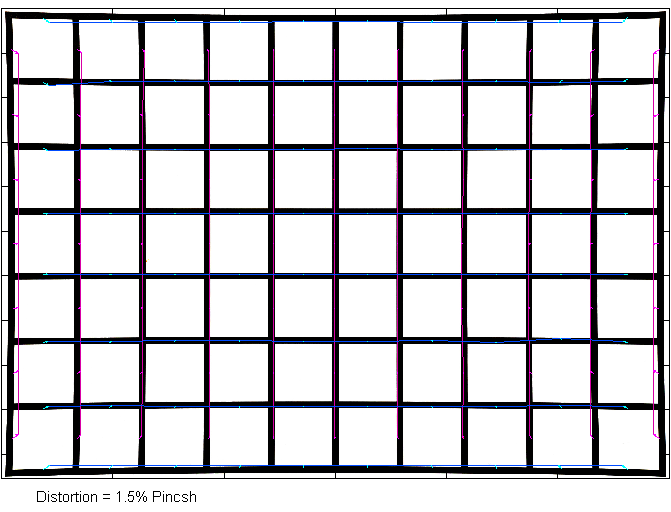
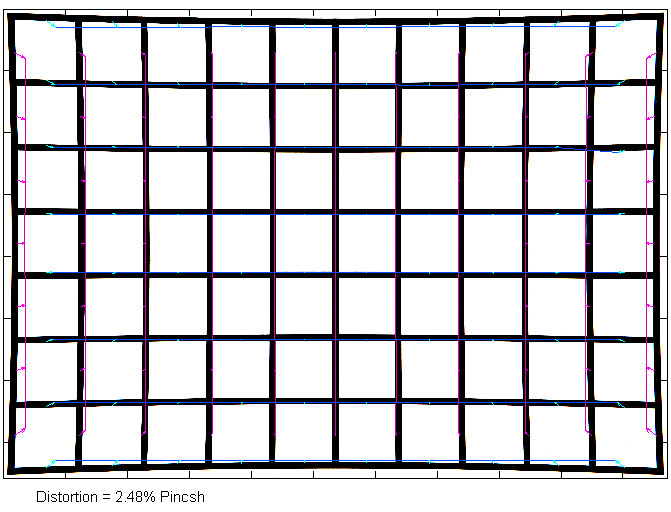
The Sirui Aurora 85mm f/1.4 produces a medium degree of pincushion distortion (2.5%) in RAW images. This is a little higher than average in this class. There is no built-in correction profile. However, Sirui provides a downloadable profile for Photoshop ACR. This reduces the distortion by 1%.
DxO PureRaw/Photolabs has a custom profile, which reduces the distortion down to almost zero.
Vignetting
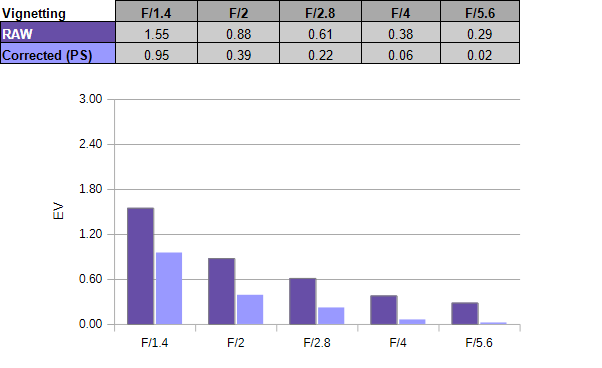
The RAW vignetting is moderate at just ~1.5 EV (f-stops) at f/1.4. This is lower than average and quite surprising given the small front element. As usual, stopping down reduces this quite a bit, and it’s mostly gone from f/2.8 onward. An internal profile is, once again, not provoded. The already mentioned Photoshop profile shaves off about 0.5 EV at f/1.4 and f/2.
MTF (resolution) at 42 megapixels
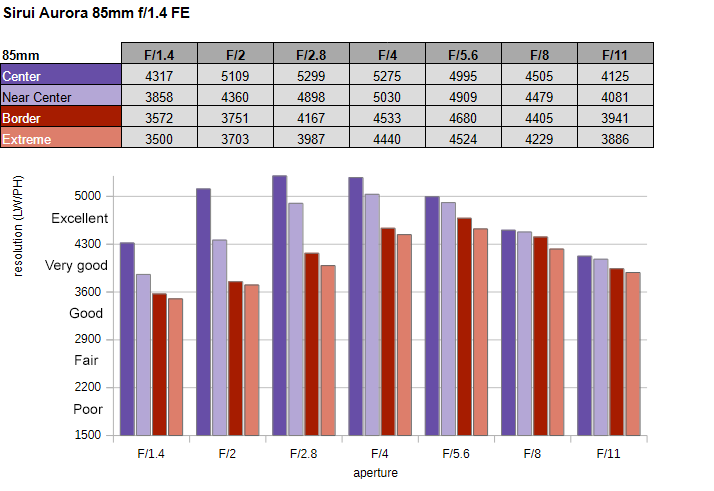
The Sirui Aurora 85mm f/1.4 produced very decent resolution results in the lab. The center resolution is very good to excellent at f/1.4. The outer image field still reaches a good to very good quality here. If you want a tack sharp center, you should stop down to f/2. The overall quality improves gradually until reaching its peak between f/4 and f/5.6. Even corners reach excellent quality at these settings. Diffraction has an impact from f/8, although f/11 remains very usable. f/16 should be avoided as usual.
The field curvature is negligible. The centering quality of the tested sample was good.
Please note that the MTF results are not directly comparable across the different systems!
Below is a simplified summary of the formal findings. The chart shows line widths per picture height (LW/PH) which can be taken as a measure of sharpness. If you would like to know more about the MTF50 figures, you may check out the corresponding Imatest Explanations.
Chromatic Aberrations (CAs)
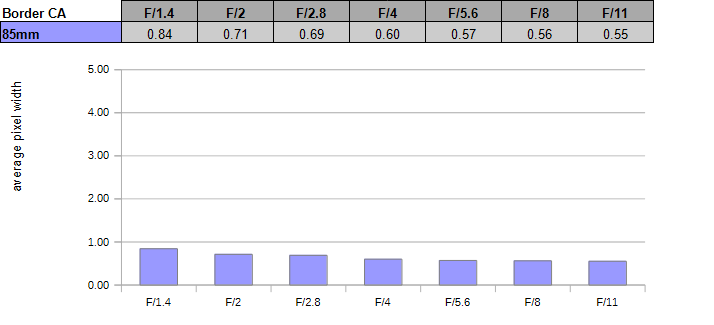
Lateral CAs are well-controlled. They peak at f/1.4 with an average pixel-width of ~0.8px at the image borders. Stopping down reduces this a bit.
Bokeh
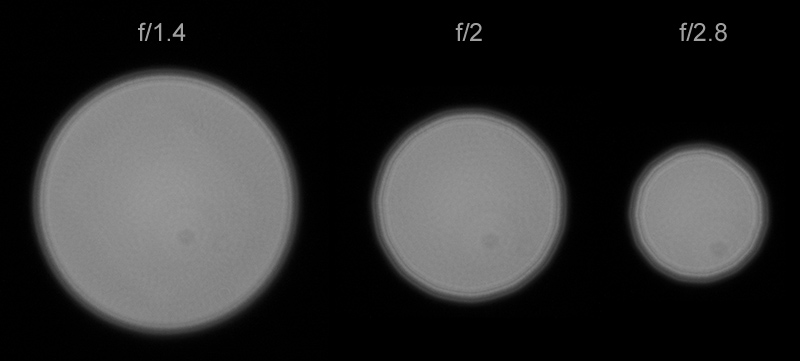
The inner zone of out-of-focus highlights is very clean in the center of the image (apart from a dust spot). There’s a very slight outlining as well as a soft halo. The disc is perfectly circular at f/1.4 and mostly so at f/2 and f/2.8. It’s worth noting that the aperture mechanism uses no less than 15 (!) blades to achieve this.
When looking at the highlight rendering across the whole image field, the circular shape of the discs remains intact up to the mid-field. Beyond, the discs deteriorate to comparatively mild “cat eyes”. The circular shape of the border discs is restored at f/2, and the corner discs follow at f/2.8.
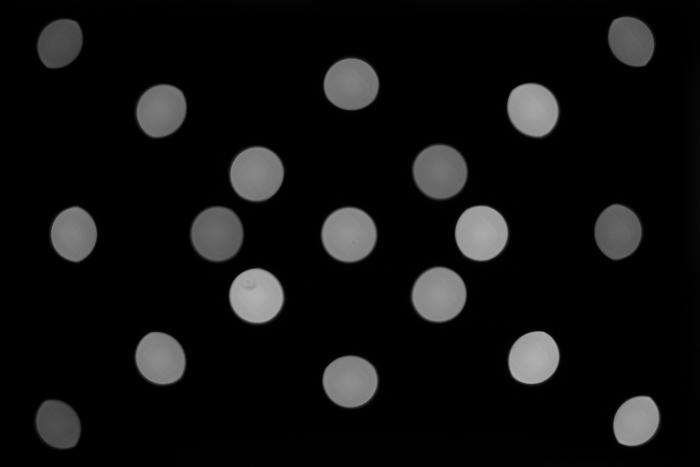
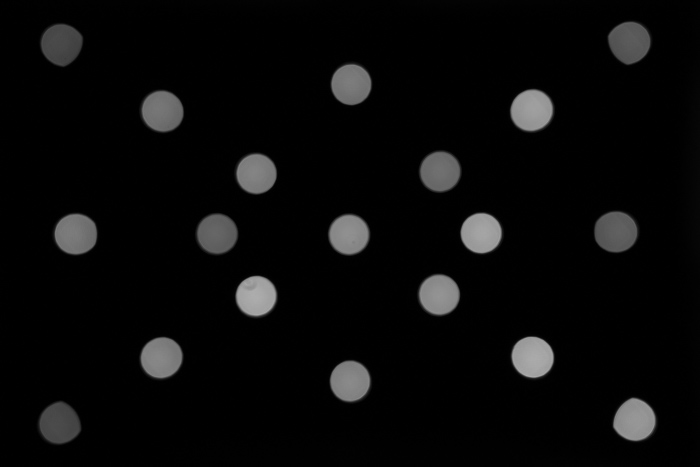
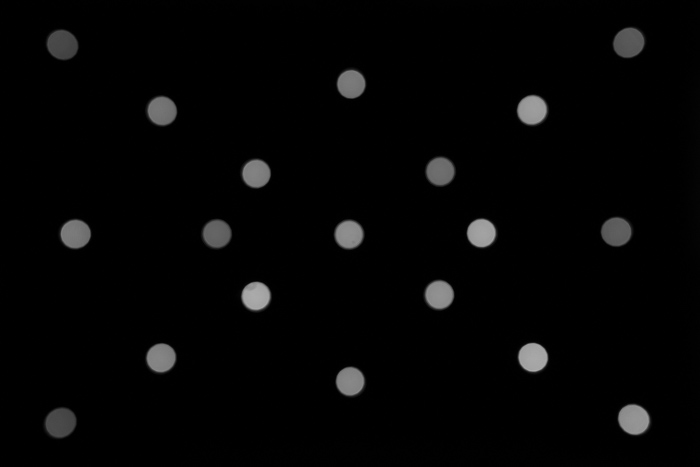
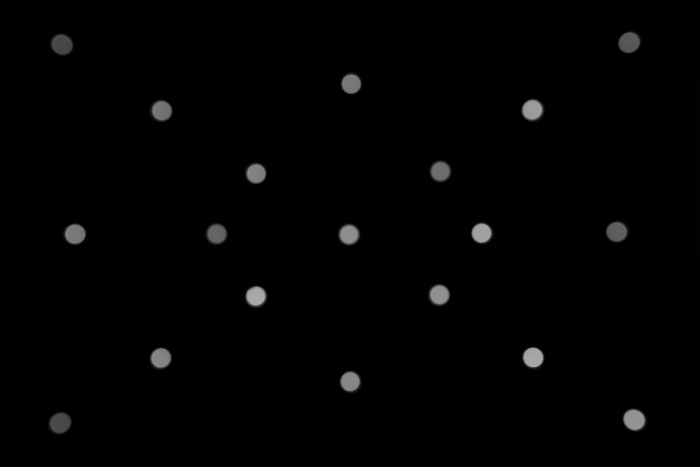
The rendering quality in the focus transition zone is smooth in the image background, although you can already see it greenish axial CAs here. The foreground blur shows double edges, which we’ve seen from many other lenses.
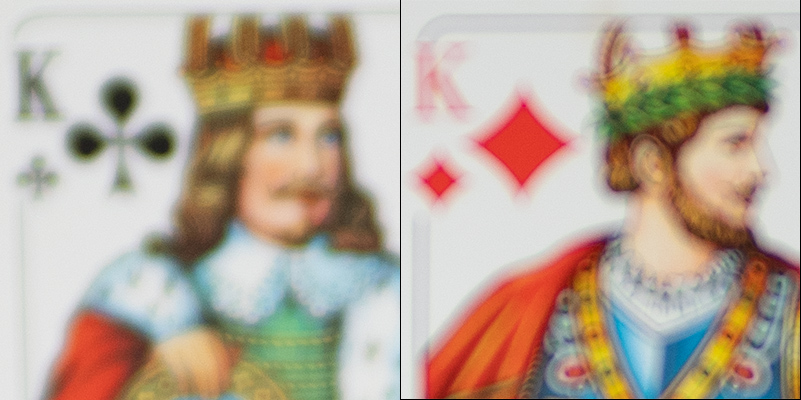
Bokeh Fringing / LoCA
LoCAs, or bokeh fringing, is a color fringing effect on the Z-axis. It shows up with a purplish tint in front of the focus point and a greenish tint behind, and it’s nearly impossible to fully correct in post.
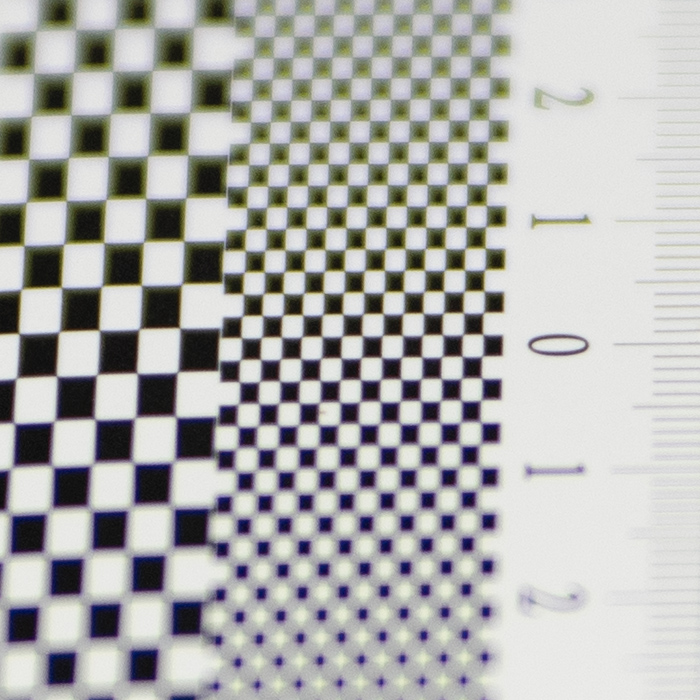
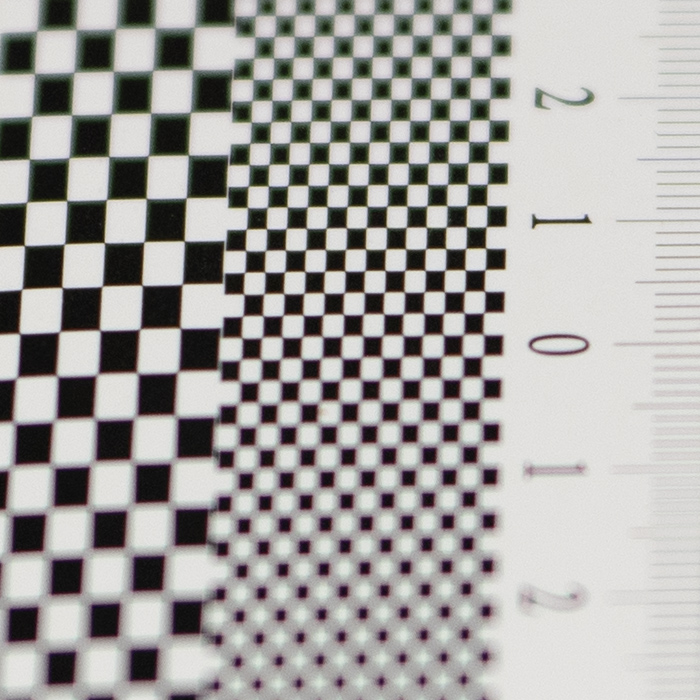
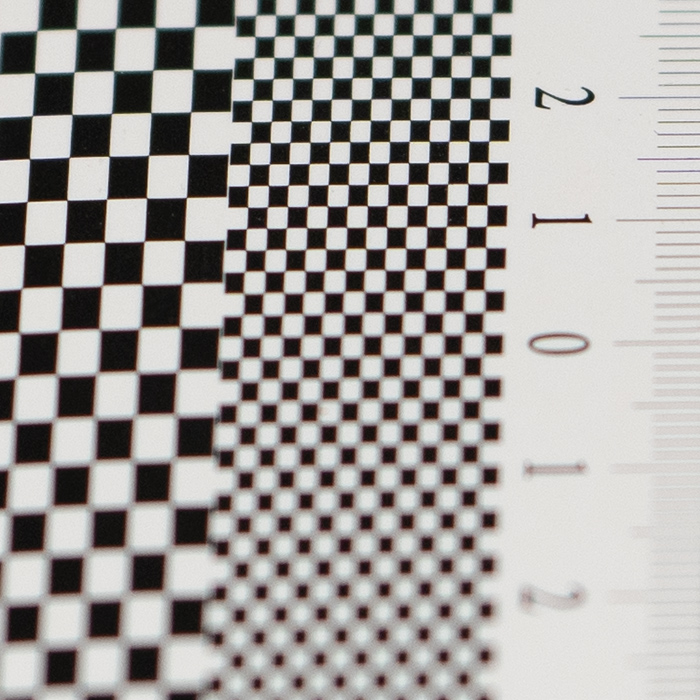
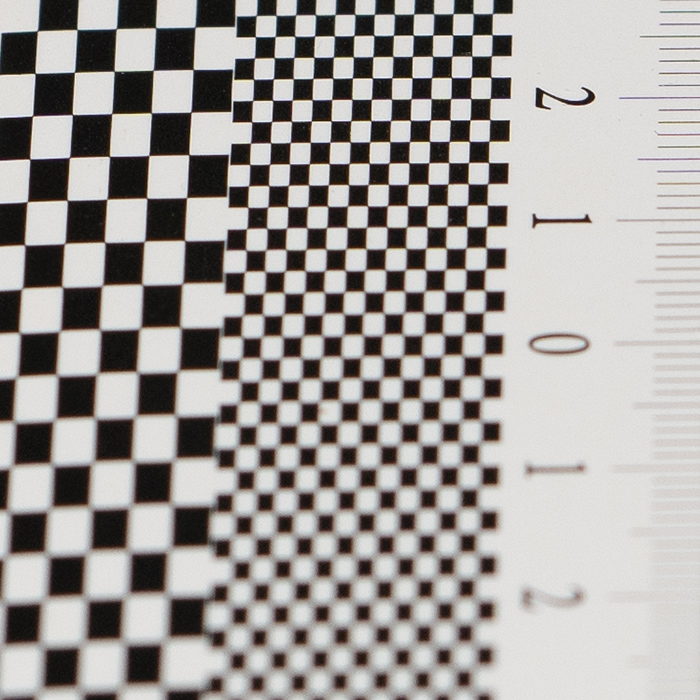
The Sirui Aurora 85mm f/1.4 struggles more than most in this respect. The fringing is clearly visible at f/1.4. It’s much better at f/2. Traces remain at f/2.8, and the issue is mostly gone at f/4. When scrolling through the aperture range, you may also notice that the focus point shifts to the rear. We’ve seen these “residual spherical aberrations” from a number of ultra-fast lenses. Please note that this isn’t overly relevant with autofocus (on Sony cameras) because the focus is obtained at working aperture.
The test is performed at a close focus distance to emphasize the effect. However, you may notice that the focus point isn’t very sharp at f/1.4. So in real-world close-up scenes, you should stop down to at least f/2.8.
Competition
This is a busy segment with plenty of options. The gorilla is, of course, Sony’s FE 85mm f/1.4 GM II. It is a superior lens, but it’s also 3x the cost. Then there’s the great Sigma 85mm f/1.4 DN ART, but that’s still twice as expensive. More comparable are the Viltrox AF 85mm f/1.4 Pro and the Meike AF 85mm f/1.4 MIX II — both tough competitors in their own rights. The Sirui lens is more compact and lightweight than both, though.
Sample Images


The Sirui Aurora 85mm f/1.4 produced decent results during our testing. It's not as sharp as some other lenses at f/1.4, but that's not necessarily a bad thing when it comes to portraits at least. Stopped down to f/2, the quality is lifted substantially, and it's tack sharp at medium aperture settings. The performance deteriorates at very close focus distances, though. Vignetting and lateral CAs are low. The pincushion distortions can be quite noticeable in critical scenes. There's no built-in correction profile, but there's a downloadable profile for Photoshop, and DxO Photolab supports the lens out-of-the-box. Axial CAs (LoCA) are on the high side. Where the lens shines is the bokeh. If you check out our sample gallery, you may find some silky smooth background renderings there.
In terms of build quality, the lens feels very substantial despite being the most lightweight in its class. The metal lens body is reassuring, and Sirui implemented extensive weather-sealing against the elements. The AF is quite fast, although not "sports fast".
The Sirui Aurora 85mm f/1.4 isn't perfect, but at just $449-549 USD, it's almost a bargain.
If you'd like to support our work, please consider shopping for this or other lenses via one of the following partners:
* Sirui Store
* Amazon (US)
* Amazon (Europe)
* B&H (US)
* KEH (US, used gear)
The Good
- Silky background bokeh
- Very compact and lightweight for a 85mm f/1.4
- Very sharp at medium aperture settings
- Nice build quality
- Very affordable
The Bad
- Noticeable axial CAs
- Gets noticeable softer at very close focus distances
- A built-in correction profile would be nice
-
Optical Quality7.5
-
Build Quality8.5
-
Price Performance10