


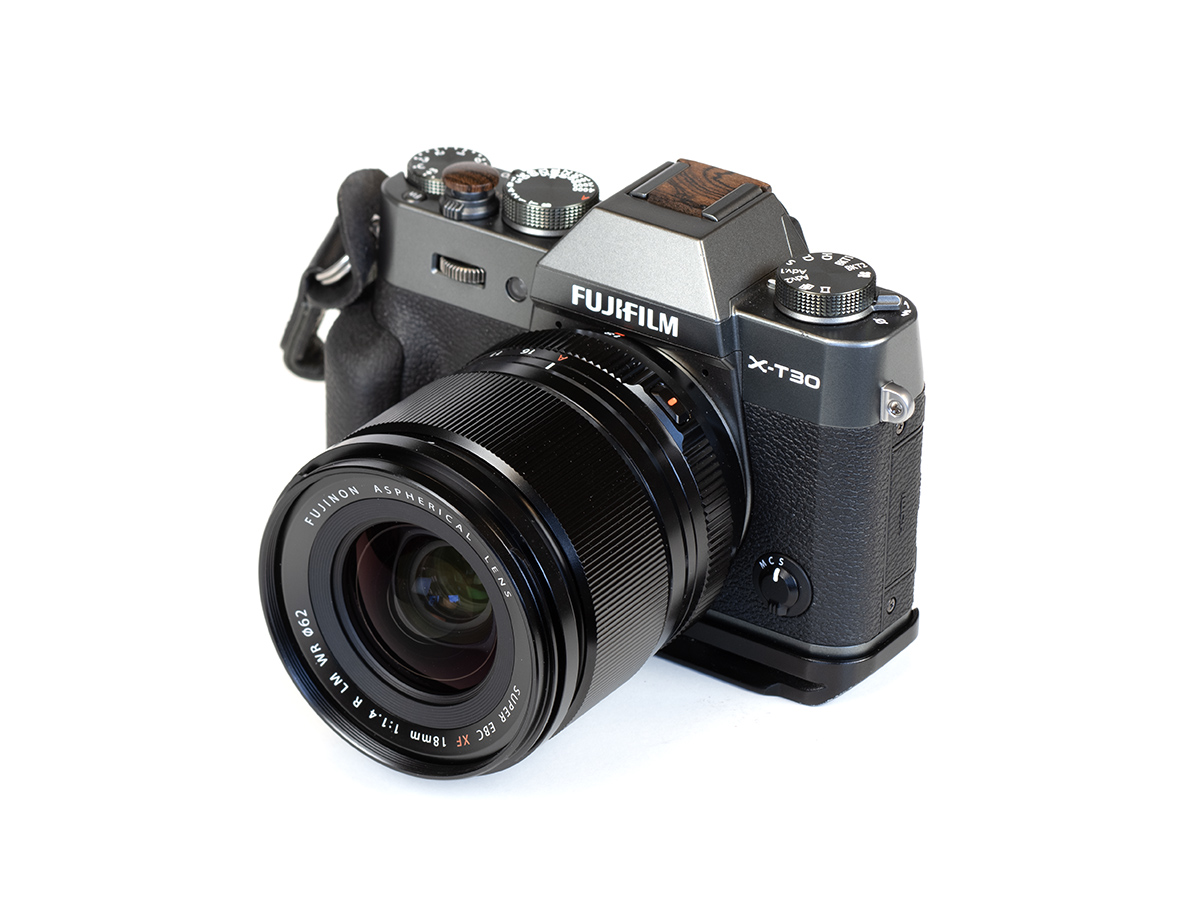
The Fujinon XF 18mm f/1.4 R LM WR is another high-performance prime lens by Fujifilm. In shape and build quality it resembles the other f/1.4 lenses in their lineup – namely the XF 23mm f/1.4 R LM WR and XF 33mm f/1.4 R LM WR. These three cousins would make a nice combo for street photography if that’s your thing. But, of course, the scope is much broader than just this. The pricing is also pretty similar sitting at around $1050 USD. That’s not at the affordable end, so let’s see whether the lens is worth it.
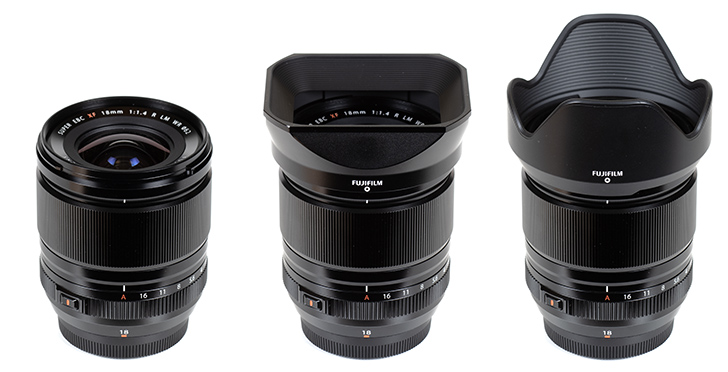
The build quality is, once again, excellent thanks to a tightly assembled all-metal lens body with weather-sealing. It’s also freeze-proof down to -10C. The broad focus ring turns silky smooth. The Fujinon uses an internal focusing mechanism, so the physical length doesn’t change during operation. Typical for all “R” lenses there is a dedicated aperture ring. Unfortunately, it can’t be “de-clicked” for video use. A petal-shaped plastic lens hood is supplied. There is also an optional square-shaped metal LH-XF18 lens hood. However, this beauty would set you back another $90 USD.
The XF 18mm f/1.4 R LM WR uses a linear AF motor (“LM”) providing both quick focusing as well as virtually silent operation. The AF motor isn’t held in place after powering off the camera, so you can feel a bit of a sliding sound/clunk when shaking the lens. This isn’t uncommon for Fujifilm lenses and no reason for concern.
| Specifications | |
|---|---|
| Optical construction | 15 elements in 9 groups (1x ED, 3x aspherical) |
| Full-format equivalent | “27mm f/2.1” |
| Number of aperture blades | 9 (rounded) |
| min. focus distance | 0.2m (max magnification: 0.15x) |
| Dimensions | φ 68.8 × 75.6mm |
| Weight | 370g |
| Filter size | φ 62mm |
| Hood | petal-shaped (bayonet mount, supplied) |
| Other features | Aperture ring Weather-resistant Freeze-proof down to -10C |
Distortions
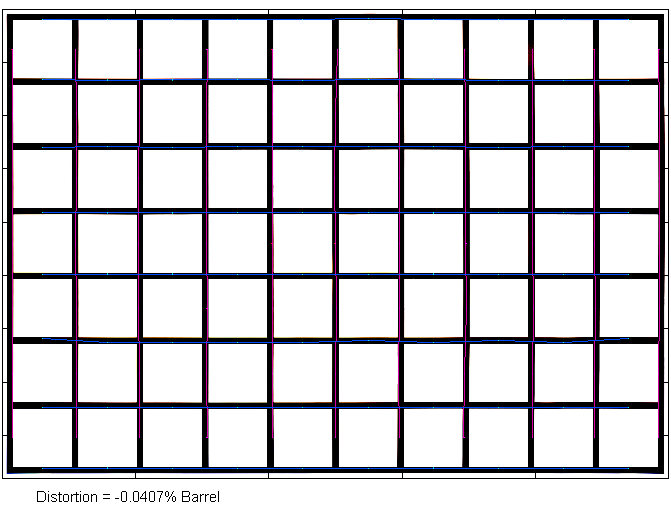
An astounding aspect of the Fujinon XF 18mm f/1.4 R LM WR is its distortion characteristic – meaning that it has none even in RAW files. This is extremely rare.
Vignetting
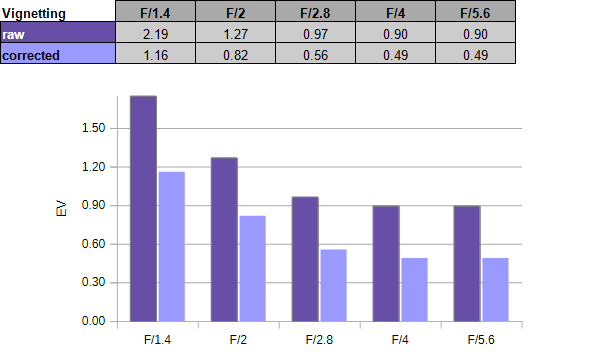
While images are distortion-free, this isn’t the case regarding vignetting. The light falloff at f/1.4 is very heavy at 2.2 EV (f-stops) in unaltered files. This isn’t unexpected in a fast wide-angle lens but it’s still a bit much for an APS-C lens. This is reduced by 1 EV (f-stop) at f/2 and settles at 0.9 EV from f/4.
Thus, autocorrection is needed here. At f/1.4 this reduces the issue to ~1.2 EV which is still a bit on the high side. The vignetting is then tamed to a reasonable ~0.5 EV from f/2.8.
MTF (resolution) at 26 megapixels
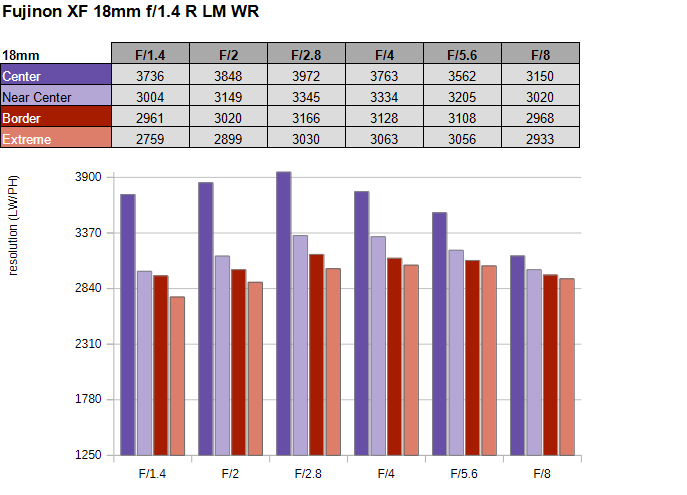
Coming back to a more positive aspect – image resolution. The center quality is excellent straight from f/1.4 here. There is a fairly steep drop beyond the dead center with good to very good results for the rest of the image field. Stopping down improves the quality until the peak is reached at f/2.8. The center is downright superb here, and the outer image field is easily on a very good level. Diffraction effects are limiting the quality from f/4 although you’d barely notice this at f/5.6. f/8 is marginally softer. f/11 and beyond should be avoided as usual on APS-C cameras.
Please note that the MTF results are not directly comparable across the different systems!
Below is a simplified summary of the formal findings. The chart shows line widths per picture height (LW/PH) which can be taken as a measure of sharpness. If you are keen to know more about the MTF50 figures, you may check out the corresponding Imatest Explanations.
Chromatic Aberrations (CAs)
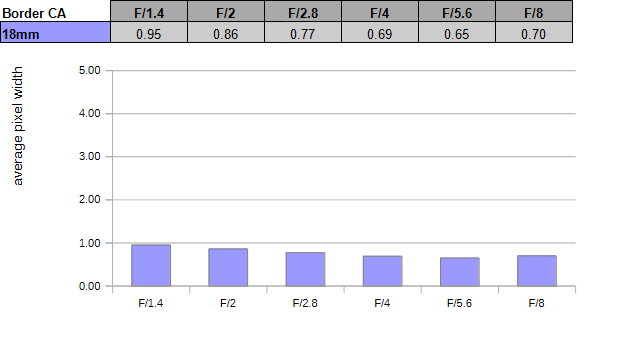
Lateral CAs are low with an average CA pixel width of less than 1px at the image borders. This is usually nothing to worry about.
Bokeh
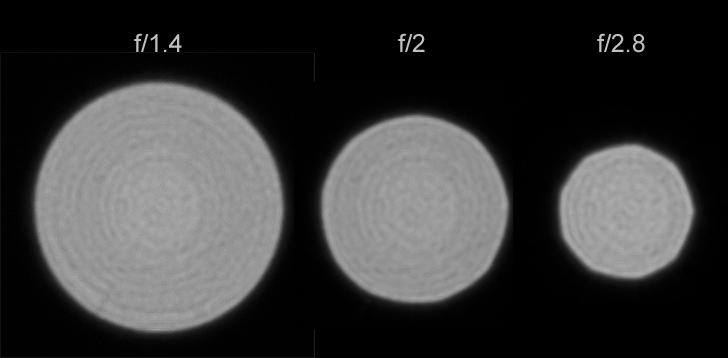
Out-of-focus highlights show a subtle inner substructure. Our bets on the cause are on the 3 aspherical elements used in the optics. However, the discs have no outlining and they are perfectly circular at f/1.4 and f/2. The more edgy aperture shape creeps in from f/2.8 here. That’s pretty similar to what we’ve seen in the other fast XF primes.
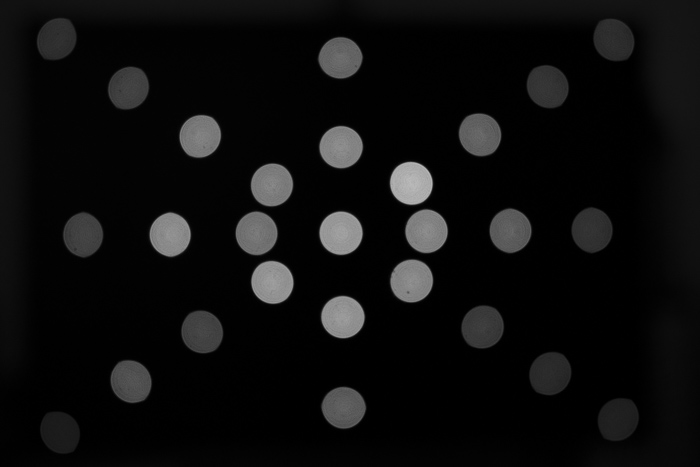
Interestingly, the circular shape is mostly maintained across the image field as you can see below. Stopping down still improves on this a bit.
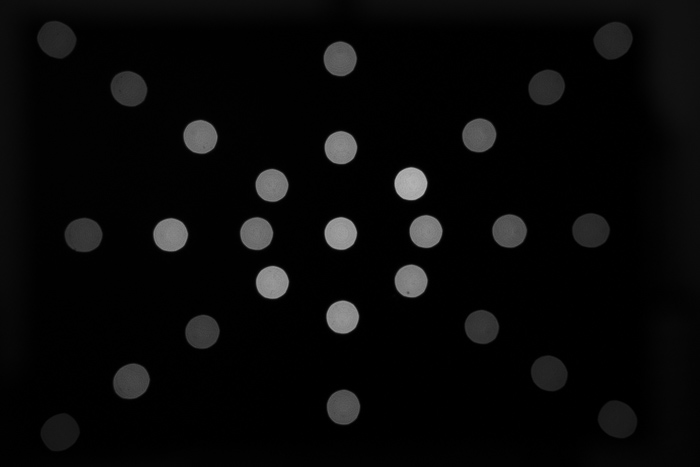
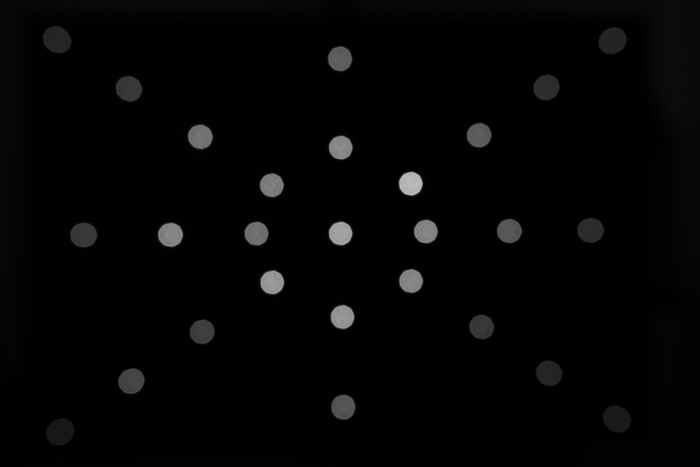
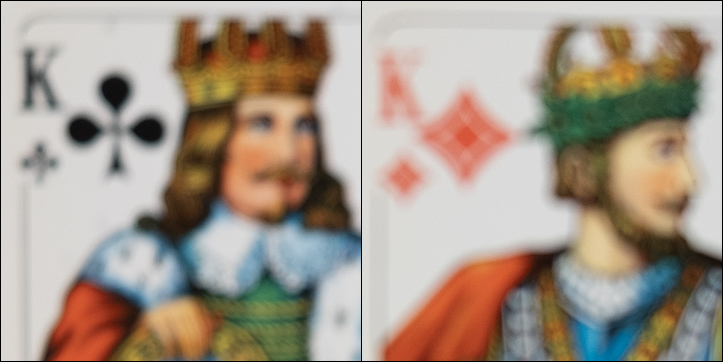
The general bokeh rendering in the focus transition zone is smooth in the background (shown to the left below). The foreground blur (to the right) is more busy but that’s less relevant in most real-world scenes.
Bokeh Fringing / LoCA
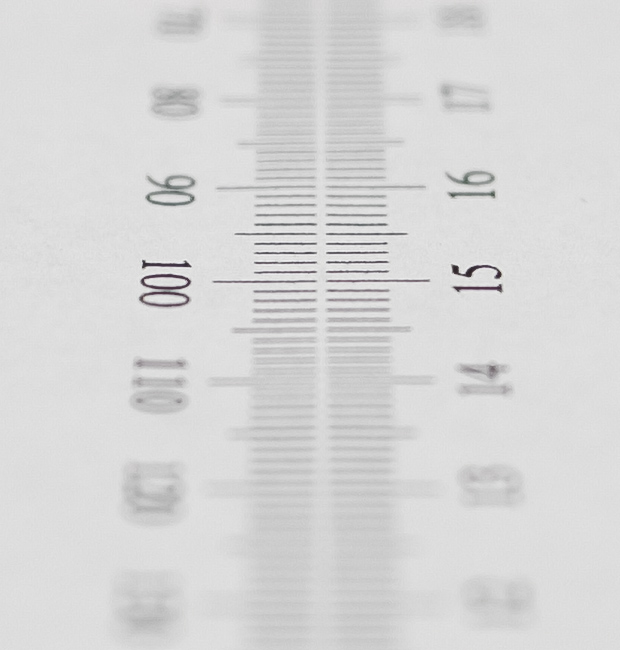
LoCAs, or bokeh fringing, is a color fringing effect on the Z-axis. It shows up with a purplish tint in front of the focus point and a greenish tint behind, and it’s nearly impossible to fully correct in post.
The Fujinon produces only very moderate color fringing at f/1.4. This is reduced the further you stop down, as usual. In practical terms it’s gone by f/2.8.
If you look closely, the focus point only moves a tiny bit towards the rear when stopping down. However, this doesn’t have any real-world impact.
Competition
You don’t have many options when it comes to fast wide-angle lenses in X-mount, but two alternatives come to mind. The Sigma 16mm f/1.4 DC DN Contemporary is a bit wider. It isn’t quite as good as the Fujinon at f/1.4 but it’s pretty decent from f/2. And it’s way more affordable. Wider still, albeit a tad slower, is the Viltrox AF 15mm f/1.7 Air. Again, the Fujinon has an edge in quality but if you are on a budget, it is a very viable solution.
Sample Images


We had high expectations for the Fujinon XF 18mm f/1.4 R LM WR and the lens didn't disappoint. The lens is very sharp even at f/1.4. The center quality is excellent but the rest of the image field is pretty good as well. Stopped down to f/2.8 and the results are very impressive indeed. Images don't exhibit any distortions, so you don't have to fear some corner smearing from autocorrection. However, autocorrection is required for the vignetting which is on the high side. Lateral as well as axial CAs are low. The quality of the bokeh is fine, although we'd wish that out-of-focus highlights would be a bit cleaner.
Just like with most of the higher-end Fujinon prime lenses, the build quality is exceptional. The all-metal outer shell and the extensive weather sealing are reassuringly solid. And the AF is snappy, too. However, videographers would have appreciated it if the aperture ring had a clickless mode.
Overall, an easy recommendation despite the fairly high price tag.
Support us by shopping at:
* Amazon US
* Amazon Europe
* B&H
* Adorama
* KEH (used gear)
The Good
- Sharp straight from f/1.4
- Very good build quality
- Quick AF
- Low axial CAs
The Bad
- A bit pricey
- Vignetting a bit high at f/1.4
- Somewhat prone to flare
-
Optical Quality8.5
-
Build Quality9
-
Price / Performance8