


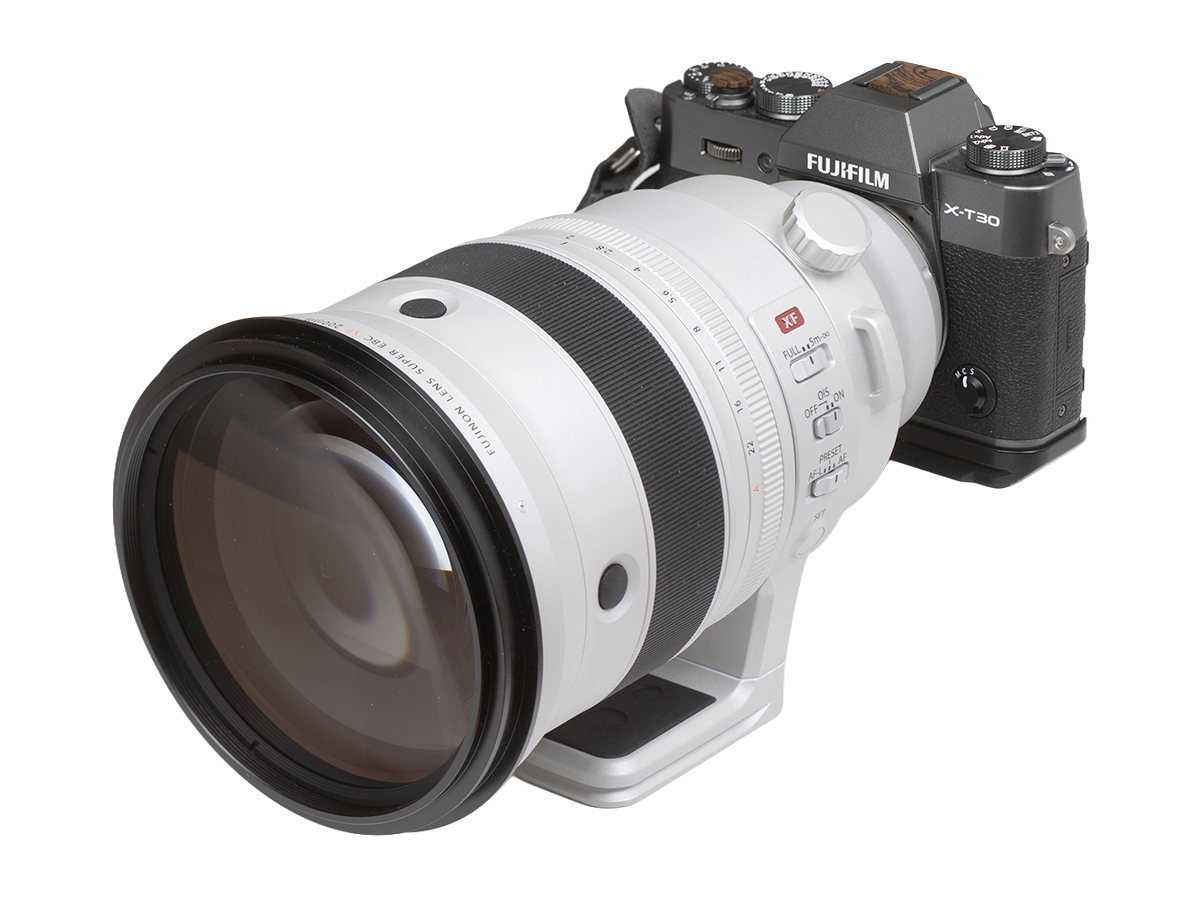
Usually we don’t really test high-end tele primes because besides getting one for testing isn’t trivial and these lenses rarely face any competition from third-party vendors. However, the Fujinon XF 200mm f/2 R LM OIS WR came along the way so who are we to argue …
With a price tag of $5000 USD, the lens is obviously targeting professional users. However, on the positive side you do not only get the lens; Fujifilm also includes a 1.4x teleconverter at no extra cost. In equivalent full-format terms, we are talking about a “305mm f/3” (or “427mm f/4.2” with 1.4x) making it ideal for action photography (and wildlife when using the 1.4x or 2x converters).
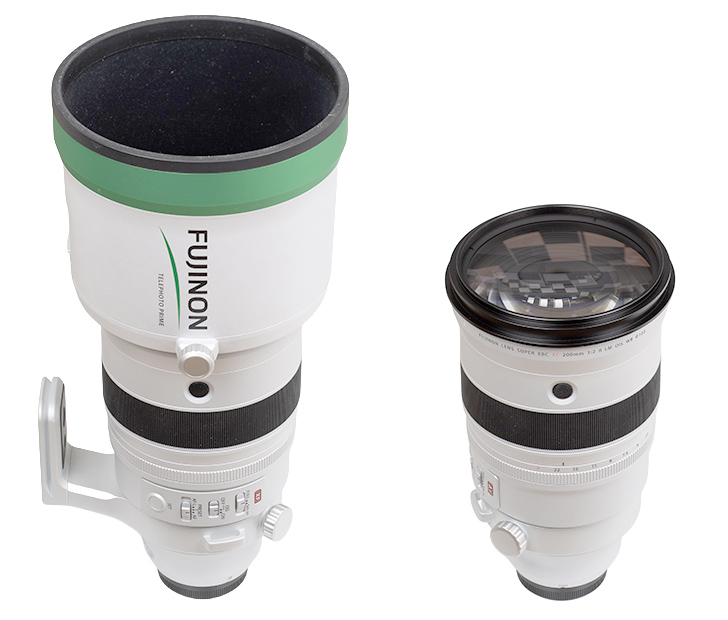
Needless to say but a lens of this caliber excels regarding its build quality. It uses a weather-sealed full-metal magnesium-alloy body. It’s also freeze-proof up to -10C. The XF 200mm f/2 is still surprisingly lightweight at just 2265g. Some may not like the silver-white coating but it’s there for a reason — managing thermal effects. After all such lenses are almost always used in outdoor conditions. Of course, it has the usual phalanx of switches and buttons such as a focus range limiter, AF control buttons, focus preset button and IS config. As you can see below, there’s also a dedicated tripod mount (Arca-Swiss compatible). As far as filters are concerned: it only takes huge 105mm front filters. There is no rear-filter slot. A deep, barrel-shaped lens hood is also part of the package.
The Fujinon uses a twin linear motor (hence the “LM” in the name) for fast and silent autofocusing. The optical image stabilizer is rated at 5 f-stops.
| Specifications | |
|---|---|
| Optical construction | 19 elements 14 groups (2x ED, 1x Super ED) |
| Equivalent on FF | “305mm f/3” |
| Number of aperture blades | 9 (rounded) |
| min. focus distance | 1.8m (max magnification: 0.12x) |
| Dimensions | ø 122 x 205.5mm |
| Weight | 2265g |
| Filter size | ø 105mm |
| Hood | barrel-shaped (screw-on, supplied) |
| Other features | Supplied w/ 1.4x teleconverter, compatible with 2x Aperture ring Image stabilizer up to 5 f-stop efficiency Focus preset button 4x focus stop buttons Focus range selector Extensive weather sealing inc. freeze proof Rotating tripod collar (Arca-type compatible) |
Distortions
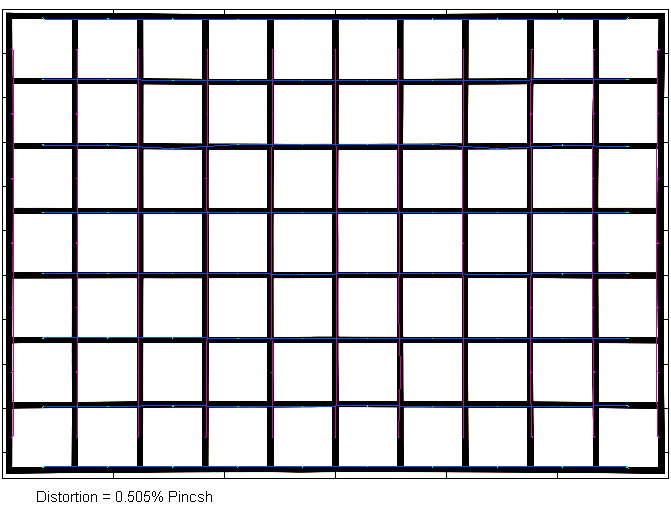
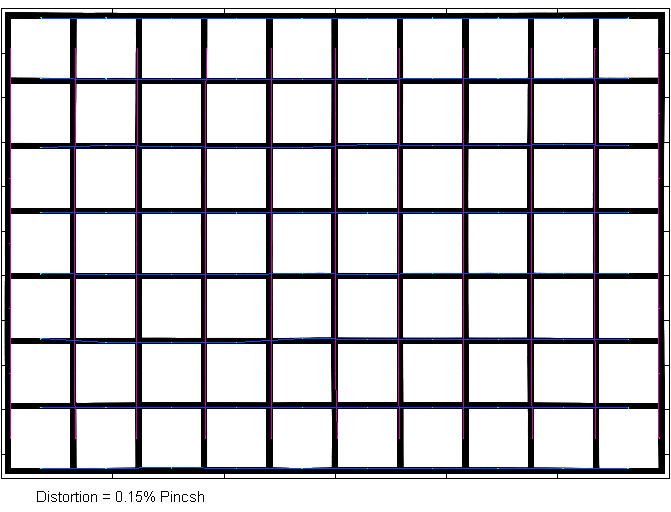
The Fujinon XF 200mm f/2 R LM OIS WR produces only a mild pincushion distortion of 0.5%. This is usually negligible although autocorrection reduces this further.
Vignetting
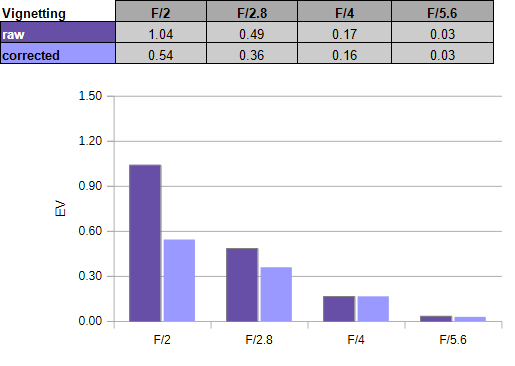
The vignetting characteristic is pretty good although this is to be expected from a long APS-C format lens. At f/2, the light falloff reaches just over 1 EV (f-stops). It’s mostly gone from f/2.8 already.
Once again, autocorrection handles this nicely.
MTF (resolution) at 26 megapixels
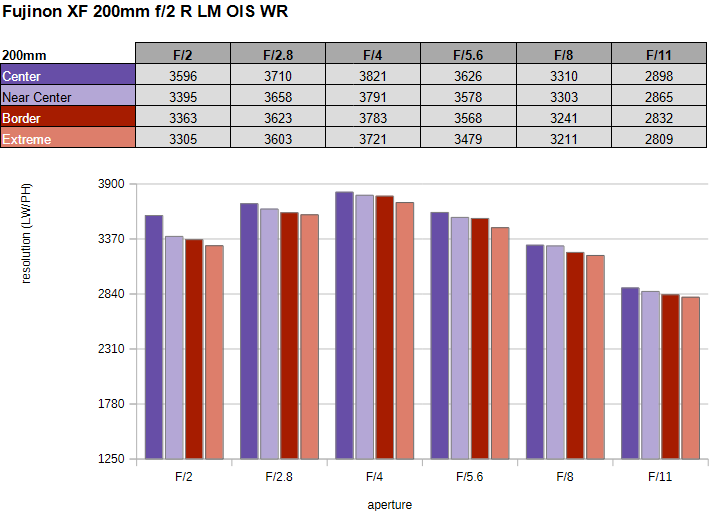
Unsurprisingly, the Fujinon doesn’t struggle on a 26-megapixel sensor. The center quality is excellent straight from f/2 and the outer image field is also very sharp here already. Stopping down still improves the quality a little with stunning results at f/4. Diffraction is the limiting factor beyond.
The tested sample had a slight centering issue which has probably prevented it from achieving higher results at f/2. That’s also the reason we won’t publish the MTFs with the 1.4x converter. Just as general guidance, a 1.4x usually costs “one school mark” in image quality.
Please note that the MTF results are not directly comparable across the different systems!
Below is a simplified summary of the formal findings. The chart shows line widths per picture height (LW/PH) which can be taken as a measure of sharpness. If you are keen to know more about the MTF50 figures, you may check out the corresponding Imatest Explanations.
Chromatic Aberrations (CAs)
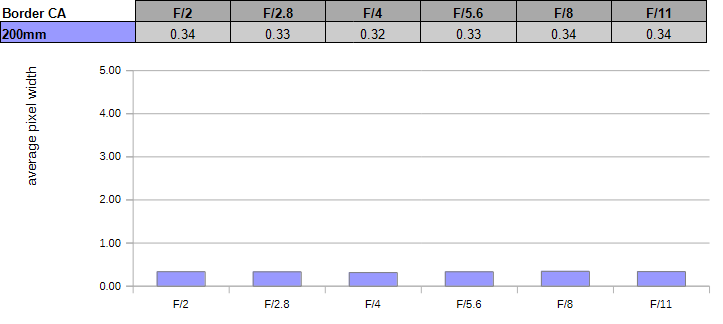
Lateral CAs are extremely low at all aperture settings and not relevant from a user perspective.
Bokeh
Sheer sharpness is one thing but the quality of the bokeh is just as important with such a lens.
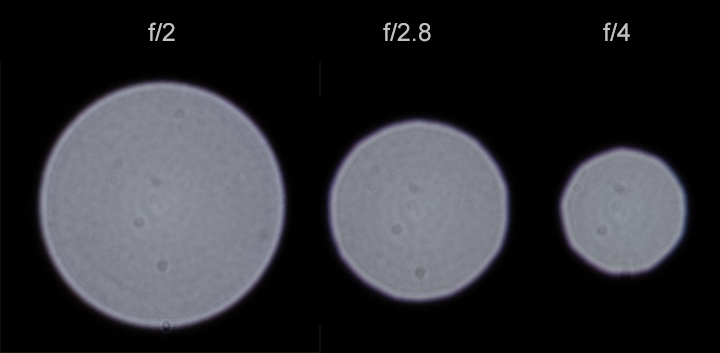
Out-of-focus highlights aren’t perfectly rendered. You may notice that the inner zone of the discs has a slightly busy substructure (and some dust particles in our case). However, this is relatively subtle here and probably not overly relevant in real-world images. There is also a bit of an outlining effect that increases when stopping down. The circular shape of the disc is maintained at f/2.8. The more edgy aperture creeps in at f/4.
The above applies to the broader center. However, the highlights deteriorate to “cat eyes” the more they are positioned towards the borders/corners—this is a mechanical vignetting effect. Stopping down to f/2.8 broadens the zone with circular discs and the corner discs are restored at f/4.
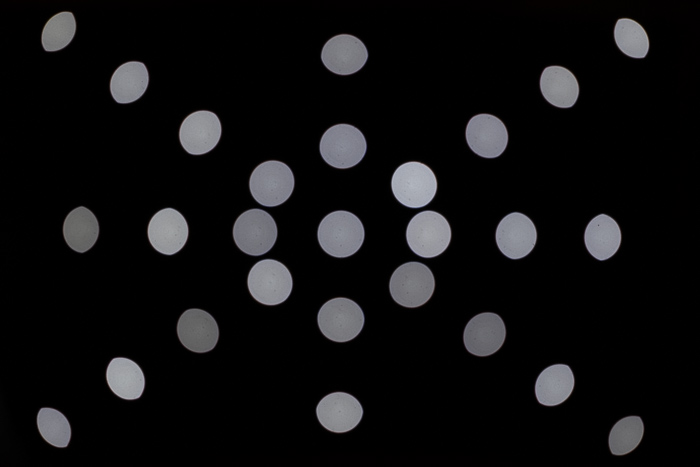
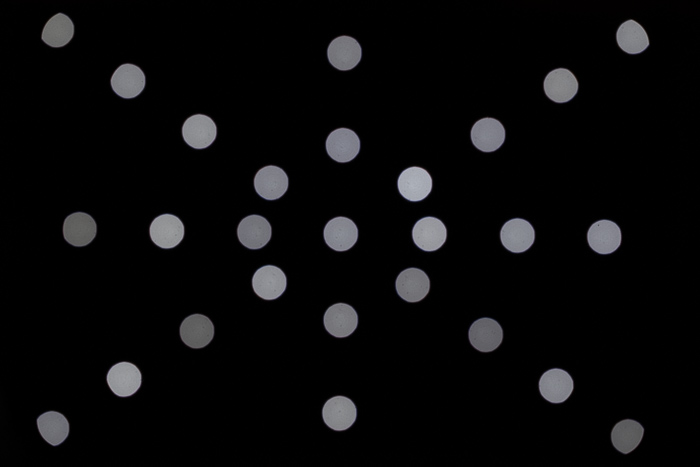
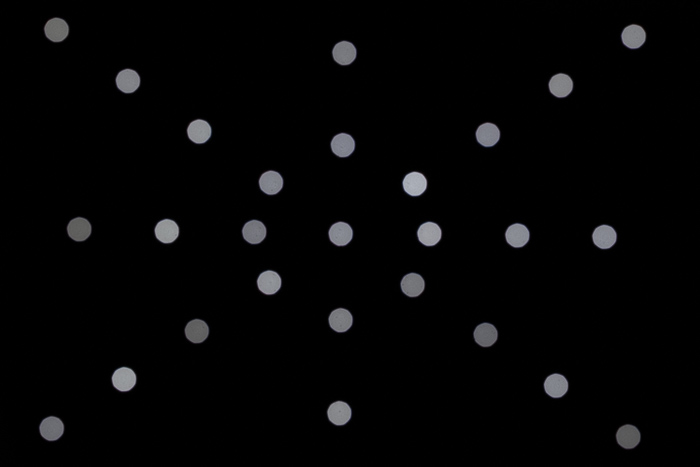
The general rendering of the out-of-focus blur is decent but not the best that we’ve seen.
Note: The foreground crop (to the right) has a bit of a lighting issue; appologies for this.
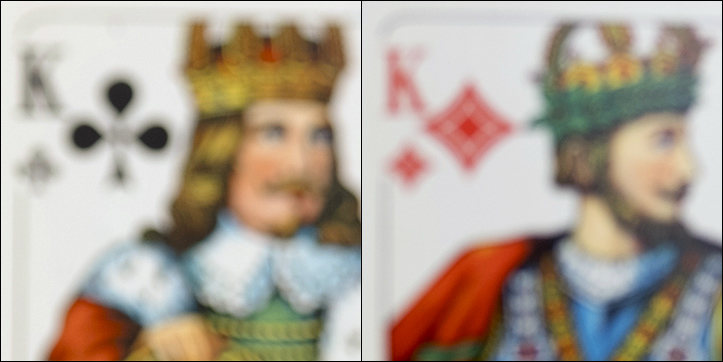
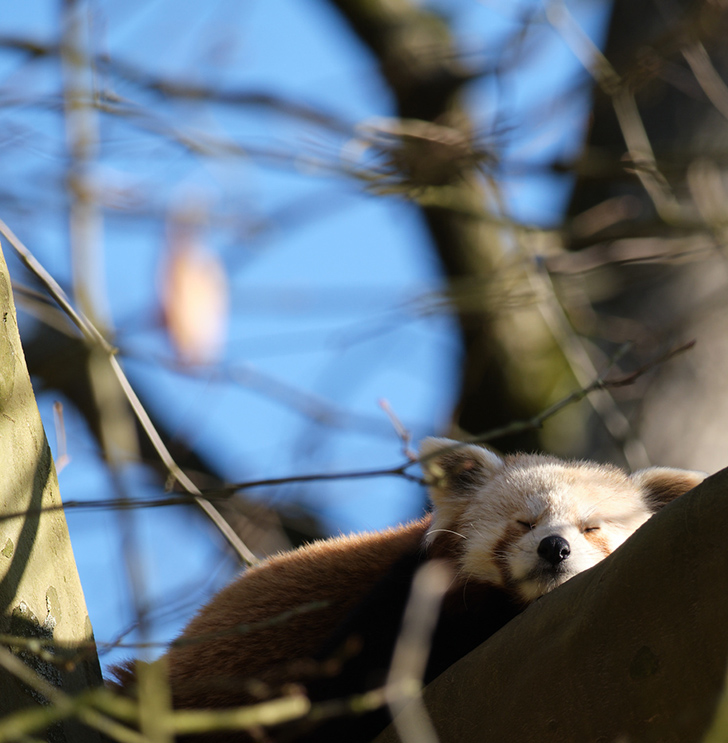
Below is a sample crop of a difficult real-world scene where the background bokeh issue is more obvious:
Bokeh Fringing / LoCA
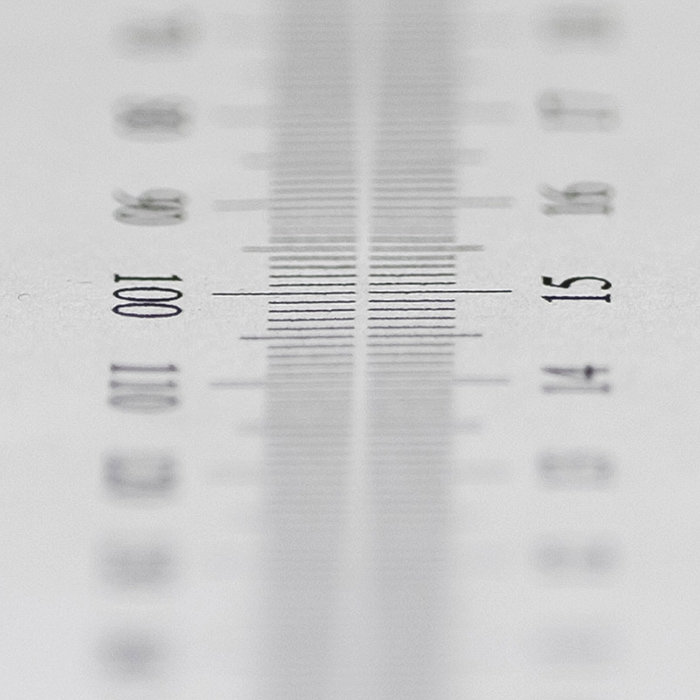
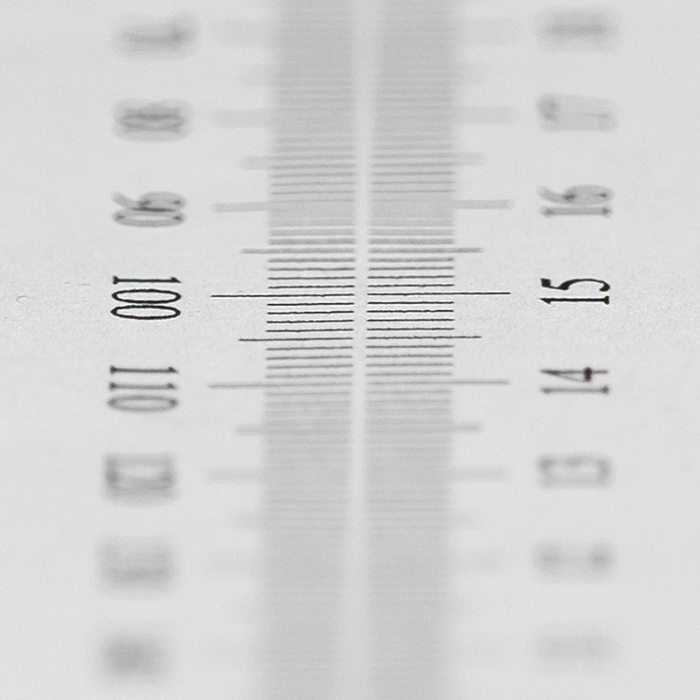
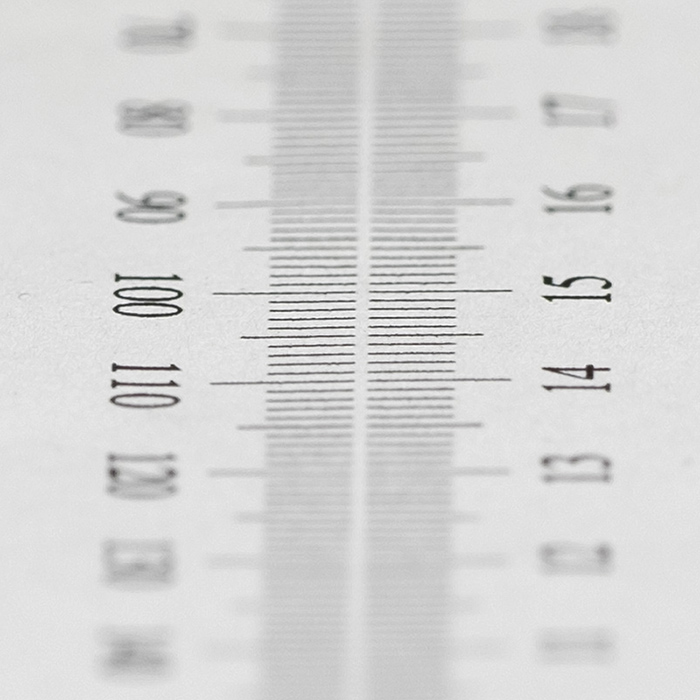
LoCAs, or bokeh fringing, is a color fringing effect on the Z-axis. It shows up with a purplish tint in front of the focus point and a greenish tint behind, and it’s nearly impossible to fully correct in post. As you can see below, the Fujinon is impeccable in this respect.
Side note: You may notice that the background numbers are rendered a bit rough here.

Competition
None, really.
Sample Images


Testing a rather exotic tele lens is always fun time and this wasn't any different with the Fujinon XF 200mm f/2 R LM OIS WR. It's plenty sharp with minimal lateral AND axial CAs - a true APO lens! Image distortions are negligible. There's a bit of vignetting at f/2 but autocorrection fixes this easily. If we had a name a weakness, it's the quality of the bokeh. It can be rough in certain scenes. Keep in mind that the depth-of-field is often so shallow that you won't notice it, though.
The build quality is about as good as it gets. The magnesium-alloy body feels as if it was carved out of sheer rock — while still being surprisingly lightweight and compact. The AF is snappy and silent. The image stabilizer is efficient.
Fujifilm is very proud of this lens and we can see why. It's not perfect in the absolute sense but still - highly recommended ... if you can afford it ...
Support us by shopping at:
* Amazon US
* B&H
* Adorama
* KEH (used gear)
The Good
- Very sharp
- An APO lens! No axial CAs to speak of
- Compact and lightweight for what it is
- Comes with a 1.4x converter
- Arca-Swiss-style tripod mount
The Bad
- It's expensive ...
- No rear filter slot
- Bokeh not ideal in certain scenes
-
Optical Quality8.5
-
Build Quality10
-
Price / Performance8