


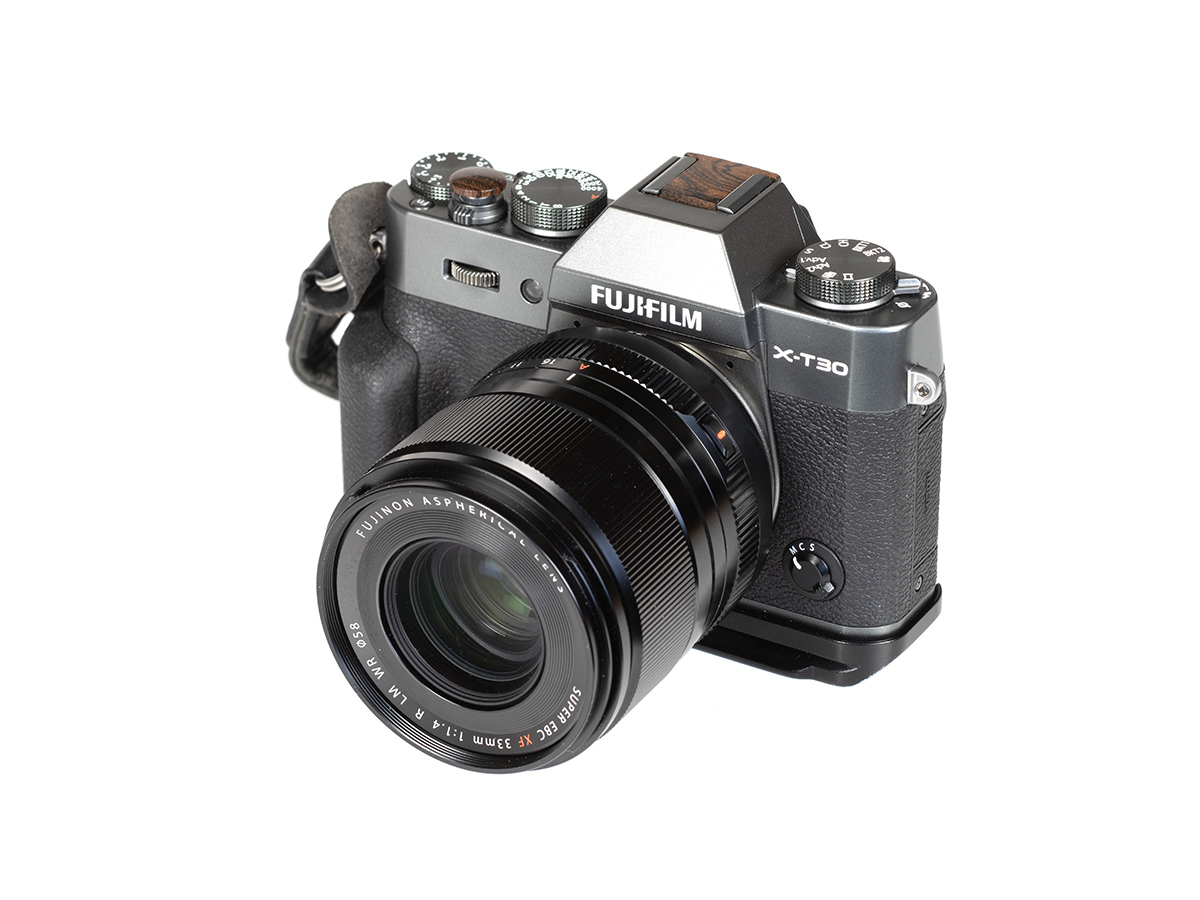
The Fujinon XF 35mm f/1.4 R is beloved for its smooth rendering characteristics among many Fujifilm users – despite being ancient by now. However, it’s not really a high-performance standard prime lens. For this purpose Fujifilm has another lens up its sleeve – the Fujinon XF 33mm f/1.4 R LM WR. High performance comes at a price – literally – so you will have to invest $950 for the privilege.
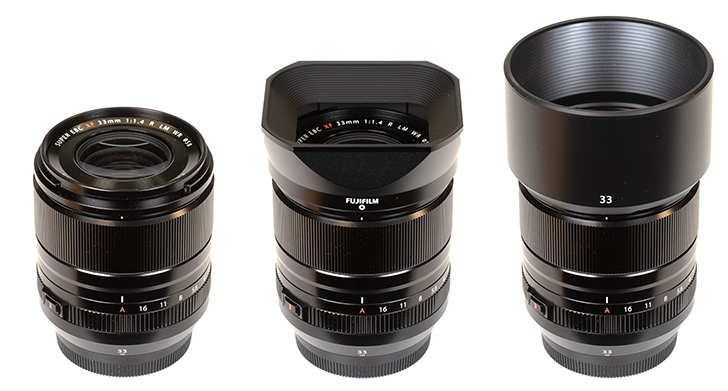
However, the build quality matches the price tag. It’s an all-metal lens body with weather-sealing, hence the “WR” (weather-resistant) in the name, and it’s even freeze-proof down to -10C. The broad focus ring turns silky smooth. The Fujinon uses an internal focusing mechanism so the physical length doesn’t change. There is, of course, also a dedicated aperture ring (“R”) that can be locked in “A” position. It can’t be “de-clicked”, though. A barrel-shaped lens hood is supplied. However, it is also compatible with the optional square-shaped LH-XF23-2 lens hood which looks quite posh as you can see below.
The XF 33mm f/1.4 R LM WR uses a linear AF motor (“LM”) which is a magnitude faster and virtually silent than the dated AF motor of the XF 35mm f/1.4 R.
| Specifications | |
|---|---|
| Optical construction | 15 elements in 10 groups (3x ED, 2x aspherical) |
| Full-format equivalent | “50mm f/2.1” |
| Number of aperture blades | 9 (rounded) |
| min. focus distance | 0.3m (max magnification: 0.14x) |
| Dimensions | φ 67mm x 73.5mm |
| Weight | 360g |
| Filter size | φ 58mm |
| Hood | barrel-shaped (bayonet mount, supplied) |
| Other features | Aperture ring Weather-resistant Freeze-proof down to -10C |
Distortions
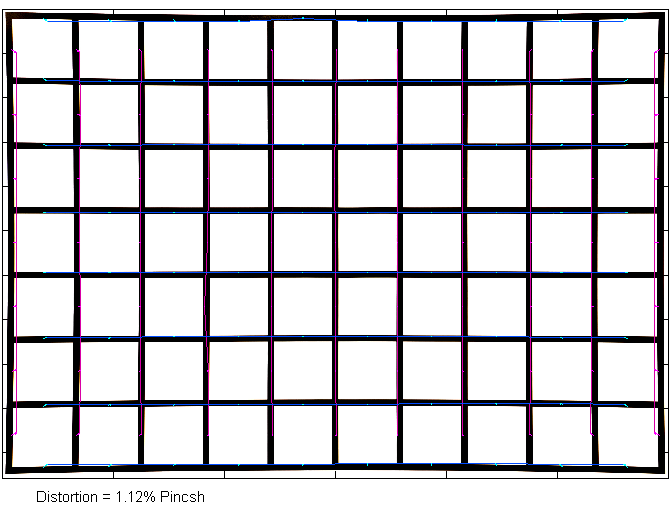
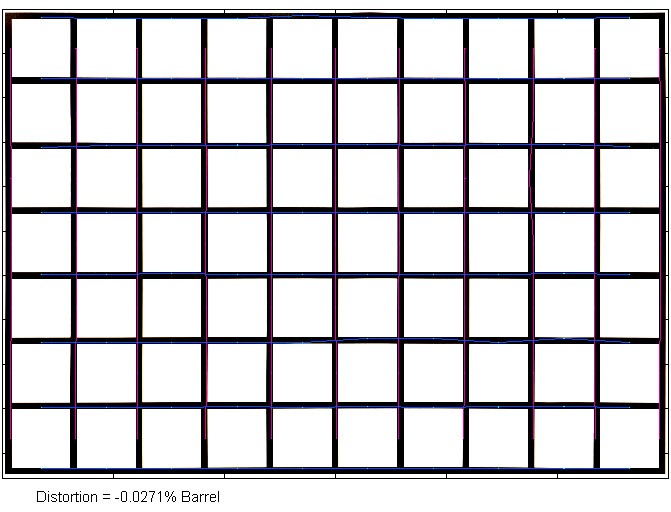
The XF 33mm f/1.4 R LM WR produces a mild pincushion distortion of ~1.1% in RAW files. Even so, autocorrection restores distortion-free images.
Vignetting
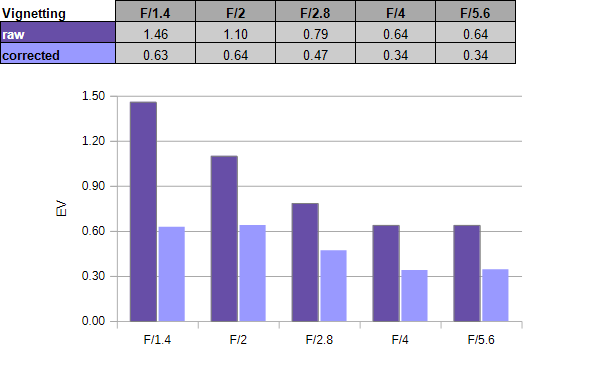
Fast lenses often produce fairly heavy vignetting at maximum aperture. Within the APS-C scope this also applies to the Fujinon although this is still moderate when applying full-format standards. RAW images show a light falloff of ~1.5 EV (f-stop) at f/1.4. This is reduced to just over 1 EV at f/2, and it settles at ~0.6 EV from f/4. Autocorrection reduces the vignetting to ~0.6 EV at f/1.4 and f/2. Beyond f/2.8, the issue is mostly negligible.
MTF (resolution) at 26 megapixels
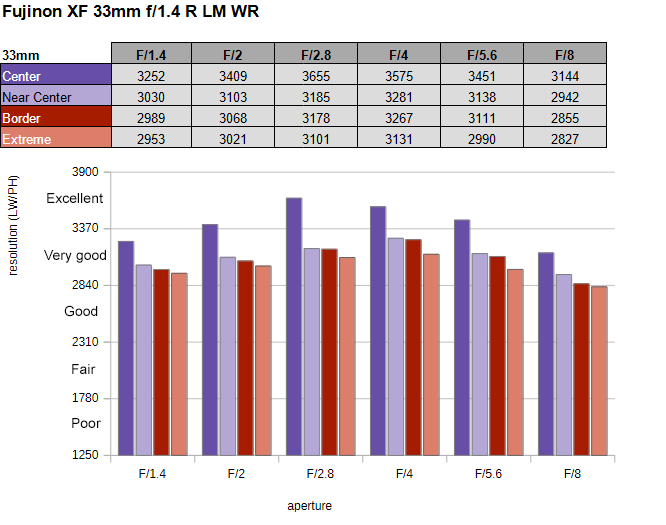
The XF 33mm f/1.4 R LM WR produces consistently high results across the relevant aperture range. The center quality is very good at f/1.4 and even the outer image field makes it across this mark. Stopping down to f/2 improves primarily in the center. The overall peak is reached between f/2.8 and f/4. Beyond that, diffraction is the limiting factor, as usual.
Please note that the MTF results are not directly comparable across the different systems!
Below is a simplified summary of the formal findings. The chart shows line widths per picture height (LW/PH) which can be taken as a measure of sharpness. If you are keen to know more about the MTF50 figures, you may check out the corresponding Imatest Explanations.
Chromatic Aberrations (CAs)
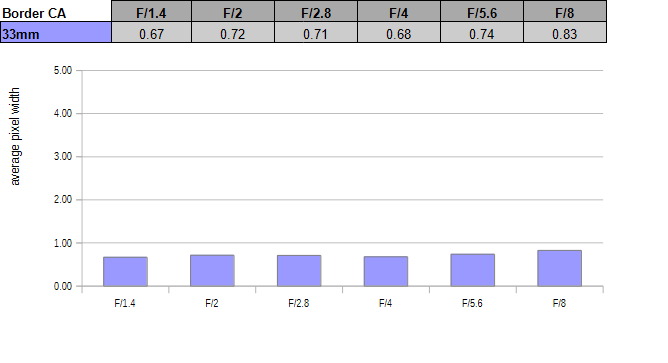
Lateral CAs are low with an average CA pixel width of 0.7px at the image borders. This isn’t really relevant anymore.
Bokeh
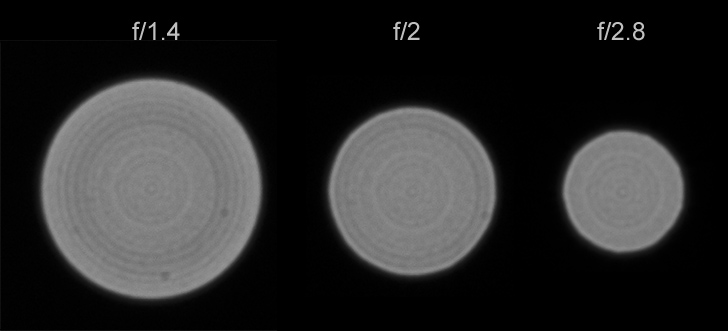
Out-of-focus highlights reveal a subtle inner substructure, most likely caused by the aspherical elements. However, the discs have no outlining and they are perfectly circular at f/1.4 and f/2. The more edgy aperture shape creeps in from f/2.8 here.
The above applies to the broader center. However, the highlights deteriorate to “cat eyes” the more they are positioned towards the borders/corners. If you look closely below, you may spot that the peripheral discs do have a one-sided outlining at f/1.4. This disappears when stopping down so for a nicer overall rendering, you may wish to go for f/1.6 instead of f/1.4. The discs are fully restored to their circular shape from f/2.8.
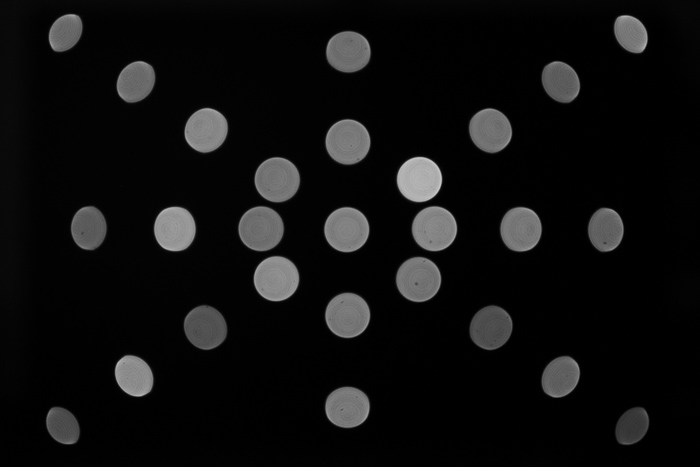
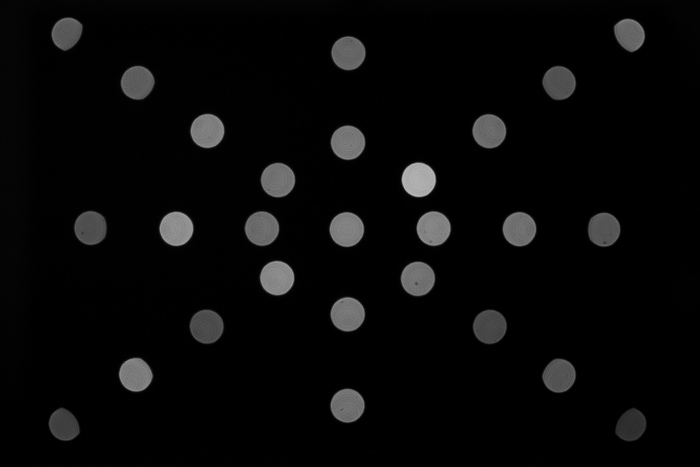
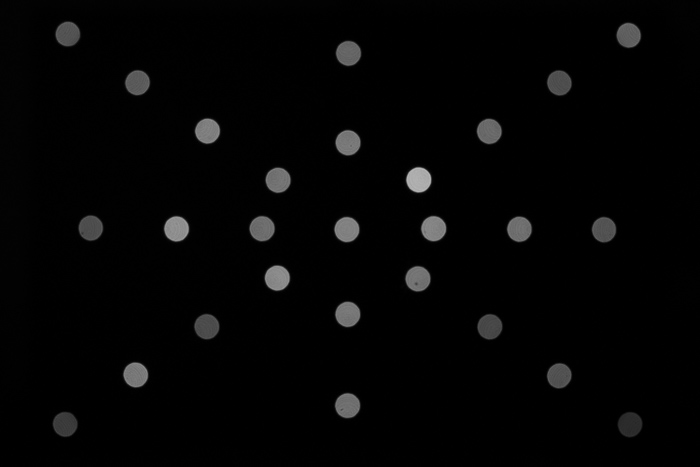
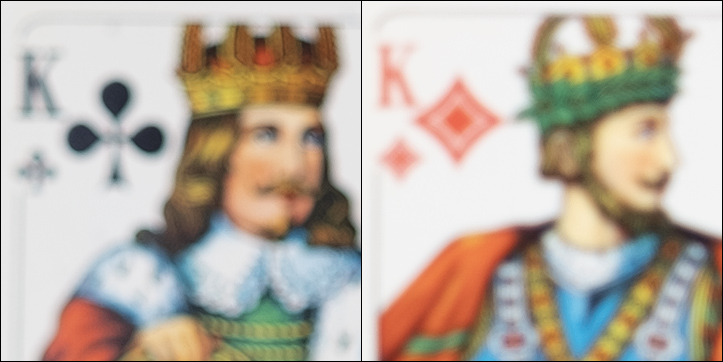
The general rendering of the out-of-focus blur is good in the background (shown to the left below) although sharp contrasts are a tad too harsh. The foreground blur (to the right) is very smooth which is quite unusual.
Bokeh Fringing / LoCA
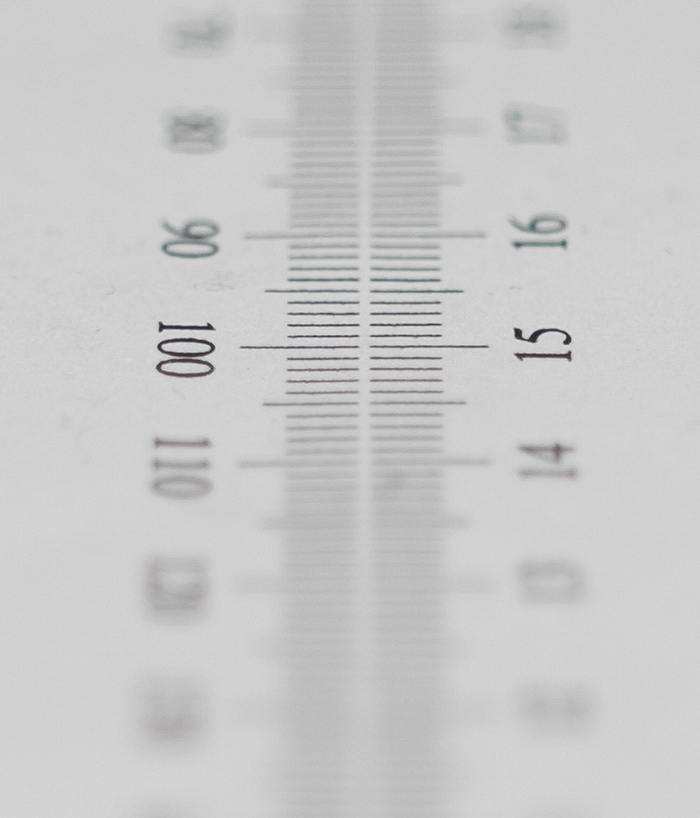
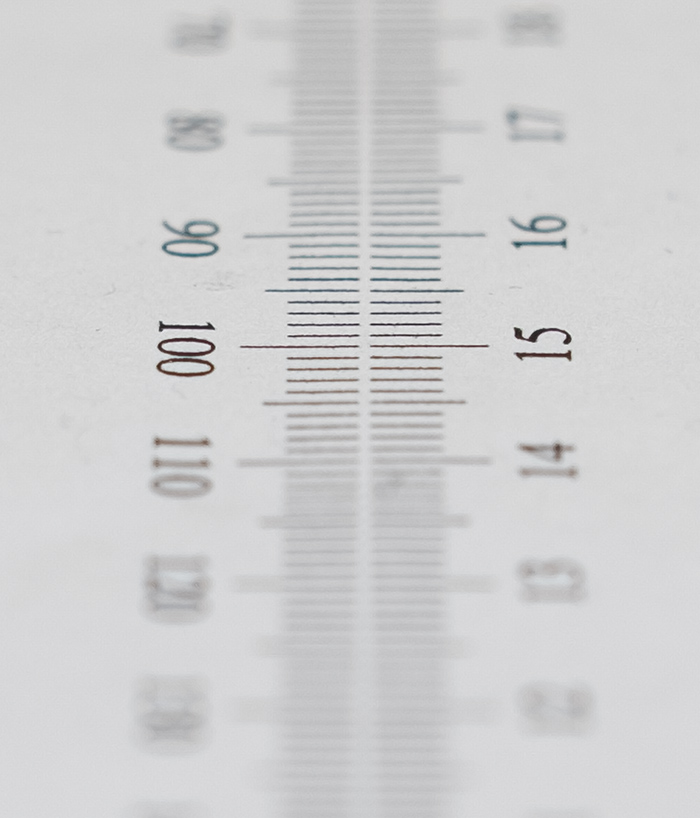
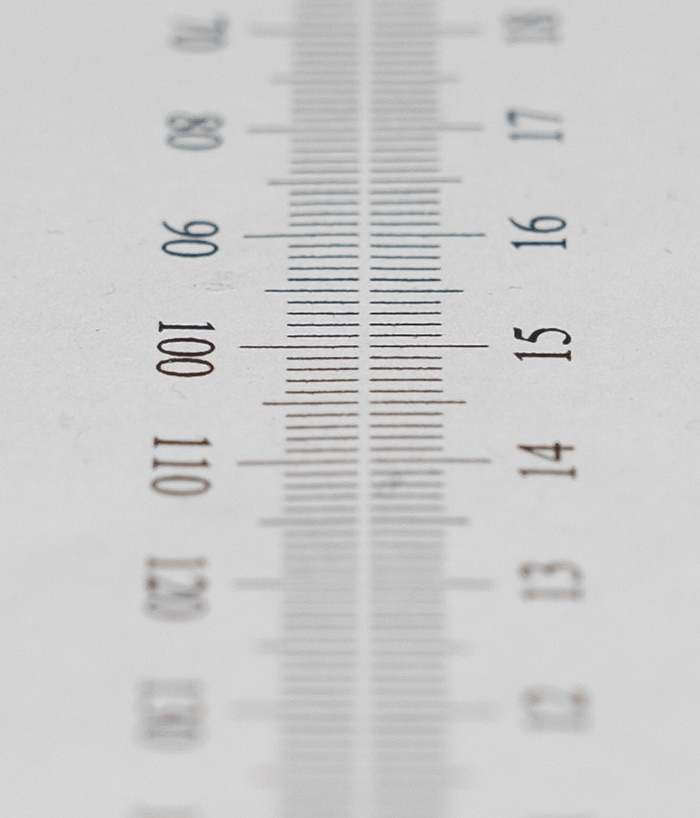
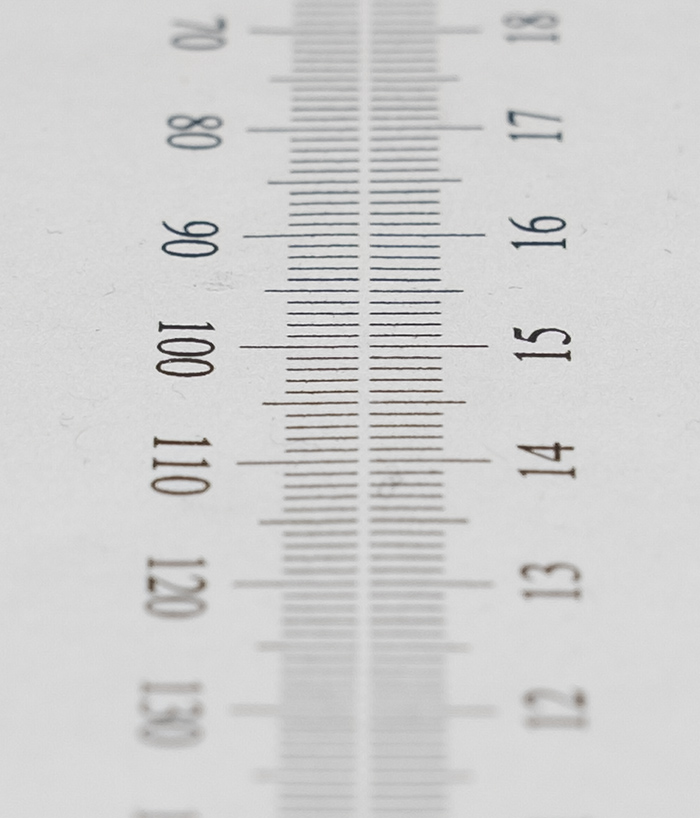
LoCAs, or bokeh fringing, is a color fringing effect on the Z-axis. It shows up with a purplish tint in front of the focus point and a greenish tint behind, and it’s nearly impossible to fully correct in post.
The Fujinon produces some LoCAs at f/1.4 and f/2. This fades at f/2.8 and the issue is mostly gone from f/4. Overall, this is nothing out of the ordinary for such a lens.
Competition
As already mentioned, the Fujinon XF 33mm f/1.4 R LM WR can be considered a successor to the XF 35mm f/1.4 R. The XF 33mm f/1.4 is certainly technically better. Some still argue that the older lens isn’t as clinical which, if true, has its merits. Regardless, the XF 35mm f/1.4 is dated with its whirring AF motor. The more modern rival is the Sigma 30mm f/1.4 DC DN Contemporary. We have yet to test the Sigma. It’s supposed to be extremely sharp in the center but less so in the outer image field. Thus it’s probably not as balanced. It’s also not as well weather-sealed. However, it is quite a bit cheaper. Then there’s the Viltrox AF 33mm f/1.4 XF – an older design. Viltrox has come a long way with their latest lenses but this early design isn’t quite worth it in comparison. There are some further options from the more exotic Chinese manufacturers.
Sample Images


The Fujinon XF 35mm f/1.4 R had a good run, but eventually Fujifilm had to come with an improved version. The Fujinon XF 33mm f/1.4 R LM WR is substantially sharper, especially at very large apertures. Image distortions and lateral CAs are already low in RAW files. The native vignetting is quite high but autocorrection handles this nicely. Axial CAs (aka LoCAs) can be visible in critical scenes but that's typical for many fast prime lenses. The bokeh isn't flawless but mostly pleasing.
The build quality is, unsurprisingly, very high. The metal body feels reassuring and the weather sealing is extensive. The new linear AF motor is both snappy and silent - and it's like day and night compared to the XF 35mm f/1.4 R.
Overall, a worthy upgrade, thus "Highly Recommended!
Support us by shopping at:
* Amazon US
* Amazon Europe
* B&H
* Adorama
* KEH (used gear)
The Good
- Sharp straight from f/1.4
- Solid build quality
- Vastly improved AF compared to the XF 35mm f/1.4 R
The Bad
- A bit pricey for a standard prime lens
-
Optical Quality8
-
Build Quality9
-
Price / Performance7