


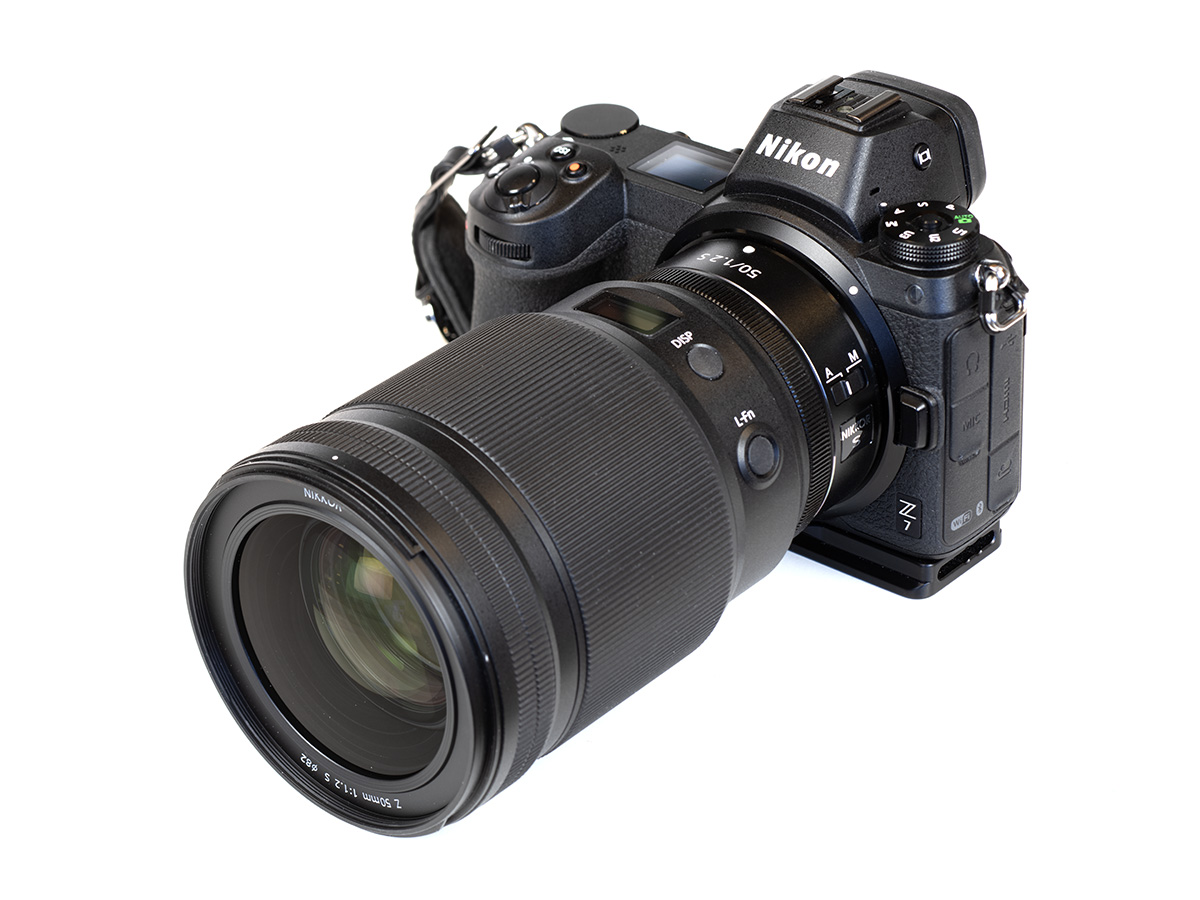
Speed is nice, more speed is better. So let’s meet the Nikkor Z 50mm f/1.2 S. Actually, it’s not the fastest standard prime lens in the Nikon lens line up – this glory goes to the Nikkor Z 50mm f/0.95 NOCT but you are probably not prepared to pay almost ten grand for this manual focus marvel. The Z 50mm f/1.2 S is already not exactly cheap at over $2000 USD.
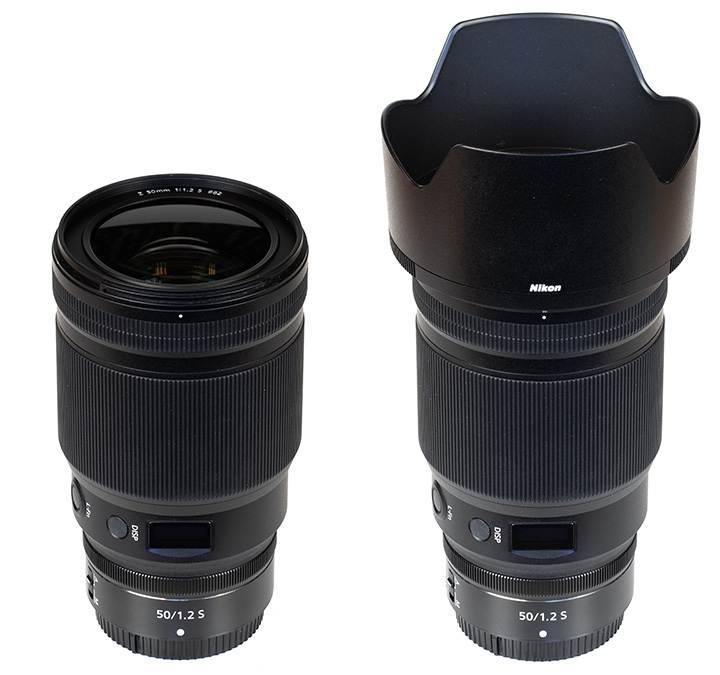
Upon first contact, you will notice that Z 50mm f/1.2 S is a brick of a lens. It weighs over 1 kg and it’s also quite long for what it is. As far as the mechanical design is concerned, it uses Nikon’s common recipe for high-end lenses. The outer shell is made of high-grade engineering plastics over a metal core. It is, of course, weather sealed. Besides the rubberized focus ring, there’s also a customizable control ring at the rear. The latter can be programmed to adjust your aperture, ISO, or exposure compensation. The top OLED information panel can be used to verify aperture, focus distance, and depth of field. As you can see below, a petal-shaped lens hood is part of the package.
The Nikkor Z 50mm f/1.2 S uses a multi-focus system where two independent stepping motors (STMs) move the focus groups. It’s pretty quck for a lens with heavy elements, but it’s not instant. The smooth focus transition and noiseless operation are desirable for videos. Speaking of videos – the focus breathing is almost non-existent.
| Specifications | |
|---|---|
| Optical construction | 17 elements in 15 groups (2x ED, 3x aspherical) Nano Crystal Coat ARNEO Coat |
| Number of aperture blades | 9 (rounded) |
| min. focus distance | 0.45m (max. magnification: 0.15x) |
| Dimensions | 89.5 x 150mm |
| Weight | 1090g |
| Filter size | 77mm |
| Hood | petal-shaped, bayonet mount, supplied |
| Other features | control ring dust- and drip-resistant Fn button OLED Display |
Distortion
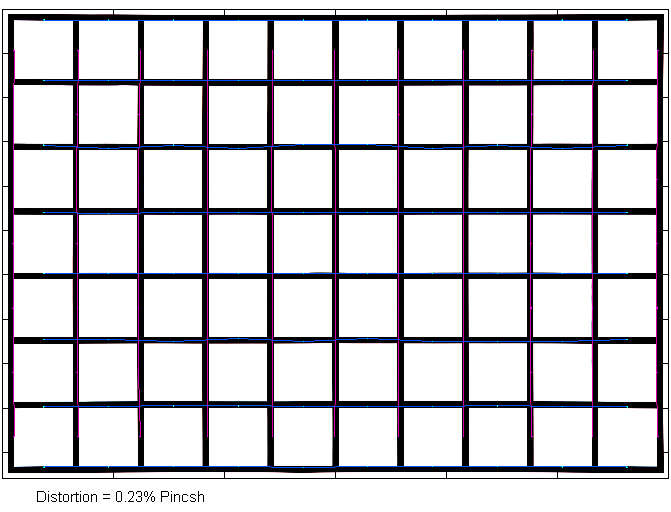
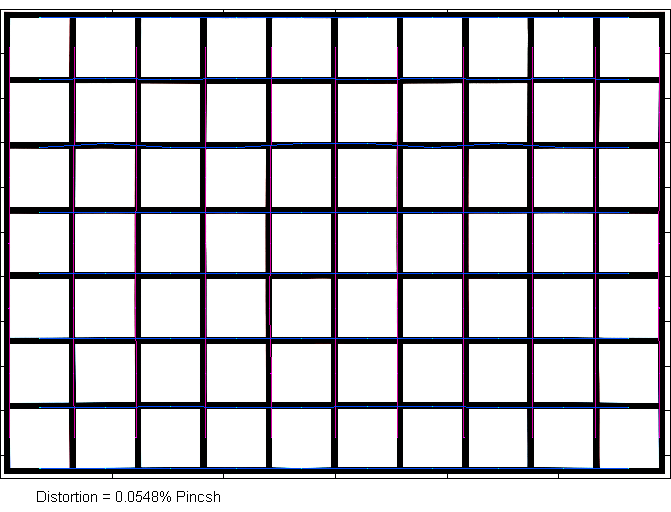
The Nikkor Z 50mm f/1.2 S is already very well corrected in RAW files with a pincushion distortion of just 0.2%. Autocorrection eliminates the rest, as usual.
Vignetting
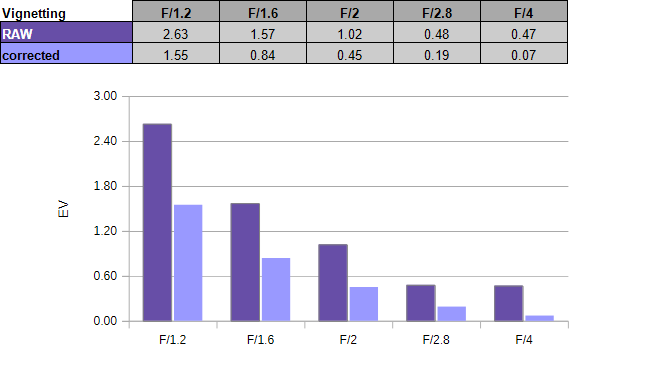
Ultra-fast lenses always produce a significant amount of vignetting and the Nikkor is no exception to this rule. RAW images reveal a light falloff of ~2.6 EV (f-stops) at f/1.2. This is reduced by 1 EV (f-stop) at f/1.6, and the issue is mostly gone by f/2.8 already. Autocorrection reduces this substantially without going for a full correction. At f/1.2 you can still notice some vignetting, but it’s well-corrected from f/2 and negligible from f/2 in this case.
MTF (resolution at 45 mp)
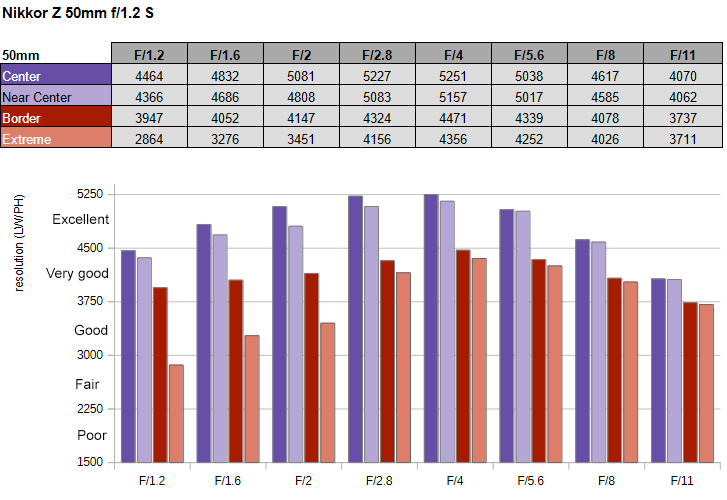
The optical design problems increase exponentially towards very high speeds. A perfect 50mm f/1.2 is basically impossible. Nikon did a good job here nontheless. At f/1.2, the broader center and even the border region reach very good quality. However, the corners are a bit soft. Whether this matters in real life is a different question, of course. The performance is lifted at f/1.6 with the center now achieving excellent quality and the corners being good at least. The quality increases further until reaching the peak at f/4. The broader center is superb here and the outer image field easily achieves a very good quality level. Diffraction effects impact the quality from here and you shouldn’t stop down beyond f/16, as usual.
Please note that the MTF results are not directly comparable across the different systems!
Below is a simplified summary of the formal findings. The chart shows line widths per picture height (LW/PH), which can be taken as a measure of sharpness. If you would like to know more about the MTF50 figures, you may check out the corresponding Imatest Explanations.
Chromatic Aberrations (CAs)
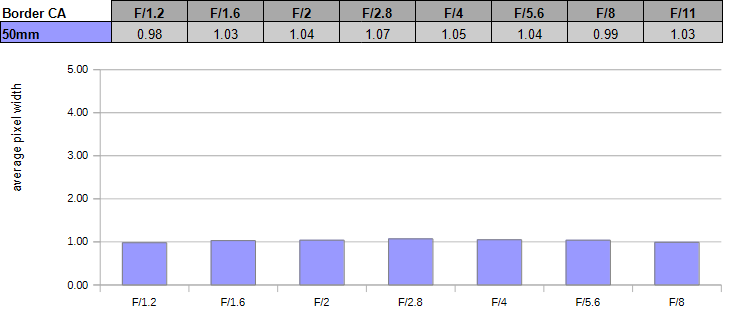
Lateral CAs are low with an average pixel width of around 1px at the borders. This is fine for such a complex lens. And autocorrection will handle this anyway.
Bokeh
The discussion about the sharpness is important, but when shooting at high speeds you tend to be as interested in the bokeh. So let’s check it out.
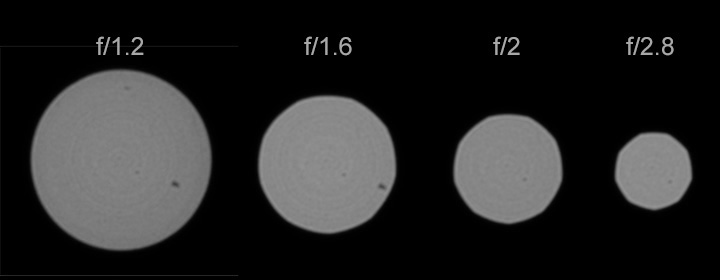
Out-of-focus highlights are very clean at f/1.2 (well, apart from the dust spots there) with only a negligible onion-ring substructure. The edges of the discs show no outlining whatsoever. The shape of the center discs is perfectly circular at f/1.2 and mostly so at f/1.6. The more edgy aperture shape creeps in at f/2 which is a little “early”.
When looking at the whole image, the circular highlight shape is maintained in the broader center but there is the usual deterioration to “cat eyes” towards the corners. The “perfect” zone is broadening the more you stop down and the corner discs are restored from f/2.
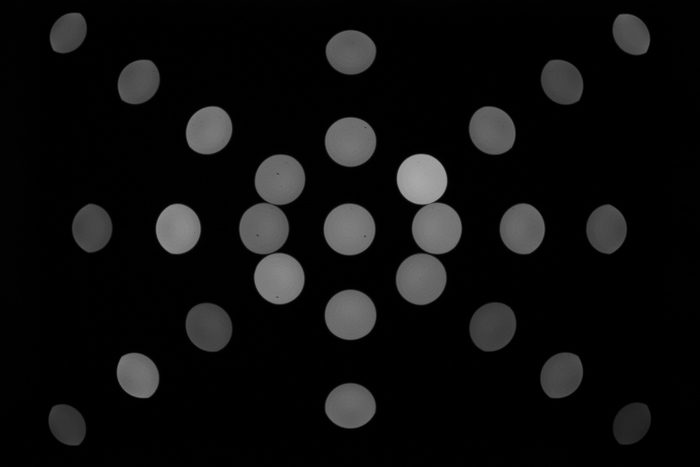
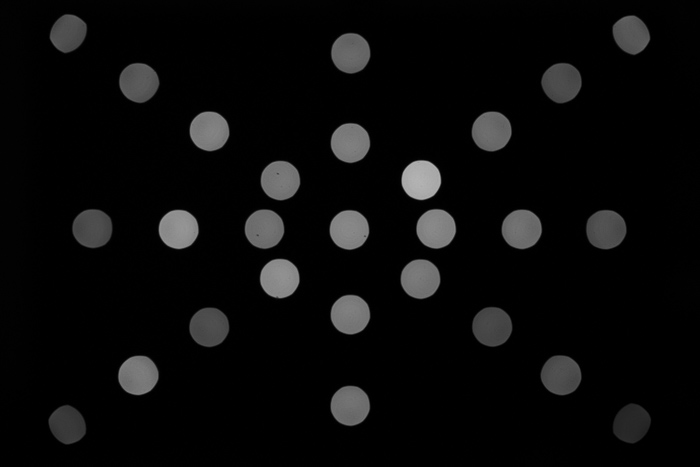
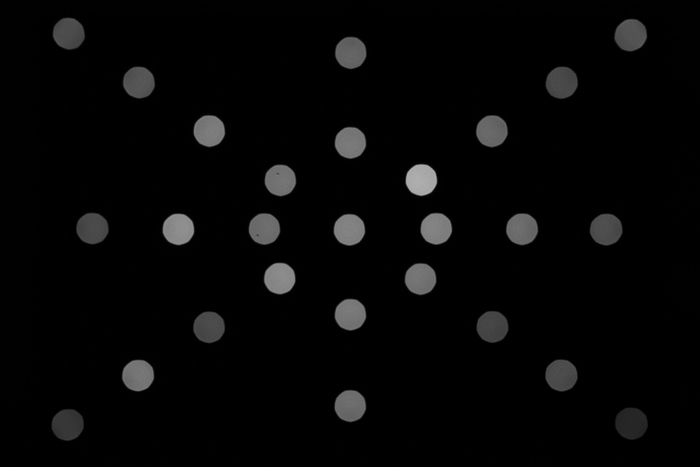
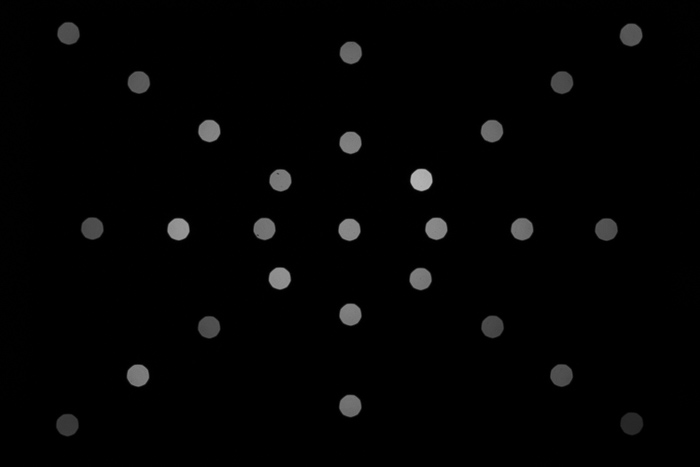
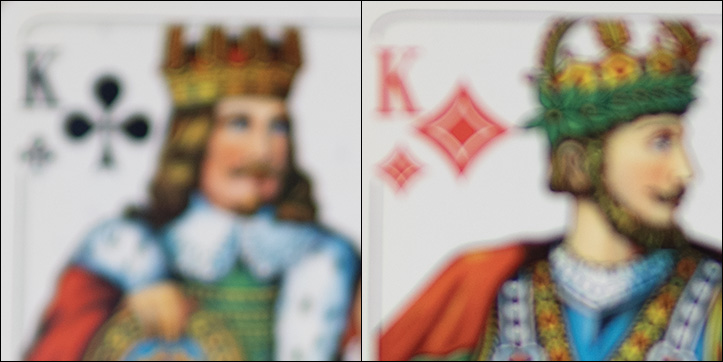
The general blur in the focus transition zone is very smooth in the image background (shown to the left below) . The foreground blur (to the right) is more busy (double-edged).
Bokeh Fringing (LoCA)
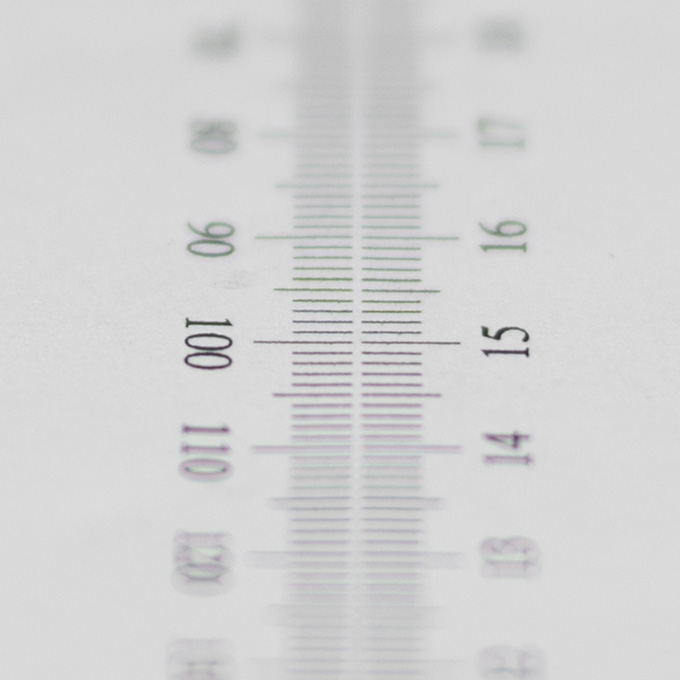
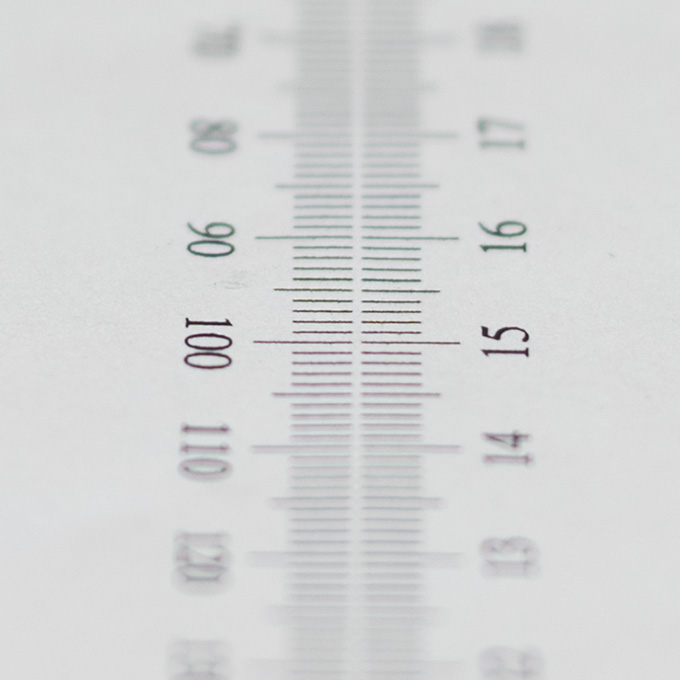
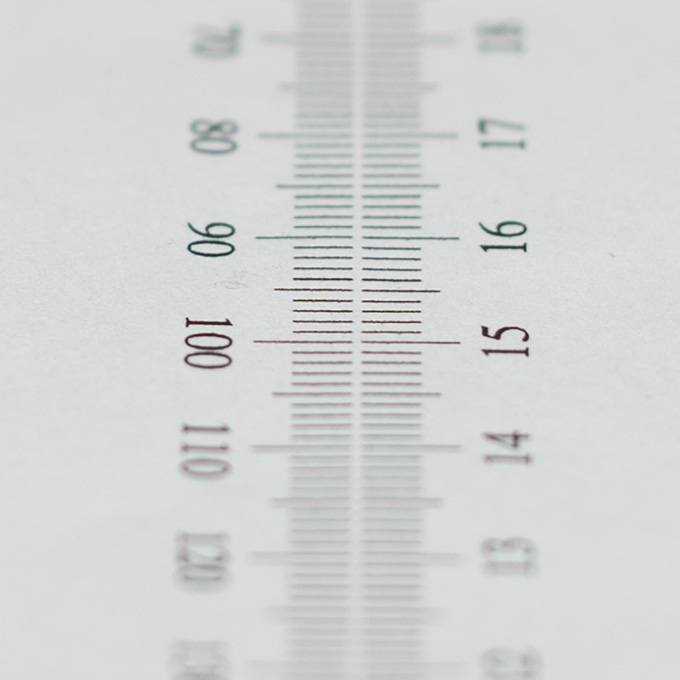
LoCAs are a color-fringing effect on the Z-axis. They show up as purplish/yellowish halos in front of the in-focus zone and greenish/bluish beyond. This aberration is quite obvious at f/1.2 as you can see below. It’s still present at f/1.2 and f/2, but reasonably well controlled from f/2.8.
If you scroll through the aperture range, you may also notice that the focus point moves to the rear. These are residual-spherical aberrations (RSA). However, the initial focus point remains sharp so this isn’t relevant in real life.
Competition
The Nikkor Z 50mm f/1.2 S is currently the fastest AF standard prime lens in Z-mount. There is, of course, the already mentioned Nikkor Z 58mm f/0.95 S Noct, but that’s a manual focus lens – and if you think the Z 50mm f/1.2 S isn’t cheap, this one is much less so. If it has to be a f/1.2 prime, there is the SongRaw AF 50mm f/1.2 “Moonlit” at half the price. It’s a newcomer company that still has to earn its glory. If you relax your speed requirements a little, there are a few options with a max aperture of f/1.4 like Nikon’s own Z 50mm f/1.4. However, keep in mind that this one is meant for “classic” image rendering rather than performance. Viltrox is offering the AF 50mm f/1.4 Pro which is actually pretty good and worth a look. If performance alone is your metric take a look at the Nikkor Z 50mm f/1.8 S which is among the best lenses that we ever tested.
Sample Images
Countryside Germany here rather than the usual sights of Australia.


The Nikkor Z 50mm f/1.2 S delivers where it counts the most. If your main subject is positioned somewhere near the center, it'll produce sharp results straight at f/1.2 combined with a very smooth bokeh. The softer corners are usually not a problem at such an aperture setting. In critical scenes you may notice some LoCAs and a bit of vignetting, though. Stopped down to f/2.8, the overall image quality becomes impeccable. Image distortions are non-issue.
The Nikkor is certainly what you can describe as a brick. Of course, this applies to most ultra-fast lenses. However, it is both heavier and bigger than the similar offerings from Canon and Sony. If you don't have an issue with this, you'd get a very well-made package that will take on professional-grade tasks with ease.
So while the Nikkor Z 50mm f/1.2 S may not be perfect from a lab perspective, it'll do the job in real life.
Support us by shopping at:
* Amazon US
* B&H
* Adorama
* KEH (used gear)
The Good
- If speed is what you want, this is the one
- Sufficiently sharp at f/1.2, very sharp at medium apertures
- Smooth bokeh
The Bad
- It's a brick
- Corner softness at f/1.2
- LoCAs at large apertures
-
Optical Quality7.5
-
Build Quality9
-
Price / Performance8