


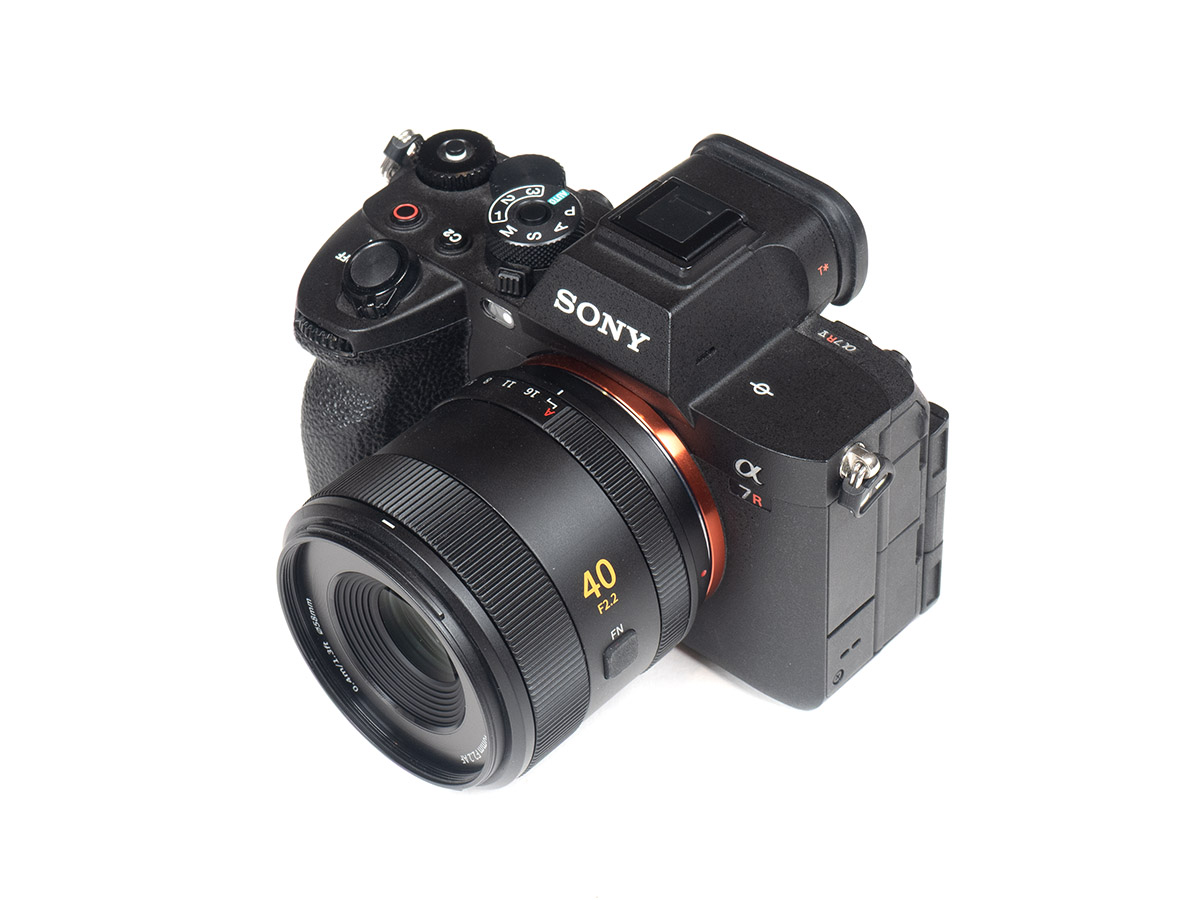
So far Sirui has been focusing on enthusiast-grade “Aurora” full-format AF (photographic) lenses, but they have now launched a budget-focused lineup of “Swift”-labeled lenses. Besides an ultra-wide lens, they introduced the Sirui Swift 40mm f/2.2 which we’ll discuss here. It’s a moderately specced standard prime lens that retails for just $149 USD and is available in Sony E (tested here), Nikon Z, Fujifilm X and L-mount.
Given the rock-bottom price tag, you may not expect much in terms of build quality but this is actually not the case. Sirui used quality plastics based on a metal mount. The focus ring turns smoothly and they even implemented an aperture ring with a pretty nice click action. There is even an Fn button as well as an AF/MF switch. Some cost cutting is noticeable regarding weather-sealing which is limited to a mount gasket. A rather tiny petal-shaped lens hood is also part of the package. A surprising aspect is autofocusing. It’s extremely fast and silent. Overall, we’d state that it punches above its price class as far as construction quality is concerned.
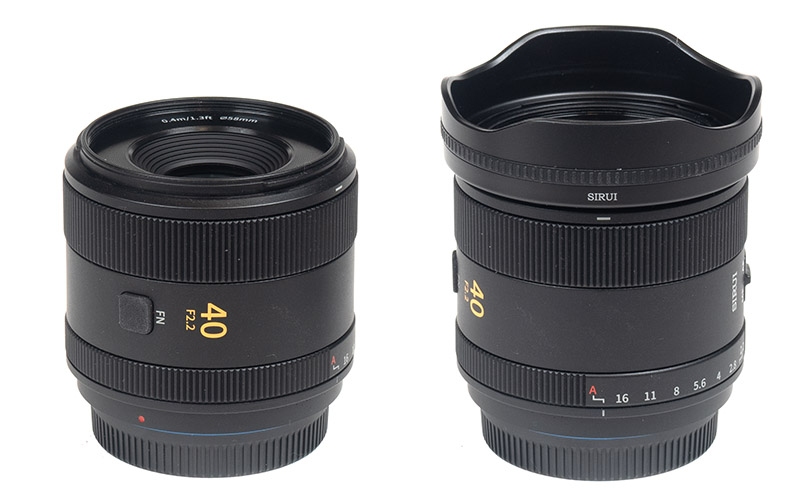
| Specifications | |
|---|---|
| Optical construction | 11 elements in 8 groups (1x aspherical) |
| Number of aperture blades | 9 |
| min. focus distance | 0.4m (MF) (max. magnification 0.14x) |
| Dimensions | φ 69.4 × 62mm |
| Weight | 210g |
| Filter size | φ 58mm |
| Hood | petal-shaped (bayonet mount, supplied) |
| Other features | aperture ring Fn-button Mount sealing |
Distortions
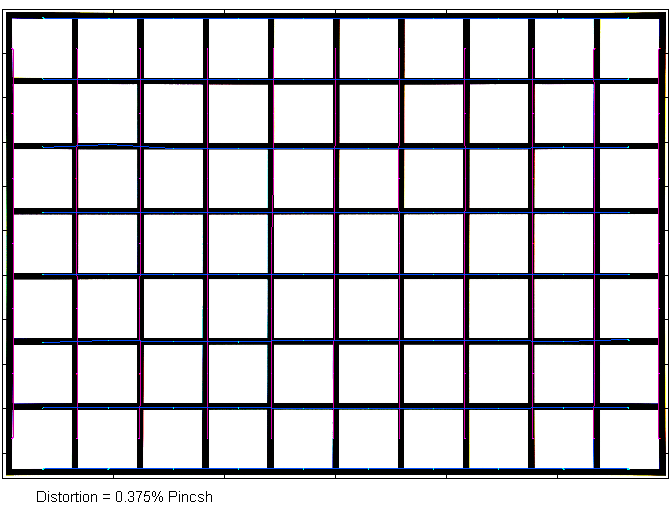
The Sirui Swift 40mm f/2.2 doesn’t feature a correction profile for image distortions. Fortunately, its optical correction is very decent with a mild pincushion distortion of 0.4%. This is barely noticeable outside of lab conditions.
Vignetting
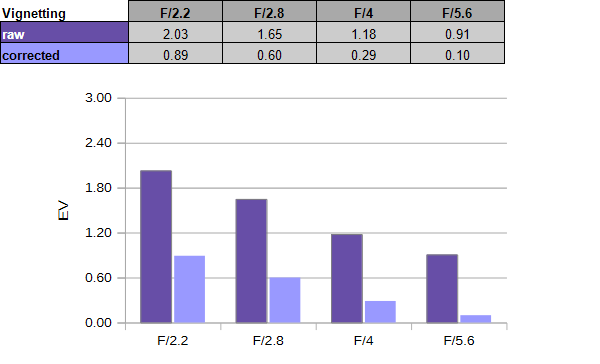
The lens does have a correction profile for vignetting. The native vignetting is high with a light falloff of 2 EV (f-stops) at f/2.2. It’s not much lower at f/2.8. It improves more from f/4 and settles at around 0.9 EV beyond. Autocorrection reduces the issue by ~1.1 EV at wide-open aperture. In practical terms, the vignetting is mostly resolved from f/2.8 already then.
MTF (resolution) at 42 megapixels
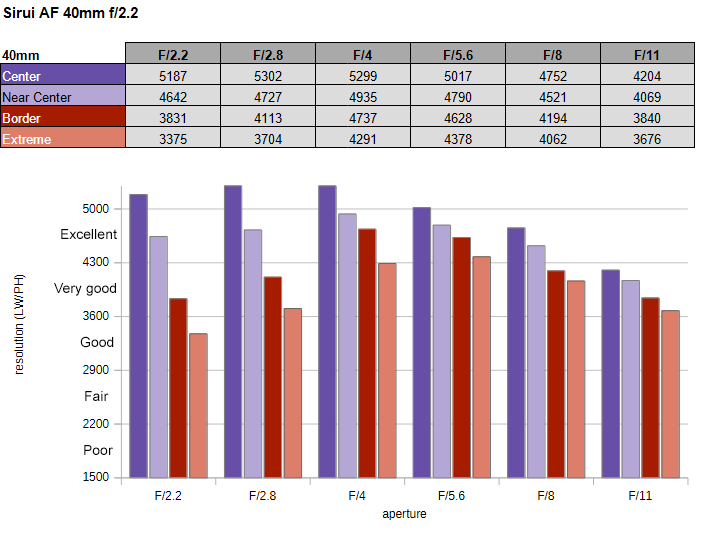
Sirui opted for moderate speed. This makes achieving a high performance fairly effortless at this focal length and we can see this in the MTF data. The broader center quality is excellent at f/2.2 already. The borders manage very good results and the corners are still decent. Stopping down to f/2.8 improves the results only marginally. However, we can spot quite a boost at f/4. The borders are excellent here and the corners are very sharp as well. As usual, diffraction is (technically) the limiting factor from f/8, but f/11 remains easily usable.
The field curvature is negligible. The centering quality of the tested sample was Ok.
Please note that the MTF results are not directly comparable across the different systems!
Below is a simplified summary of the formal findings. The chart shows line widths per picture height (LW/PH) which can be taken as a measure of sharpness. If you would like to know more about the MTF50 figures, you may check out the corresponding Imatest Explanations.
Chromatic Aberrations (CAs)
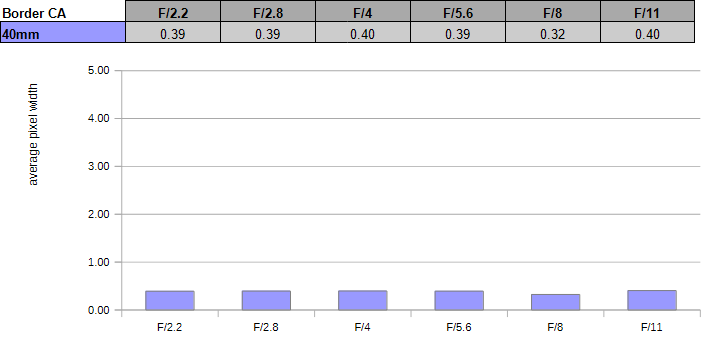
Lateral CAs are very well controlled with an average pixel width of 0.4px at the image borders. They do increase in the corners. There’s also no correction profile for this so you have to rely on the capabilities of RAW converters to eliminate the CAs.
Bokeh
A 40mm f/2.2 isn’t really a bokeh king. If you want to achieve a shallow depth-of-field, you will have to choose rather close focus distances. Regardless, let’s check its qualities here.
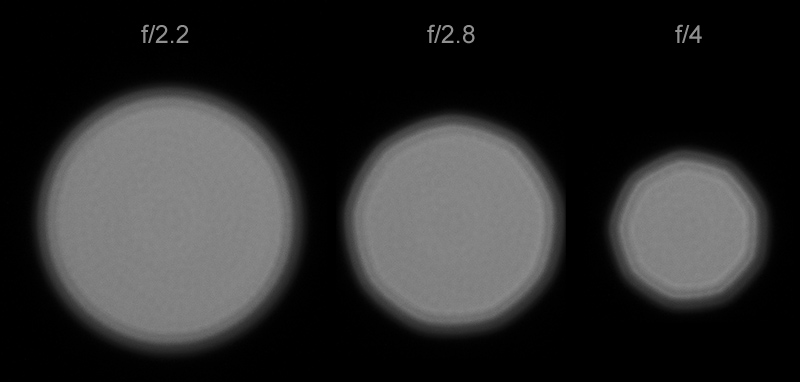
Out-of-focus highlights have a clean inner zone. There’s a nice soft halo around the discs although we can also spot a ring or double-edge at the periphery. The more edgy aperture shape is already slightly visible at f/2.8 and, of course, more so at f/4. The double edge is also getting more obvious.
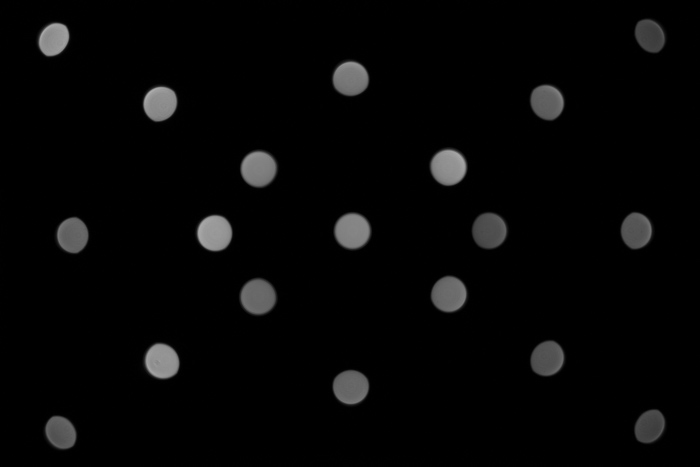
When looking at the highlight rendering across the whole image field, the circular shape remains mostly intact. Only highlights in the corners show a slight deterioration in shape. If you look closely, you may spot some outling of the discs from the midfield, though. The outlining is gone from f/2.8. The shape of the corner discs is restored from f/4.
Note: The 40mm f/2.2 can’t focus very close so the bokeh discs are small in the sample images below.
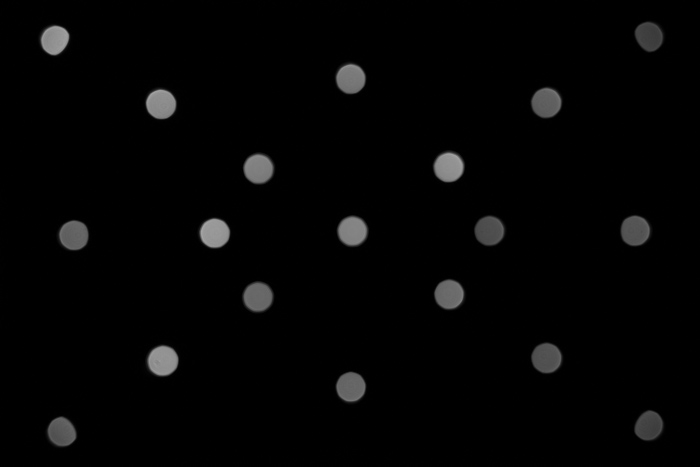
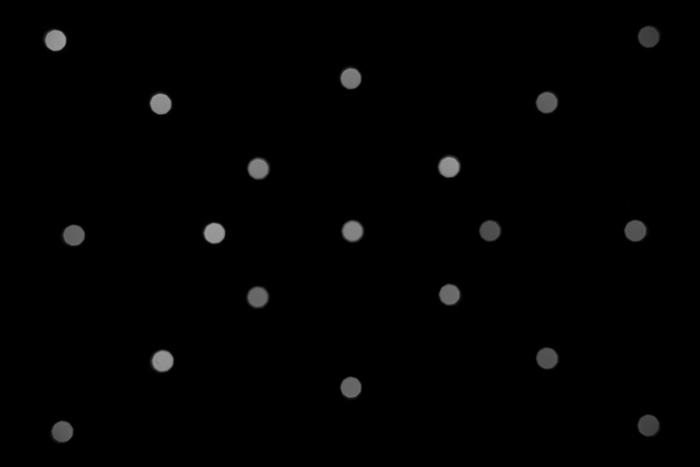
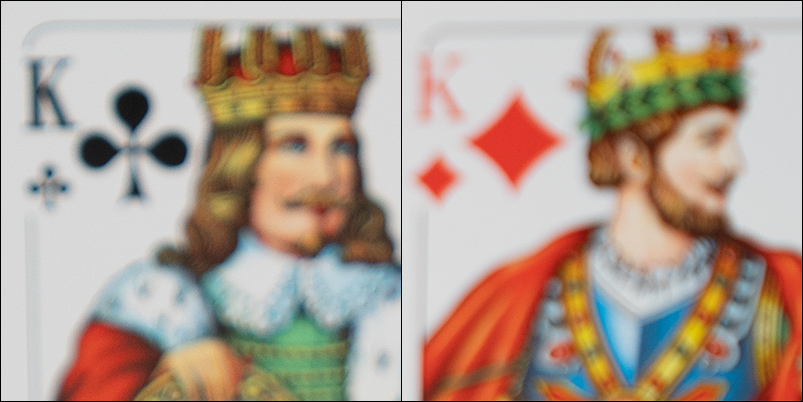
The rendering quality in the focus transition zone is fairly smooth in the image background (to the left below) although we can spot some harsher edges here and there. The foreground blur (to the right below) is softer.
Bokeh Fringing / LoCA
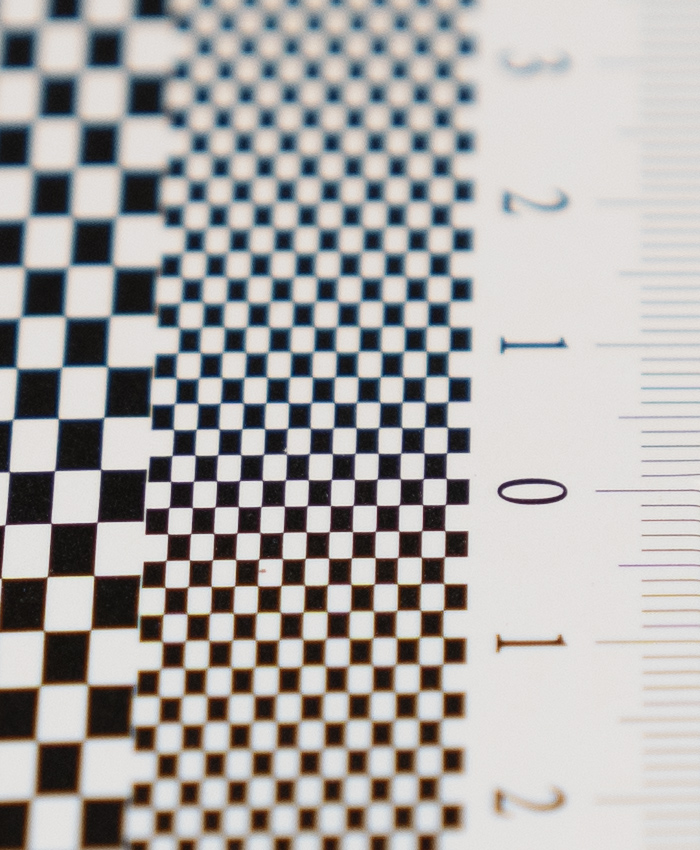
LoCAs, or bokeh fringing, is a color fringing effect on the Z-axis. It shows up with a purplish tint in front of the focus point and a greenish tint behind – and it’s nearly impossible to fully correct in post.
The Sirui Swift 40mm f/2.2 shows very pronounced fringing at f/2.2 and f/2.8. It remains visible at f/4 and traces remain at f/5.6. The optical system doesn’t include any low dispersion elements so that’s not surprising here.
You may also notice that the focus point does not shift when stopping down (= no relevant RSAs).
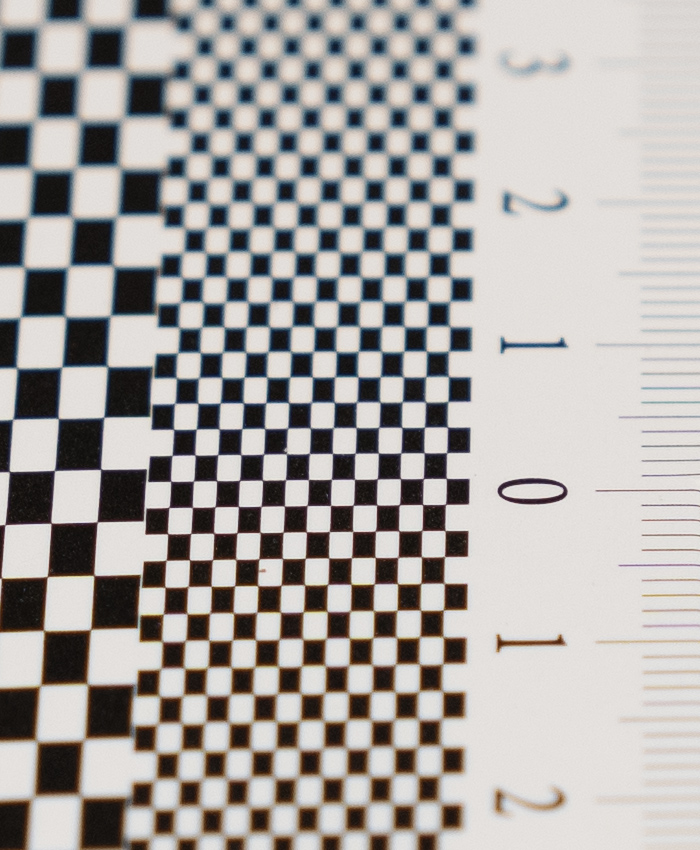
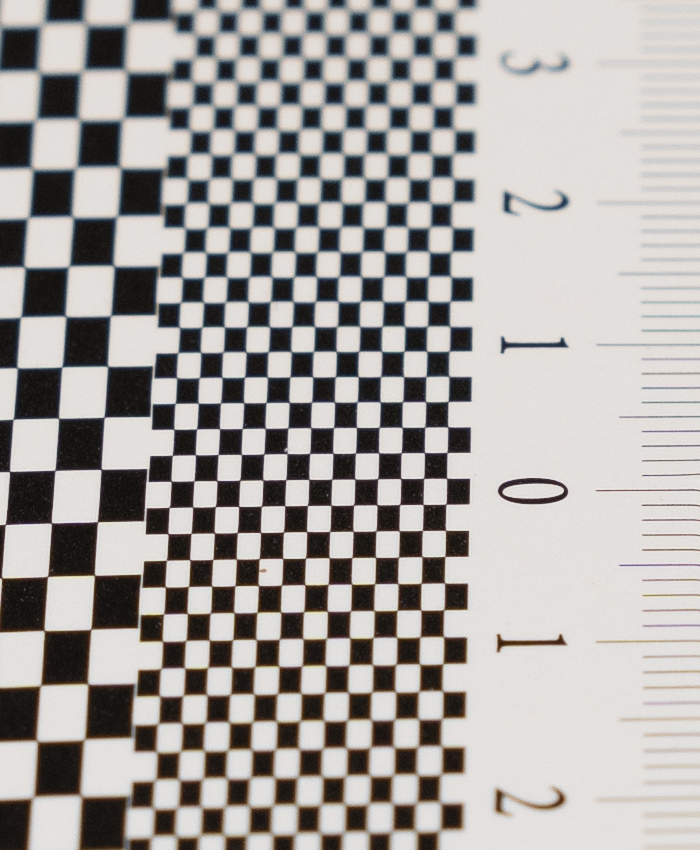
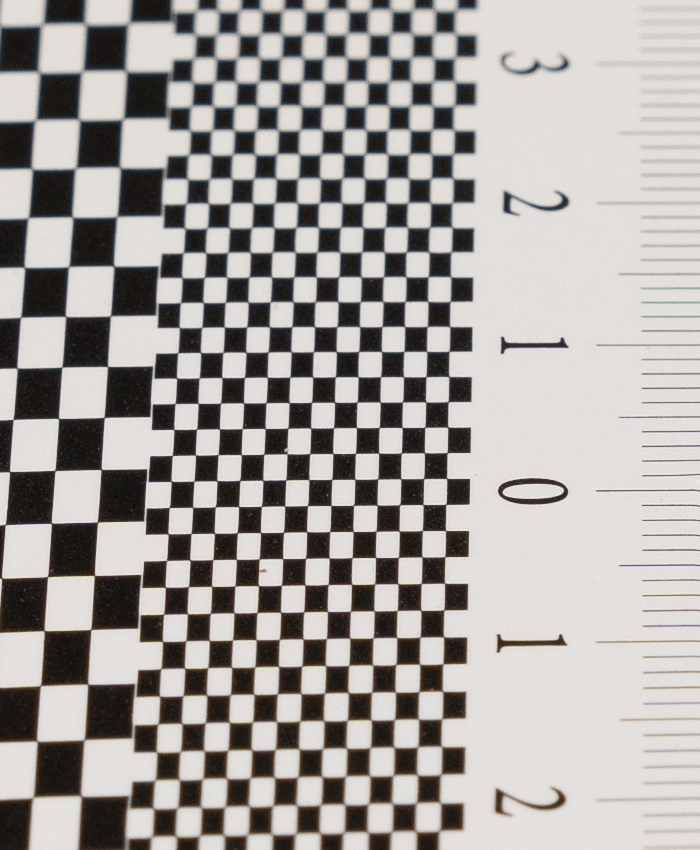
Flare
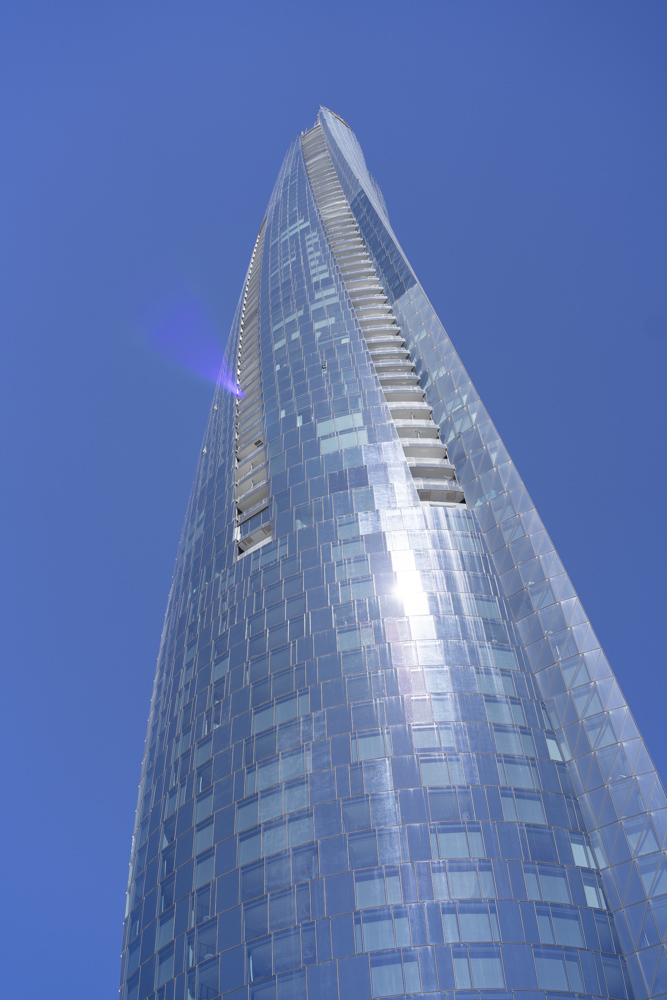
One weakness of the lens is flare. It doesn’t like bright spots in your scene. Below is an example showing colored ghostings from the glass reflections (no, it’s not a phaser directed to outer space). The glare around white objects is also more pronounced than average.
Competition
When limiting the quest strictly to 40mm lenses, there’s the Viltrox AF 40mm f/2.5 Air but we’d rate it below the Sirui Swift 40mm f/2.2. 7Artisans has recently released a 40mm f/2.5 as well, but we haven’t tested this one yet. The same goes for the TTArtisan 40mm f/2. The king of the hill is probably the Sony FE 40mm f/2.5 G but it’s in a very different price league.
If you are a bit flexible regarding the focal length, there are also a myriad of 35mm and 50mm lenses to consider.
Sample Images


The Sirui Swift 40mm f/2.2 is another interpretation of the surprisingly popular 40mm lens class and it does a pretty decent job. In terms of sharpness, it's up there. The broader center quality is great at f/2.2 already and if you require snappy corners that's available from f/4. Image distortions are low as are lateral CAs. Axial CAs are on the high side, though. Vignetting benefits from autocorrection. The bokeh quality is good although shallow depth-of-field photography is somewhat limited by the comparatively moderate speed. A weakness is flare resistance, so it's advisable to use the provided lens hood (which only helps with stray light, of course).
The build quality is high for a lens this affordable. The plastics used for the lens barrel and control rings feel quite nice and everything is tightly assembled. Unlike some other budget-friendly lenses, it even features an Fn-button and an AF/MF switch. The AF is also surprisingly fast.
Overall, the Sirui Swift 40mm f/2.2 is a worthwhile option for shoppers on a budget.
If you'd like to support our work, please consider shopping for this or other lenses via one of the following partners:
* Sirui Store (Global)
The Good
- Sharp
- Very good build quality
- Super affordable
- Fast AF
The Bad
- Flare/glare resistance could be better
- LoCAs are on the high side
-
Optical Quality7
-
Build Quality7.5
-
Price / Performance10