


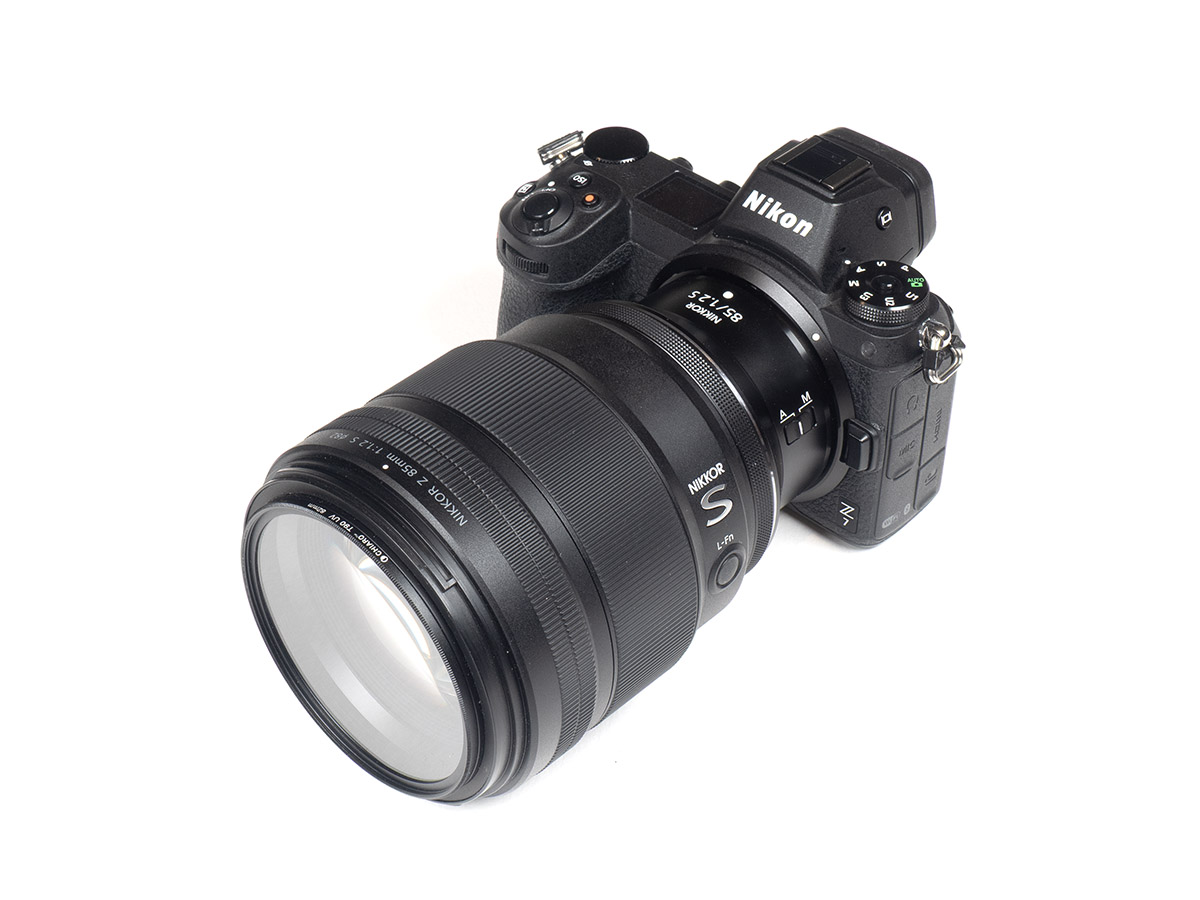
So you are looking for a speed monster in Nikon Z mount? Nikon has a couple of lenses for you then – including the Nikkor Z 85mm f/1.2 S. This one is not for the faint-hearted given its retail price of $3000 USD but then such a price tag isn’t unheard of in this lens class.
In terms of build quality the lens follows the usual recipe for high-end Nikkors. It is made of a high-grade polycarbonate outer barrel built over a metal chassis. The plastic shell doesn’t help much with its weight which sits at a whopping 1.16 kg. The massive glass elements simply take their toll here. Typical for S-class lenses, there’s extensive weather sealing. It features a wide, smoothly turning focus ring. Unfortunately, the focus action feels mechanically “detached” which is something that we’ve noticed with other Nikkors as well. There’s also the configurable control ring which defaults to aperture control but it can be configured to ISO or exposure compensation as well. Nikon also implemented a L-Fn button as well as an AF/MF switch. A deep barrel-shaped lens hood is part of the package.
The AF is based on a multi-focus system utilizing dual stepping motors (STM). AF actions are not as fast as on the Z 85mm f/1.8 but still pretty quick and good enough for tracking at typical working distances. The noise level during operation is very low. Focus breathing is low but detectable with long focus pulls.
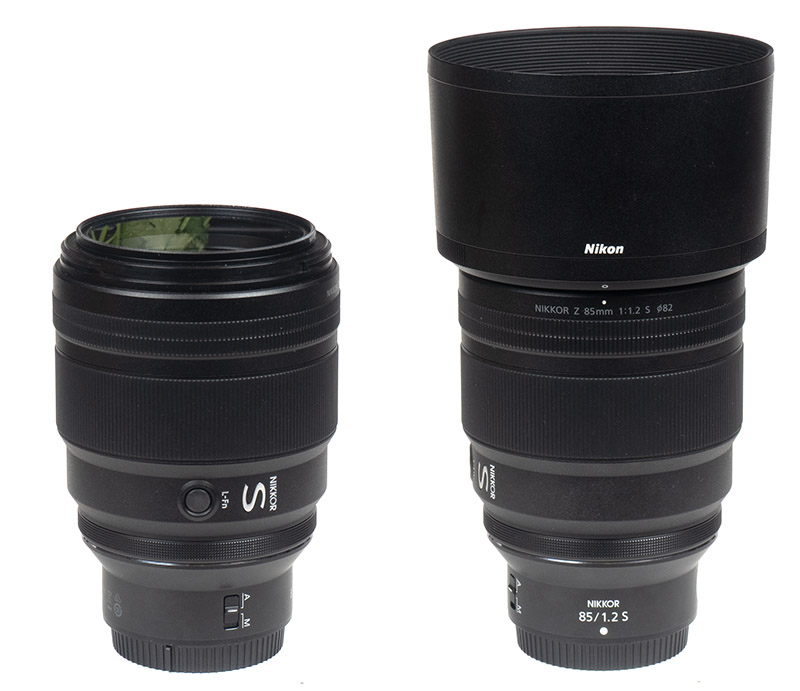
| Specifications | |
|---|---|
| Optical construction | 15 elements in 10 groups (1x ED, 2x aspherical) Nano Crystal Coating |
| Number of aperture blades | 11 (rounded) |
| min. focus distance | 0.85m (max. magnification: 0.11x) |
| Dimensions | 102.5 x 141.5mm |
| Weight | 1160g |
| Filter size | 82mm |
| Hood | barrel-shaped, bayonet mount, supplied |
| Other features | control ring dust- and drip-resistant Fn button Focus-breathing compensation |
Distortion
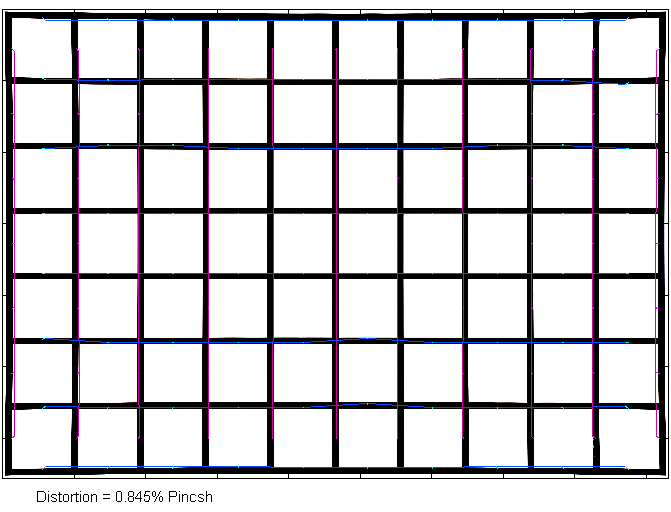
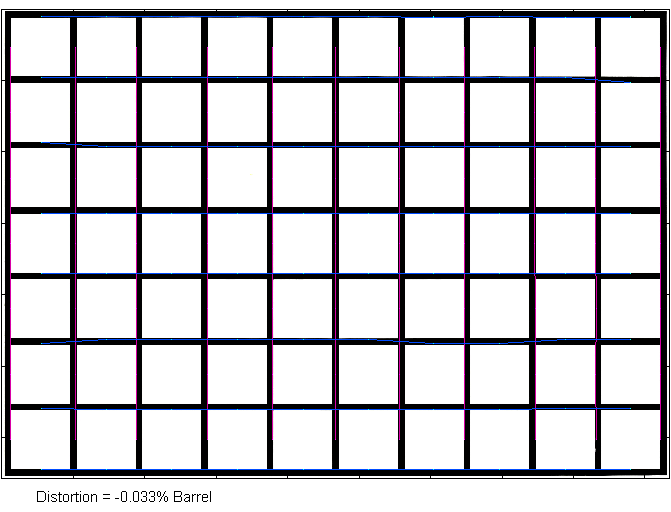
The Nikkor Z 85mm f/1.2 S produces a fairly mild pincushion distortion of ~0.8% at normal working distances. Autocorrection can take advantage of the built-in profile to eliminate the rest.
Vignetting
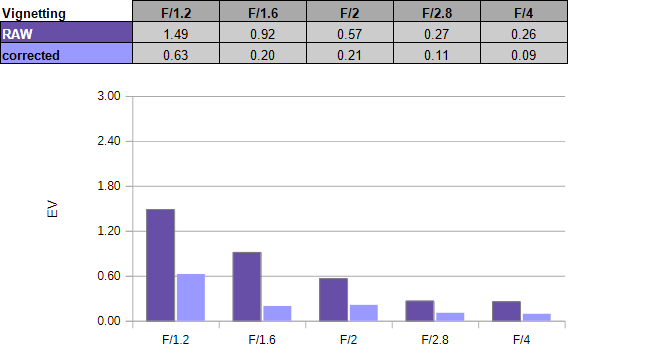
The Nikkor Z 85mm f/1.2 S is very well corrected in terms of vignetting. The RAW vignetting is still visible at f/1.2 but at just 1.5 EV (f-stops) it is lower than average in this lens class. This is reduced to just under 1 EV at f/1.6 and the issue is mostly irrelevant from f/2 already. If needed, autocorrection reduces the issue by almost 1 EV at f/1.2 and it’s negligible beyond this setting then.
MTF (resolution at 45 mp)
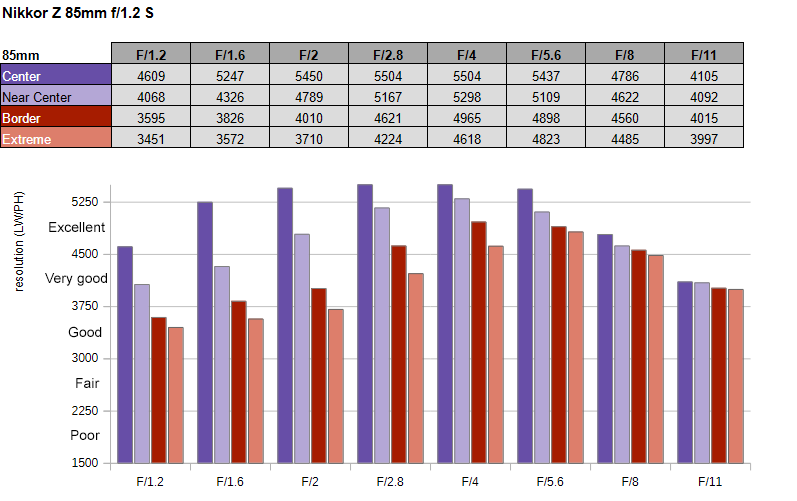
Such ultra-fast lenses are primarily optimized to deliver reasonable quality at maximum aperture already – which is very difficult because the optical problems rise dramatically with the speed. Keeping this in mind, the Nikkor Z 85mm f/1.2 S delivers an impressive job here. The dead center resolution is excellent at f/1.2 already. The quality then drops to a very good near-center and a good outer image field. Stopping down to f/1.6 boosts the center to outstanding levels although the rest of the image field improves only marginally. The center exceeds the potential of the 45mp sensor at f/2 and the near-center quality reaches excellent results here. The outer image field sees a major uplift from f/2.8. A truly stunning quality across the image field is achieved between f/4 and f/5.6. f/8 is affected by diffraction. f/11 is still usable and f/16 (not shown) should be avoided as usual.
The centering quality of the tested sample was good. Field curvature is minimal.
Please note that the MTF results are not directly comparable across the different systems!
Below is a simplified summary of the formal findings. The chart shows line widths per picture height (LW/PH), which can be taken as a measure of sharpness. If you would like to know more about the MTF50 figures, you may check out the corresponding Imatest Explanations.
Chromatic Aberrations (CAs)
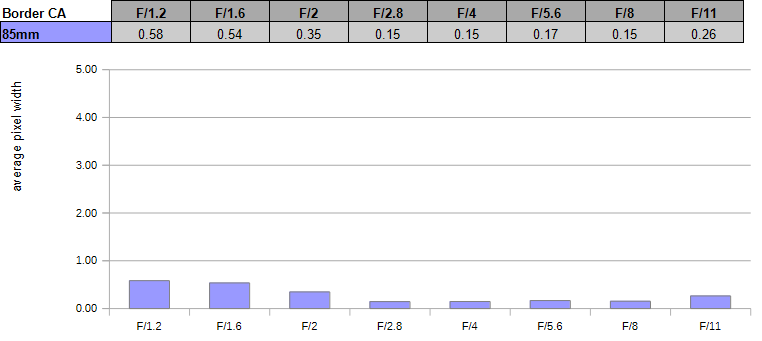
Lateral CAs are very low overall. At large aperture settings the border CAs reach a width of just ~0.5px and it’s even lower at medium apertures. Autocorrection can handle this with ease.
Bokeh
Sharpness is one thing but that’s not the primary reason for investing into a 85mm f/1.2. It’s also about shallow depth-of-field photography so let’s see how the Nikkor performs in this respect.
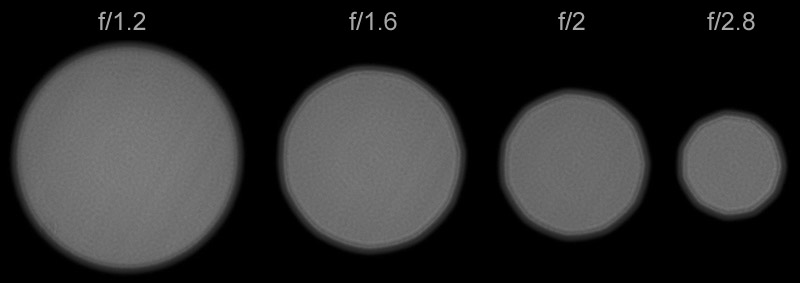
Out-of-focus center highlights are very clean at f/1.2. The disc edges are slightly feathered which is exactly what you want here for smoothness. If you look closely, you may spot some “stripes” in the inner zone. Possibly a polishing issue on one of the lens elements? Stopping down to f/1.6 or f/2 maintains the circular shape although the edge of the discs sharpens up a little here. The more edgy aperture setting starts to get a bit more pronounced from f/2.8.
When looking at the whole image, the circular highlight shape is maintained in the broader center but there is the usual deterioration to “cat eyes” towards the corners. The “perfect” zone is broadening the more you stop down and the corner discs are restored from f/2.
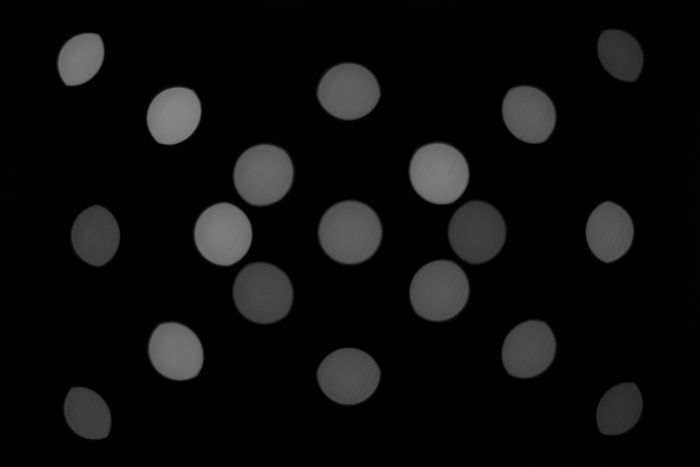
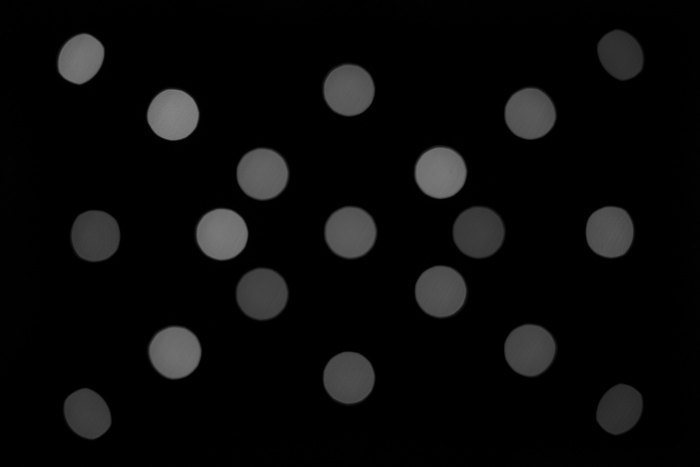
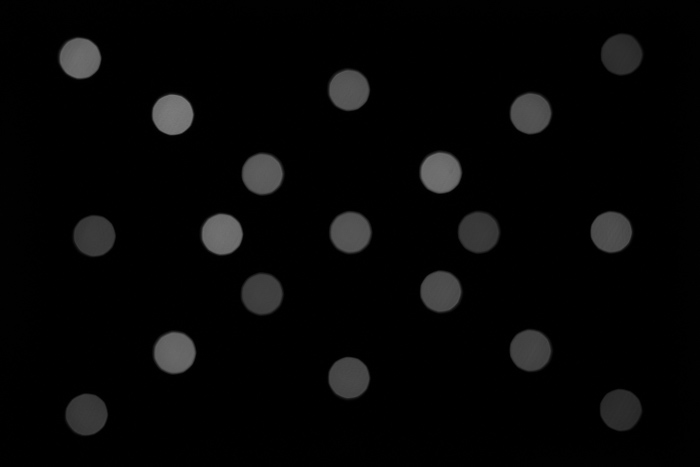
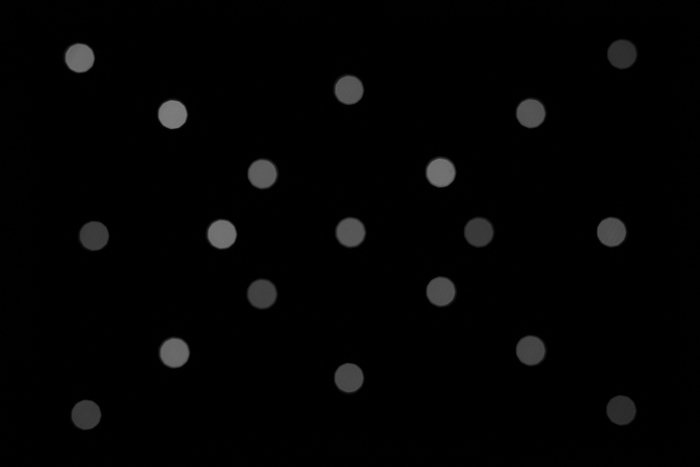
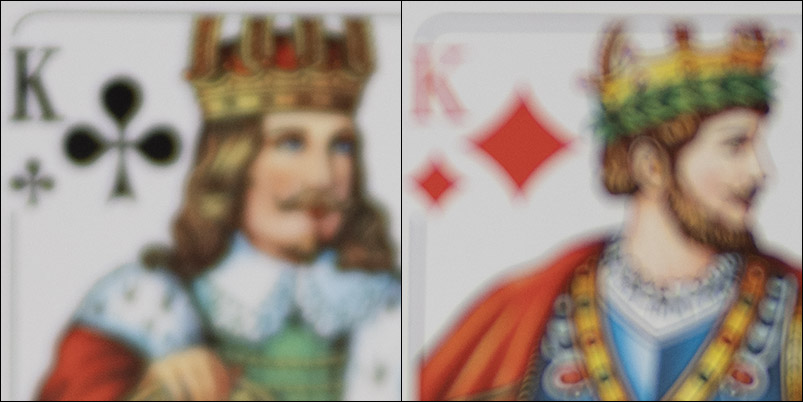
The general blur in the focus transition zone is very smooth in the image background (shown to the left below) . The foreground blur (to the right) is more busy (double-edged) as so often.
Bokeh Fringing (LoCA)
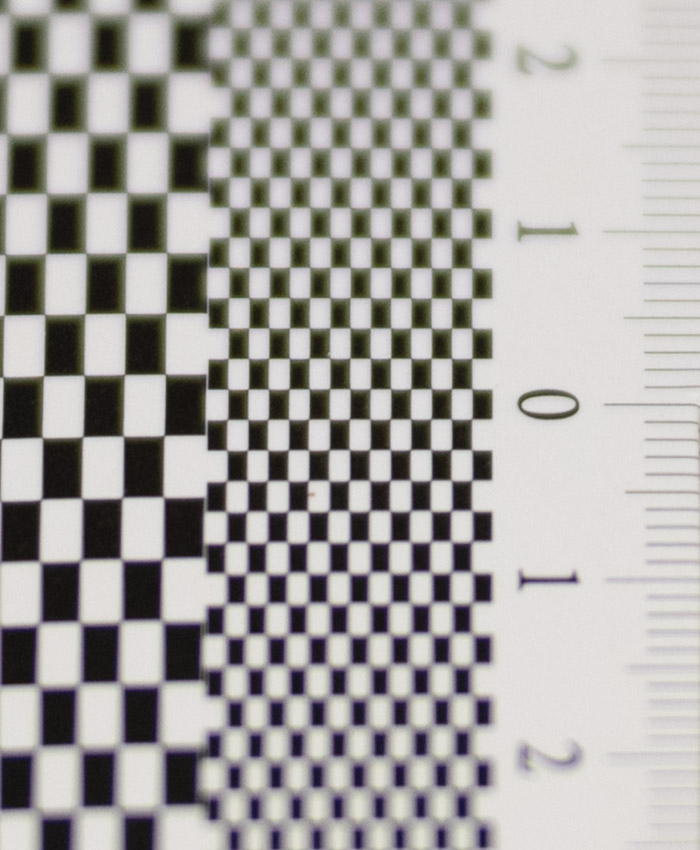
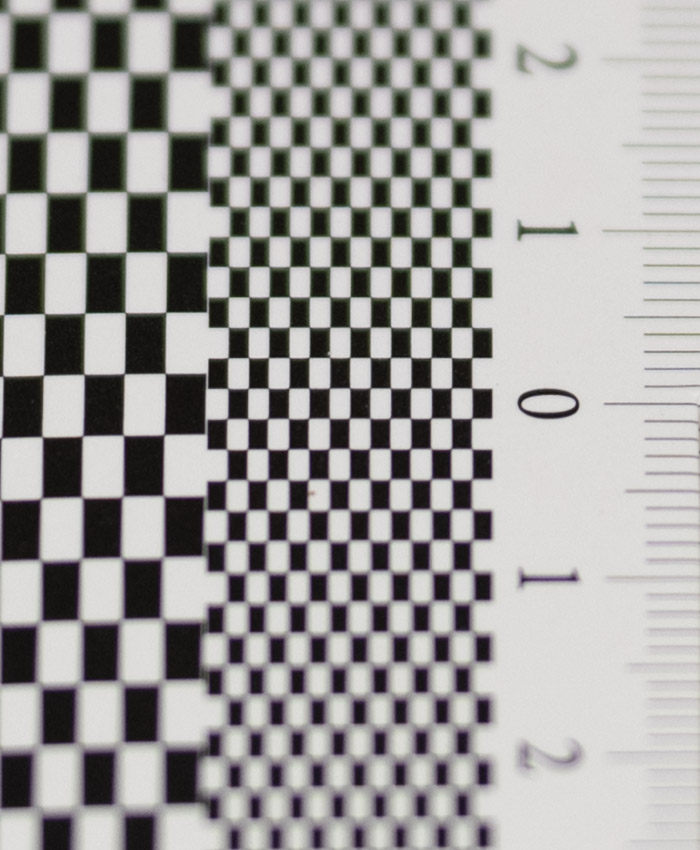
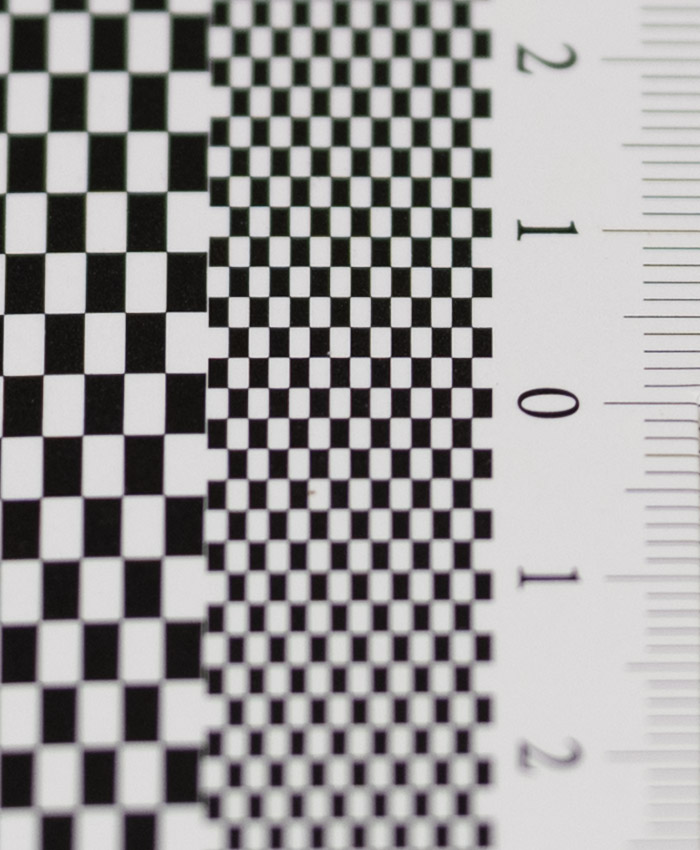
LoCAs are a color-fringing effect on the Z-axis. They show up as purplish/yellowish halos in front of the in-focus zone and greenish/bluish beyond. The fringing is very obvious at f/1.2 and f/1.6 . It’s still present at f/2 and gone from f/2.8.
If you scroll through the aperture range, you may also notice a slight focus point shift to the rear (residual-spherical aberrations or RSA). The initial focus point remains within the depth-of-field, though, so it’s not relevant in real-life.
Competition
At the time of this review, there’s only one lens that shares the same paper specs – the SongRaw AF 85mm f/1.2 MS. It seems to be a great performer although we haven’t tested it here in our lab. It’s MUCH more affordable at just $650 USD or less than a quarter(!) of the Nikkor. If you can relax your requirements to f/1.4 there’ll be plenty more options like the Viltrox AF 85mm f/1.4 Pro, the Sirui Aurora 85mm f/1.4 and the Meike 85mm f/1.4 MIX II – and they are all pretty good and, once again, much more affordable at around the $500 mark.
Sample Images


The Nikkor Z 85mm f/1.2 S is beyond the budget of most mortals but if you are among the lucky ones who could afford it, it'll be a hot commodity. It's quite sharp at f/1.2 while also offering a smooth bokeh. Stopped down a bit, it's sharp as a tack in the center from f/2 and it achieves greatness at medium aperture settings. Lateral CAs are very low and there's also very little native image distortion. Even the vignetting is very well controlled for such an ultra-fast lens. It's still not flawless, though. Axial CAs can be visible in critical scenes and during our field testing we noticed that it is a bit prone to glare (thus use the lens hood).
The build quality is excellent but we expected no less from a pro-grade lens here. If you aren't used to such lenses it has to be said that it's very much on the heavy side so be prepared. The AF is pretty quick.
The biggest question may be whether you REALLY require an 85mm f/1.2 lens. 85mm f/1.4 lenses are more affordable and usually more compact and light-weight. Still, if you want to have the fastest 85mm around (in Z-mount), this is probably "the one". Thus, highly recommended.
If you'd like to support our work, please consider shopping for this or other lenses via one of the following partners:
* Amazon (US)
* Amazon (EU)
* B&H (US)
* Adorama (US)
* KEH (used gear, US)
The Good
- Nice bokeh
- Sharp at f/1.2, outstanding at f/4
The Bad
- It's a brick (unsurprisingly)
- Very expensive
- A bit prone to flare
- LoCAs at large apertures
-
Optical Quality8.5
-
Build Quality9
-
Price / Performance7