


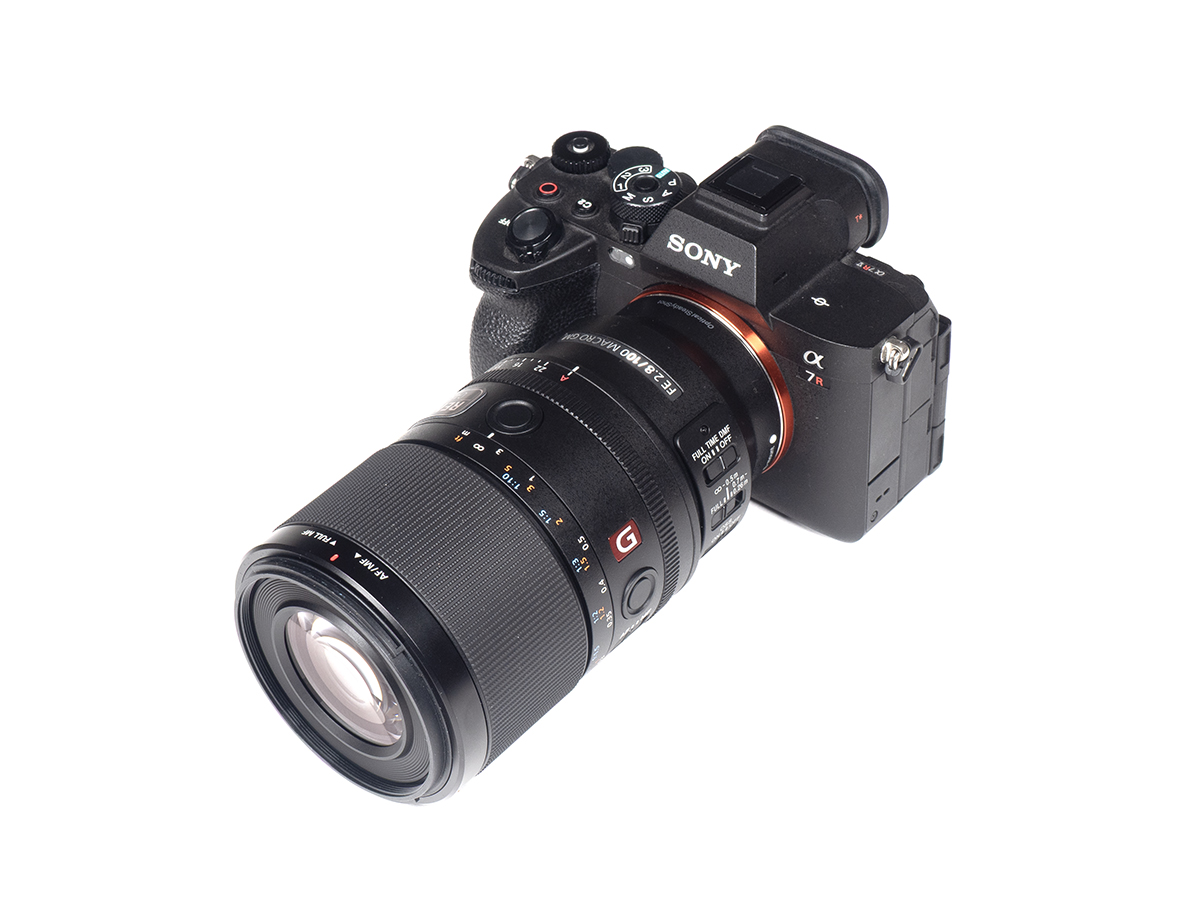
The FE 100mm f/2.8 macro GM OSS is Sony’s 2nd generation macro lens for the E-mount system. It supersedes the FE 90mm f/2.8 macro G OSS, which has been with us since 2015. Sony is convinced that they created something special here because they lifted the designation from G to GM class for the new lens. And alongside, the price has also been raised by 50% to now $1500 USD. So let’s check how much substance they added to the recipe.
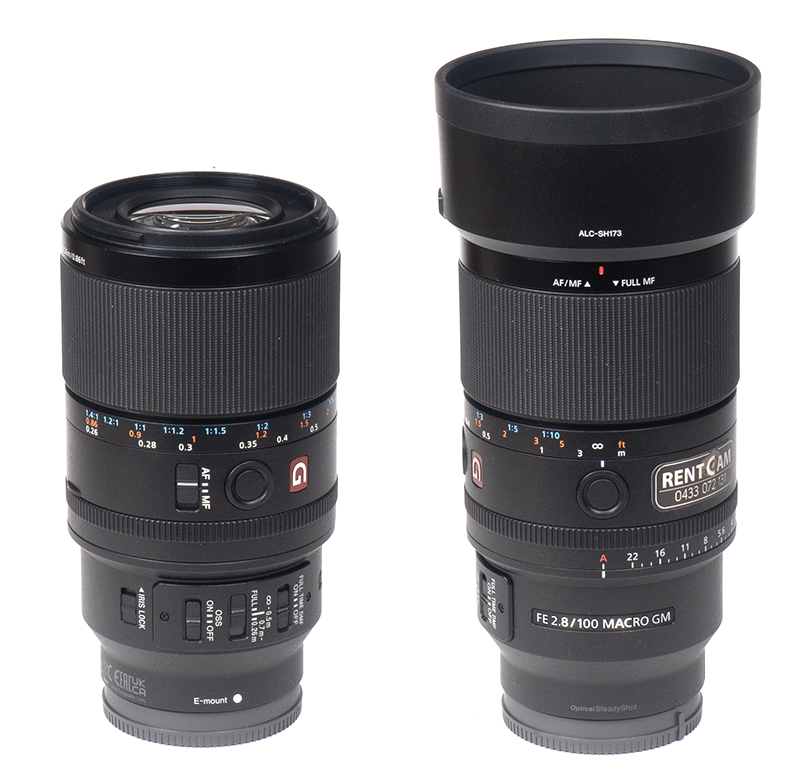
The 100mm f/2.8 uses a combination of tough engineering plastics and magnesium alloy with extensive weather sealing. That’s not all that different from the 90mm f/2.8, although the quality has been lifted a bit. Another similarity is the clutch mechanism to switch between AF and MF. Unlike on conventional Sony FE lenses, the distance- and magnification scales are printed directly onto the lens barrel. Then there’s a whole phalanx of controls, including a de-clickable and lockable aperture ring, two configurable Fn buttons (configured to AF stop as default), a focus limiter, an AF/MF switch, a switch for the optical image stabilizer, and, of course, the broad rubberized focus ring. A novelty is the compatibility with Sony’s teleconverters. Natively, the FE 100mm f/2.8 macro GM OSS offers a max. magnification of 1.4x (increased from the 1x on the 90mm f/2.8). The working distance is 9cm in this case. When mounting the lens to the 2x converter, this increases to a whopping magnification of 2.8x then. This also increases the working distance, which can be important when shooting live critters. A deep, petal-shaped lens hood is part of the package.
The FE 100mm f/2.8 macro GM OSS uses no less than 4 (!) XD (“eXtreme Dynamic”) linear motors, providing both snappy as well as silent autofocusing. Even so, you should take advantage of the focus limiter to avoid focus hunting when doing close-ups, unless you prefer using manual focusing here anyway (which many will do). The image stabilizer can give you a gain of about 4 f-stops, although this decreases at macro distances due to the extreme angular movements. If the camera has a sensor-based image stabilizer, the two systems are coordinated.
| Specifications | |
|---|---|
| Optical construction | 17 elements in 13 groups (2x XA, 2x ED) Nano AR Coating II fluorine coating on the front element floating focusing system |
| Number of aperture blades | 11 (rounded) |
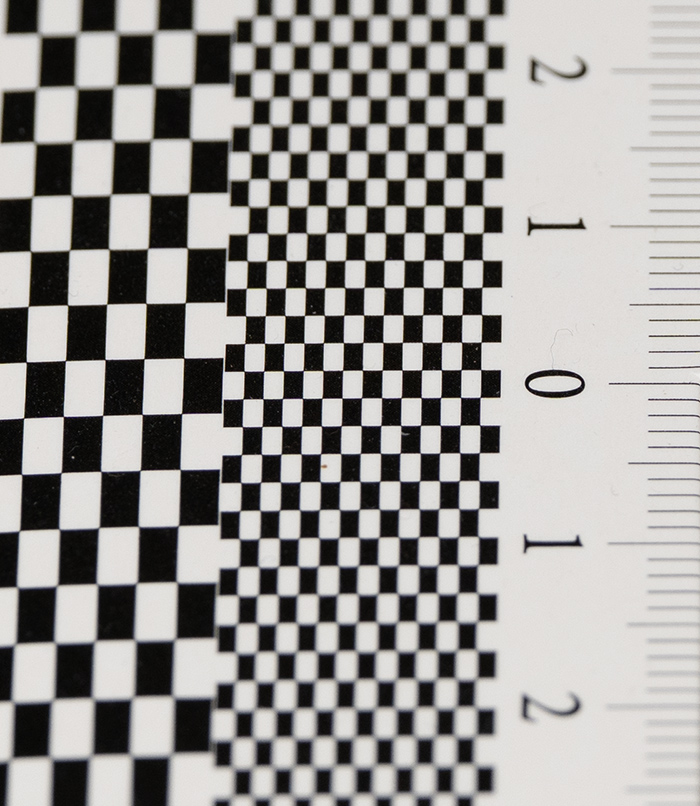
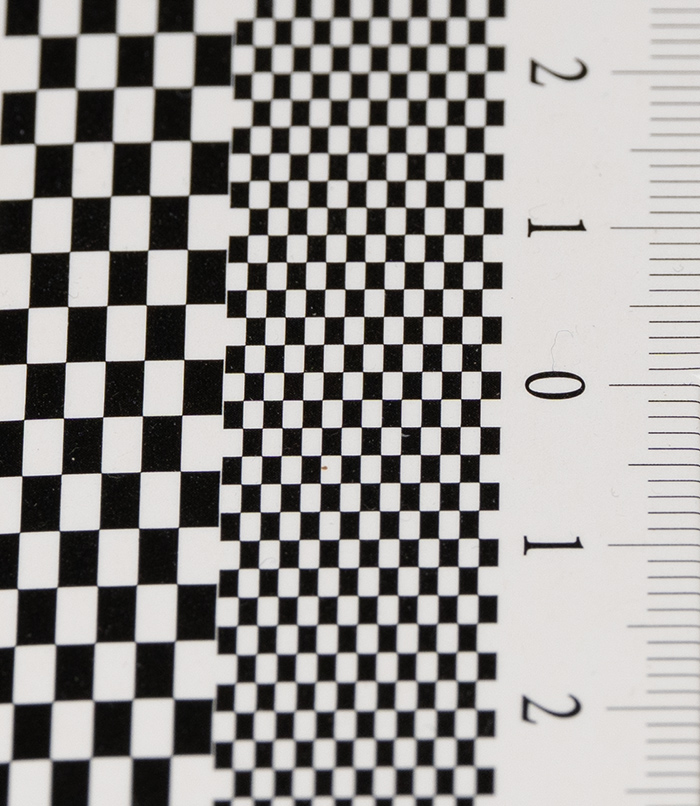
| min. focus distance | 0.26m (max. magnification 1.4x) |
| Dimensions | φ 81.4 x 147.9 mm |
| Weight | 646g |
| Filter size | φ 67mm |
| Hood | barrel-shaped (bayonet mount, supplied) |
| Other features | focus-clutch mechanism focus limiter focus distance scale de-clickable aperture ring aperture lock 2 Fn buttons dust- and moisture-resistant compatible with 1.4x and 2x tele converters image stabilizer |
Distortions
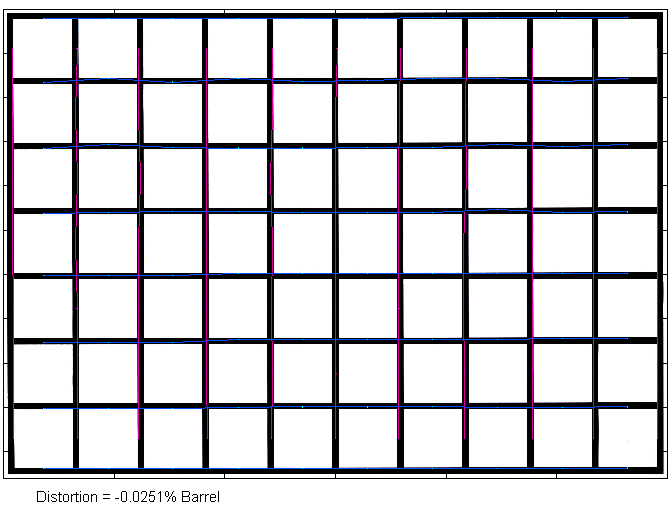
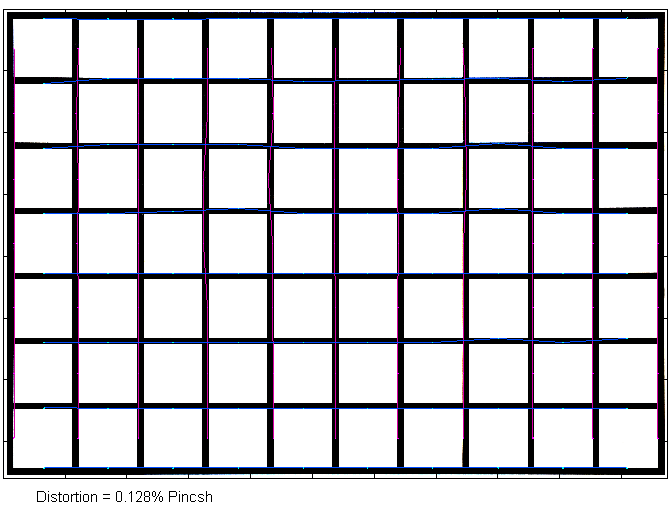
The Sony FE 100mm f/2.8 macro GM OSS produces negligible pincushion distortion in RAW files – as it should be with a true macro lens, which is also intended for repo work. Autocorrection produces a perfect result here.
Vignetting
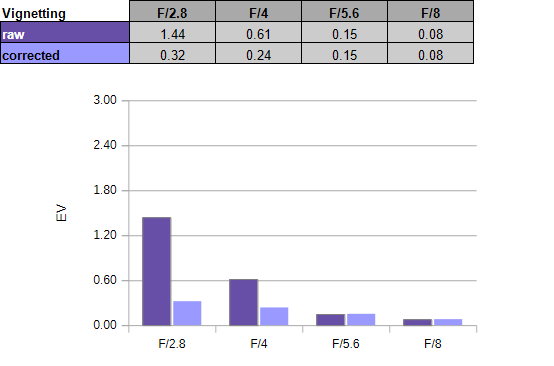
The RAW vignetting is visible at f/2.8, although a light falloff of ~1.4 EV (f-stops) isn’t excessive either. Stopping down to f/4 resolves most of it, and the issue is gone from f/5.6. With activated autocorrection, the vignetting is already negligible at f/2.8.
MTF (resolution) at 42 megapixels
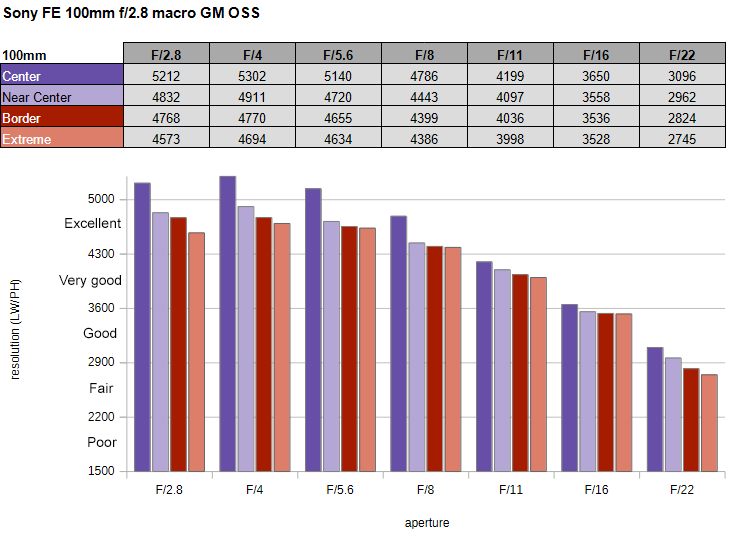
The Sony FE 100mm f/2.8 macro GM OSS produced outstanding resolution figures in the lab. The quality is basically perfect at f/2.8 already. There’s still a tiny increase in quality at f/4. Diffraction starts to have a marginal effect at f/8. The quality is still very good at f/11. Diffraction effects are more noticeable at f/16, and f/22 should be avoided.
The field curvature is negligible. The centering quality of the tested sample was very good.
Note: The resolution tests are performed at conventional focus distances. The Sony lens has a floating system, which should help maintain this level of quality for macro distances.
Please note that the MTF results are not directly comparable across the different systems!
Below is a simplified summary of the formal findings. The chart shows line widths per picture height (LW/PH) which can be taken as a measure of sharpness. If you would like to know more about the MTF50 figures, you may check out the corresponding Imatest Explanations.
Chromatic Aberrations (CAs)
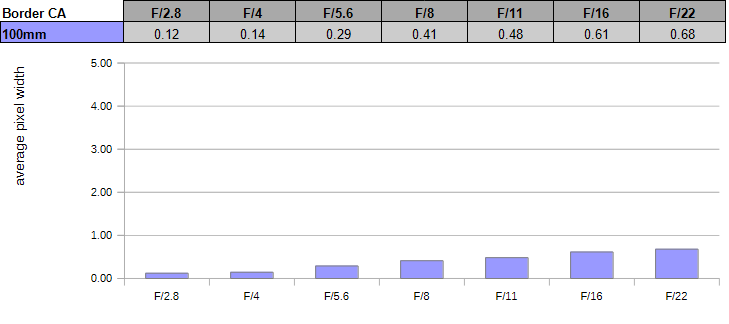
Lateral CAs are negligible from f/2.8 to f/5.6. They increase slightly beyond but are still fairly low even at f/22. Autocorrection should handle this with ease.
Bokeh
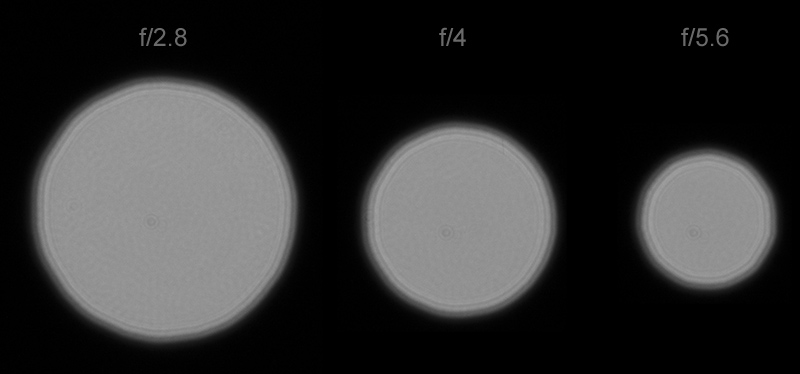
The inner zone of out-of-focus highlights is very clean in the center of the image. There is a bit of outlining, though, and it stays the same when stopping down. The shape of the aperture remains circular until f/5.6 thanks to no less than 11 rounded aperture blades.
When looking at the highlight rendering across the whole image field, the circular shape of the discs remains intact up to the mid-field. Beyond, the discs deteriorate to “cat eyes” which are, of course, most pronounced in the corners. The zone of “perfect” discs increases when stopping down to f/4. The corner discs are fully restored from f/5.6.
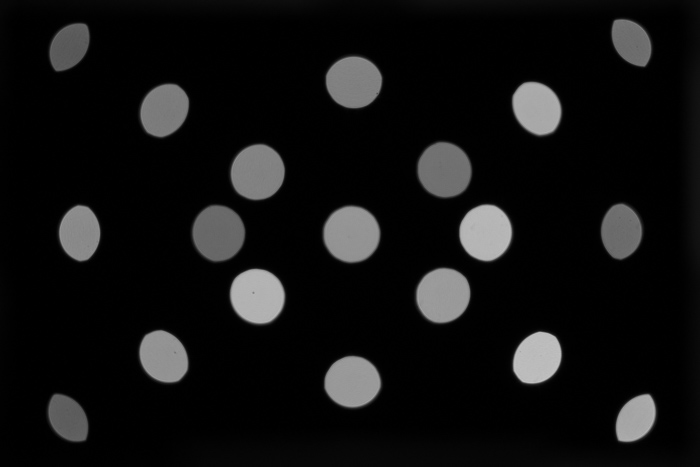
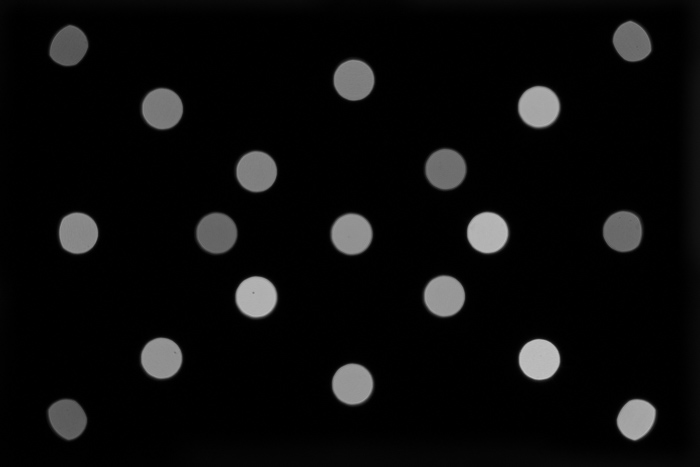
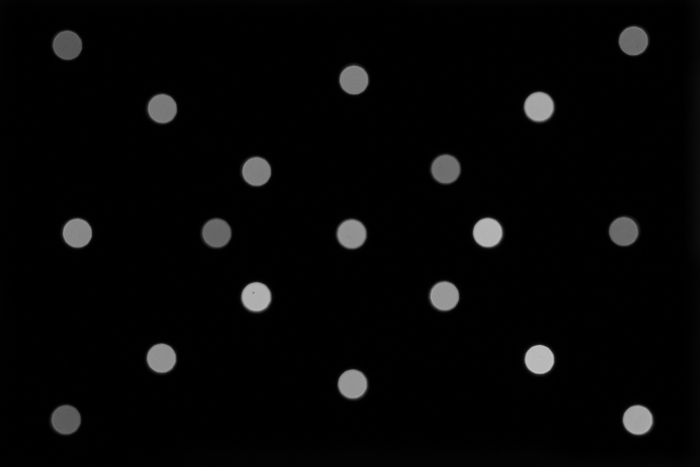
The rendering quality in the focus transition zone is silky smooth, both in the image background and foreground.

Bokeh Fringing / LoCA
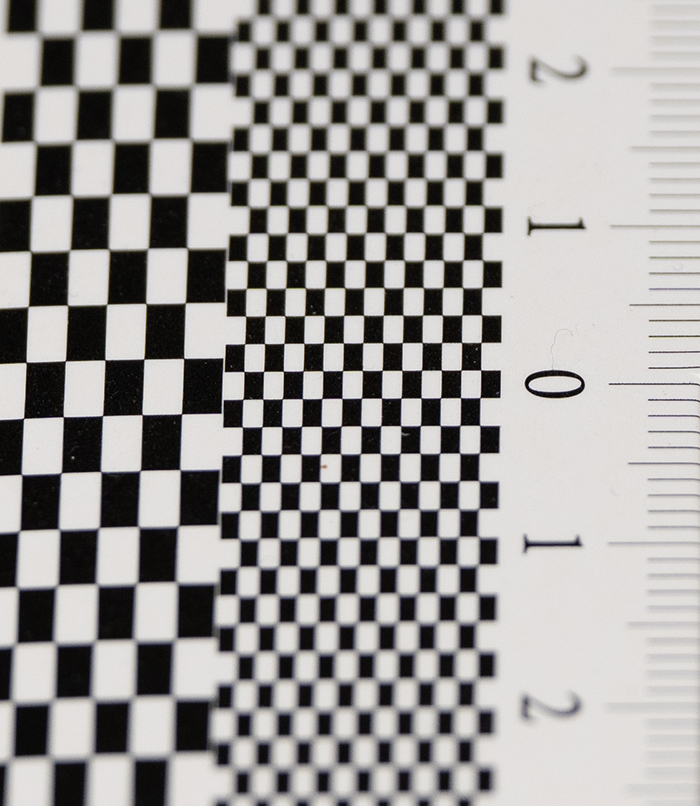
LoCAs, or bokeh fringing, is a color fringing effect on the Z-axis. It shows up with a purplish tint in front of the focus point and a greenish tint behind, and it’s nearly impossible to fully correct in post. However, the Sony lens produces barely any fringing at f/2.8 already.
You may also spot that the focus point remains spot on, so there’s no focus shift when stopping down.
Competition
The Sony FE 100mm f/2.8 macro GM OSS is not alone in this class. You should still be able to find the older Sony FE 100mm f/2.8 macro G OSS out there. It’s still available at about half of the price, and no slouch either. It’s sharp, but the bokeh isn’t as good. The AF is also much slower. Then there’s the Sigma 105mm f/2.8 DG DN Macro Art and the Tamron 90mm f/2.8 Di III VXD Macro. Both are, again, much more affordable – especially the Tamron lens. We haven’t tested these two lenses yet. However, modern macro lenses are basically all very good, so unless you are after the very best, these should also do.
Sample Images


The Sony FE 100mm f/2.8 macro GM OSS does everything a little better than its predecessor. It's now perfectly sharp across the image frame at f/2.8. Image distortions are basically nonexistent, and lateral CAs are very low. There's a bit of vignetting wide-open, but autocorrection handles this nicely. The quality of the bokeh, especially the out-of-focus highlights, is much improved. Bokeh fringing is a non-issue. The build quality has also been lifted by a notch. Other than the general quality impression, the focus speed is a magnitude faster now, and manual focusing is more precise. The max. magnification has been boosted to 1.4x, and it can be further increased when using one of Sony's teleconverters. Overall, this is a near-perfect macro lens now. The only downside is its rather hefty price tag. Even so - "Highly Recommended"! If you'd like to support our work, please consider shopping for this or other lenses via one of the following partners: * Amazon (US) * Amazon (Europe) * B&H (US) * Adorama (US)
The Good
- Extremely sharp
- Internal focusing
- Smooth bokeh
- Fast AF
The Bad
- Focus breathing (on older Sony cameras)
- Pricey
-
Optical Quality9.5
-
Build Quality9
-
Price Performance8