


Introduction
We tested the Viltrox AF 9mm f/2.8 Air (black version) in Sony E-mount a while ago already. For obvious reasons, we’ll reuse most of the findings of this test here again. The MTFs, vignetting, and CAs tests were run again, though.
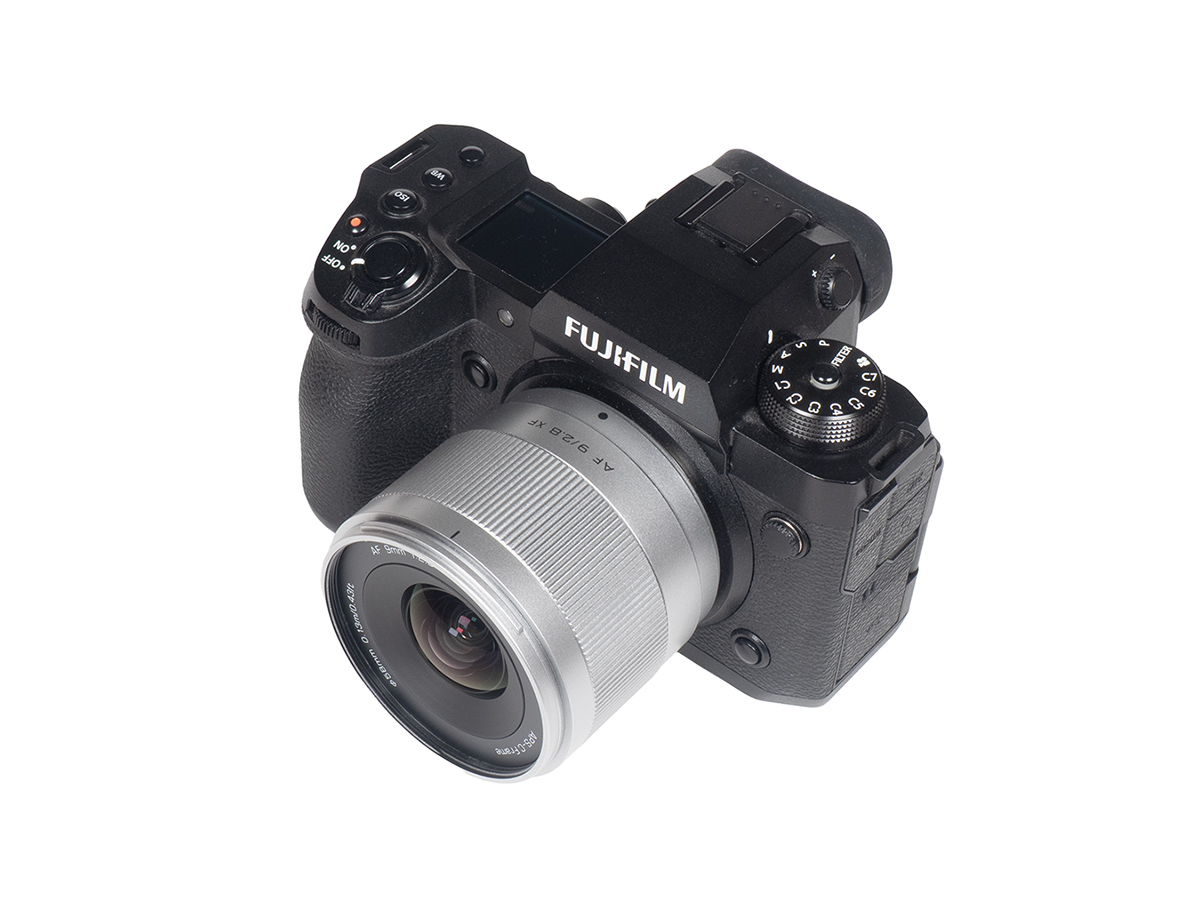
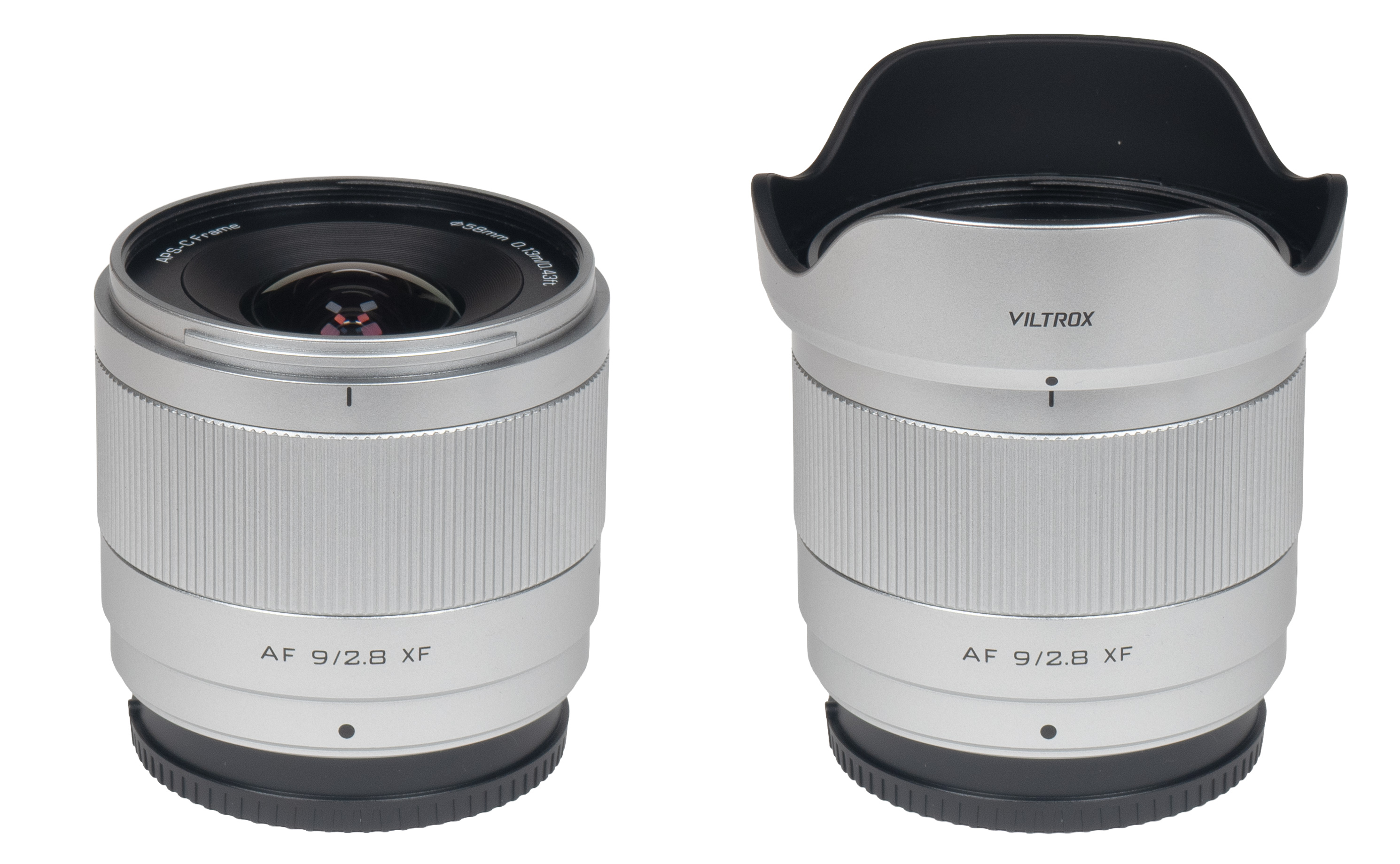
The 9mm f/2.8 Air XF is an APS-C format lens equivalent to about 14mm in full-format terms. The lens stays, of course, true to the cause of their “Air” lineup. Thus, it’s both very compact and very affordable at just $199 USD / 229 EUR / 190 GBP. The lens is available in E- , Z-, and X-mount. As you can see, this review covers the silver version that is exclusively available in X-mount – probably to match the silver-top cameras that are available from Fujifilm.
The build quality remains in line with what we’ve seen of the “Air” lineup. Thus, it’s using good-quality, consumer-grade engineered plastics based on a metal mount. The focus ring turns smoothly. And a small petal-shaped lens hood is supplied. A USB-C port on the lens mount can be used for firmware updates.
The AF uses a conventional STM (stepping motor), which is well sufficient for moving the small lens elements in a fast and silent manner. Manual focusing is very precise.
| Specifications | |
|---|---|
| Optical construction | 13 elements in 11 groups, incl. 3x ED, 3x HR, 2x aspherical |
| Number of aperture blades | 7 |
| min. focus distance | 0.13m (max. magnification 0.15x) |
| Dimensions | φ65 x 56.4 mm |
| Weight | 175g |
| Filter size | 58mm |
| Hood | petal-shaped (bayonet mount, supplied) |
| Available Mounts | Fujifilm X-mount (Silver and Black) Sony E, Nikon Z (Black only) |
| Other features | – |
Distortions
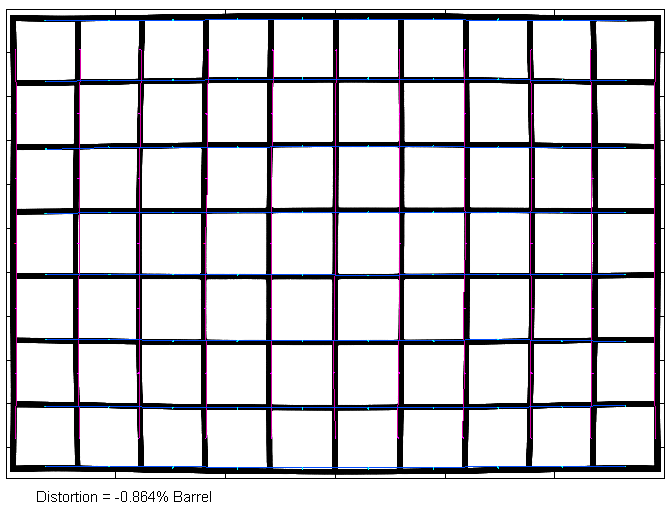
Despite the petite size and the rather extreme focal length, Viltrox managed to keep image distortions well under control, which makes you wonder why the OEMs can’t do it. In RAW images, there’s only a mild barrel distortion of less than 1%.
Vignetting
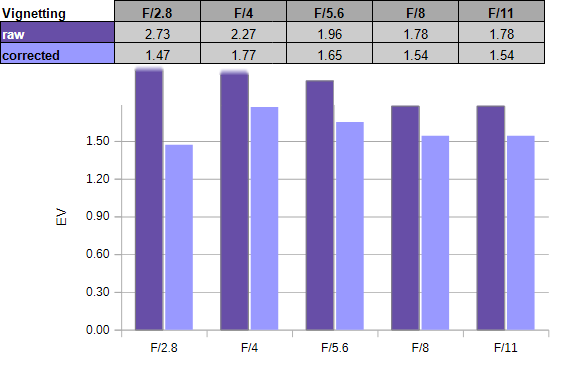
The Viltrox AF 9mm f/2.8 Air XF has one clear weakness – vignetting. A light falloff of almost 3 EV (f-stops) wouldn’t be unusual for similar lenses on full-format cameras. However, it’s a bit much in the APS-C scope, where the figures are exceeding our usual scale substantially here.
Auto-correction doesn’t help too much, unfortunately. It cuts off ~1.3 EV at f/2.8. Strangely, the vignetting increases a bit at f/4 before return to a 1.5 EV light falloff from f/8.
MTF (resolution)
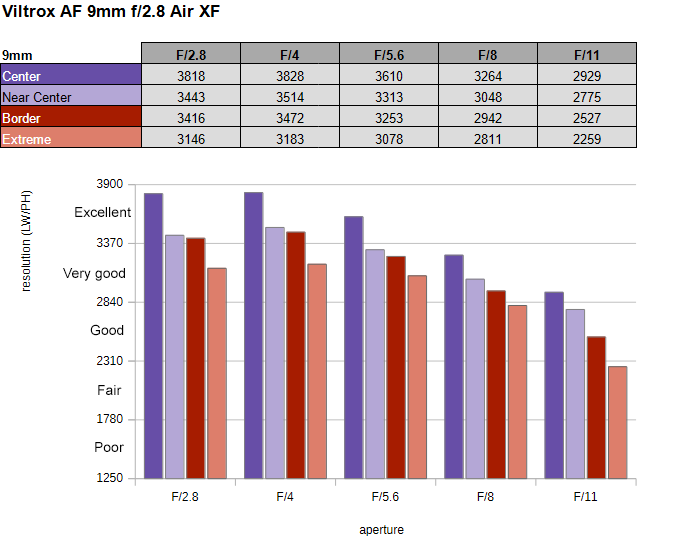
The resolution characteristic of the Viltrox left us quite baffled. We can only describe it as tack sharp straight from f/2.8. Even the corners are easily very good. Stopping down to f/4 lifts the quality marginally, but the lens is basically diffraction-limited. Don’t stop down beyond f/8 unless needed.
The centering quality of the tested sample was Okay (slightly softer on the right side). The field curvature is fairly low.
Please note that the MTF results are not directly comparable across the different systems! Below is a simplified summary of the formal findings. The chart shows line widths per picture height (LW/PH) which can be taken as a measure of sharpness. If you would like to know more about the MTF50 figures, you may check out the corresponding Imatest Explanations.
Chromatic Aberrations (CAs)
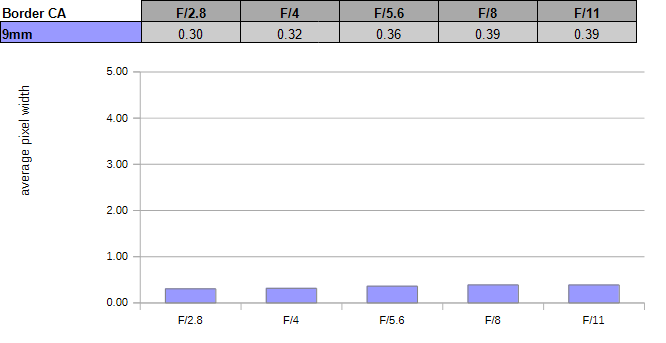
Lateral CAs are low, with a peak CA pixel width of ~0.3px at the image borders, which is, once again, very impressive.
Sun Stars
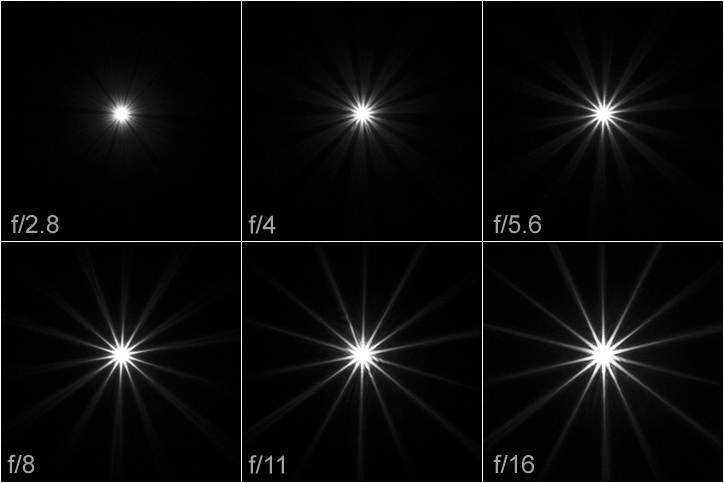
Below is a sequence of 100% cropped images from f/2.8 all the way up to f/16 – illustrating the sun star behavior. Sun stars are an aperture effect that shows up if a bright light source is part of the scene (usually in night shots).
The aperture shape is near circular at f/2.8, so there isn’t any sun star effect to speak of here. They start to appear at f/4 already, although you should stop down to f/8 if you are really after the effect. The rays are nicely pointy (rather than fan-like). The best results are, as usual, available at f/11 and, more so, at f/16 – although image softness will be an issue due to diffraction if you stop down this much.
Competition
In terms of value, the Viltrox AF 9mm f/2.8 Air doesn’t really have any competition worth mentioning. Even the fully manual Laowa 9mm f/2.8 Zero-D is twice the price. There is, of course, Fujifilm’s own Fujinon XF 8mm f/3.5 R WR, but it didn’t really impress us. It’s 1mm wider, though, if this matters to you.
Sample Images


Viltrox continues to release quality lenses at prices that can't be matched by the traditional players - it's not even close. This also applies to the Viltrox AF 9mm f/2.8 Air XF. It's an amazingly sharp lens despite the extreme focal length. Some other players should be ashamed in comparison (I'm looking at you, Fujifilm ...). Lateral CAs are very low, and image distortions are quite easy to live with as well. If nice sun stars are your thing, the lens can do that for you. There's one obvious flaw, though - vignetting, but it's not a showstopper. In terms of build quality, the Viltrox lens is nothing special, neither in good nor bad terms. The plastic quality is quite decent, and the assembly quality is flawless. It's good consumer-grade quality. The AF is snappy. You can forgive the lack of weather sealing. Given the very low pricing, you may think of the Viltrox AF 9mm f/2.8 Air XF as a bottom feeder, but this doesn't do justice here because, at least in terms of sharpness, it is up there with the very best - and better than most. So it's more than just a simple value recommendation here.
If you'd like to support our work, please consider shopping for this or other lenses via one of the following partners:
* Viltrox Store
* Amazon (US)
* Amazon (Europe)
* B&H (US)
* Adorama (US)
The Good
- Brilliant sharpness
- Amazing affordability
- Low RAW distortion
- Very small and light-weight
The Bad
- Heavy Vignetting
- Auto-correction profile needs some work
-
Optical Quality8
-
Build Quality7
-
Price / Performance10