


Introduction
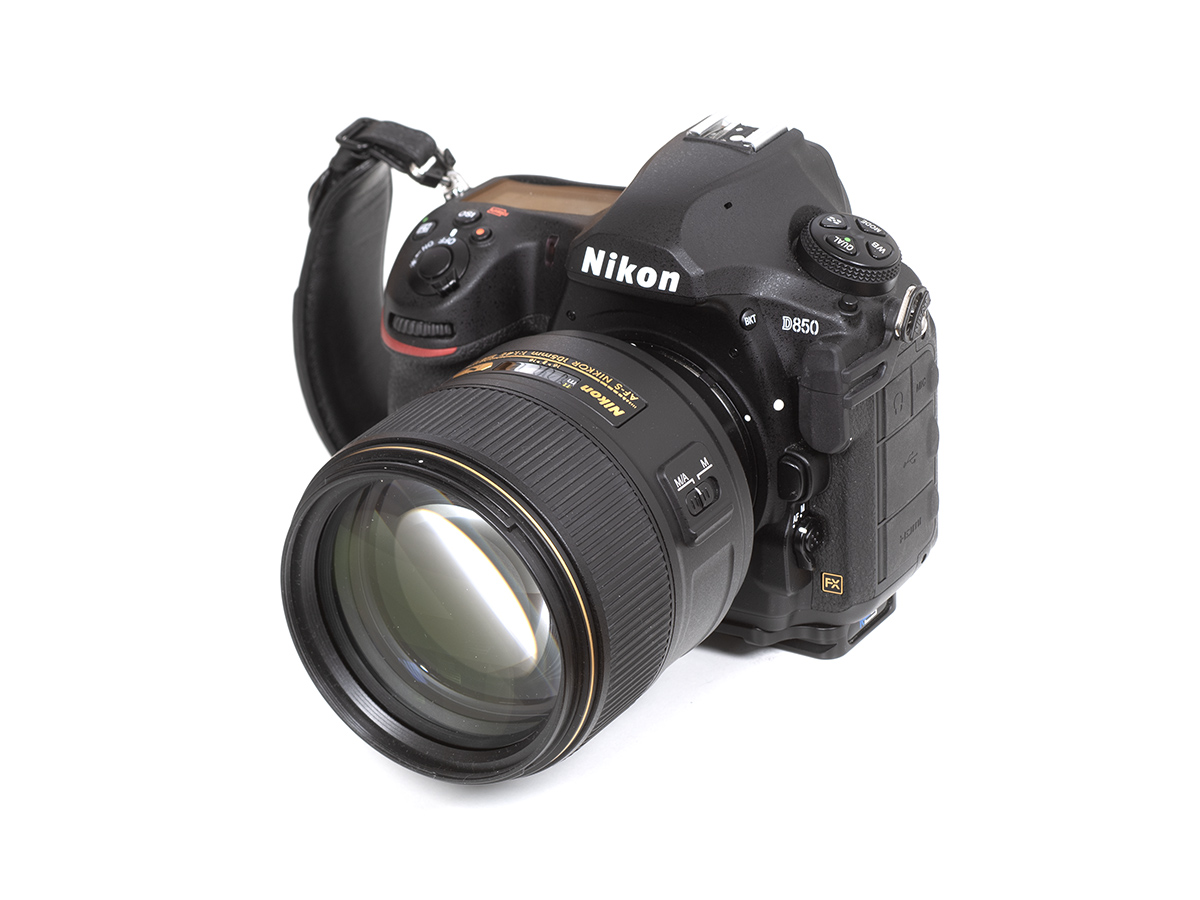
After all these fancy new lenses for mirrorless cameras, let’s do a little excursion to a blast of the past – the not-yet-quite-vintage Nikkor AF-S 105mm f/1.4 E ED in Nikon F mount, released back in 2016. It’ll be part of a miniseries of reviews where we’ll cover some of the more iconic Nikon lenses for Nikon DSLRs. The 105mm f/1.4 E is actually still available new in shops out there, but given the paper specs, don’t expect it to be on the affordable side – it still retails for about $1900 out there.
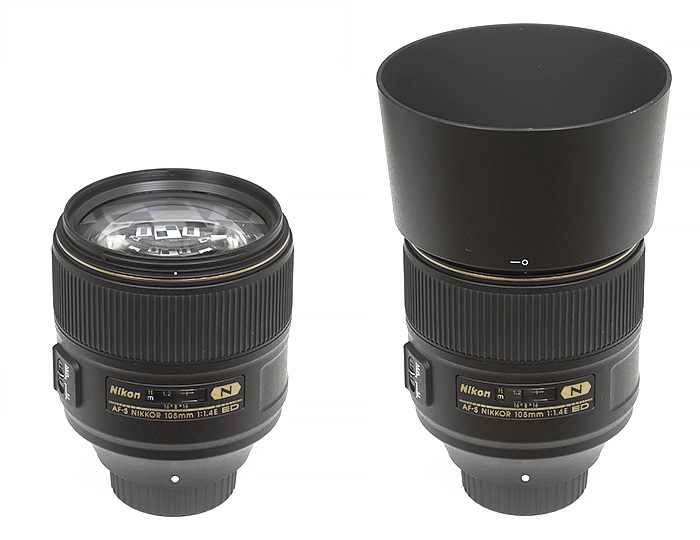
Let’s start with the less exciting stuff and discuss some specs and build quality first. If you’ve ever handled any of the latest Nikon F-mount f/1.4 primes, especially the AF-S 58mm f/1.4 or the AF-S 85mm f/1.4, the 105mm lens will look very familiar at first. However, that doesn’t prepare you well for the weight of it coming in at just below 1kg. However, while it is certainly a “fat” lens, it’s comparatively short at just over 10cm. Apart from size and weight, it is indeed very similar to its closest siblings, which means it comes with an outer barrel that might be either high-end plastic or a magnesium alloy (which still feels like plastic). Nikon claims the lens is sealed to resist dust and moisture. There is one feature that sets it apart from the other “gold ring” f/1.4 primes: it is the first lens of that group to feature an electronically controlled aperture (thus the ‘E’ designation in its name). The broad, rubberized focus ring operates smoothly. It’s worth mentioning that the lens’ focus mechanism follows the focus ring movement immediately and without any delay.
The AF is very fast and near noiseless on the Nikon D850. The physical length of the lens remains constant during focus operation, and the huge front element does not rotate. As is the case for all new Nikkors for many years now, the AF-S 105mm f/1.4E is a G-type lens and thus does not offer an aperture ring.
| Specifications | |
|---|---|
| Optical construction | 14 elements in 9 groups (3x ED) Nano Crystal Coat Fluorine coated elements |
| Number of aperture blades | 9 (rounded) |
| min. focus distance | 1m (max. magnification ratio 1:7.7) |
| Dimensions | 94.5 x 106 mm |
| Weight | 985g |
| Filter size | 82mm |
| Hood | barrel-shaped (bayonet mount, supplied) |
| Other features | Lens provides distance (D) information to the camera, Silent Wave AF motor |
Distortion
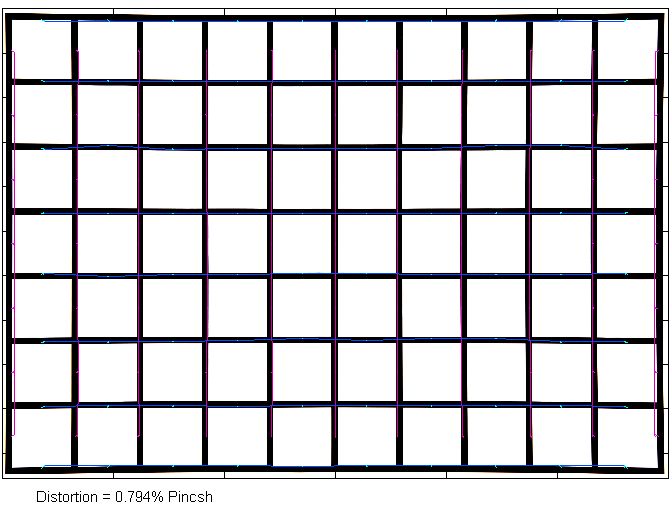
The lens produces a small amount of pincushion distortion. This can be visible in subjects with straight lines near the image border. However, this is likely not the case in the majority of shots this lens is designed and used for.
Vignetting
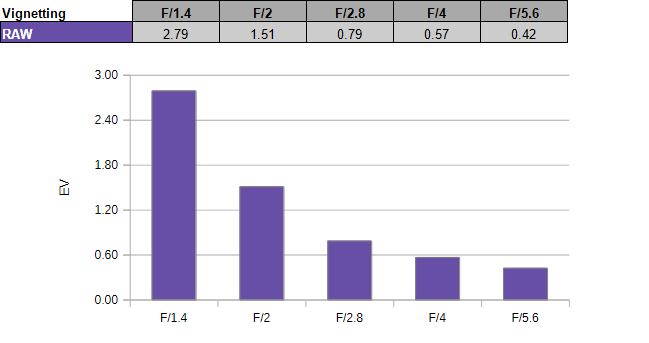
Despite the lens’ huge front element and diameter, there is, of course, a fair amount of vignetting that is typical and unavoidable for such fast lenses. Wide open, the light falloff towards the borders reaches a very noticeable 2.7 EV (f-stops). Stopped down to f/2, it’s already down to 1.5 EV and likely not relevant for most subjects anymore from f/4 onwards.
Note: In our original review based on the Nikon D3x, we recorded lower vignetting figures, which simply relate to the different tone curve. The vignetting figures are obtained from JPGs shot in default configuration.
MTF (resolution)
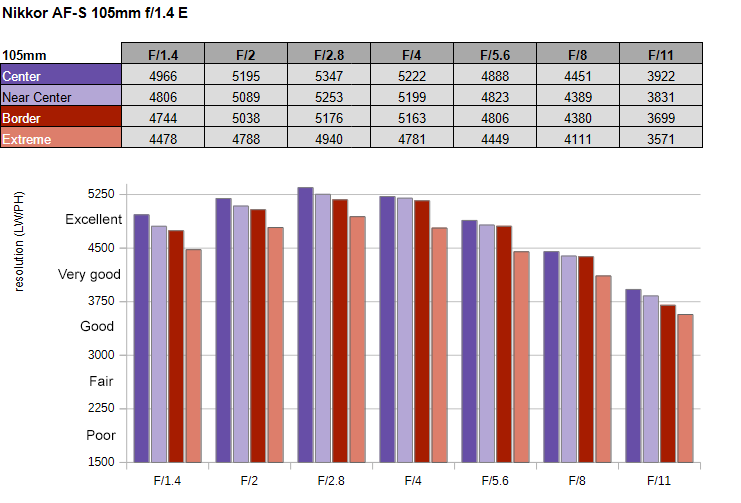
The Nikkor produced absolutely superb resolution figures in the lab – and that’s straight from f/1.4. It reaches and probably surpasses the limits of the 45 megapixel sensor of the D850. The peak performance is reached at f/2.8 although you will be hard pressed to see the difference from f/1.4 in the real world. Diffraction effects slowly creep in thereafter, with slightly visible effects at f/8 and f/11 should be avoided unless required for your scene.
Please note that the MTF results are not directly comparable across the different systems! Below is a simplified summary of the formal findings. The chart shows line widths per picture height (LW/PH) which can be taken as a measure of sharpness. If you would like to know more about the MTF50 figures, you may check out the corresponding Imatest Explanations.
Chromatic Aberrations (CAs)
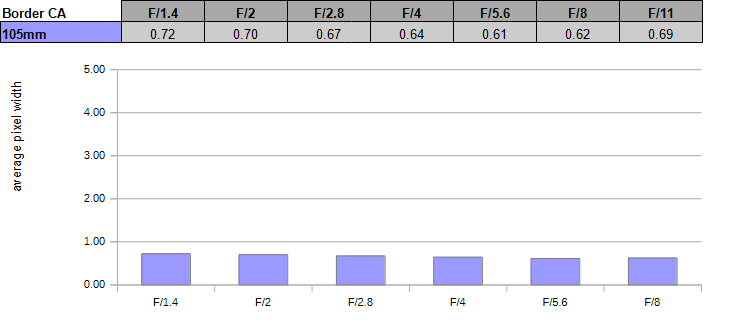
Chromatic aberrations (color shadows at harsh contrast transitions) are well controlled with an average CA pixel width around the 0.7px mark at the image borders.
Bokeh
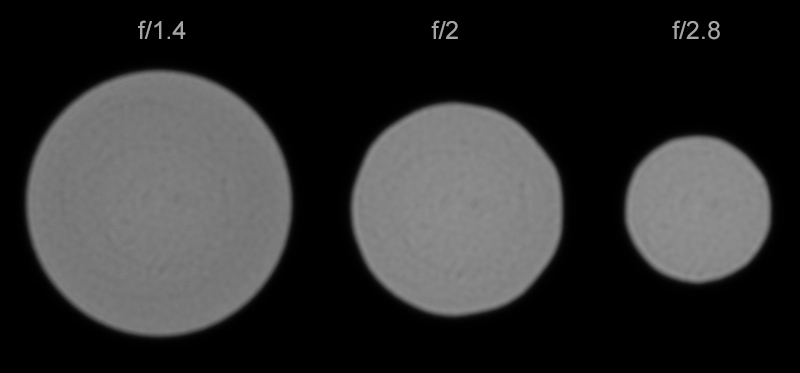
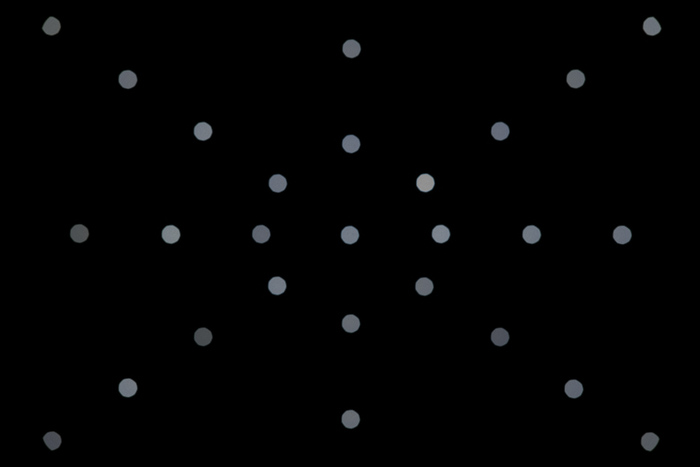
Out-of-focus highlights are mostly clean with some minor “grain” in the inner zone. The center discs are circular at f/1.4 with no visible outlining. Stopping down to f/2 introduces a tiny bit of edginess. Surprisingly, it doesn’t increase at f/2.8.
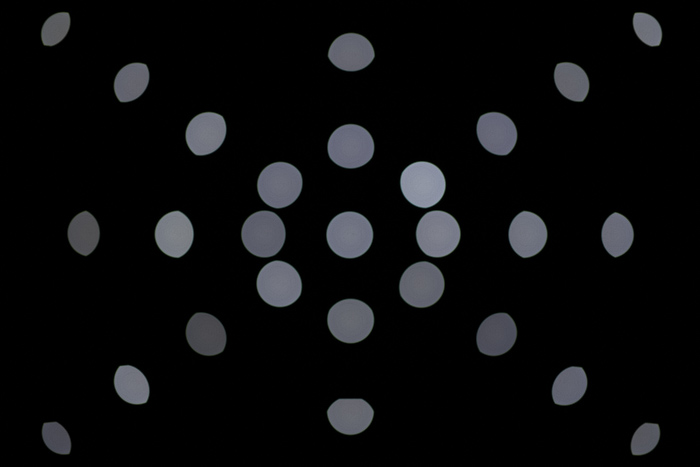
Despite the rather large front element, the Nikkor can’t sustain the circular disc shape across the image field, so there’s some mechanical vignetting going on there. The discs are only circular very near the center at f/1.4. They deteriorate to “cat eyes” from the midfield, and these are very obvious in the image corners. Stopping down starts the restoration, but the corner discs aren’t fully back to their natural shape until after f/4.


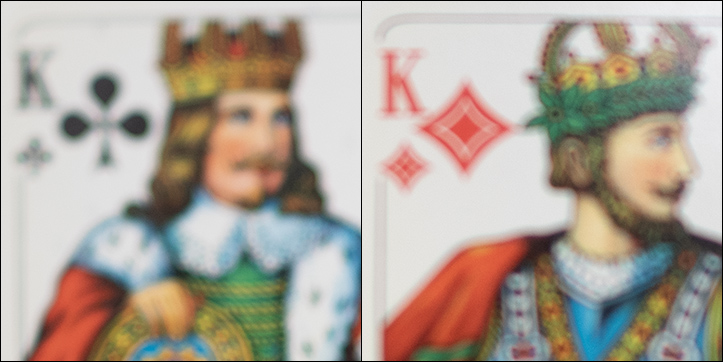
The general out-of-focus rendition is very smooth in the image background (shown to the left below), but more nervous with double edges in the foreground (to the right below).
Bokeh Fringing / LoCA
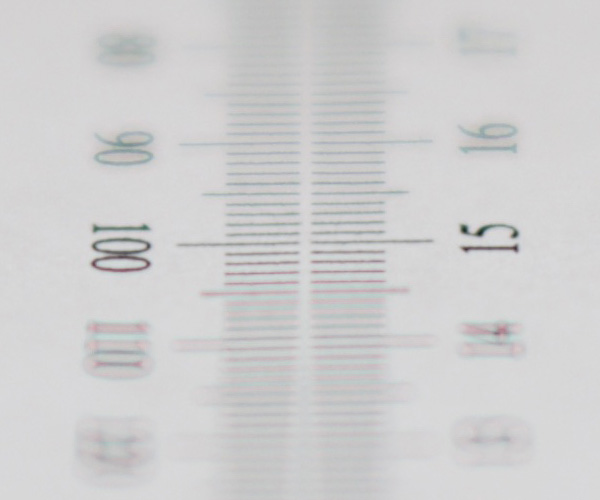
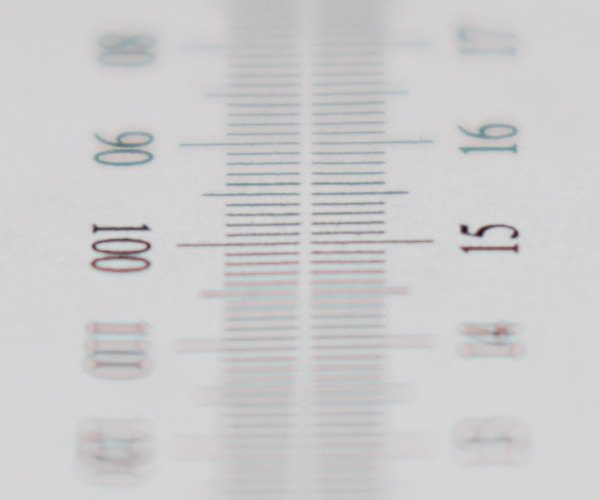
Bokeh fringing (non-coinciding focal planes of the various colors) is a common issue with relatively fast glass. As you can notice below, the halos have different colors – magenta (red + blue) in front of the focus point and green beyond. Unlike lateral CAs, bokeh fringing cannot easily be fixed in post processing.
Typical for most fast primes, especially ultra fast ones, the Nikkor shows a heavy amount of bokeh fringing at large aperture settings (you may also spot the rough foreground rendering). The sharpness is not ideal at f/1.4 – probably because the lens doesn’t feature a floating focusing system for close focus correction. The color fringing is reduced when stopping down but isn’t fully resolved by f/4 – which is “late”.
In addition, these shots also illustrate the focus shift when stopping down. The effect is emphasized in these images, which were shot near the lens’ minimum focus distance. At more field-relevant distances, the issue won’t really be noticeable.

Sample Shots
It's difficult not to be excited about the Nikkor AF-S 105mm f/1.4 E ED. Sharpness is outstanding across the frame at any aperture setting (limited by diffraction at small apertures, of course). This extremely high resolution comes combined with a pleasant bokeh, although there can be noticeable axial CAs and corner highlights aren't ideally rendered. Lateral CAs and image distortion are low, but there is also (and unsurprisingly) quite some vignetting wide open.
The build quality is outstanding, which of course can be expected at this price level. There is no aperture ring though, which may annoy traditionalists. The AF is very fast on the latest DSLR generation, at least.
In summary, the lens well deserves our "Highly Recommended" rating.
If you'd like to support our work, please consider shopping for this or other lenses via one of the following partners:
* B&H (US)
* Adorama (US)
* KEH (US, used gear)
The Good
- Outstanding sharpness
- Pro-grade build quality
- Fast AF
The Bad
- Axial CAs are on the heavy side
- No close-focus correction
- Slight focus shift when stopping down
- No aperture ring
-
Optical Quality9
-
Build Quality9
-
Price Performance9