


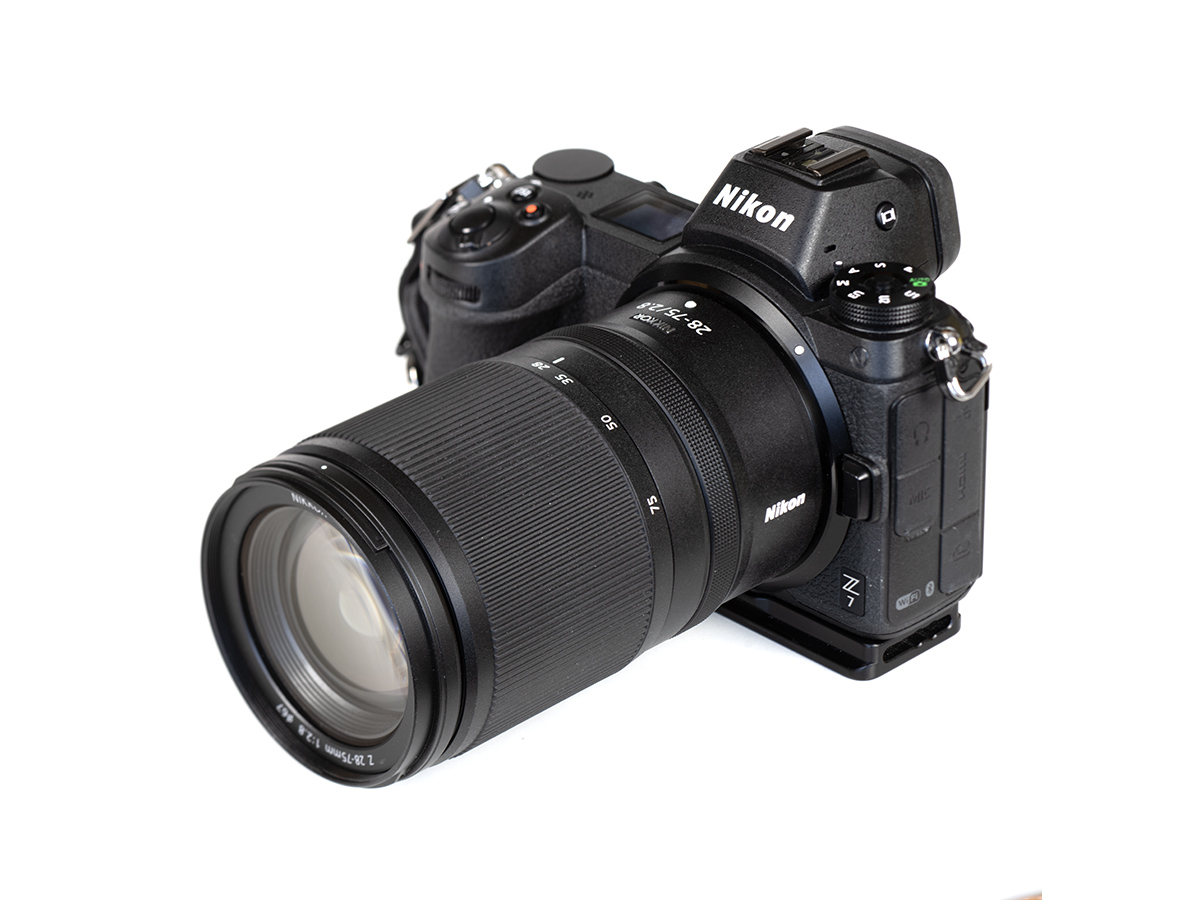
Fast, standard zoom OEM lenses have become quite expensive over the years. And apparently, that’s also something that Nikon recognized as well. It’s a popular segment, so they made a deal with Tamron. The Nikkor Z 28-75mm f/2.8 is, mostly, a carbon copy of the Tamron 28-75mm f/2.8 Di III RXD (1st gen). At around $1000 at this point, it’s still not exactly cheap, but that’s a fraction of what Nikon is asking for their “S” lens. The Z 28-75mm f/2.8 isn’t the only lens licensed from Tamron – there’s also the Z 17-28mm f/2.8 and Z 70-180mm f/2.8. At Tamron all these lenses have been superseded by 2nd generation lenses already. However, as of the time of this writing, they remain part of the Nikkor lens lineup.
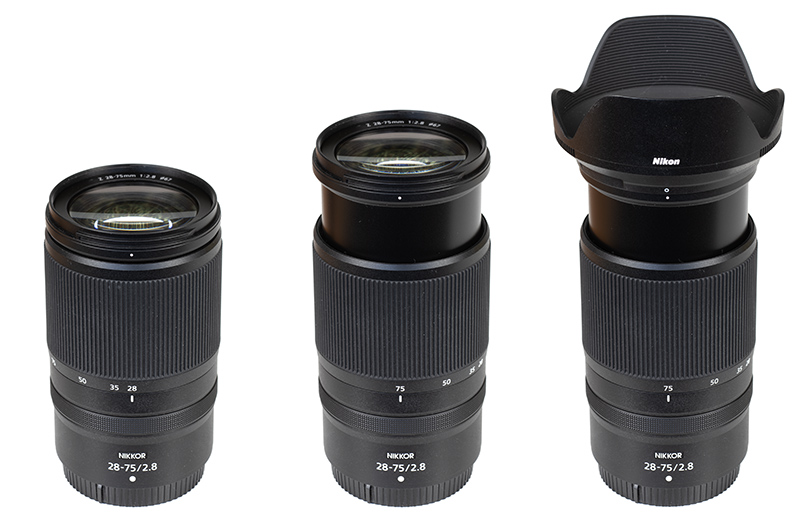
While the optical system is made by Tamron, there are still a couple of differences compared to the original Tamron lens. The outer matches the Nikon’s matte-black finish, and there’s the Nikon’s customizable control ring (defaults to manual focusing). The focus ring rotation direction can be changed, and you can choose between linear and non-linear focus response in compatible Nikon Z bodies. The lens uses an extending zoom mechanism, as you can see below. There is some weather sealing thanks to the dust- and drip-resistant design. A fluorine coating on the front element also helps to repel moisture. Firmware updates can also be performed via the camera (rather than via a USB-C port in the native Tamron lens). A petal-shaped lens hood is supplied.
Nikon states that the lens uses an STM motor … which is probably just Tamron’s RXD. It’s quiet and fast enough for most purposes. Don’t expect it to be as fast as Nikon’s latest VCM, though.
| Specifications | |
|---|---|
| Optical construction | 15 elements in 12 groups (1x Super ED, 1x ED, 3x aspherical) |
| Number of aperture blades | 9 (rounded) |
| min. focus distance | 0.19m (max. magnification 0.34x) |
| Dimensions | Φ 75 × 120.5mm |
| Weight | 565g |
| Filter size | Φ 67mm |
| Hood | petal-shaped, supplied |
| Other features | dust- and drip-resistance control ring |
| Compatible mounts | Nikon Z |
Distortion
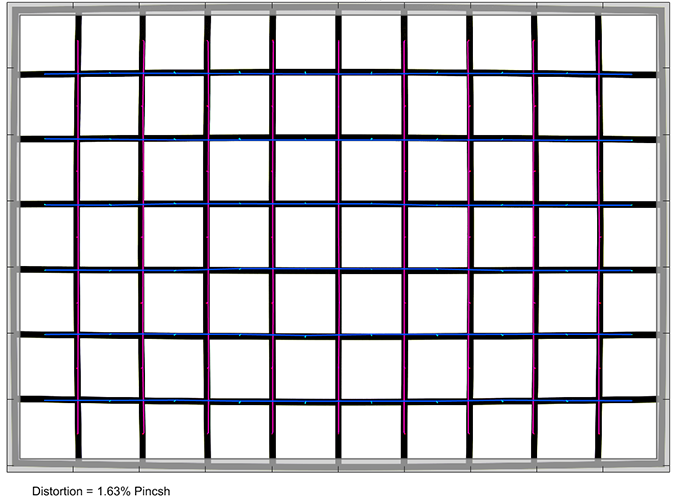
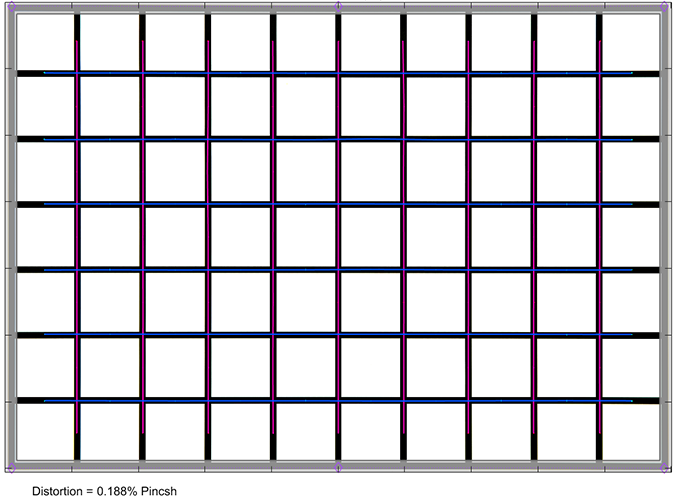
Note: We’ve taken the distortion figures from the Tamron 28-75mm f/2.8 review, because they can’t really change between systems.
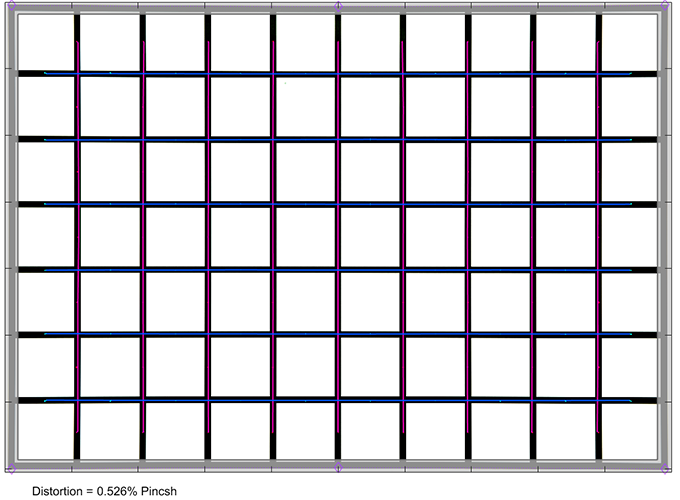
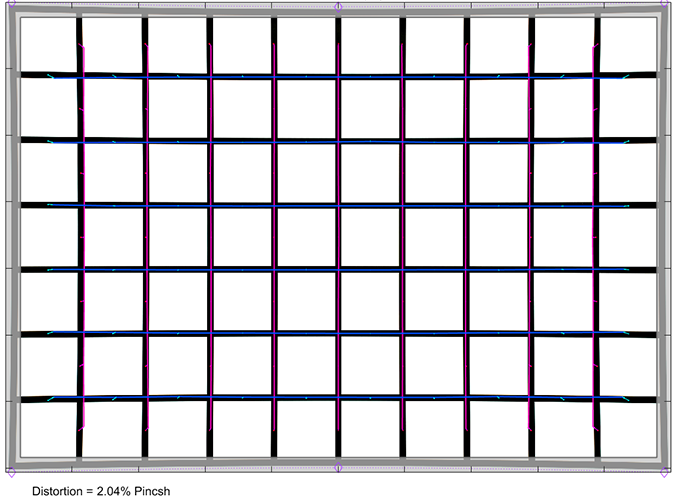
With activated image auto-correction, you don’t have to worry about image distortions. They are near zero across the range, as you can see below.
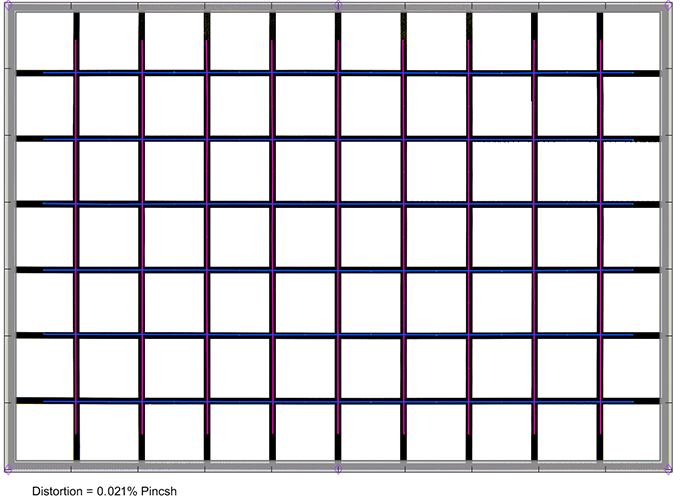
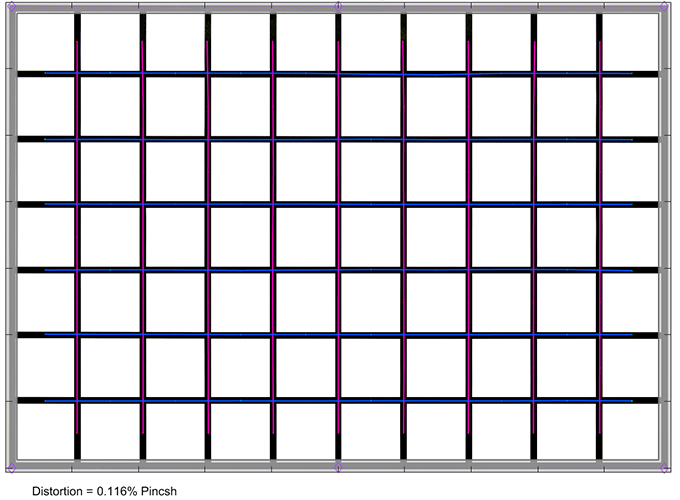
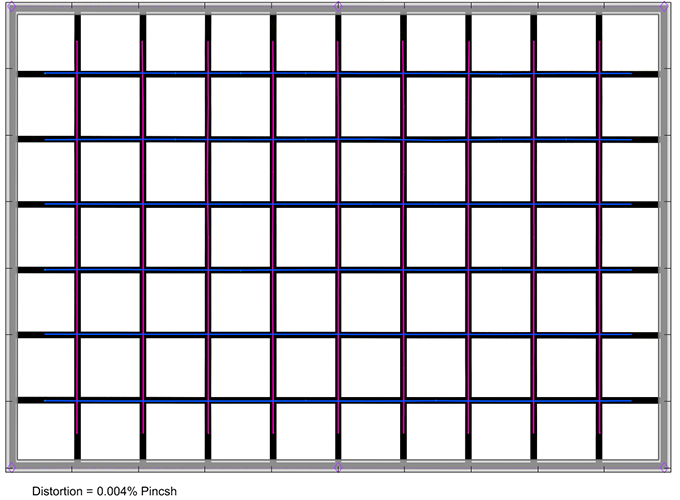
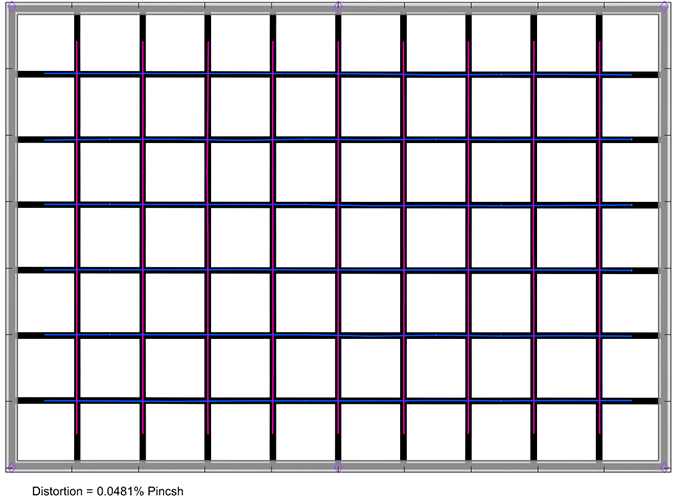
When looking at the RAW characteristic, the situation is slightly worse but still very acceptable for a standard zoom lens. The lens shows a slight barrel distortion at 28mm and medium pincushion distortions at 75mm. In between the distortions are negligible.
Vignetting
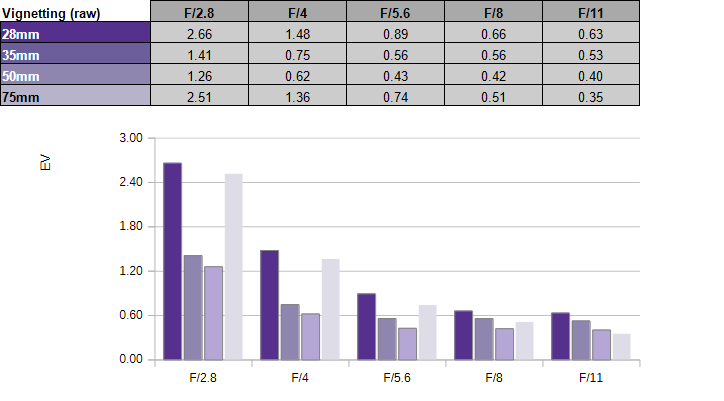
The RAW vignetting is very high at 28mm and 75mm @ f/2.8 at more than 2.5 EV (f-stops). This is very visible. It’s quite high in the middle of the zoom range. Stopped down to f/4, the light falloff eases by roughly 1 EV (f-stop) at the extreme ends. The vignetting is acceptable from f/5.6.
Note: Nikon has a different tone curve compared to Sony, so there is a slight scaling factor between the Nikkor and the Tamron lens (tested in Sony E-mount).
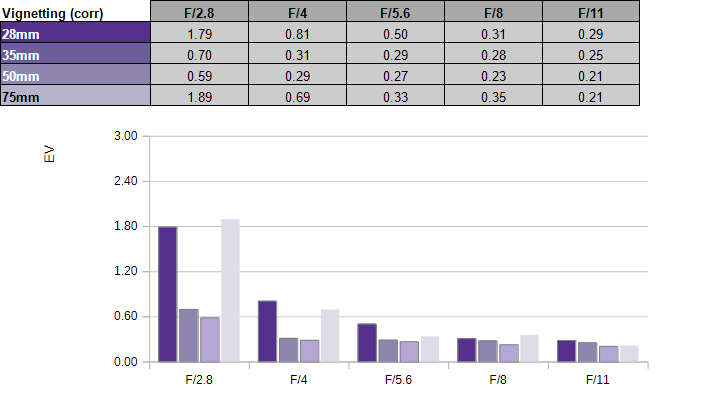
Activated autocorrection reduces the vignetting by ~3/4 EV (f-stops) at f/2.8. The light falloff is still visible at 28mm and 75mm. At f/4, the vignetting is acceptable at the extreme ends and negligible at 35mm and 50mm. The issue is mostly resolved at f/5.6 at 28mm and 75mm as well.
MTF (resolution at 45 mp)
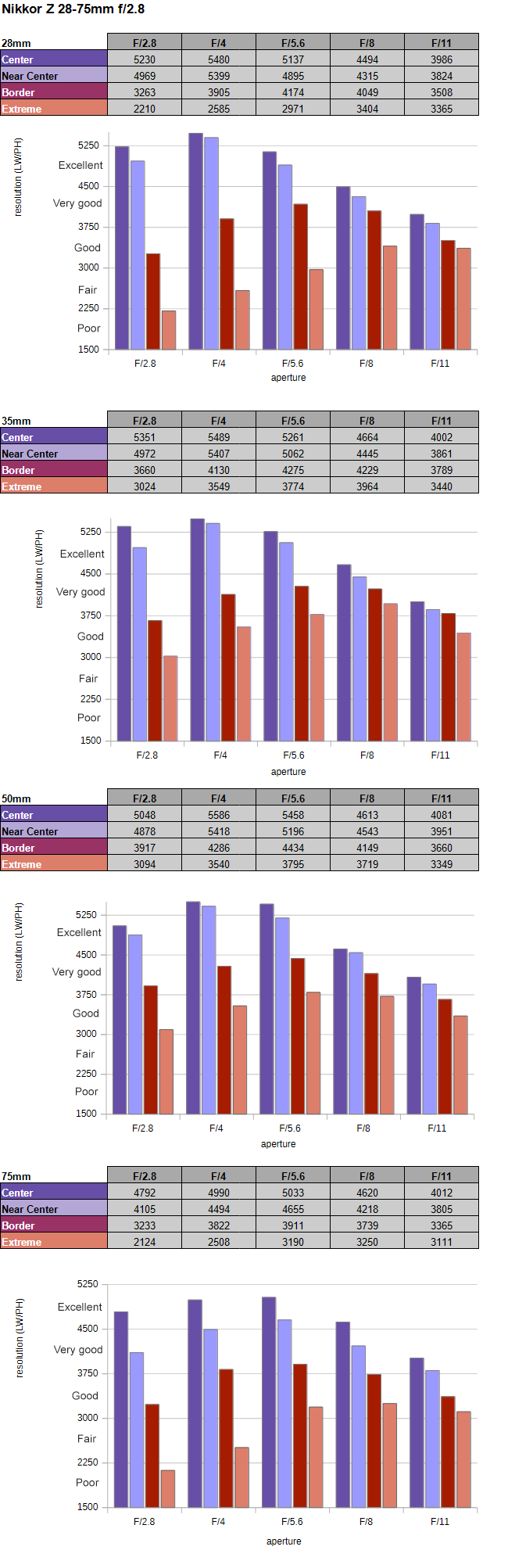
The Nikkor Z 28-75mm f/2.8 has two souls here. The center quality is nothing short of superb at large to medium aperture settings. However, there’s a rather steep drop from the midfield. At 28mm f/2.8, the borders are merely good, followed by soft corners. Stopping down boosts the border quality to very good levels from f/4. The corners improve slower and only reach good quality at f/8. The resolution is slightly higher at 35mm and 50mm, although the border/corner quality isn’t great at maximum aperture. The quality drops again at 75mm with very soft corners at f/2.8. The results are fine from f/5.6 without being impressive.
The centering quality of the tested sample was okayish (slightly tilted). Field curvature is low.
Please note that the MTF results are not directly comparable across the different systems!
Below is a simplified summary of the formal findings. The chart shows line widths per picture height (LW/PH), which can be taken as a measure of sharpness. If you would like to know more about the MTF50 figures, you may check out the corresponding Imatest Explanations.
Chromatic Aberrations (CAs)
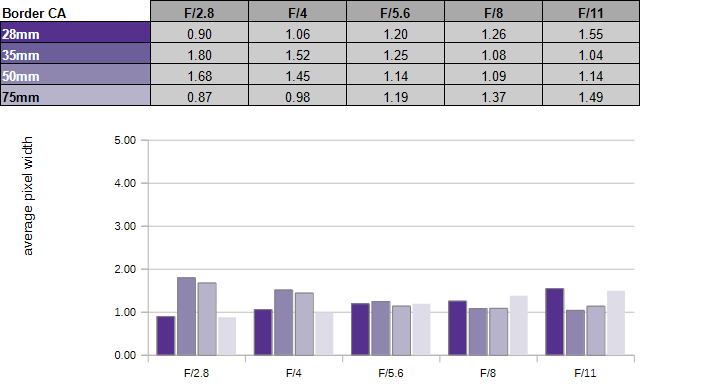
Lateral CAs are fairly well corrected. They are mostly around an average pixel width of 1px at the image borders, with slightly higher CAs at smaller aperture settings at the extreme ends, and large aperture settings in between.
Keep in mind that lateral CAs are losslessly autocorrected in JPEGs and most RAW converters, so it’s not a big deal in real life.
Bokeh
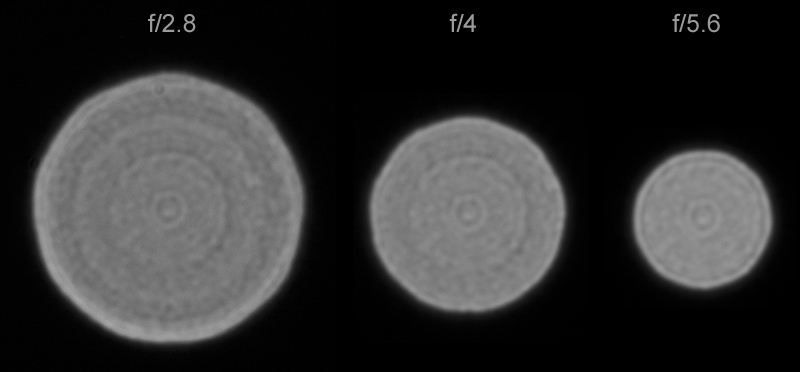
Out-of-focus highlights are roughly rendered, as you can see below. The inner zone shows an onion-like substructure – most likely brought to you by the 3 aspherical elements. Some “grain” is also obvious and the disc edge is brighter. Stopping down doesn’t really change this. On the positive side, the circular shape of the discs is largely intact even at f/5.6.
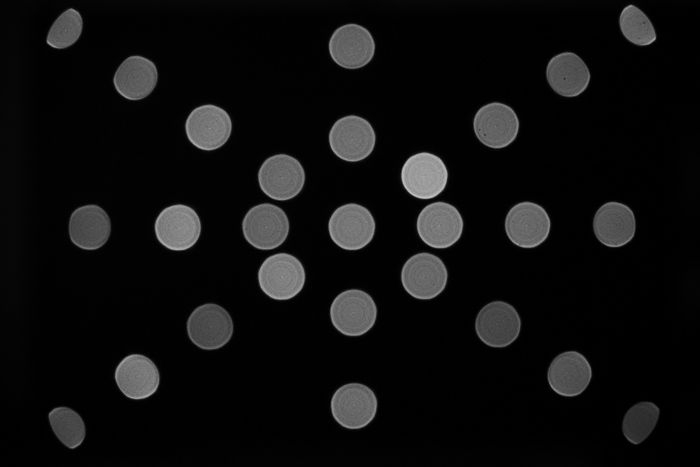
The shape of the highlights deteriorates from the midfield into the edges with some obvious “cat-eyes” at f/2.8. You may also notice that the disc edges show the already mentioned outlining (bubble effect). Stopping down to f/4 removes most of the disc outlining. The circular shape of the corner discs is restored from f/5.6.
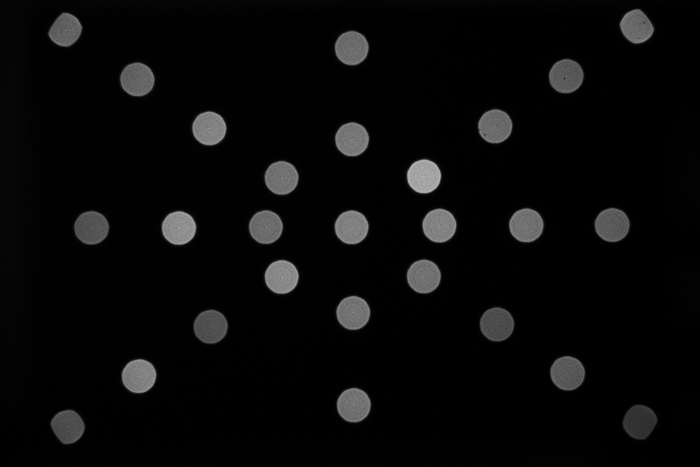
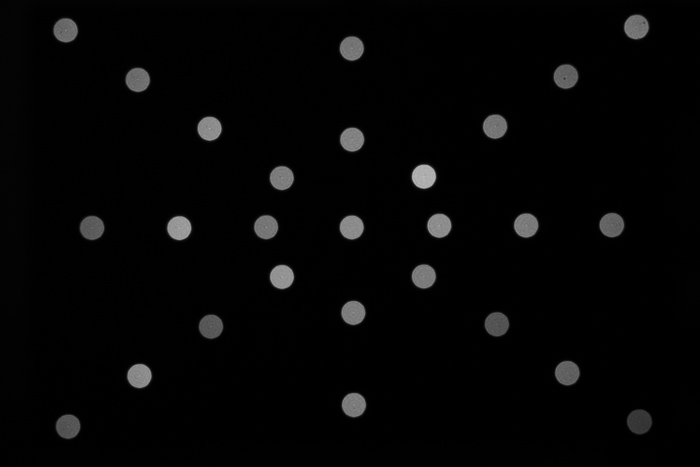
The rendering in the out-of-focus transition zone is a bit busy in the background (to the left below). The foreground blur is comparatively smooth here.
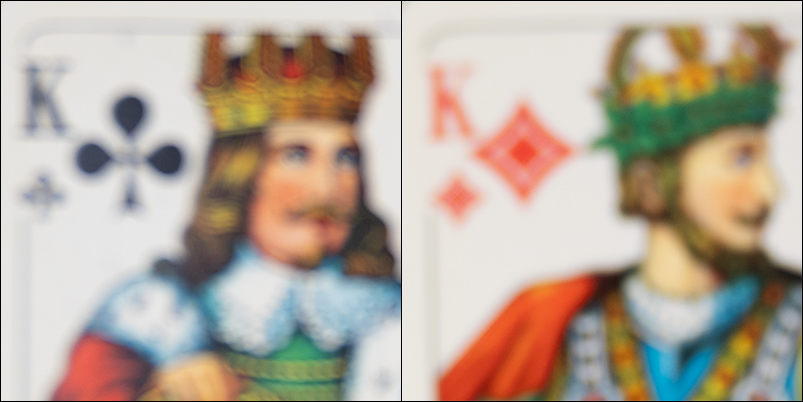
In real life, the bokeh isn’t great either. Below is a crop from a gallery image taken at 75mm f/2.8:

Competition / Alternatives
On paper, the in-house Nikkor Z 24-70mm f/2.8 S II is an obvious alternative, but it’s FAR out there price-wise and, as such, not a real alternative for most mortals. However, the Nikkor Z 24-70mm f/2.8 S mk I (shown in the center below) is available for reasonable prices on the used market, and it’s certainly better. If you prefer a new lens, there’s the Tamron 28-75mm f/2.8 G2 (to the right below), which is a major improvement over the Z 28-75mm f/2.8.
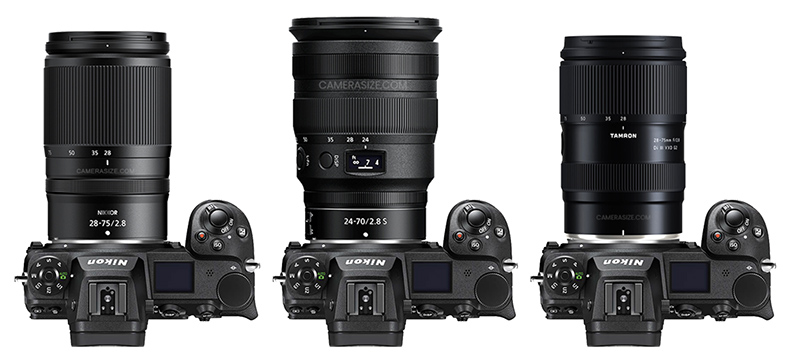
Image courtesy of camerasize.com.
Sample Images
Note: these are older sample images from our German (countryside) branch.


The Nikkor Z 28-75mm f/2.8 is an older lens, and it shows. The optical design is optimized for center quality. However, the outer image field is far less impressive, especially at f/2.8. Stopped down, the results are good without being impressive. The RAW distortion is comparatively moderate, so autocorrection can easily correct this without a noticeable loss in quality. The same goes for lateral CAs. The vignetting is a bit high at f/2.8, but that's not unexpected in this lens class. Autocorrection helps to tame the issue again.
The build quality is generally fine. This is also where Nikon customized the original Tamron design. The AF speed relies on an STM, which delivers a decent performance here.
Overall, the Nikkor Z 28-75mm f/2.8 had its time, but if can't afford the S-class Nikkors, you should really prefer the improved Tamron G2 lens over this one.
If you'd like to support our work, please consider shopping for this or other lenses via one of the following partners:
* Amazon (US)
* Amazon (Europe)
* B&H (US)
* Adorama (US)
* KEH (US, used gear
The Good
- Outstanding center sharpness
- Comparatively affordable
- Minimal focus breathing
- Lightweight
The Bad
- Unimpressive corner quality
- Rough background bokeh
-
Optical Quality5.5
-
Build Quality7
-
Price Performance5