


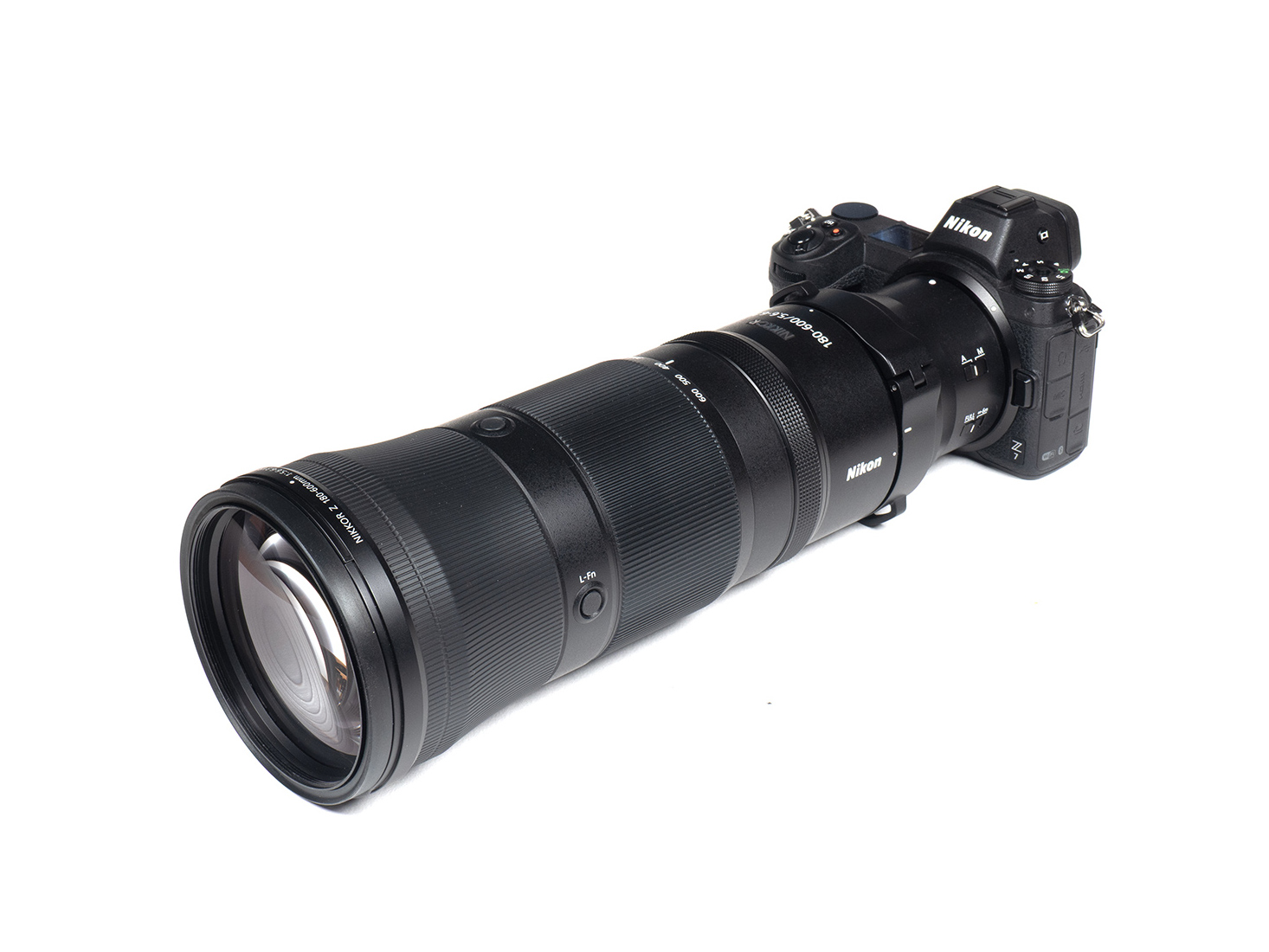
The Nikkor Z 180–600mm f/5.6–6.3 VR expands Nikon’s Z-mount lineup into the super-telephoto zoom range, addressing the gap for photographers requiring very long reach. Covering focal lengths from 180mm through 600mm, it is positioned squarely for wildlife, sports, and aviation use, where flexibility and reach are primary considerations. The lens also represents an evolution from Nikon’s DSLR-era AF-S 200–500mm f/5.6E ED VR. Priced at around $2000 USD, the Z 180–600mm f/5.6–6.3 VR remains just attainable for normal mortals.
From a design and specification standpoint, the lens closely follows a formula that has already proven popular in the mirrorless market – notably the Sony FE 200–600mm f/5.6–6.3 G OSS. Key elements such as a variable aperture, built-in optical stabilization, and internal zooming almost suggest that the Sony lens was taken as a coarse blueprint and certainly as a target to beat.
The build quality of the Nikkor is excellent and relies on high-quality engineering plastic for its outer shell. The rubberized zoom and (configurable) focus rings turn smoothly. By rotating a focus ring, M/A mode allows you to switch from autofocus to manual with no time lag. The Nikkor also features the usual set of Fn-buttons, a focus limiter, and a rotating, detachable tripod mount.
The Nikkor uses an STM drive. Most manufacturers are moving away from such stepping motors, but Nikon still loves theirs. It’s fairly quick and silent, so there isn’t really anything wrong with this anyway. The built-in image stabilizer is rated at 5.5 f-stops. Syncro-IS doesn’t seem to add much here.
The lens is also compatible with Nikon Z teleconverters, although we wouldn’t recommend this, because these push the resulting aperture well into diffraction territory, so performance would take a double hit then.
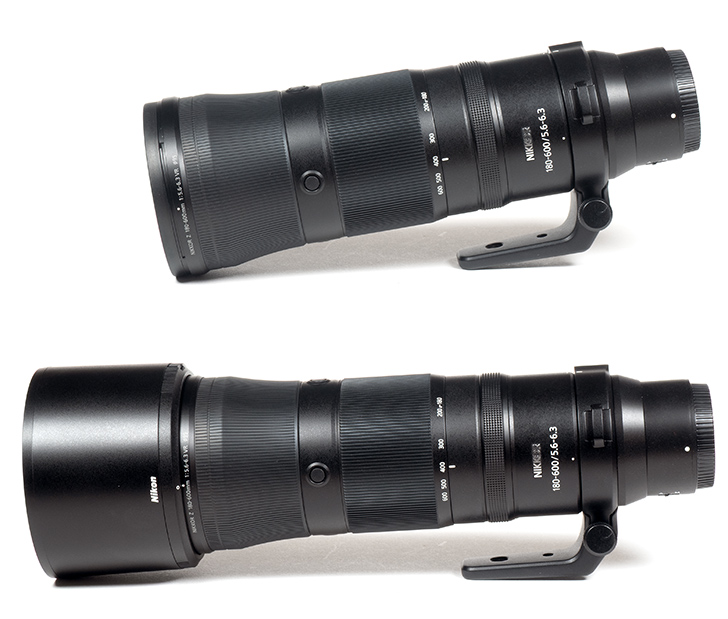
| Specifications | |
|---|---|
| Optical construction | 25 Elements in 17 Groups (6x ED, 1x aspherical) |
| Number of aperture blades | 9 (rounded) |
| min. focus distance | 1.3-2.4m (max. magnification: 1:4) |
| Dimensions | 110 x 315.5mm |
| Weight | 1955g (2140g w/ tripod collar) |
| Filter size | 95mm |
| Hood | barrel-shaped, bayonet mount, supplied |
| Other features | fluorine coating 4 Fn buttons Focus limiter rotating tripod collar image stabilization (5.5 stops) dust- & moisture-resistant compatible with Nikon Z-series teleconverters |
Distortion
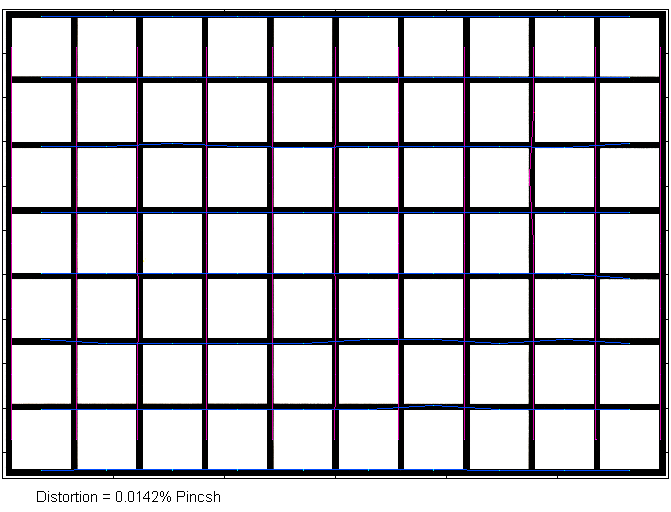
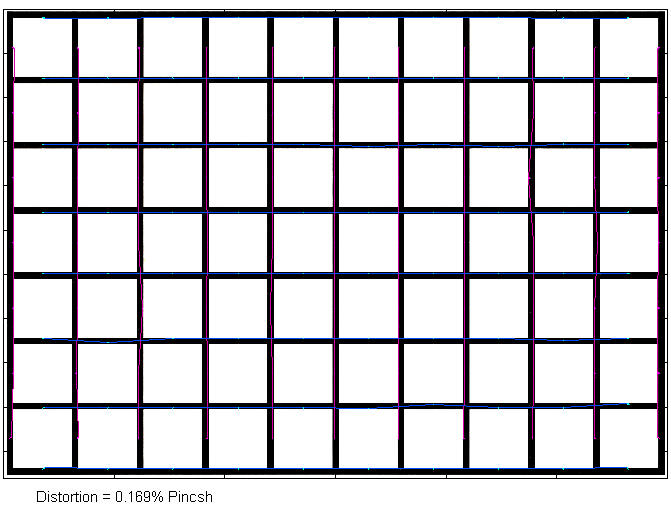
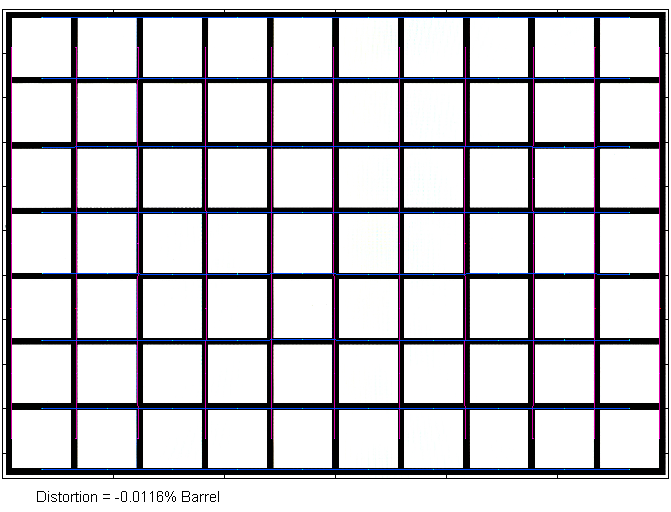
The Nikkor produces slight pincushion distortions in RAW images throughout the zoom range. They peak in the middle range at 1.1%, but this isn’t really disturbing.
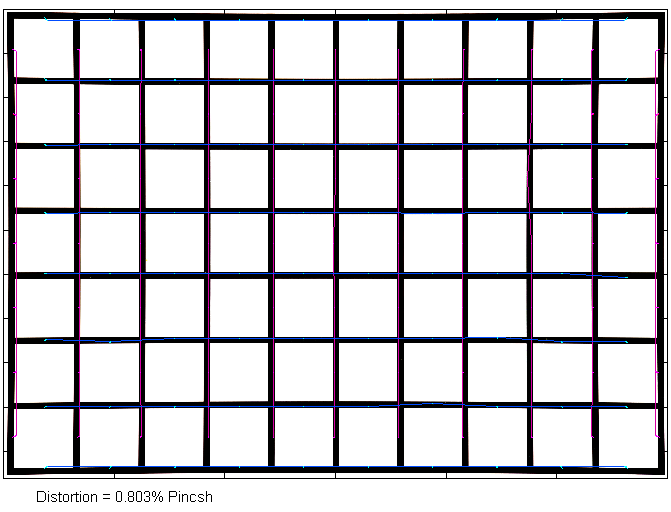
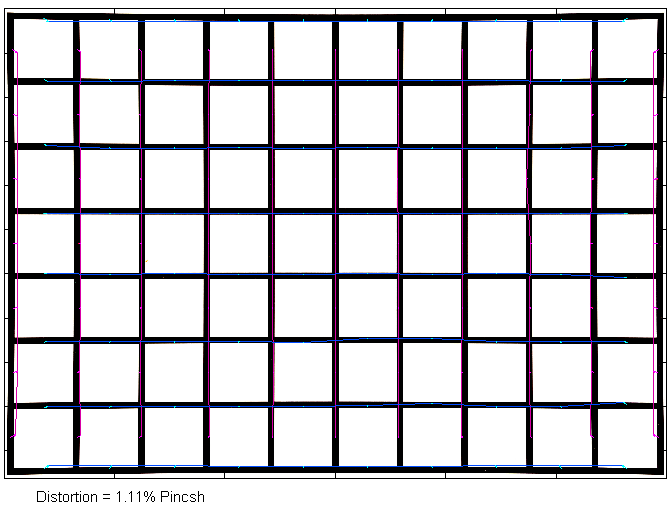
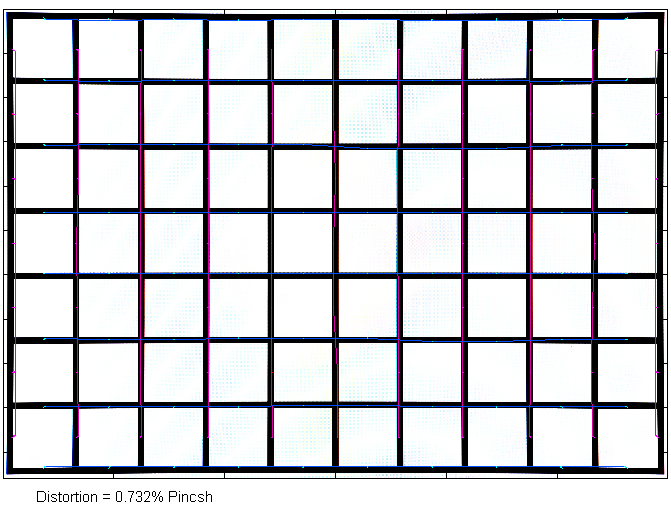
Auto-correction handles image distortions almost perfectly.
Vignetting
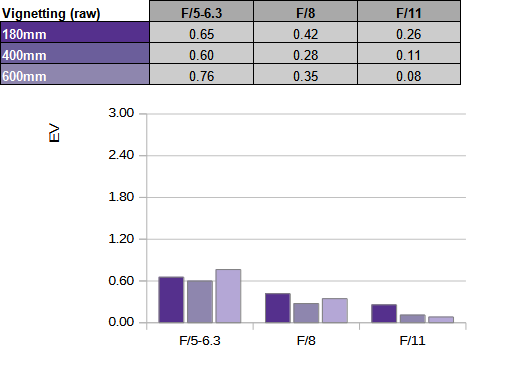
The RAW vignetting of the Nikkor is surprisingly low, with a light falloff around 0.7 EV (f-stops) at maximum aperture. The vignetting is negligible from f/8 already.
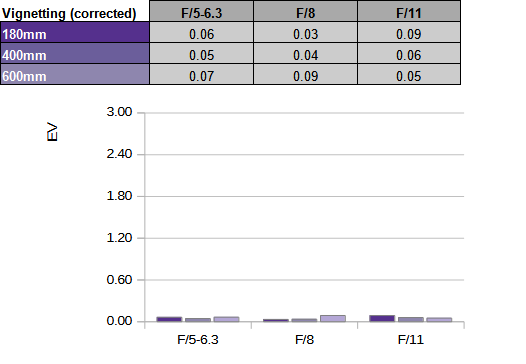
Auto-correction (in high mode) removes the vignetting completely.
MTF (resolution at 45 mp)
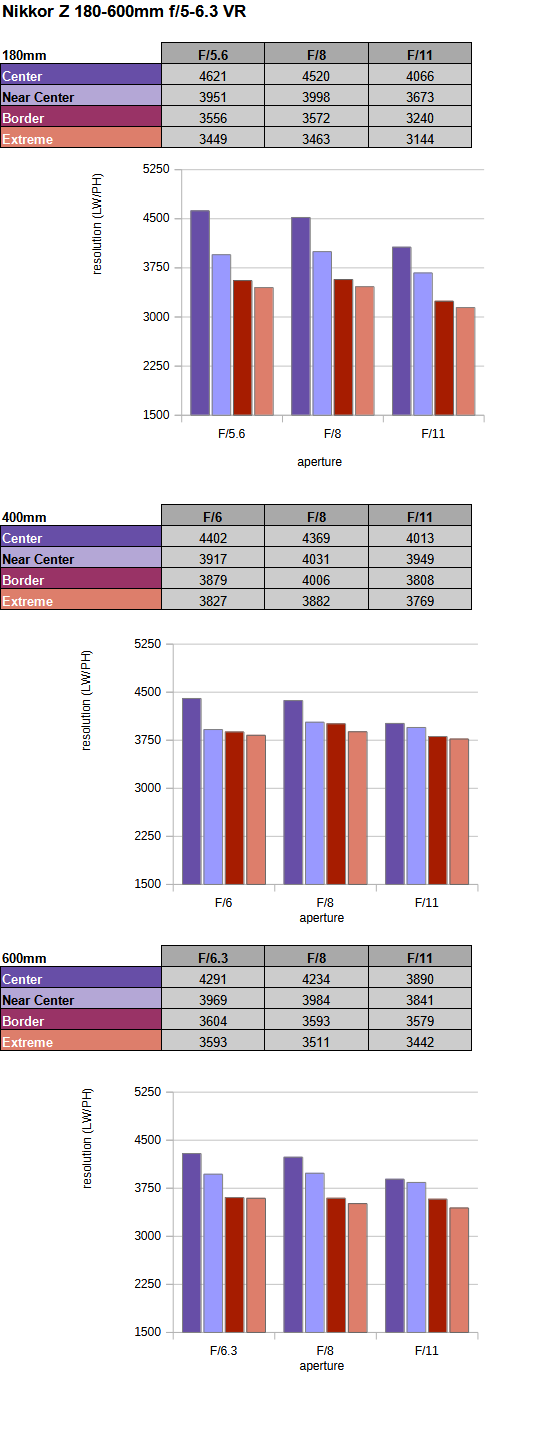
The resolution figures of the Nikkor Z 180-600mm f/5.6-6.3 VR are decent without being truly outstanding – at least on high-megapixel sensors. Overall, the performance is quite consistent. The center quality is generally very good, falling to good results in the outer image field. The lens performs best in the low to mid range, but the quality remains quite high at 600mm. Stopping down doesn’t really improve the quality, and f/11 is affected by diffraction already.
The field curvature is flat. The centering quality of the tested sample was good.
Please note that the MTF results are not directly comparable across the different systems!
Below is a simplified summary of the formal findings. The chart shows line widths per picture height (LW/PH), which can be taken as a measure of sharpness. If you would like to know more about the MTF50 figures, you may check out the corresponding Imatest Explanations.
Chromatic Aberrations (CAs)
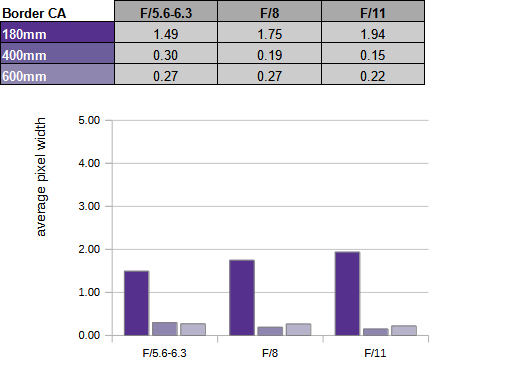
While the lens has the best center sharpness at 180mm, it is also the focal length with the highest lateral CAs. They range between 1.5~2px at the image borders. Surprisingly, the CAs are almost absent at longer focal lengths.
Lateral CAs should get auto-corrected by the camera (JPEGs) or most RAW converters anyway.
Bokeh
The quality of the bokeh is an important aspect with such a lens despite the comparatively slow aperture range. You’ll still use it to isolate objects from their surroundings.
The Z 180-600mm f/5.6-6.3 VR features an aspherical element in its optical design. It is probably responsible for a marginal pattern that we can see in the inner zone of out-of-focus highlights. The discs are nicely circular at max aperture, but there’s also a bit of an outlining effect at the disc edges. Stopping down produces slightly edgy discs from f/11.
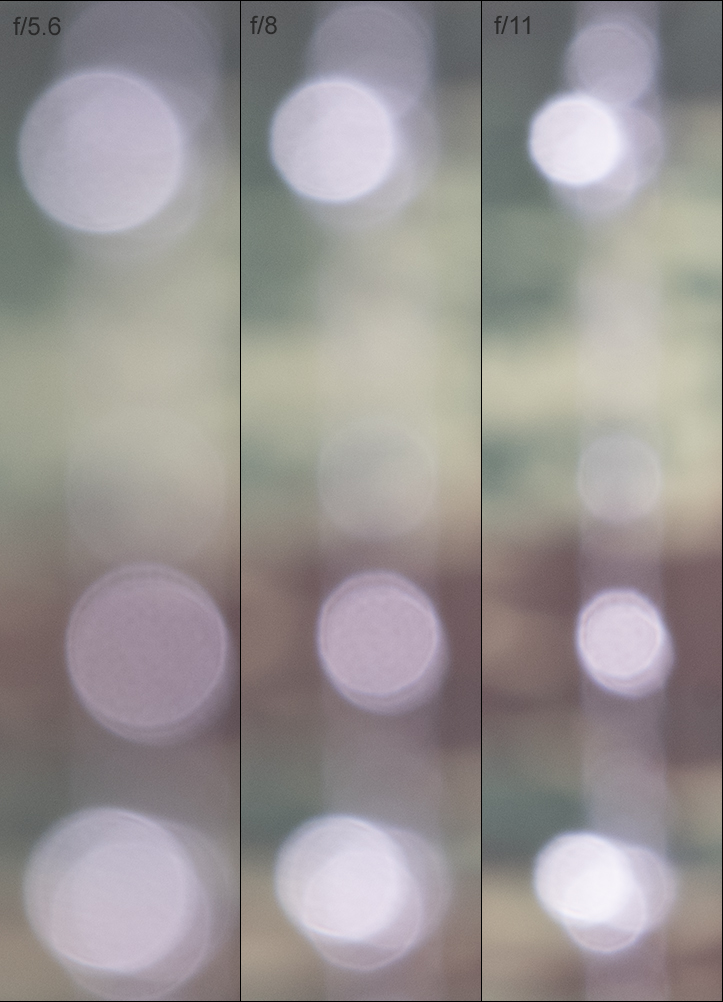
The highlight discs maintain a near-circular shape across much of the image frame, as you can see below. Only the corner discs are distorted. Stopping down to f/8 will restore them already—at 180mm at least.



The general blur in the focus transition zone is smooth in the critical image background – shown to the left below. The less critical foreground blur (to the right) is almost as good. Quite a nice performance here.

Competition
As of the time of this writing, there’s only one alternative to the Nikkor – the Tamron 150-500mm f/5-6.7 Di III VC VXD. The Nikkor is better at the long end. However, the Tamron lens is substantially smaller due to its extending zoom design and quite a bit more affordable.
Sample Images


The Nikkor Z 180-600mm f/5.6-6.3 VR is capable of providing a decent and pretty consistent performance. It can't rival prime lenses on high-megapixel cameras, but it doesn't break the bank either.
Just like with its rivals, it performs best at the "wide" end of the range with high sharpness, specifically in the center. The borders & corners are still pretty fine. However, there's only a slight decrease in this pattern towards the 600mm setting. Both image distortions and vignetting are well controlled. Lateral CAs are only present at 180mm, but all this can be well auto-corrected. The quality of the bokeh is pretty good for such a lens.
Nikon relies on high-quality engineering plastics for most of their lenses, and that's also the case here. Regardless, the Nikkor Z 180-600mm f/5.6-6.3 VR feels very solid. The internal zoom mechanism allows for rapid action and provides some extra protection on top of the weather sealing. The AF is quite snappy, and the image stabilizer is efficient.
Nikon may not have classified it as an "S" class lens, but this shouldn't stop you from producing high-quality images. Overall, it's an easy value recommendation.
The Good
- Internal zoom mechanism
- Nice build quality
- No obvious optical weakness
The Bad
- It's not crazy sharp
-
Optical Quality
-
Build Quality
-
Price / Performance