


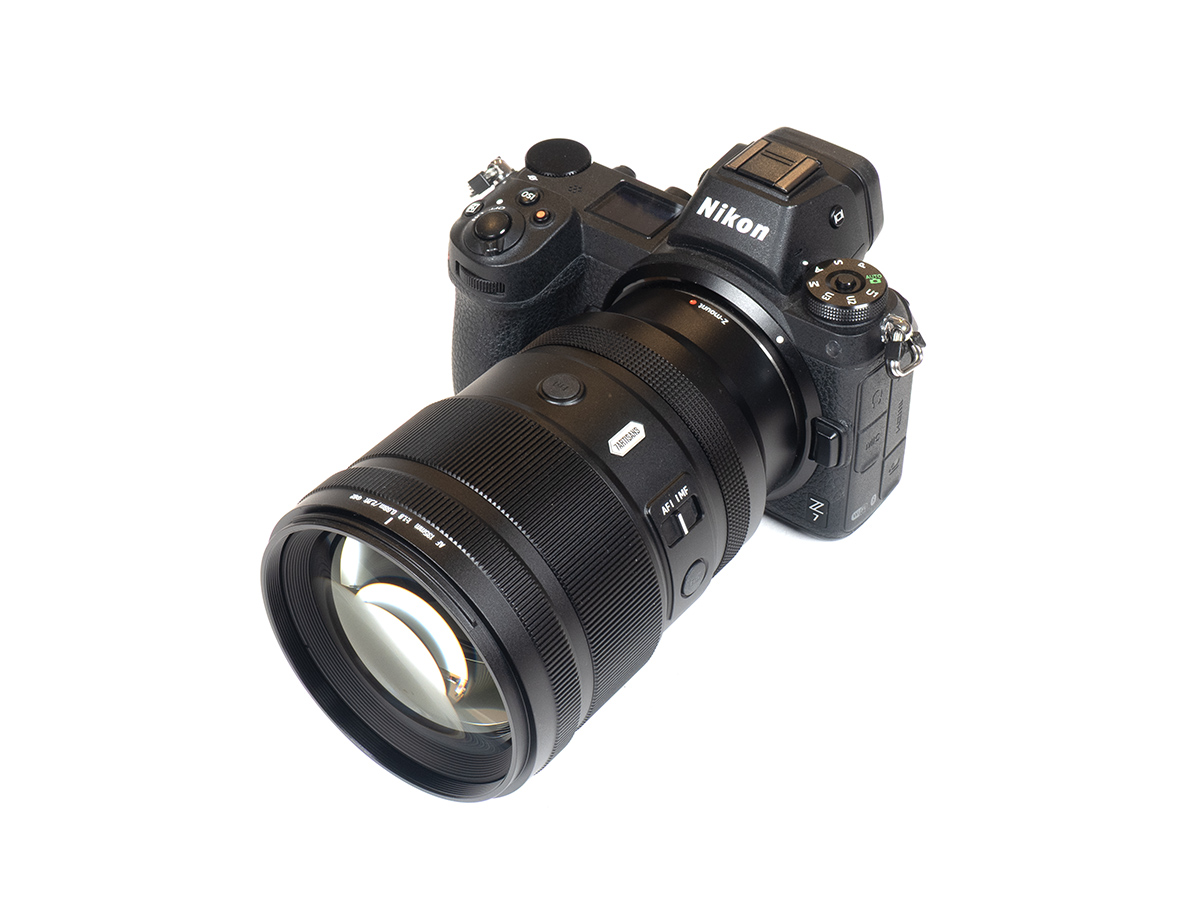
The Chinese lens manufacturers are getting more and more ambitious. The latest company exploring the premium lens segment is 7Artisans with their new AF 135mm f/1.8 MAX lens, a full-format fast medium tele lens available in Sony E, Nikon Z and L-mount. This review discusses the Nikon Z-mount version. As hinted by the “MAX” in the name, it is a member of their new high-end lineup. However even so, it’s available for just $689 USD — an amazing value if it can provide quality results. Let’s find out.
The build quality of the 7Artisans AF 135mm f/1.8 MAX impresses upon first contact. It’s an all-metal body built like a tank although the weight remains typical for a lens in this class. The broad, metal focus ring turns very smoothly. The Nikon version features a customizable control ring similar to native Nikkor lenses (the Sony E and L-mount versions have an aperture ring). There are also 2 Fn-Buttons that default to focus locking. A barrel-shaped plastic lens hood is included.
The 7Artisans lens uses an older-style STM motor for autofocusing. It is only slightly perceptible and reasonably quick. Manual focus works by-wire as usual and feels a bit “detached”. It’s worth noting that the aperture works silently until f/5.6 from when closing the aperture becomes a bit more “clicky”.
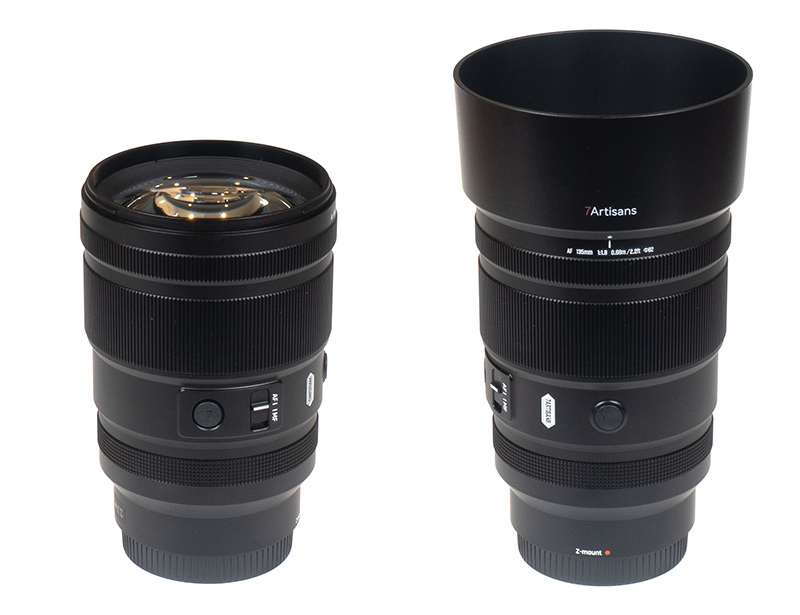
| Specifications | |
|---|---|
| Optical construction | 16 elements in 13 groups (6x ED. 5x HR) Fluorine coating |
| Number of aperture blades | 12 |
| min. focus distance | 0.68m (max magnification 1:4) |
| Dimensions | φ 91.2 x 130mm |
| Weight | 1014g |
| Filter size | φ 82mm |
| Hood | barrel-shaped (bayonet mount, supplied) |
| Other features | Nikon-mount: Stepless multi-function control ring Sony E & L-mount: aperture ring 2x Fn Buttons dust-sealed mount USB-C port for firmware updates |
Distortions
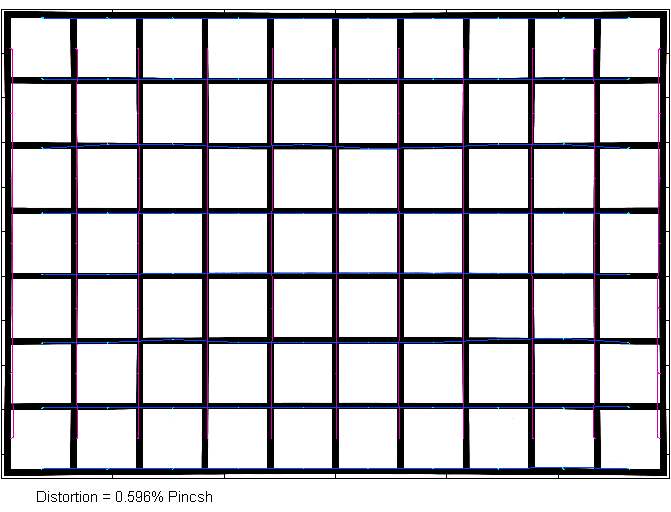
The 7Artisans AF 135mm f/1.8 MAX produces only a slight amount of pincushion distortion in RAW images which shouldn’t be an issue in most scenes. The lens doesn’t have a profile for automatic distortion correction.
Vignetting
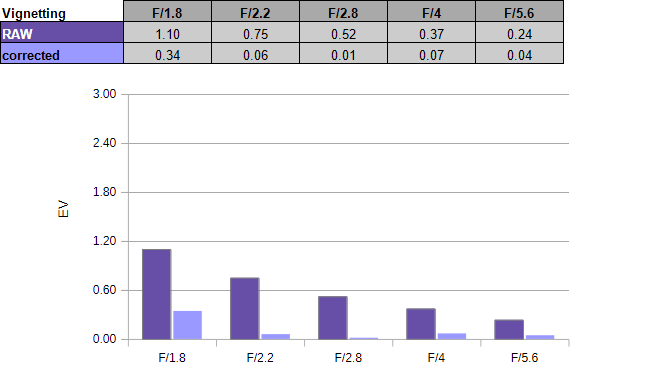
The lens produces a moderate amount of light falloff of just 1.1 EV (f-stops) at f/1.8 in RAW images. The issue is negligible from f/2.8 onward. With auto-correction (in high mode) activated, the vignetting is negligible at maximum aperture already.
MTF (resolution) at 45 megapixels
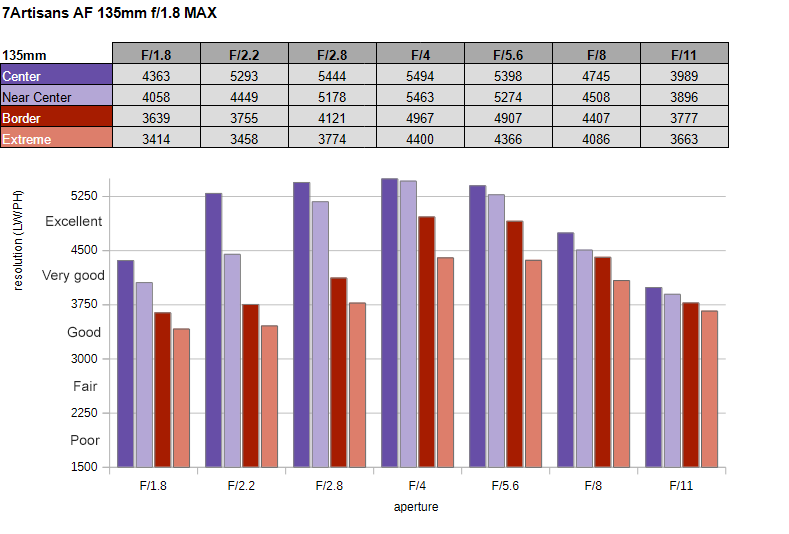
The 7Artisans AF 135mm f/1.8 MAX produced high-quality results in the lab. At f/1.8, the broader center is sharp and the outer image field is still good. Stopping down to f/2.2 lifts the center to a superb level already. The near-center quality follows at f/2.8 and there’s also a slight uplift at the borders/corners at this setting. The best quality is reached at f/4 where the borders reach excellent levels and the corner quality is very good. Diffraction effects set in at f/8 with a higher impact at f/11. As usual, f/16 should be avoided.
The field curvature is low. The centering quality of the tested sample was okay.
Please note that the MTF results are not directly comparable across the different systems!
Below is a simplified summary of the formal findings. The chart shows line widths per picture height (LW/PH) which can be taken as a measure of sharpness. If you want to know more about the MTF50 figures, you may check out the corresponding Imatest Explanations.
Chromatic Aberrations (CAs)
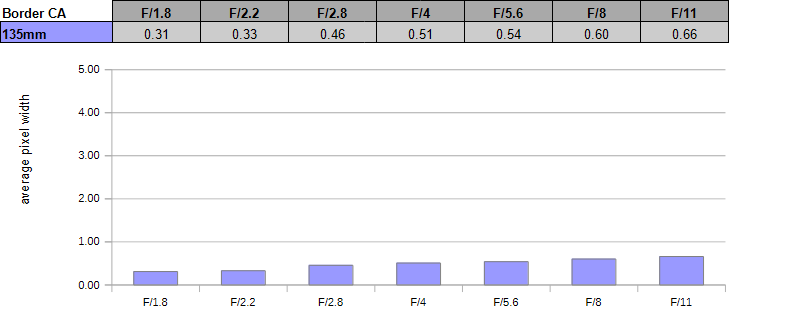
Lateral CAs have an average width of around 0.3px at the image borders and max aperture. This is negligible. The CAs increase slightly the more you stop down but they remain low even at f/11.
Bokeh
A 135mm f/1.8 lens is primarily about shallow depth-of-field photography, so let’s take a look at the quality of the bokeh.
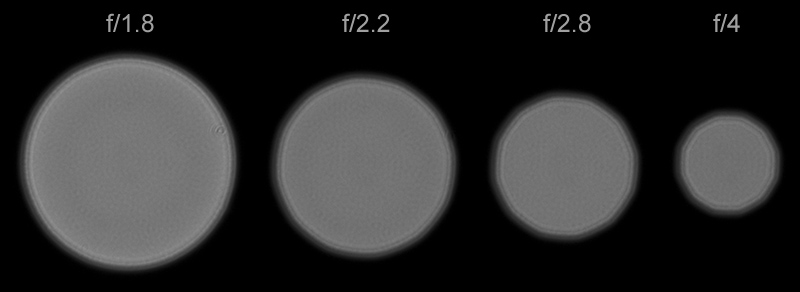
Out-of-focus highlights in the image center have a very smooth inner zone and marginal outlining. Stopping down mostly maintains the circular shape until f/4.
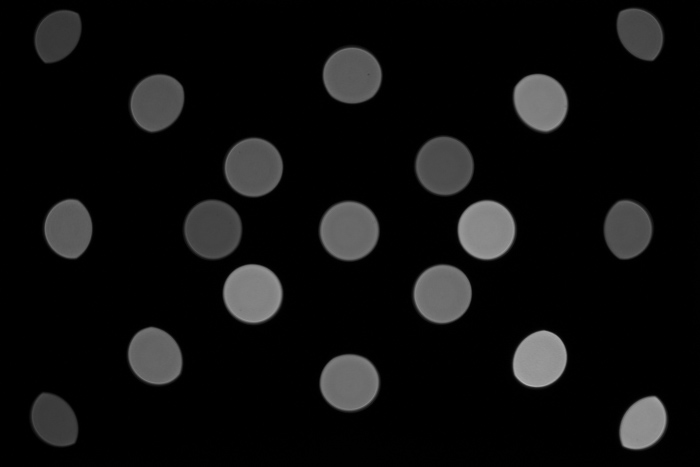
When observing the highlight rendering across the whole image field, we can spot a slight deterioration from the circular shape from roughly the mid field into the corners. “Cat eyes” develop the more the highlights are located in the image corners. As usual, stopping down increases the zone of perfect discs. The border discs are fully restored at f/2.8, the corner discs at f/4.
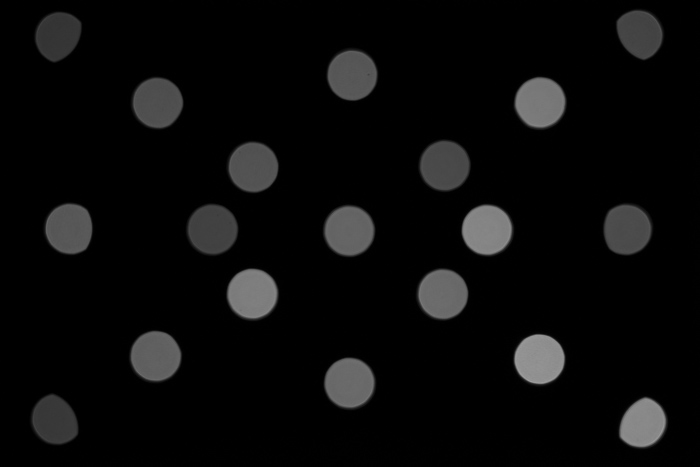
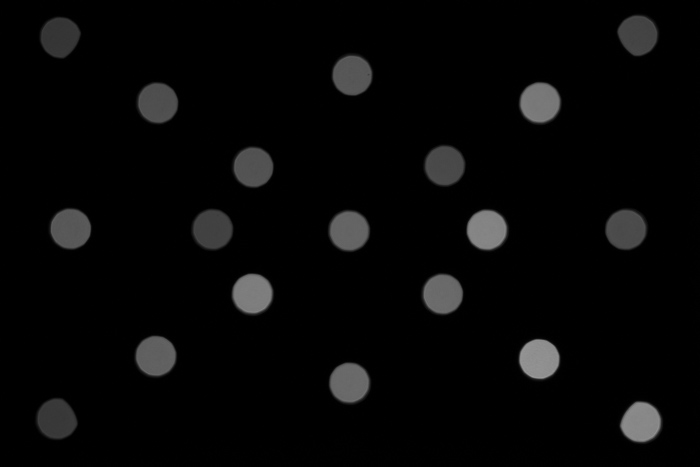
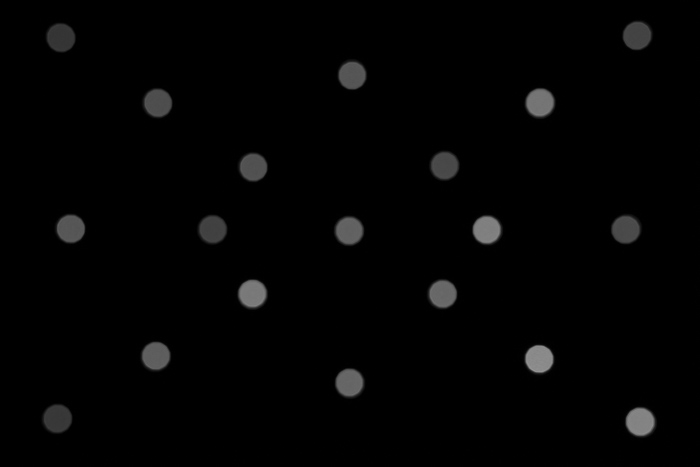
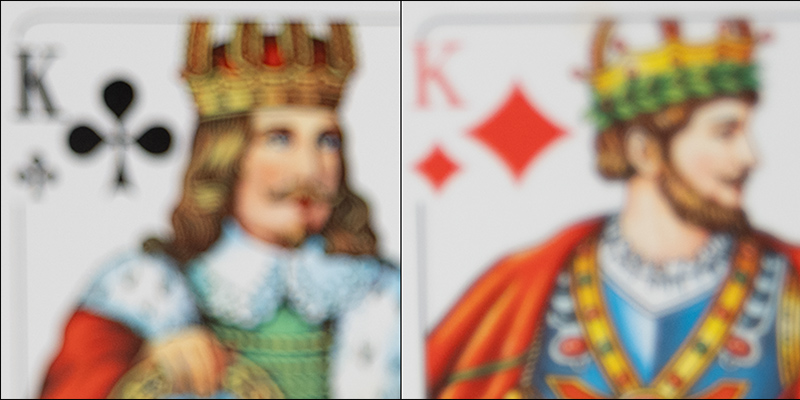
The rendering quality in the focus transition zone is very smooth in the foreground (shown to the right below). The background blur (to the left) is a bit rough. This can be visible in difficult scenes if the depth-of-field isn’t shallow enough.
Bokeh Fringing / LoCA
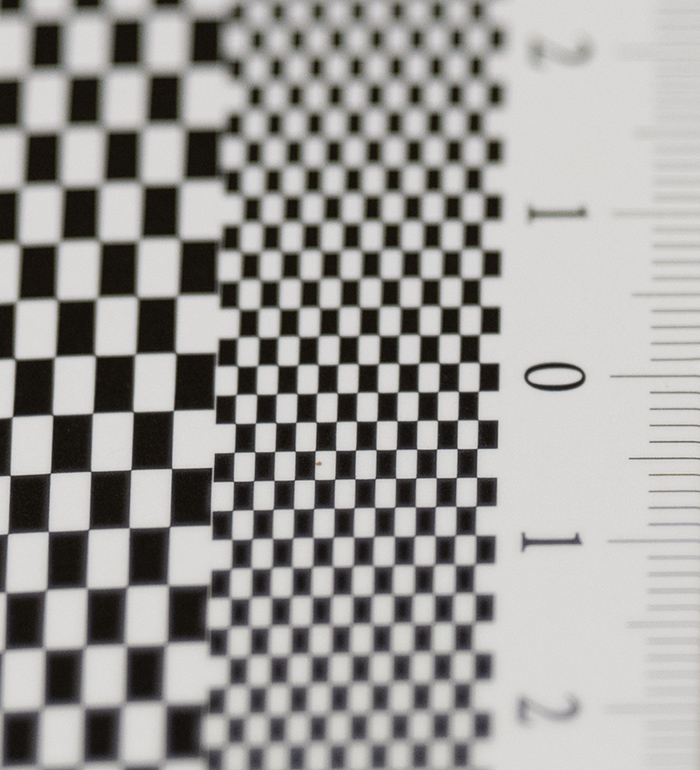
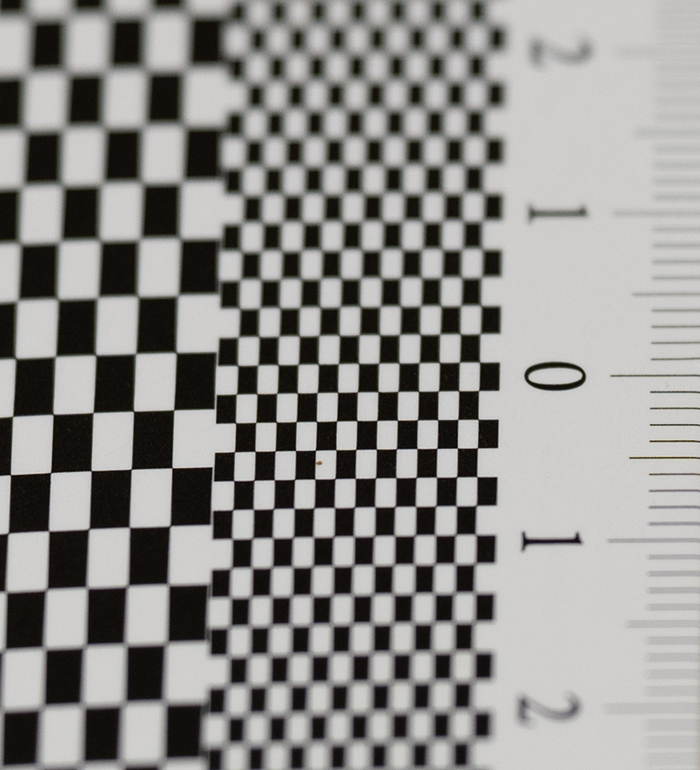
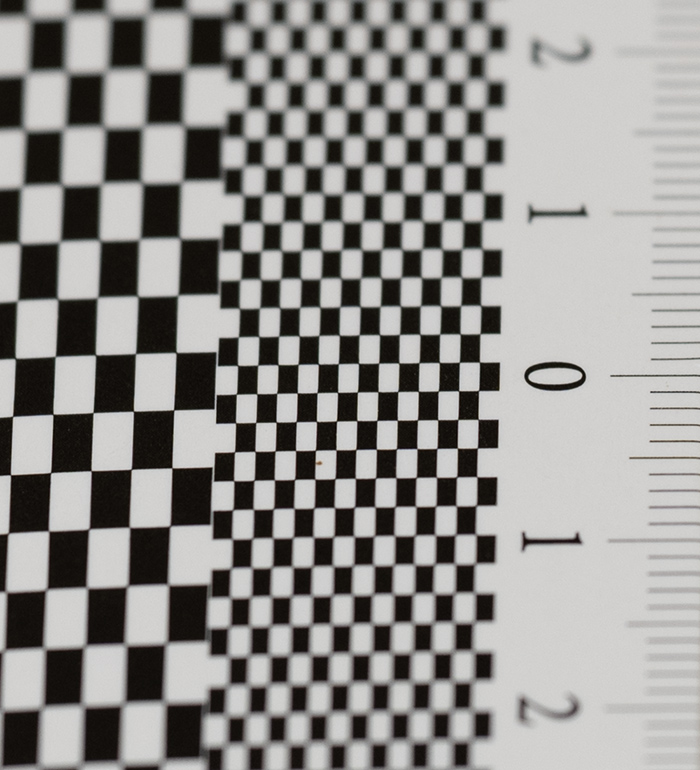
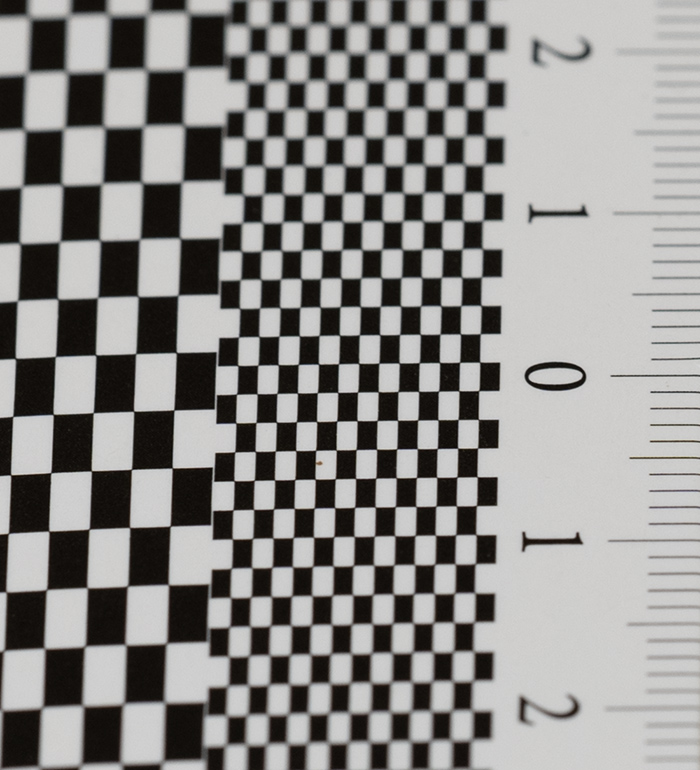
LoCAs, or bokeh fringing, is a color fringing effect on the Z-axis. It shows up with a purplish tint in front of the focus point and a greenish tint behind, and it’s nearly impossible to fully correct in post.
The 7Artisans AF 135mm f/1.8 MAX handles this very nicely. There’s only a marginal fringing visible at f/1.8 and it’s basically gone from f/2.2 already.
You may also notice that the focus point remains spot on when stopping down (= no relevant focus-shift/RSAs).
Competition
The 7Artisans AF 135mm f/1.8 MAX isn’t alone in this lens class. The fiercest competitor is the Viltrox AF 135mm f/1.8 LAB Z. We’d rate the Viltrox lens a bit higher but it is also slightly pricier. There’s also the Nikkor Z 135mm f/1.8 S Plena, but it resides in a very different price universe.
Sample Images


The 7Artisans AF 135mm f/1.8 MAX came in as a bit of a surprise. So far 7Artisans supplied the budget segment of the market, but with such a fast medium tele prime lens they are moving up the food chain - as also signaled via the new "MAX" designation. The optical quality of the lens is quite impressive. At f/1.8, the center quality is very good and it even achieves greatness across the frame at f/4. Lateral CAs are low and axial CAs are almost nonexistent. It produces a slight image distortion but it's usually not relevant in real life. The vignetting is comparatively low and well-autocorrected anyway. The quality of the bokeh is good although not flawless. It's certainly very smooth if the depth-of-field is very shallow, but you can spot some busy spots in difficult scenes.
The build quality is very impressive thanks to an all-metal outer shell and tight controls. The weather sealing is a bit basic with only a mount gasket. The STM AF is decent but not cutting-edge in terms of speed and refinement.
The almost baffling aspect is the price tag. A fast 135mm prime lens at just $689 is unheard of and certainly an amazing value.
If you'd like to support our work, please consider shopping for this or other lenses via one of the following partners:
* Amazon (US)
* Amazon (Europe)
* B&H (US)
* Adorama (US)
The Good
- Build like a tank
- Very sharp when stopped down a bit
- Very affordable for a fast 135mm lens
- Marginal axial CAs
The Bad
- Bokeh can be a bit busy in difficult scenes
- No distortion correction profile
- Basic weather-sealing
-
Optical Quality8
-
Build Quality8
-
Price / Performance10