


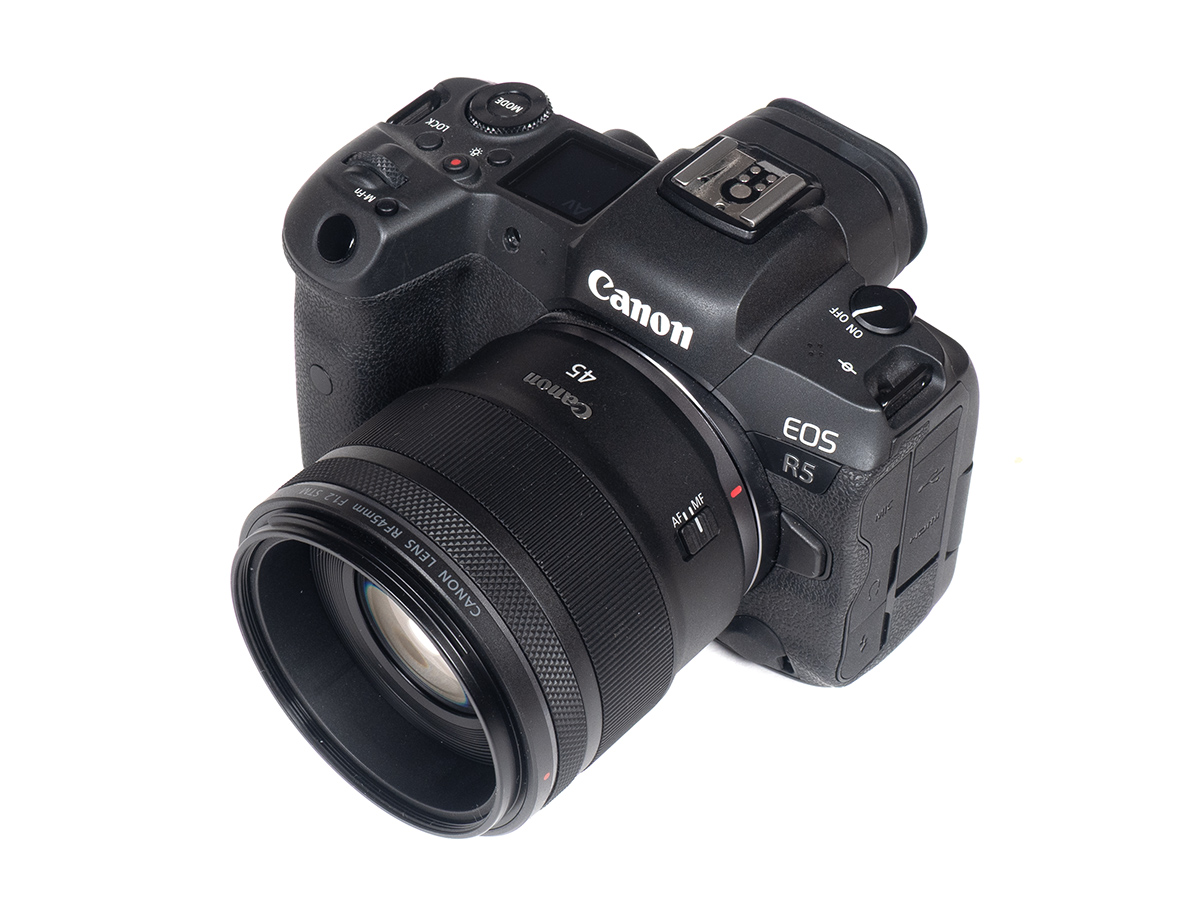
When rumors about the Canon RF 45mm f/1.2 STM emerged, there was lots of excitement. An ultra-large aperture lens from Canon for as little as $470USD.? We all know Canon, and Canon lenses ain’t cheap – often for good reasons. They also have some less than impressive consumer-grade lenses for little money. So into which category falls the lens at hand here? Let’s find out.
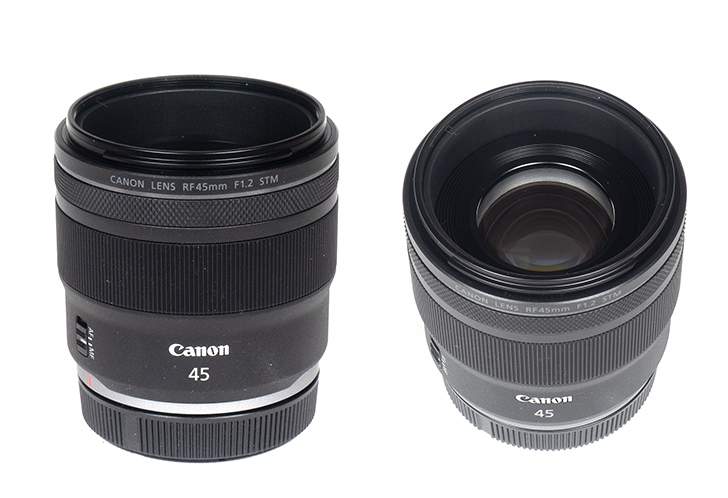
The build quality is typical of Canon’s entry level offerings. The lens barrel is made of decent-quality engineering plastic based on a metal mount. The lower part of the lens feels a little hollow, but this won’t really affect longevity. The broad focus ring turns smoothly, and there’s the usual configurable control ring near the front. The physical length remains the same during focus operations. There is, however, an inner lens tube that is moving – meaning that focusing relies on a linear extension mechanism, which is a bit of a dated approach. It also means that the AF has to shift the glass groups as a whole, which affects the AF speed to some degree. It’s still fairly snappy, although focus precision can be an issue (see the LoCA chapter). Weather sealing is not provided, and neither is a lens hood. This may be an affordable lens, but Canon should really spend the few extra cents for this – all the other manufacturers do.
| Specifications | |
|---|---|
| Optical construction | 9 elements in 7 groups (1x aspherical) |
| Number of aperture blades | 9 (rounded) |
| min. focus distance | 0.45m (max magnification 0.13x) |
| Dimensions | φ 78 x 75mm |
| Weight | 346g |
| Filter size | φ 67mm |
| Hood | petal-shaped, optional |
| Other features | Control Ring Focus breathing correction compatible |
Distortions
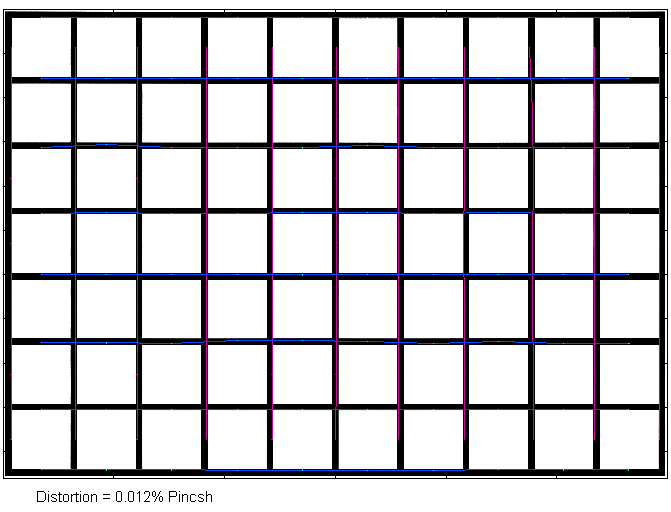
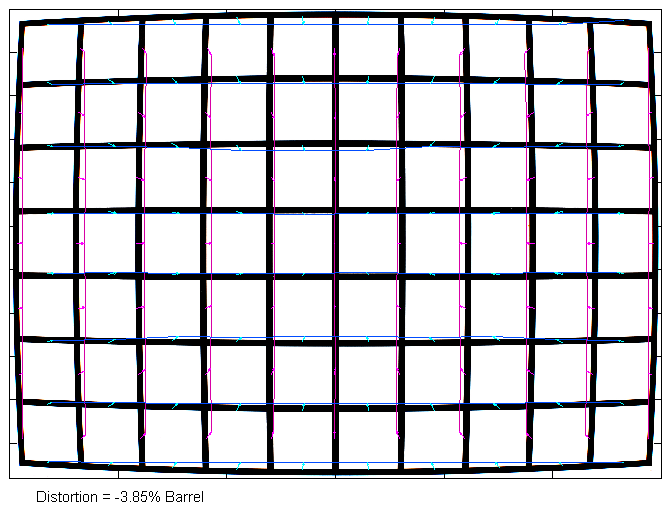
The Canon RF 45mm f/1.2 STM produces a fairly heavy amount of barrel distortion in RAW images. However, image auto-correction handles the situation nicely here.
Vignetting
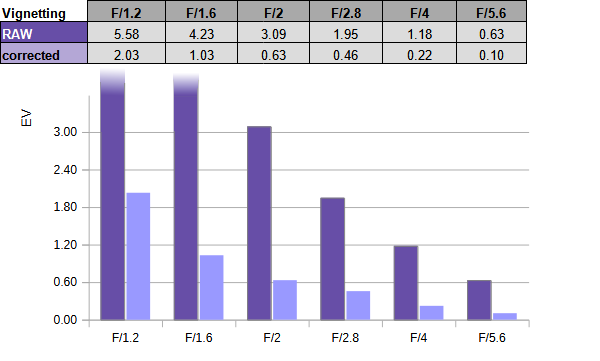
Ultra-large aperture lenses tend to produce very high vignetting at max aperture. This also applies to the Canon lens with a light falloff of more than 5 (!) EV (f-stops) in RAW images at f/1.2 – that’s without distortion correction.
The profile correction (including distortion correction) reduces this to a still high, although not excessive, 2 EV (f-stops) at f/1.2. Stopping down to f/1.6 reduces this further, and the issue is more or less gone from f/2.
MTF (resolution) at 45 megapixels
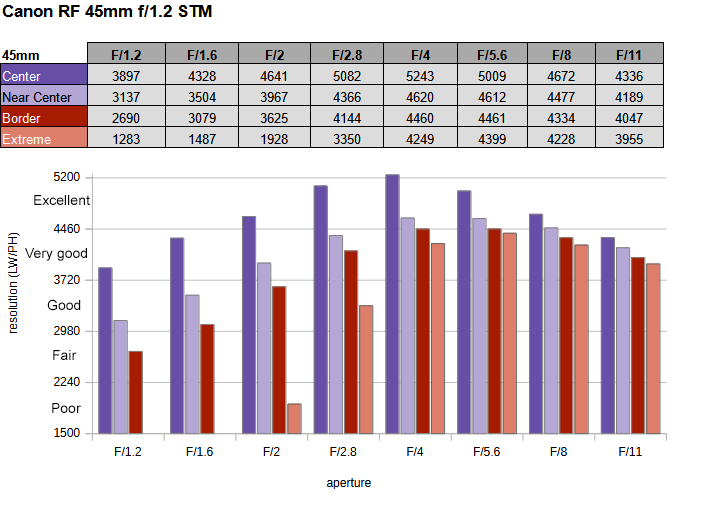
The Canon RF 45mm f/1.2 STM has a -say- “traditional” optical design with just a single aspherical element. They used to make such lenses some decades ago … and it shows. The center quality is okay at f/1.2, although it’s nothing to brag about. There’s a sudden drop beyond the dead center with the near-center already being a bit soft; the border quality is unimpressive, and the corners are rather terrible. Stopping down to f/1.6 lifts the quality a bit, but the corner resolution remains a no-show up to f/2. This changes at f/2.8. The broader center and even the borders become impressively sharp, and the corners emerge from the blur to good quality. There’s nothing to complain about at f/4 and beyond. The lens is perfectly sharp across the image field here until diffraction takes its toll.
The field curvature is wavy. The centering quality of the tested sample was good.
Please note that the MTF results are not directly comparable across the different systems!
Below is a simplified summary of the formal findings. The chart shows line widths per picture height (LW/PH) which can be taken as a measure of sharpness. If you would like to know more about the MTF50 figures, you may check out the corresponding Imatest Explanations.
Chromatic Aberrations (CAs)
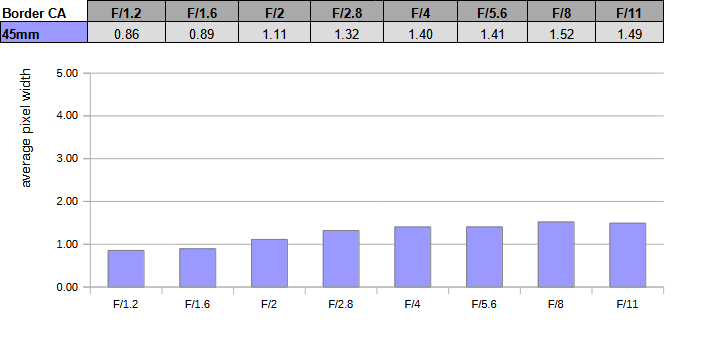
Lateral CAs have an average width between ~0.9 and 1.5px at the image borders. Auto-correction can handle this. Without corrective measures, the CAs would be slightly noticeable on high-megapixel cameras, at least.
Bokeh
The Canon RF 45mm f/1.2 STM is, first and foremost, defined by its ultra-large aperture, so sharpness may not be all that important for some users, but the bokeh is. So let’s see.
Out-of-focus highlights are quite nicely rendered in the image center. Despite the aspherical element, the inner disc zone is quite smooth, and the circular shape remains intact until f/2.8. You may already spot a greenish outlining at the disc edges below – but more on this later.
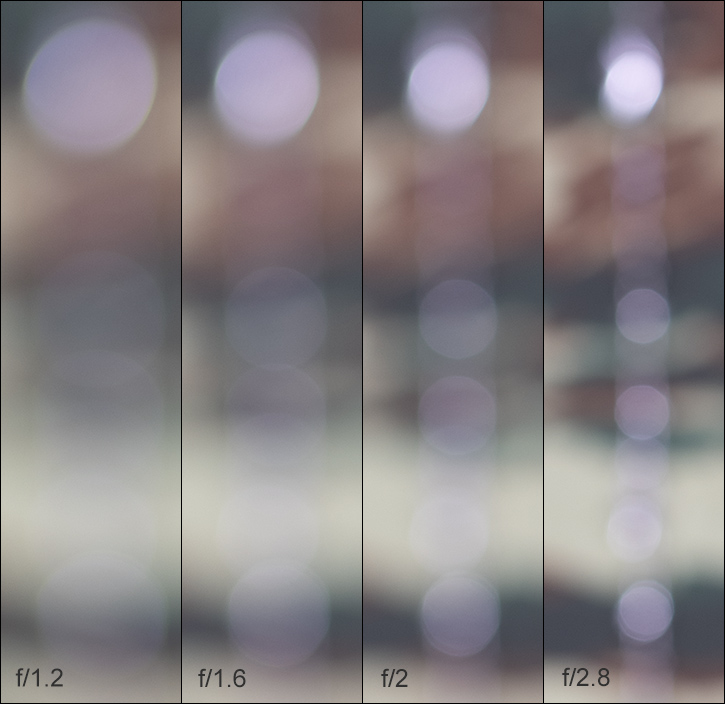
As you can see below, the circular highlight shape is only intact near the image center at f/1.2. It deteriorates rapidly to “cat eyes” the more you look into the image corners. This is a mechanical vignetting effect related to the size of the front element. Stopping down restores the circular shape across the image field, and the highlights are all circular from f/2.8.
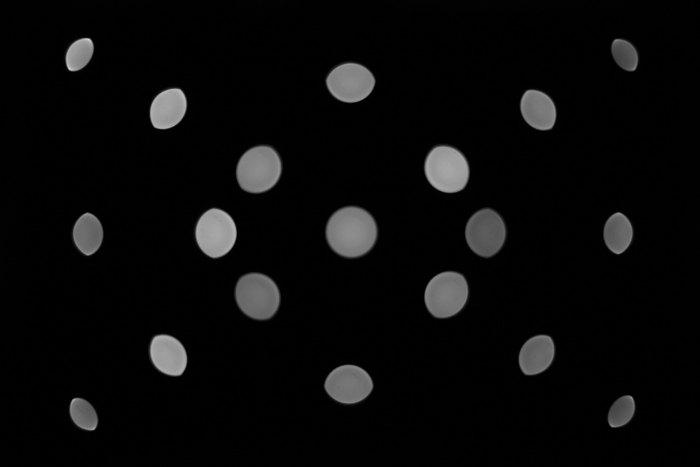
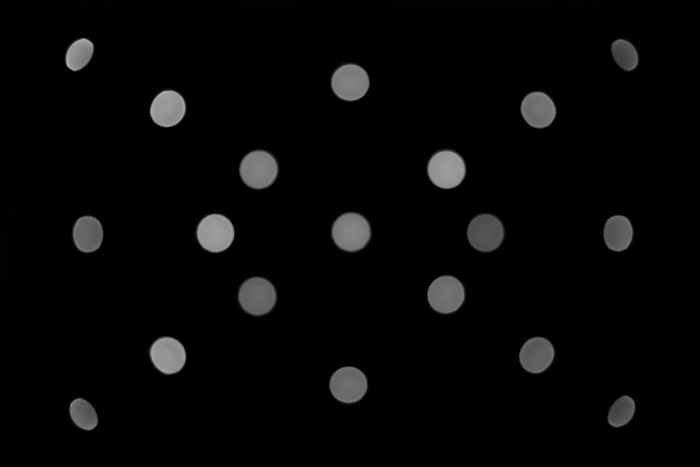
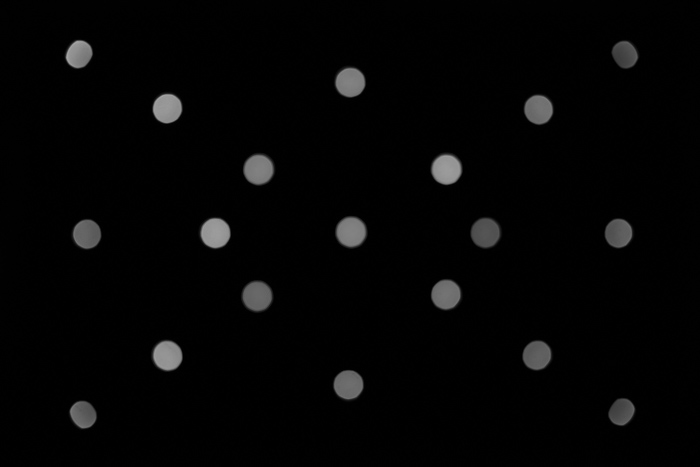
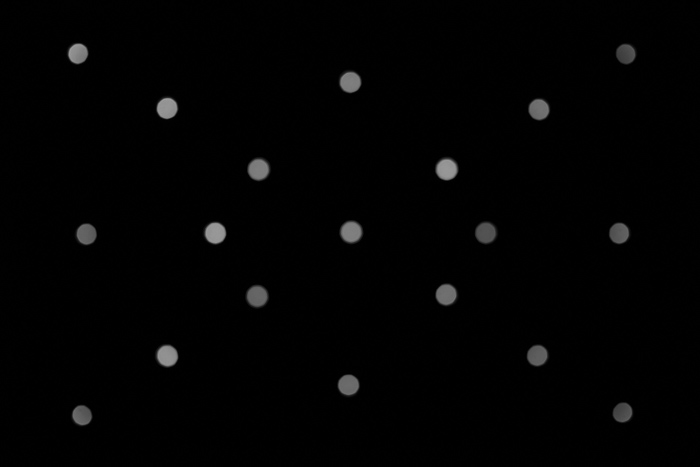
The rendering quality in the focus transition zone is mixed. The background blur is smooth, but you will notice a greenish haze there. The foreground blur is more on the rough side with “shadowy” edges.
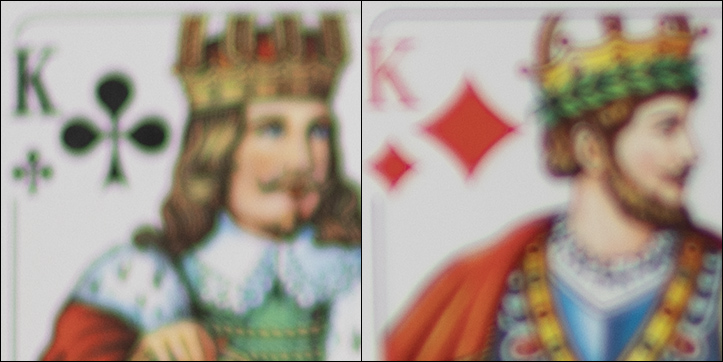
Now the above is taken near the image center.
That’s not the whole story, though. Below are crops of two out-of-focus regions taken from the image CORNERS (at f/1.2):
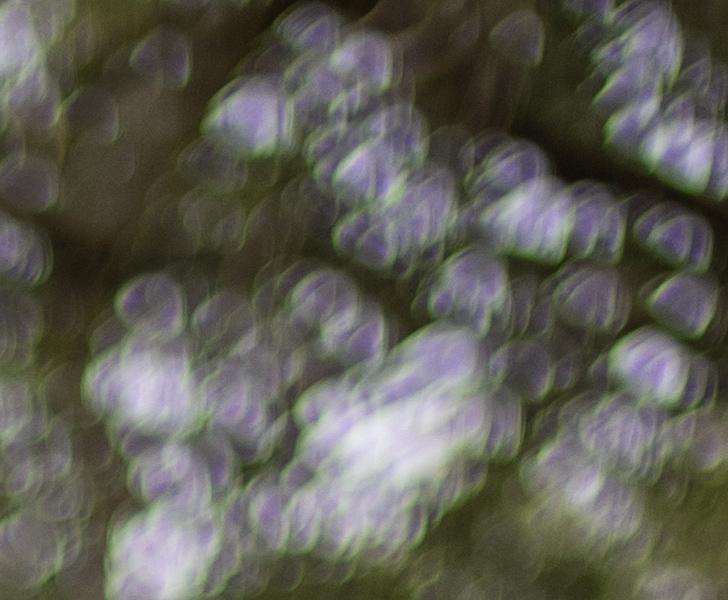
Batman would be proud of the following …

Bokeh Fringing / LoCA
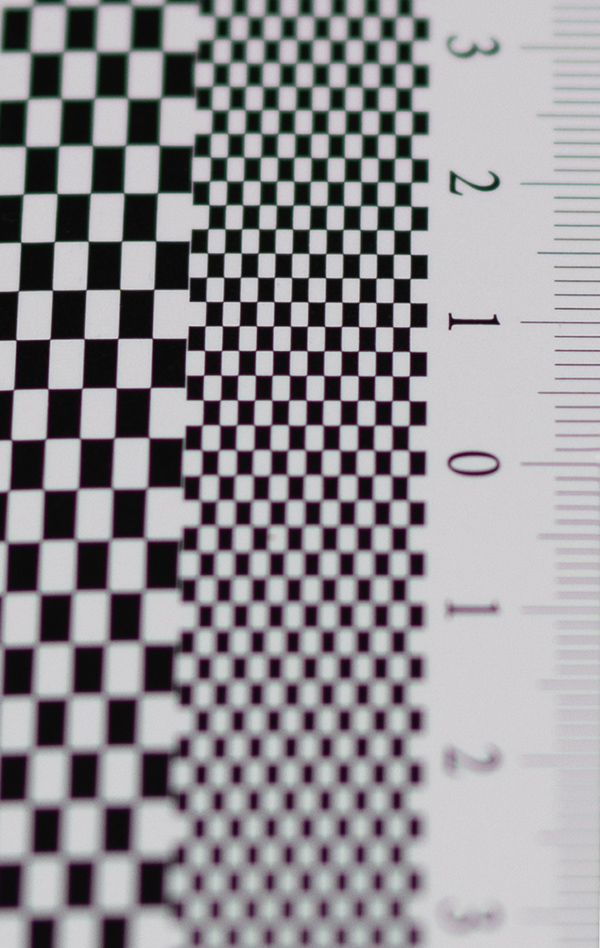
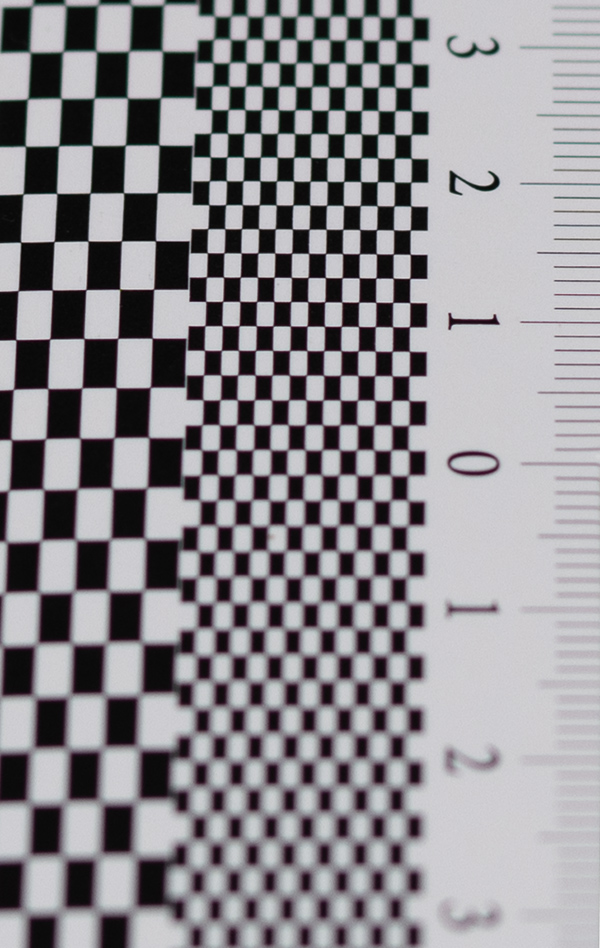
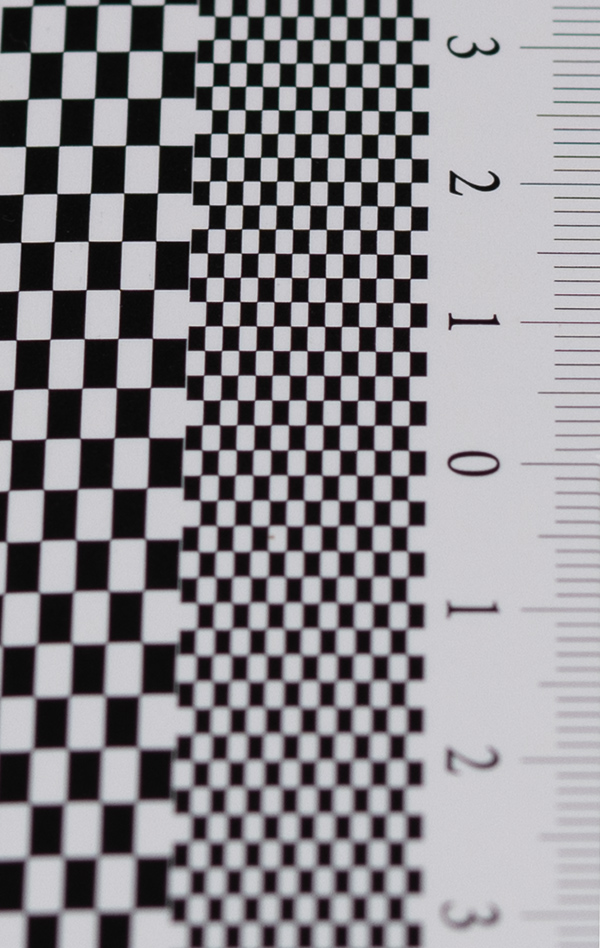
LoCAs, or bokeh fringing, is a color fringing effect on the Z-axis. It shows up with a purplish tint in front of the focus point and a greenish tint behind – and it’s nearly impossible to fully correct in post.
So this chapter brings us to the color tint that we’ve already observed a bit in the previous chapter. There is no other way to describe it – the Canon RF 45mm f/1.2 STM performs poorly when it comes to these axial CAs. The fringing is nothing short of excessive at f/1.2. Stopping down improves this gradually, and it’s acceptable from f/2.8 and gone from f/4.
This is not the only observation here, though. The focus point is kept fixed in this test. When scrolling through the aperture range, you will notice that the focus point shifts rapidly towards the rear. This relates to RSAs (“Residual Spherical Aberrations”). You may argue that this isn’t relevant when using AF, but at least with our test camera (R5), the focus wasn’t profile corrected. Thus at least a closer focus distances, you should double-check the focus via Depth-of-Field preview.
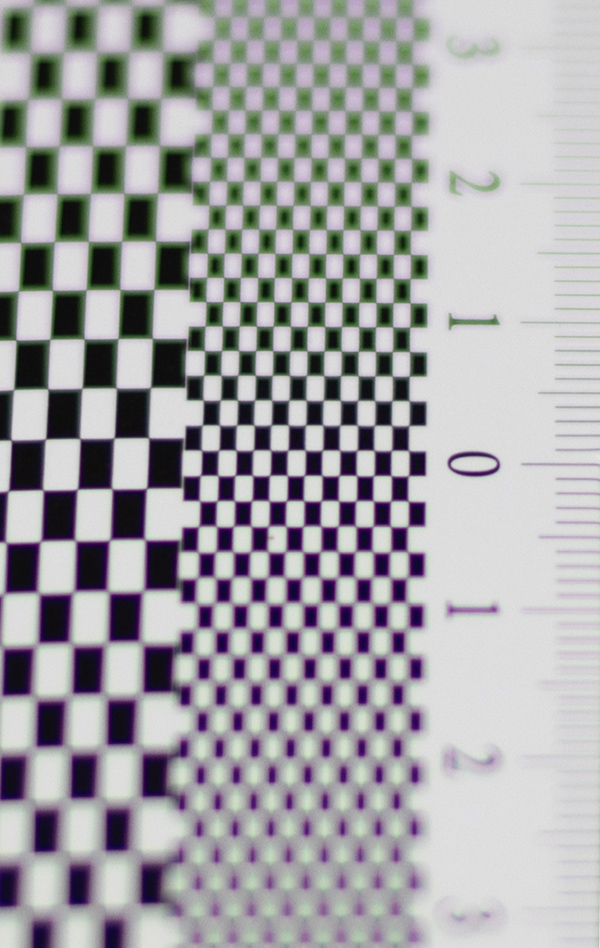
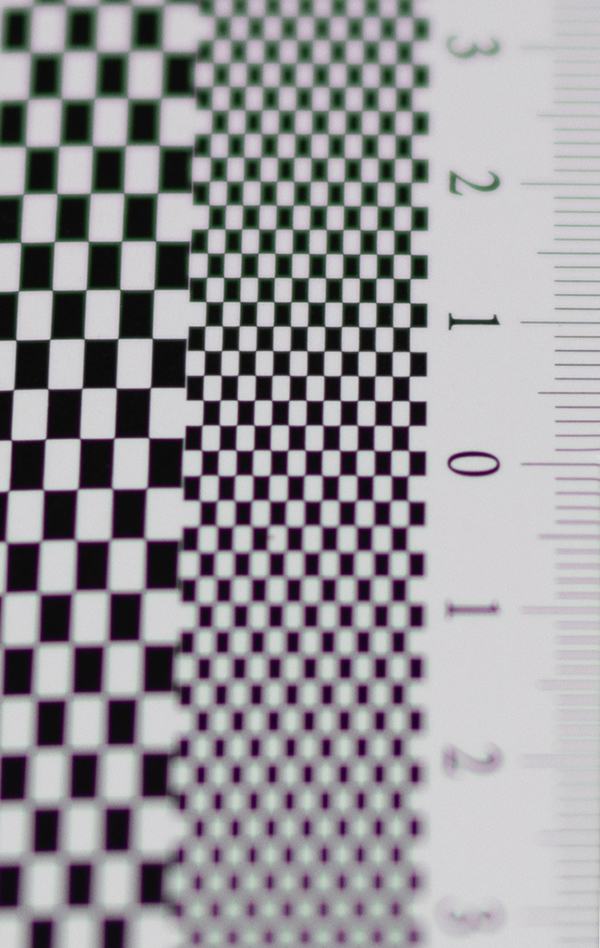
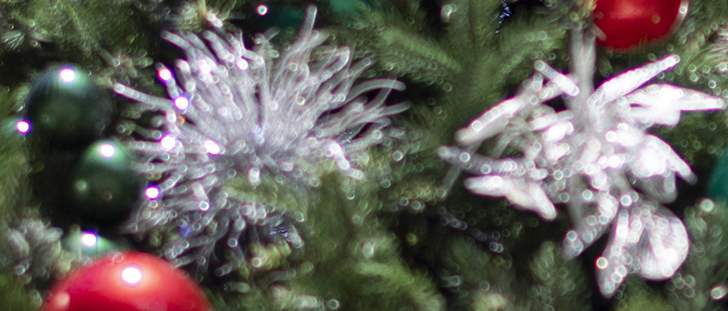
In case you wonder how LoCAs can show up in real life, here’s a sample crop of an image taken from the gallery – the purple-ish halos at harsh contrasts should be fairly obvious here (as is the rough foreground bokeh).
Sample Images


From a reviewer's perspective, most lenses are rather boring these days. While there are variations, of course, most mainstream lenses are at least in the "decent" category. So the Canon RF 45mm f/1.2 STM was a refreshing change for us here - although not in a good way. It is a bit unclear what Canon wants to tell us with this lens. Sure, f/1.2 is nice on paper, allowing very shallow depth-of-field photography. However, the fact that it has an f/1.2 setting is almost the only glorious aspect of this lens - and for some, this may be enough, and that's perfectly fine. In terms of performance, it resembles lenses from the 1960s or 1970s. At f/1.2, the center quality is passable by today's standards, but the corners fall completely apart. Things do get better the more you stop down. A broader part of the image field is fine from f/2.8. And beyond, the quality is actually very good if not great - but that's not a huge achievement for a 45/50mm lens, really. The rather wavy field curvature is also not up to Canon's usually high standards here. Lateral CAs are Ok, but axial CAs can be very obvious at large aperture settings. Well, there are people who like psychedelic colors, I suppose. Something that isn't likeable is the massive focus shifts the more you stop down. The rather high native vignetting and barrel distortion are autocorrected. The bokeh has its ups and downs, too.
The build quality is fine for a consumer-grade prime lens. The engineering plastic feels a bit hollow, but it's not too bad. The AF speed is fine, as you can expect from a Canon lens. It's still not a lens for action photography due to its STM drive and somewhat dated focusing system.
Overall, it's surprising that they decided to offer this lens. Their own MTFs for this lens are very low. Still, if you like the charm of a vintage lens in a modern form factor, why not?
The Good
- Very sharp at medium aperture settings
- f/1.2 on a budget
The Bad
- Blurry corners from f/1.2 to f/2
- Excessive axial color fringing at f/1.2
- Very pronounced focus shift
- Wavy field curvature
- Miserable corner bokeh in certain scenes
- Overpriced for what it is
-
Optical Performance
-
Build Quality
-
Price / Performance