


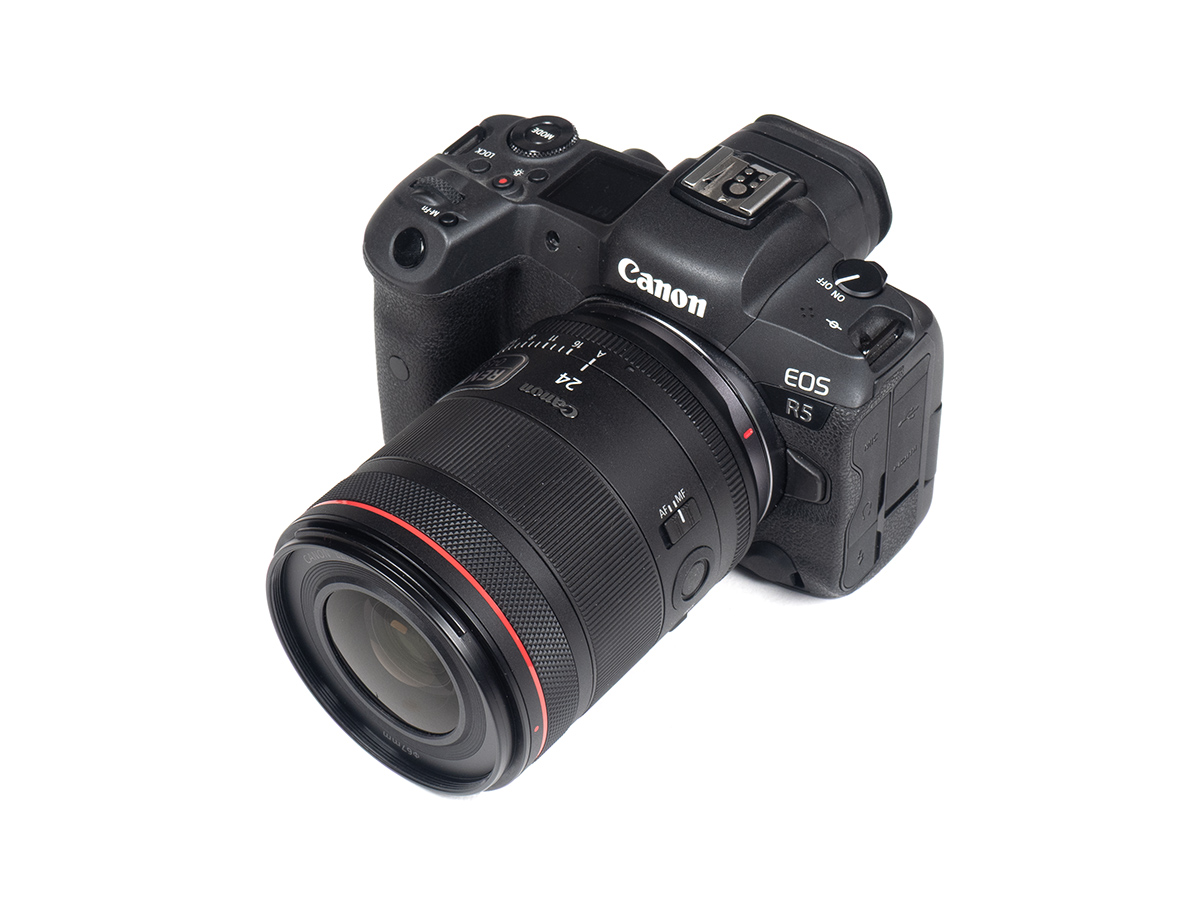
Following our reviews of the RF 35mm f/1.4 L VCM and RF 14mm f/1.4 L VCM, this is now our third analysis of the Canon’s “hybrid” (photo and video-focused) prime lenses. The Canon RF 24mm f/1.4 L VCM shares roughly the same dimensions and weight with the other hybrid lenses. This is intentional because that’s what video folks want to maintain a similar size/weight balance e.g. on their video rigs. However, this also means that there are some design constraints as we’ll see later on. Unsurprisingly, the RF 24mm f/1.4 L VCM doesn’t come cheap at around $1500 USD although, to be fair, this is in line with the pricing asked by other OEMs.
Most of Canon’s RF L-class lenses rely on high-quality yet lightweight engineering plastics based on a metal mount – and this is no different here. As you can expect from a lens of this grade, weather sealing has been incorporated. There’s also the usual configurable control ring at the front with a smoothly turning focus ring behind. The de-clickable aperture ring is located at the back. A petal-shaped lens hood is provided.
As the name implies, the lens uses a video-friendly Voice Coil Motor (VCM) rear focus system with a Nano USM (Ultrasonic Motor) for precise, fast, and near-silent autofocus operation. Manual focusing is done by wire, and it’s very smooth and precise. There is very little focus breathing which is, of course, what you want for video work.
Curiously, Canon warns that you should consult your doctor if you have an implantable cardiac pacemaker because the VCM motor emits a low-level magnetic field.
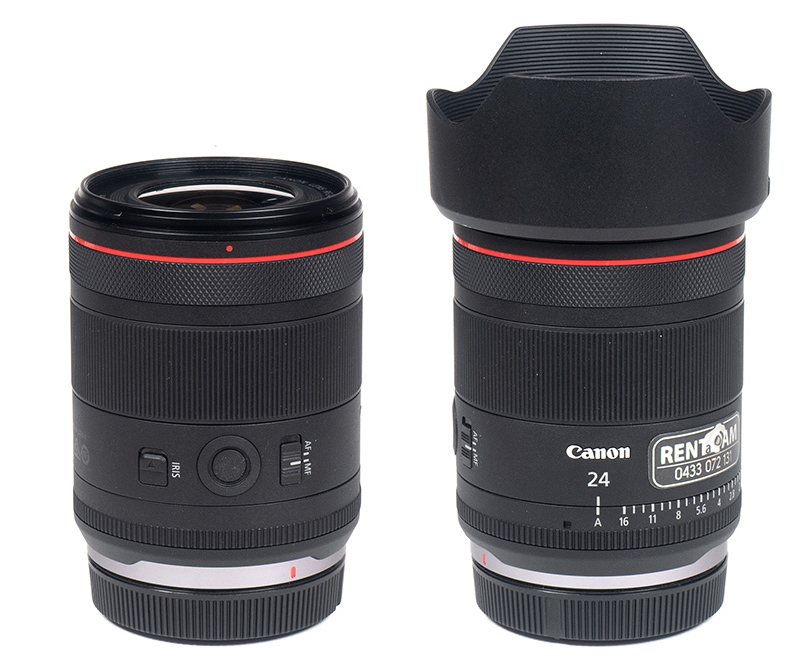
| Specifications | |
|---|---|
| Optical construction | 15 elements in 11 groups (1x GMo, 2x UD) Floating focusing system Super Spectra, SWC and ASC Coatings Fluorine coating on the front element |
| Number of aperture blades | 11 (rounded) |
| min. focus distance | 0.24m (max magnification 0.17x) |
| Dimensions | φ 76.5 x 99.3mm |
| Weight | 515g |
| Filter size | 67mm rear filter holder |
| Hood | petal-shaped, provided |
| Other features | weather-sealing control ring aperture ring Fn-button |
Distortions
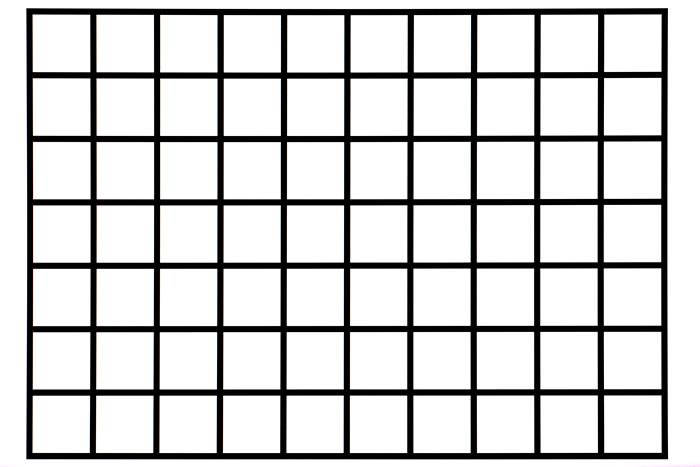
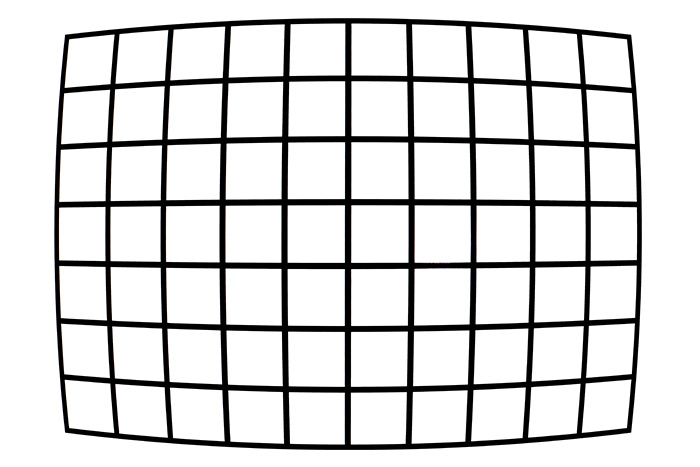
In the introduction, we hinted at certain compromises that Canon had to make to keep the RF 24mm f/1.4 L VCM consistent with the size- and weight factor of the other L VCM lenses. Image distortion is one of them. RAW images reveal a MASSIVE barrel distortion of more than 7%. Canon has never been shy of letting distortions “float” but this is a bit much in a 24mm prime lens, really. Thus they are heavily relying on digital autocorrection to tame this down to a negligible degree as you can see below. For in-camera JPEGs, Canon doesn’t allow to disable distortion correction for obvious reasons.
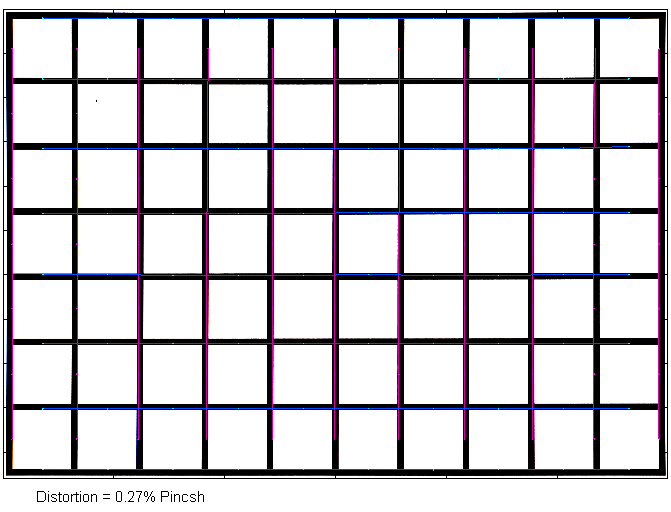
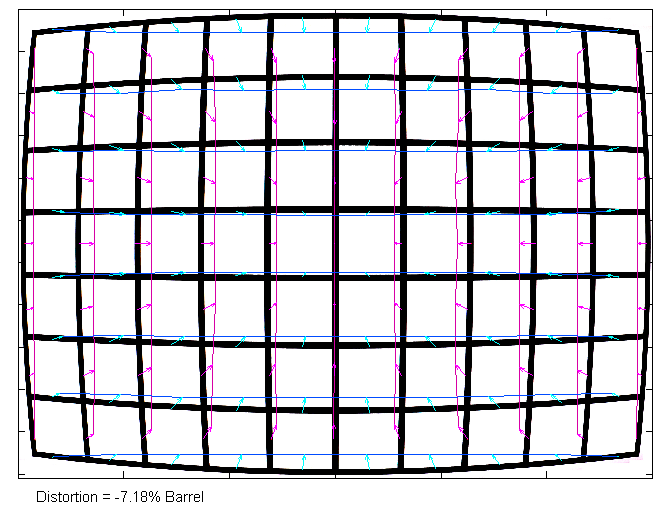
The above distortion figure was cropped to the grid. The below uncropped images illustrate the amount of stretching needed to compensate for the issue. If you are a keen reader, you can already conclude that this isn’t without consequences regarding the resolution characteristic of the lens.
Vignetting
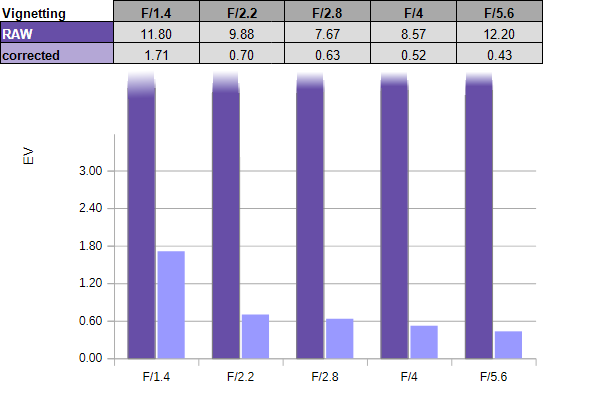
Because Canon effectively demands autocorrection, they reduced the covered image circle. Thus if we disable autocorrection, the corners are essentially black with a light falloff between 7 and 12 EV (f-stops). (Note: the figures only vary because Imatest measures the vignetting at a certain distance from the center, and the result varies across the aperture range).
With activated distortion- and vignetting compensation, there’s still a noticeable light falloff of 1.7 EV (f-stop) at f/1.4. Stopped down to f/2, the issue isn’t gone but not overly relevant anymore.
Here’s a visual showing the vignetting at f/1.4 with and without autocorrection:


MTF (resolution) at 45 megapixels (Corrected)
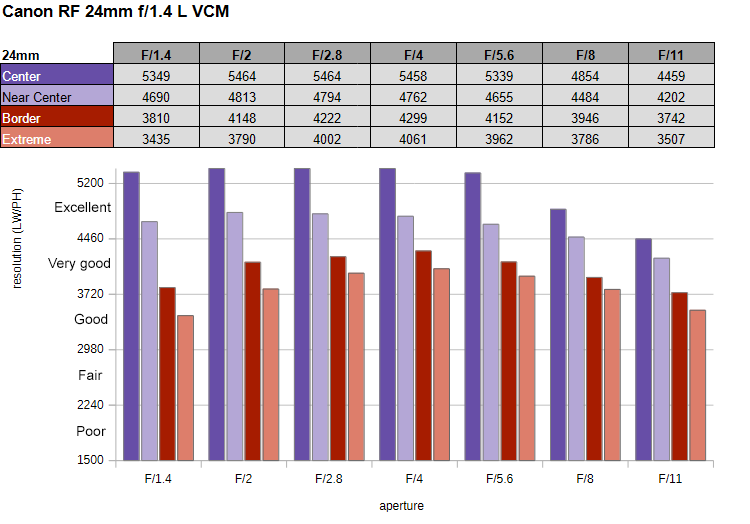
The chart shows the results with applied autocorrection – you would rather not use the lens without it, as we’ve seen above. Even so, the results are pretty good. The resolution in the center is nothing short of outstanding straight at f/1.4. The quality decreases with the distance to the center, of course. The near-center is still excellent, whereas the borders are very good (albeit just) and the corners drop to a good result. Even so, this is perfectly fine at such a large aperture settings. Stopping down maintains the quality in the broader center and there’s a slight uplight in the outer image field with the corners creeping up into very good territory. The best overall image quality is achieved between f/2.8 and f/5.6. As usual, diffraction sets in at f/8. f/11 remains usable.
It is worth mentioning that this rather “flat” corner/border resolution characteristic is a side-effect of the autocorrection algorithm. The RAW image quality in the corners is actually great but dampened to a lower level by the distortion correction.
The field curvature is low. The centering quality of the tested sample was high.
Please note that the MTF results are not directly comparable across the different systems!
Below is a simplified summary of the formal findings. The chart shows line widths per picture height (LW/PH) which can be taken as a measure of sharpness. If you would like to know more about the MTF50 figures, you may check out the corresponding Imatest Explanations.
Chromatic Aberrations (CAs)
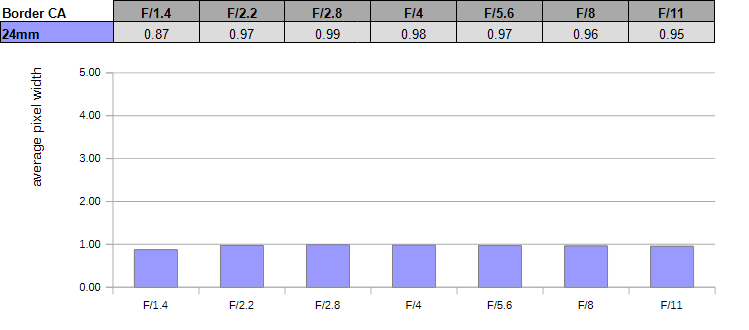
Lateral CAs have an average width of around 1px at the image borders. This is slightly more elevated than expected for such a modern lens. However, this is losslessly corrected anyway.
Bokeh
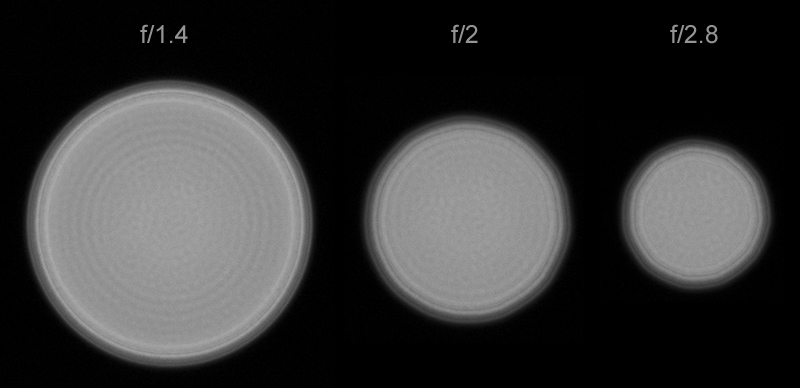
Out-of-focus (center) highlights are relatively clean although we can spot the onion rings in the inner zone (probably caused by the aspherical element). As you can spot below, the discs are surrounded by a faint halo which softens the highlight rendering. The circular shape remains intact at f/2 and, mostly, at f/2.8 thanks to the 11 rounded aperture blades.
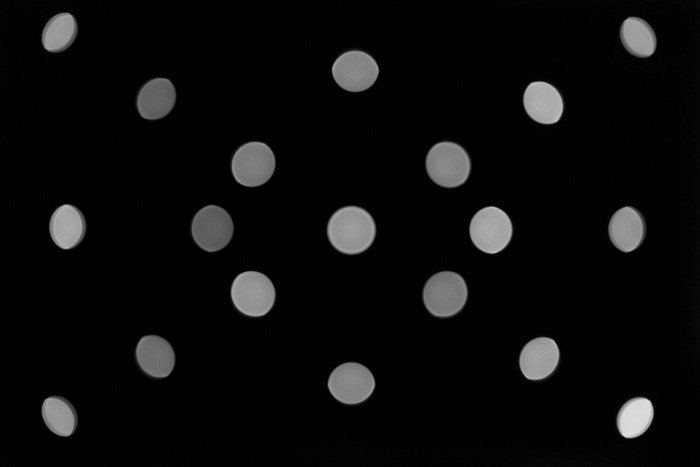
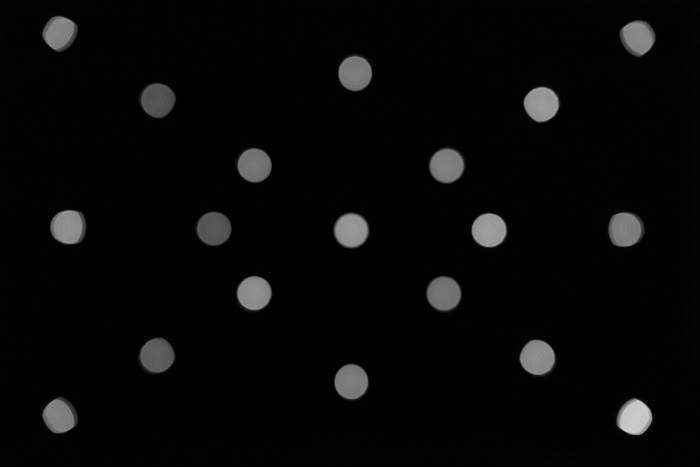
When observing the highlight rendering across the image frame, we can spot a deterioration of the highlight shape from the midfield with obvious “cat eyes” in the corners (Note: the corner discs have “shadows” but this is an effect from the LEDs used for this test). The zone with perfect discs broadens when stopped down but the result is less pleasing at f/2. The border discs are restored to their circular shape at f/2.8. The corner discs follow at f/4.
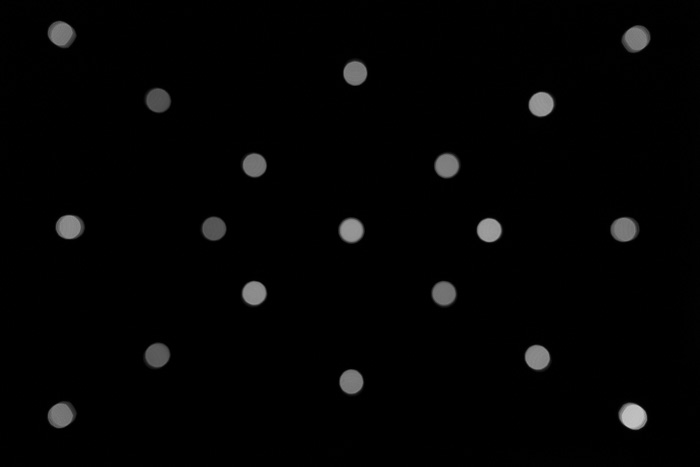
The rendering quality in the focus transition zone is surprisingly smooth both in the background (shown to the left below). The foreground blur (to the right) is only a little harsher. This is pretty good for a wide-angle lens.
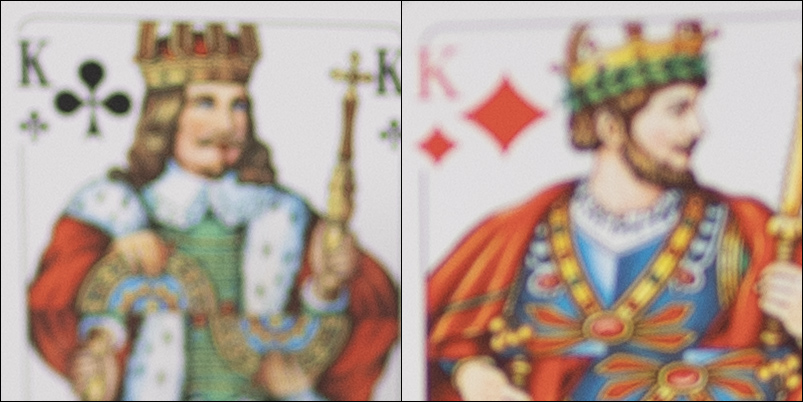
Bokeh Fringing / LoCA
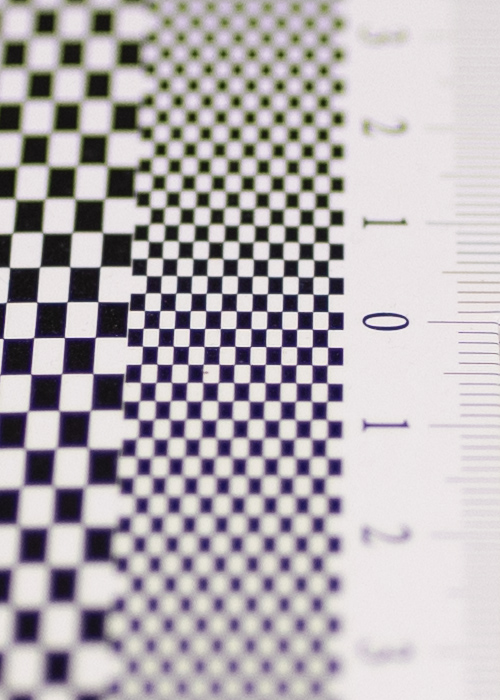
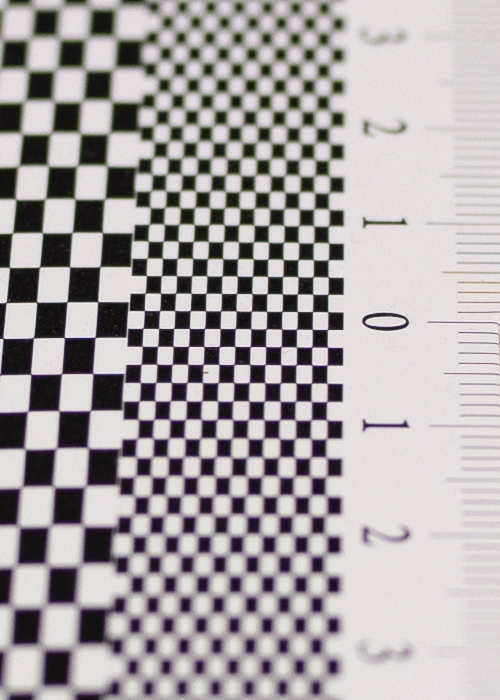
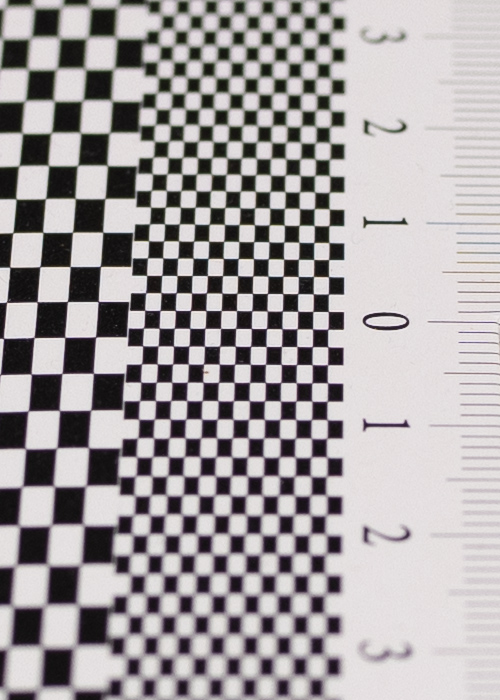
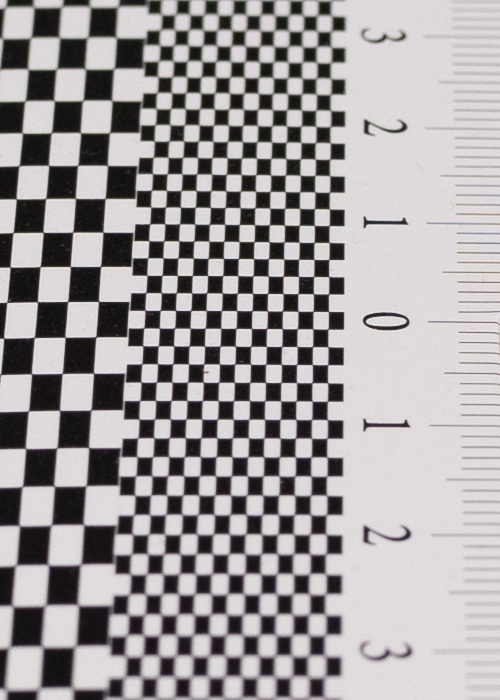
Unlike lateral CAs, axial CAs (on the Z-axis) are difficult to remove. And unfortunately, the RF 24mm f/1.4 L VCM can produce quite a bit of color fringing at large aperture settings. The greenish tint in the background and the purple tint in the foreground zone should be quite obvious at f/1.4 below. As usual, this is reduced by stopping down. However, the fringing is still obvious at f/2, but less so at f/2.8 and it’s gone by f/4.
You may also notice that the focus point remains stop on, so there’s no focus shift when stopping down (no relevant RSA (Residual Spherical Aberrations)). This is a close focus test and it’s worth noting that the sharpness is very high here thanks to the floating focusing system used in the lens.
Sun stars
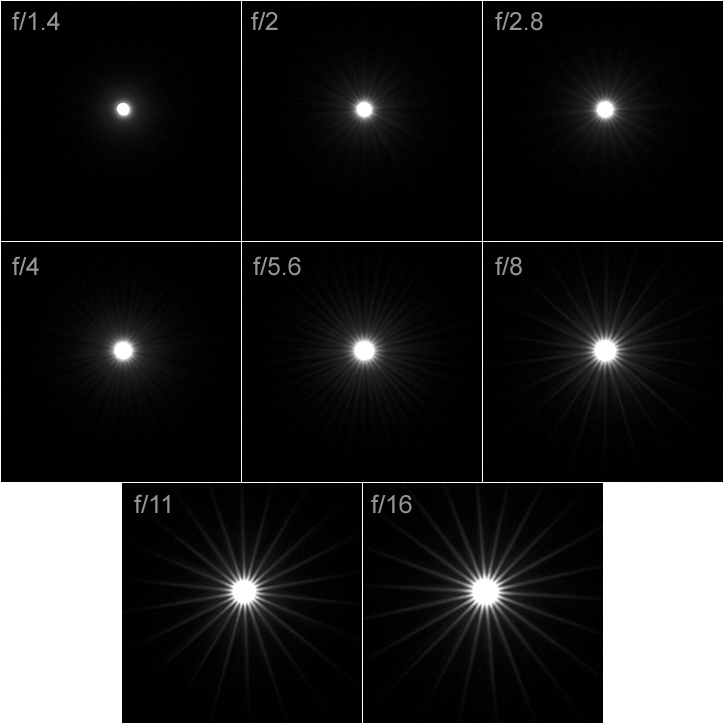
Sun stars are diffraction spikes caused by the non-circular aperture when shooting a pointy light source such as streetlights or the sun. At f/1.4, the aperture is circular, so the result is just a “blob”. From f/2 to f/5.6, there are only very faint rays visible. They are getting more obvious at f/8. For the best results you should stop down to f/11 or f/16 as so often. The rays are nicely “pointy” which is what you want here.
Sample Images


Some of our comments above were a bit negative, but that's because we also look into what's happening in RAW images. However, this is not what Canon has intended here specifically regarding image distortion. The RF 24mm f/1.4 L VCM is only meant to be used with digital autocorrection and, accordingly, we recognize this in our verdict. The resolution characteristic is consistently high across the relevant aperture range. It exceeds the sensor resolution in the image center even at f/1.4. The outer image field isn't as good, of course, but still very usable at this setting. Stopped down the borders and corners reach very good results without being tack sharp though. The autocorrected image distortions and lateral CAs are negligible. There's still some vignetting at maximum aperture, though. A weakness are axial CAs (aka LoCAs) up to f/2. The quality of the bokeh is fine for such a wide-angle lens.
The build quality is in line with what we've seen from most other Canon L-class prime lenses. It's well built and weather-sealed. It can't escape a slightly "plasticy" feel but it's still obvious that this is a very high-quality product. The engineering plastic used for the body also results in a comparatively low weight. The VCM AF is impressively fast and essentially silent. There's also no obvious focus breathing which is certainly appreciated among video creators.
Overall, the Canon RF 24mm f/1.4 L VCM primarily impresses with its consistent performance. There is, however, still the question of why a lens this expensive and this high-grade has to rely this much on digital autocorrection.
The Good
- Very consistent performance
- Compact and lightweight for an f/1.4 prime
- Aligns with the other L VCM prime lenses
- Negligible focus breathing
The Bad
- Massive native image distortion limits the corner quality
- Very high LoCAs at f/1.4 and f/2
- Relies HEAVILY on autocorrection
-
Optical Quality7.5
-
Build Quality9
-
Price / Performance7