


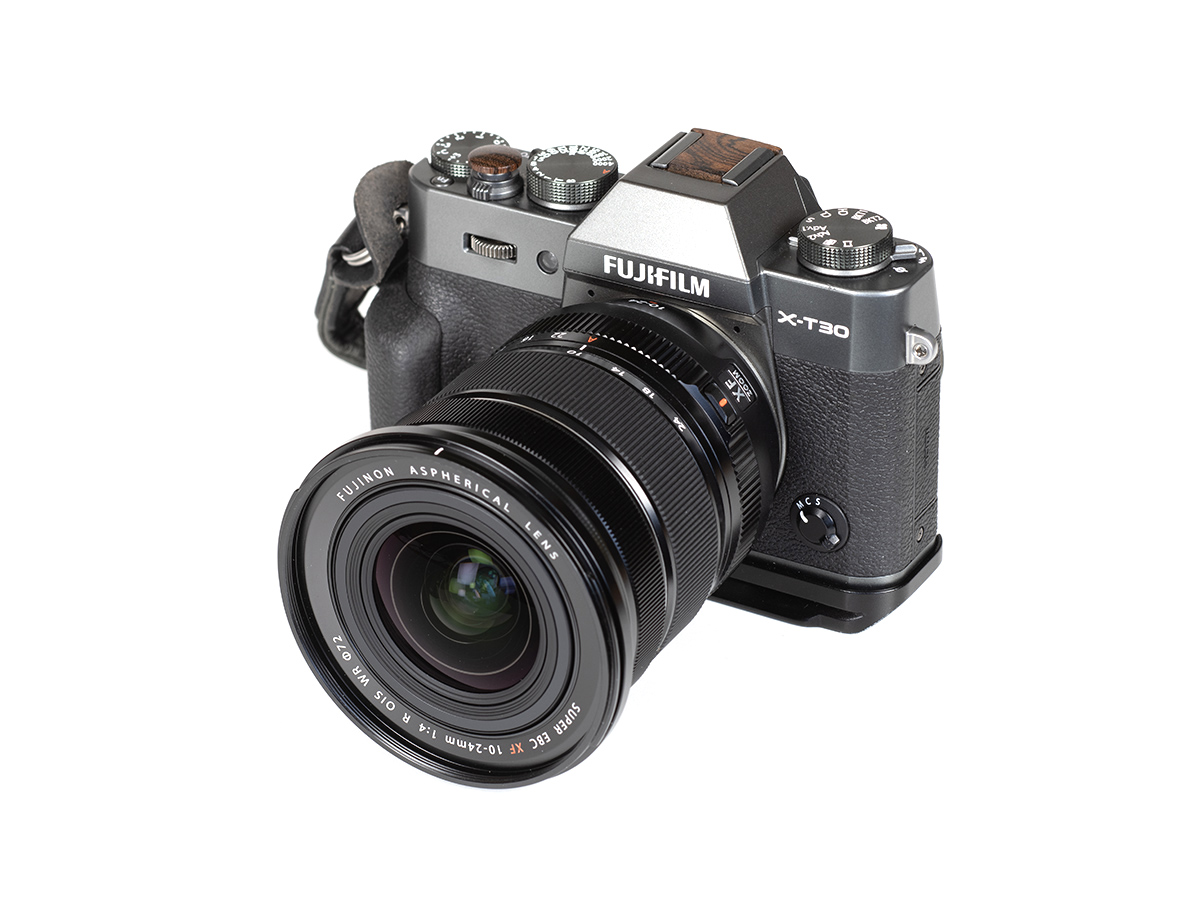
The Fujinon XF 10-24mm f/4 R OIS WR has been with us for quite a while. We reviewed the initial version back in 2015. Fujifilm released a mild mid-life refresh in 2020, which added weather-sealing (WR = Weather-Resistant). The optical design has not been changed. It’s still a very popular lens for obvious reasons – it covers the most important focal length range in the ultra-wide segment, it features an optical image stabilizer and, importantly, it doesn’t come with the bulk and price tag of the XF 8-16mm f/2.8 R LM. Although it has to be said that the XF 10-24mm f/4 has seen a number of steep price increases over the years. So is this still a winning recipe? Let’s find out … again.
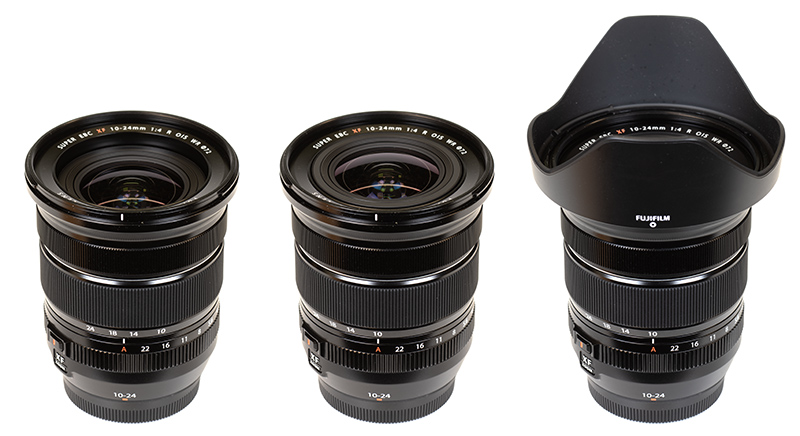
The lens body is mostly made of metal. The broad zoom and focus control rings are rubberized and turn smoothly. The physical length remains constant regardless of the zoom or focus action although the inner zoom barrel moves a little bit – see the product images below. Typical for all Fujinon lenses, there’s a dedicated aperture ring with distinctive clicks. The aperture steps are now marked compared to the initial version of the lens. There’s also a new aperture lock switch now. The optical image stabilizer can be activated on the lens as well Unlike the XF 8-16mm f/2.8 it also accepts front filters. A large plastic lens hood is also part of the package.
The lens features an older-style AF motor. It’s still pretty fast because ultra-wide lenses don’t really require a lot of shifting of the focus group for focusing. It’s also fairly quiet.
The image stabilizer (OIS) is only rated at just 3.5 f-stops which isn’t all that much by today’s standards. However, most Fujifilm cameras have an IBIS these days and with sync IS (combining the two IS systems), Fujifilm claims a gain of up to 6.5 f-stops. This is actually quite impressive, although you should handle such statements with a grain of salt in the real world if you are coffee-addicted.
| Specifications | |
|---|---|
| Optical construction | 14 elements in 10 groups (4x aspherical, 4x ED) |
| Number of aperture blades | 7 (rounded) |
| min. focus distance | 0.24m (max magnification 0.16x) |
| Dimensions | φ 77.6 x 87mm |
| Weight | 385g |
| Filter size | φ 72mm |
| Hood | petal-shaped (bayonet mount, supplied) |
| Other features | weather-sealing, freeze-proof down to -10C aperture lock optical image stabilizer (3.5 f-stops, 6.5 f-stops with sync IS) |
Distortions
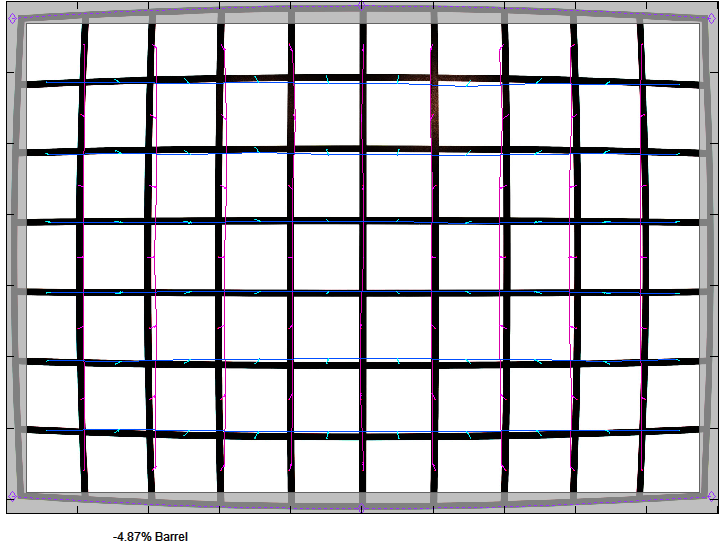
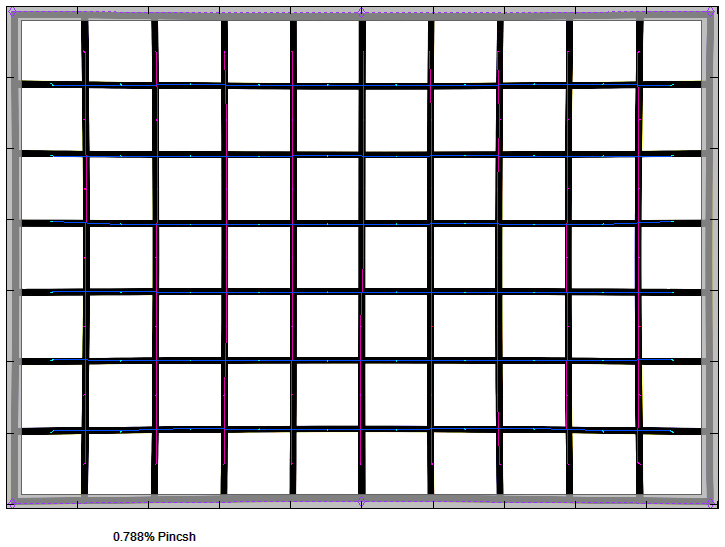
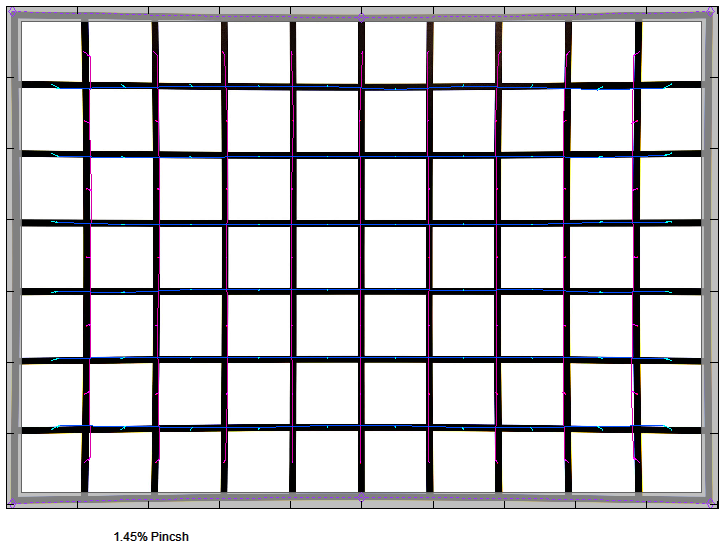
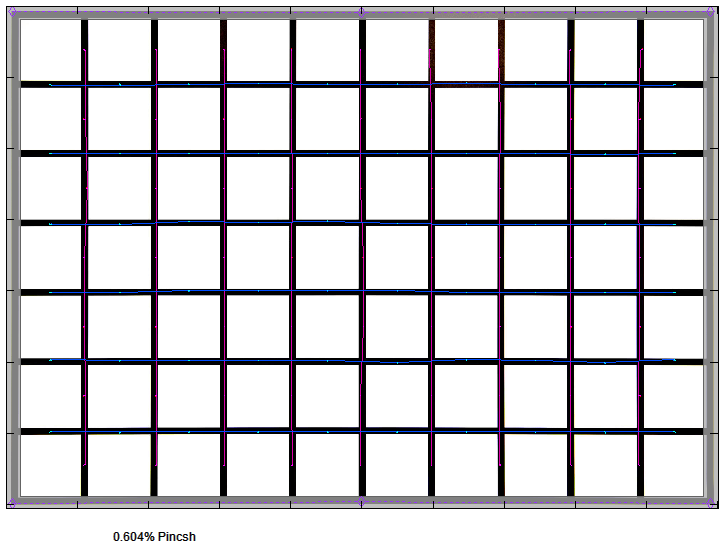
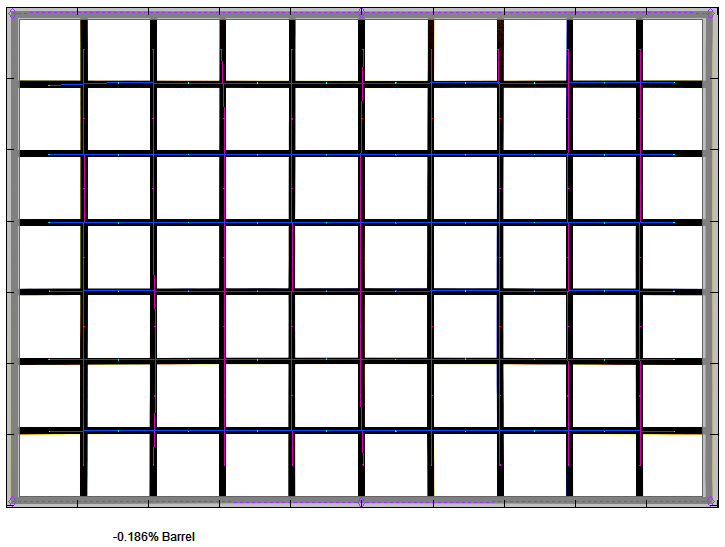
Fujifilm relies on heavy autocorrection in most of their lenses and that’s also visible in the RAW files of the Fujinon XF 10-24mm f/4 R OIS WR. At 10mm, we can clearly spot a very heavy barrel distortion of almost 5%. However, this eases rapidly with a negligible distortion at 14mm. Beyond, there are increasing pincushion distortions that reach a medium level at the long end.
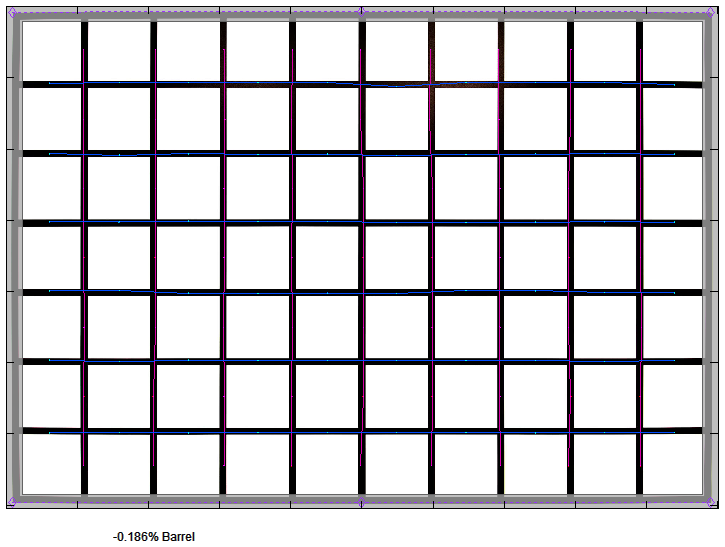
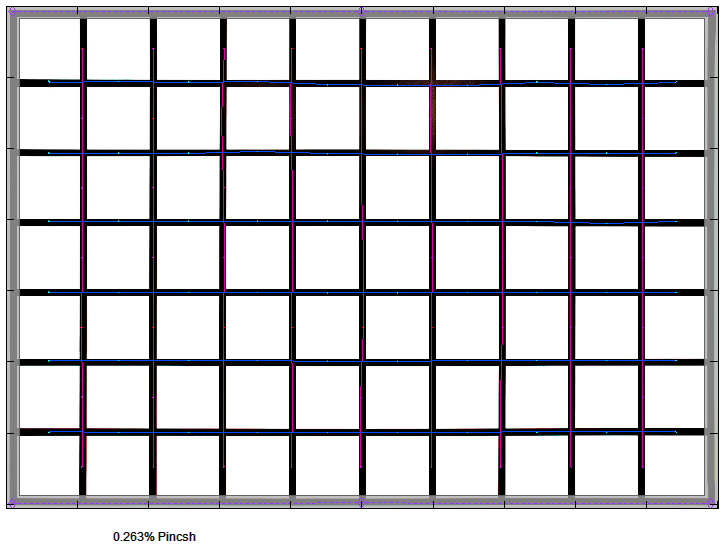
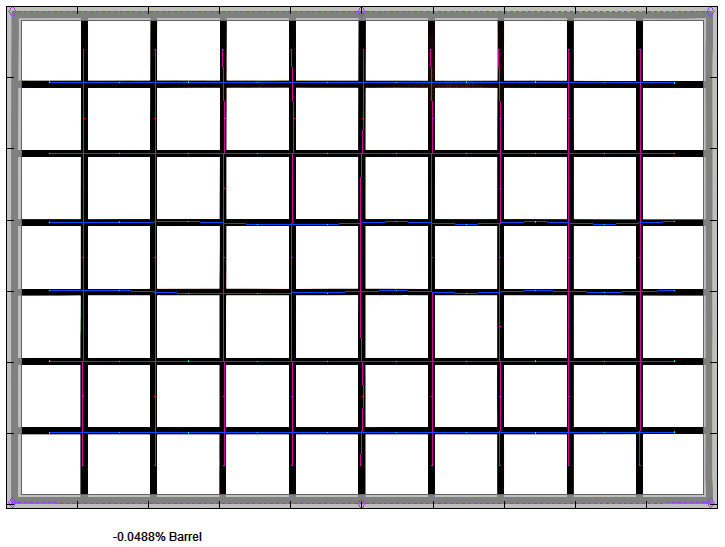
Of course, this is different with activated autocorrection which helps to reduce the issue to a mostly negligible degree.
Vignetting
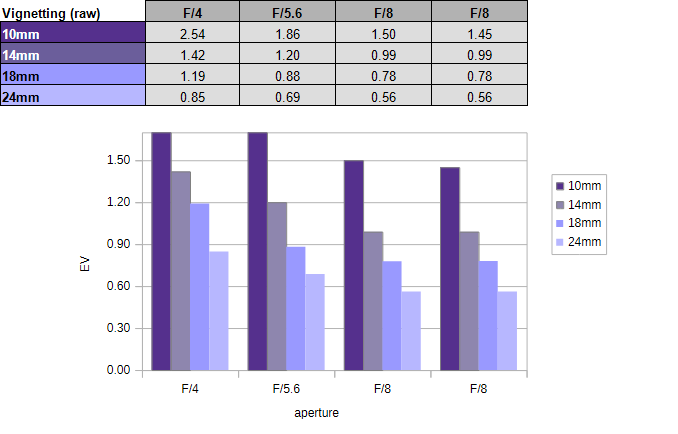
As with most ultra-wide lenses vignetting is an issue in RAW files and it’s worst at the wide end of the zoom range. At 10mm f/4 the light falloff reaches a whopping 2.5 EV (f-stops) which is way beyond our scale for APS-C lenses (although this is rather normal for full-format lenses). Stopping down helps a bit but there’s still some noticeable vignetting even at f/8. As usual, this eases the more you zoom out. The vignetting is still high at 14mm and at 18mm @ f/4 but it’s well controlled at the 24mm setting.
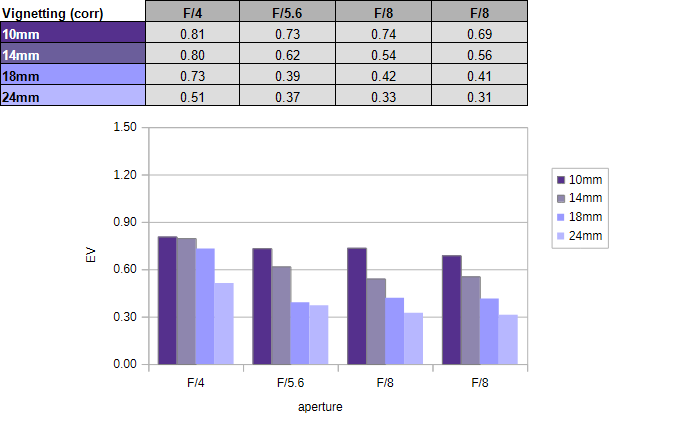
Autocorrection has to come to the rescue, of course. It fixes most of the issue with only some moderate vignetting between 10mm and 14mm. Keep in mind that this isn’t lossless. Vignetting correction increases the corner noise and decreases the dynamic range in the image corners due to the signal amplification.
MTF (resolution) at 26 megapixels
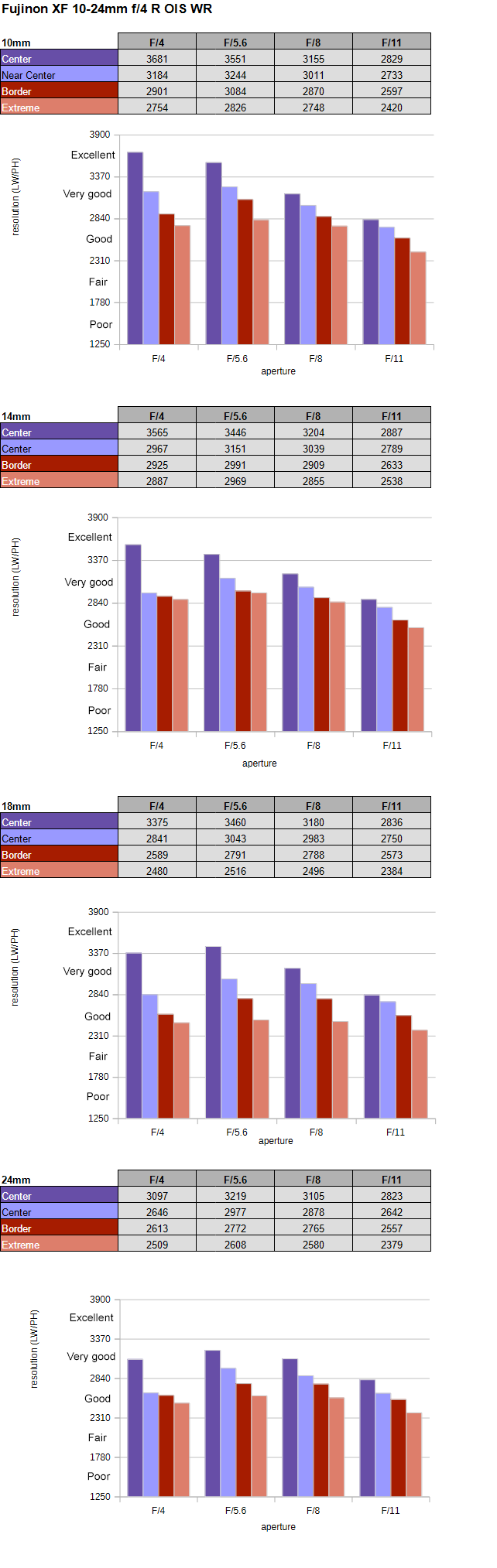
The resolution characteristic of the Fujinon XF 10-24mm f/4 R OIS WR remains solid although it doesn’t stand out. At 10mm, the dead center quality is great. The near-center quality is very good followed by good to very good borders/corners. However, there is some more softness creeping in at the last pixels beyond our corner test spot. Stopping down to f/5.6 increases the overall quality a bit. Diffraction effects set in beyond already. The sweet spot is around the 14mm. The quality is reduced at 18mm and 24mm with the center quality falling to very good results. The corners still reach good quality.
The centering quality of the XF 10-24mm f/4 was mediocre – unfortunately that’s a not-so-seldom issue with Fujifilm lenses. As such it’s also difficult to judge the field curvature.
Please note that the MTF results are not directly comparable across the different systems!
Below is a simplified summary of the formal findings. The chart shows line widths per picture height (LW/PH) which can be taken as a measure of sharpness. If you would like to know more about the MTF50 figures, you may check out the corresponding Imatest Explanations.
Chromatic Aberrations (CAs)
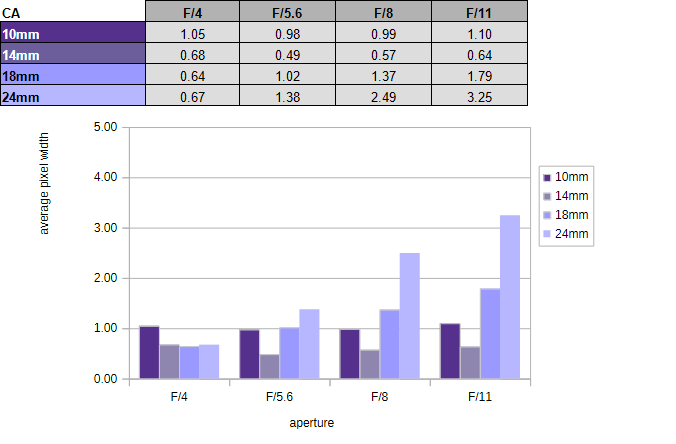
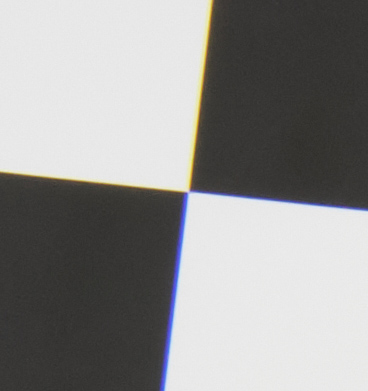
Lateral CAs are an interesting topic with this lens. They are fairly moderate at the wide end. However, at 18mm and more so 24mm, they rapidly increase the more you stop down. At 24mm f/11 we measured a whopping CA pixel width of more than 3px at the image borders. However, keep in mind that you shouldn’t really stop down this much due to diffraction and autocorrection will reduce this issue anyway.
The corner CAs look like this here at 24mm f/11:
Competition
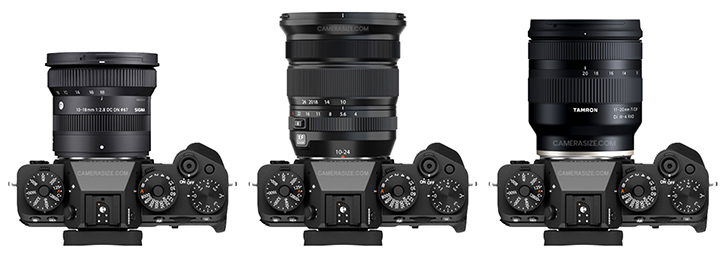
Compared to the old days, the Fujinons aren’t competing alone for your bucks anymore. There is, for instance, the Sigma 10-18mm f/2.8 DC DN Contemporary (to the left below) – and it beats the XF 10-24mm f/4 (center) in most aspects while also being smaller, faster and cheaper. The same goes for the Tamron 11-20mm f/2.8 Di III-A RXD (to the right).
Sample Images


The Fujinon XF 10-24mm f/4 R OIS WR is still a fairly solid option. If you can find a good sample, it's pretty sharp at its wider focal length settings (short of the last few pixels in the corners). The long end isn't quite as high in quality but still usable. RAW images reveal some weaknesses regarding vignetting, distortions and CAs but autocorrection hides most of this from you.
The Fujinon XF 10-24mm f/4 R OIS WR shines when it comes to build quality. The metal body simply feels tough and the control rings have a nice touch to them. Weather sealing and the freeze-proof design are certainly reassuring for outdoor use. The image stabilizer can come in handy in certain situations and on cameras without IBIS. The AF stepping motor may not be the latest and greatest but it does the job.
The Fujinon XF 10-24mm f/4 R OIS WR is no longer the obvious go-to lens in the ultra-wide segment and after more than a decade, it feels ripe for a real update. It's still a decent lens but the competition has caught up and surpassed it optically somewhat while also being more affordable.
If you'd like to support our work, please consider shopping for this or other lenses via one of the following partners:
* Amazon (US)
* Amazon (Europe)
* B&H (US)
* Adorama (US)
* KEH (used gear, US)
The Good
- Great build quality
- Image stabilizer
The Bad
- A bit pricey
- Sample variations
- It's fairly big
- Falls behind optically
-
Optical Quality6
-
Build Quality9
-
Price Performance5