


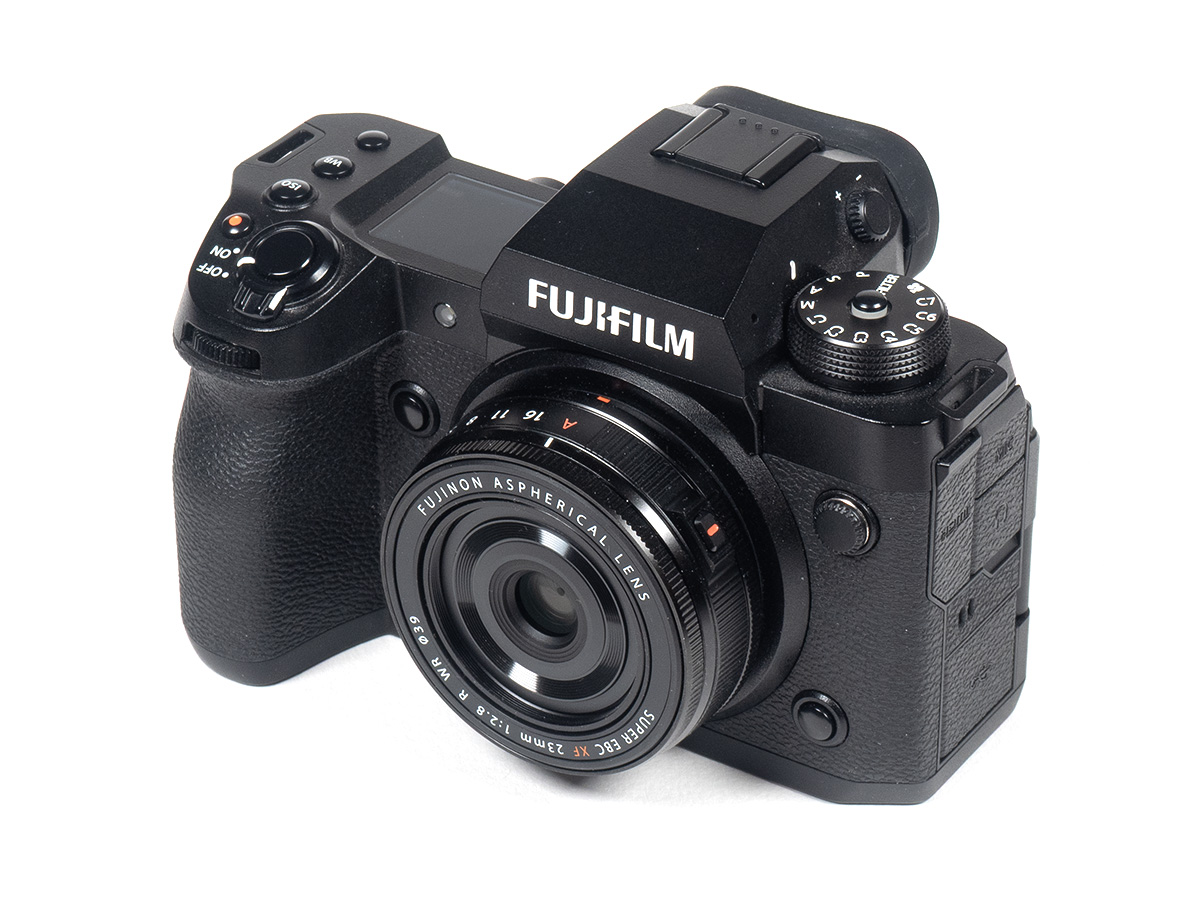
I’ve always been a sucker for pancake lenses, and when Fujifilm announced the XF 23mm f/2.8 R WR, it was obvious that I just had to test it. There are surely many among you who can’t understand my interest. Yes, pancake lenses are almost always slow. In full-format terms, we are “merely” talking about a “35mm f/4.2” here. And it’s not exactly cheap at $500USD / 450EUR either. Still, just look at it. It’s a tiny beauty – at least from a distance. But let’s dig deeper now.
As already hinted, the most striking aspect of the lens is the physical length of just 23mm (coincidentally the same as the focal length) and a weight of merely 90g. While a featherweight, the build quality is still perfectly fine. The lens body is made of metal down to the lens mount and control rings. There is, however, an inner lens tube that extends a little during focusing, meaning that it uses a simple linear-extension focusing mechanism. Fujifilm still claims that the lens is weather-resistant (WR). Despite the tiny size, Fujifilm still managed to incorporate an aperture ring. And to minimize the size with an attached hood, a tiny dome-shaped one is included.
An aspect that isn’t so great is the AF motor, which still relies on a stepping motor. The AF speed is fine due to the focal length and small weight of the focusing group, but it’s not exactly racing along, and you can clearly hear it purring like a cat while active.
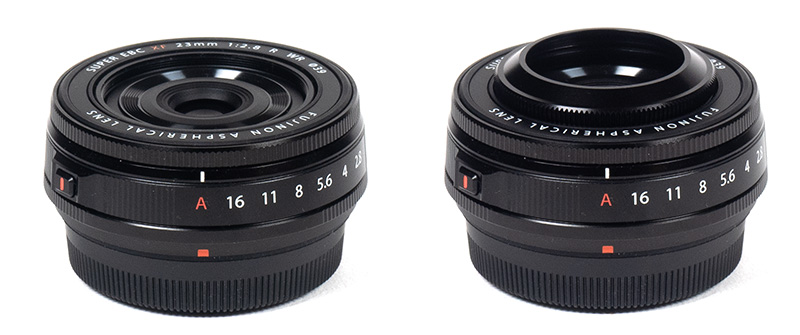
| Specifications | |
|---|---|
| Equiv. focal length | “35mm” (full format equivalent) |
| Equiv. aperture | “f/4.2” (full-format equivalent, in terms of depth-of-field) |
| Optical construction | 8 elements in 6 groups (2x aspherical) |
| Number of aperture blades | 11 (circular) |
| min. focus distance | 0.19m (max. magnification ratio 1:5) |
| Dimensions | 61.7 x 23mm |
| Weight | 90g |
| Filter size | 39mm |
| Hood | dome-shaped (screw-on, supplied) |
| Other features | weather sealing aperture ring |
Distortion
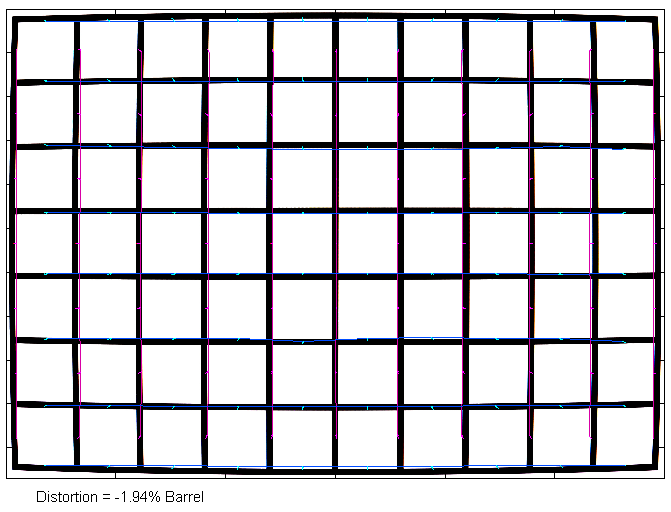
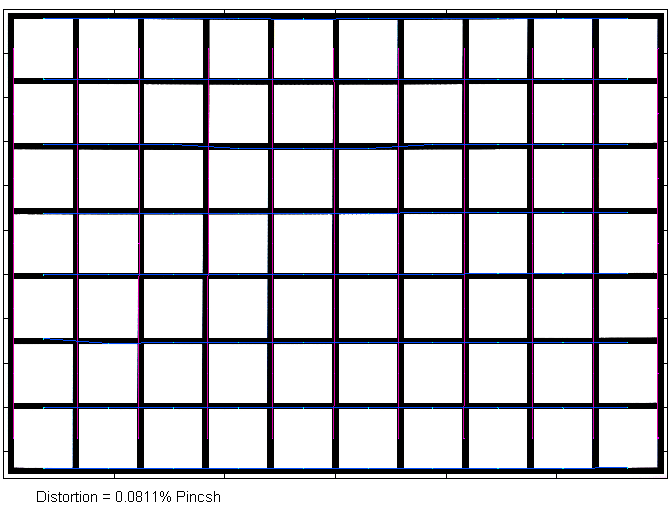
The Fujinon produces a native barrel distortion of ~2.3%, which is almost surprisingly low for a contemporary wide-angle lens. Auto-corrected RAW images and JPEGs are distortion-free.
Vignetting
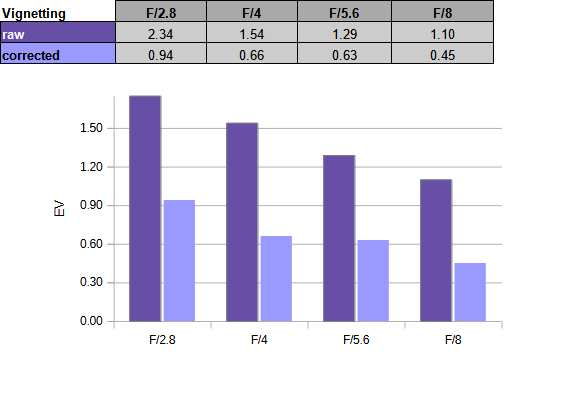
If the XF 23mm f/2.8 R WR has a weakness, it’s vignetting. However, that’s only applying to uncorrected RAW files. At f/2.8, the light falloff peaks at 2.3 EV (f-stops). This may not be unusual on full-format cameras, but it is very high for an APS-C format lens. Stopping down helps, but the vignetting is still quite high at f/8.
Auto-correction shaves off ~1.4EV at f/2.8, so the vignetting isn’t quite as obvious anymore here. The issue is moderate from f/4 onward in this case.
MTF (resolution at 26mp)
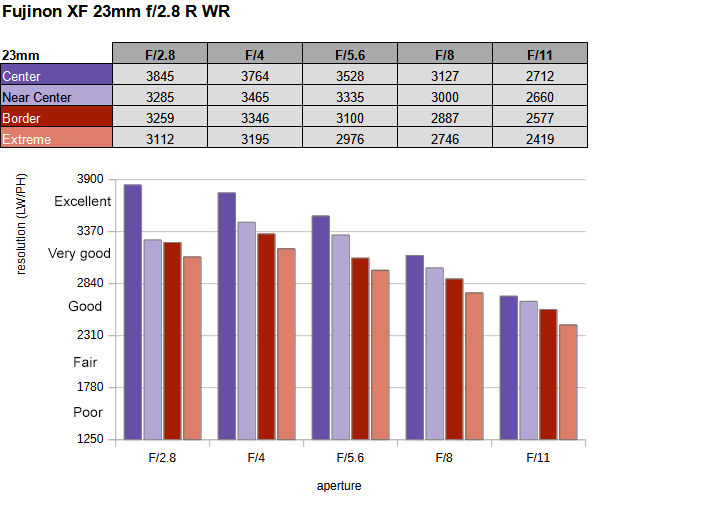
Pancake lenses have a mixed reputation when it comes to sharpness – some are good, some not so much. The Fujinon XF 23mm f/2.8 R WR belongs to the first category. The dead center quality is superb at f/2.8 already. It drops from there but still remains very good even in the corners. The peak performance is reached at f/4 with a slightly better quality beyond the center. Diffraction reduces the quality from there. f/8 remains fine, but better avoid f/11, especially on 40mp cameras.
The centering quality of tested sample was good. The field curvature is low.
Please note that the MTF results are not directly comparable across the different systems!
Below is a simplified summary of the formal findings. The chart shows line widths per picture height (LW/PH) which can be taken as a measure for sharpness. If you are keen to know more about the MTF50 figures, you may check out the corresponding Imatest Explanations
Chromatic Aberrations (CAs)
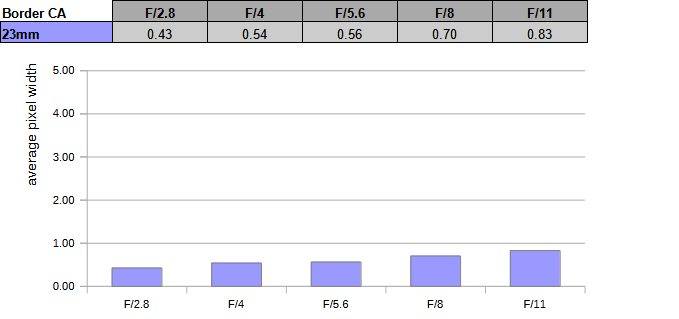
The lateral CAs (color shadows at hard contrast transitions) are low at f/2.8 and increase slightly when stopping down.
Sunstars
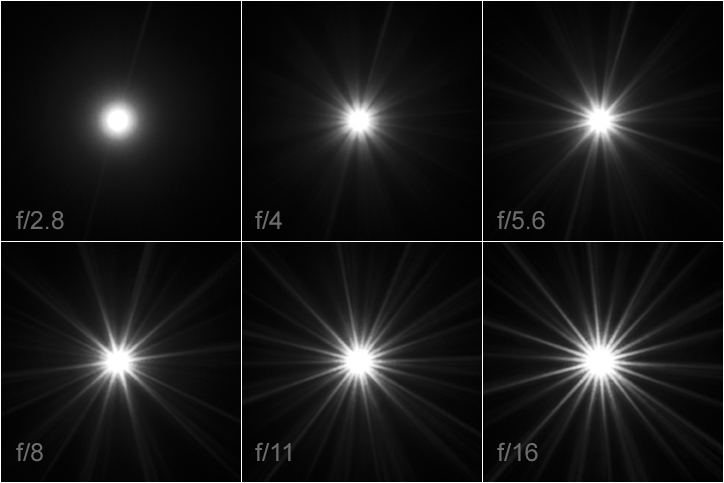
Sunstars are caused by diffraction spikes at the edge where two aperture blades meet. The XF 23mm f/2.8 R WR has a high number of these blades – 11 to be precise—so this will result in 22 rays.
At maximum aperture, the lens opening is perfectly circular, so a bright light source (e.g. streetlights at night, the sun, etc.) will simply show up as a “blob” in your image. Closing the aperture increases the sunstar effect. As you can see below, the lens produces fan-like rays at f/4. The first spiky rays start to emerge at f/5.6. The cleanest ray rendering is at f/16. It’s still not the greatest sunstar quality that we’ve seen.
The 11 rounded aperture blades suggest that Fujifilm emphasized the bokeh rather than sunstars – which is a little odd because a 23mm f/2.8 APS-C lens is hardly a bokeh monster.
Competition
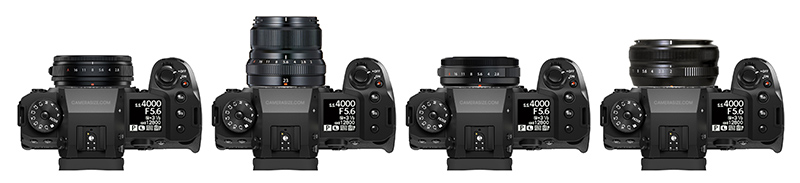
The competition is certainly plentiful. Besides several third-party lenses (e.g. Viltrox AF 25mm f/1.7 Air, Sigma 23mm f/1.4 DC DN Contemporary, TTArtisan AF 23mm f/1.8, …), there are also 3 Fujifilm lenses of direct interest here. The XF 23mm f/2.8 R WR is shown to the far-left below. Next to it is the XF 23mm f/2 R WR. It’s an older design by now, but it is a stop faster for the same price. The optical quality is similar. The 2nd from the right is the XF 27mm f/2 R WR. It’s only a mild wide-angle lens, so not quite comparable. But it’s just as tiny. On the wider side of things is the XF 18mm f/2 R (far right), again an oldie but a goodie.
Compared to the Fujifilm X100VI – a Thought
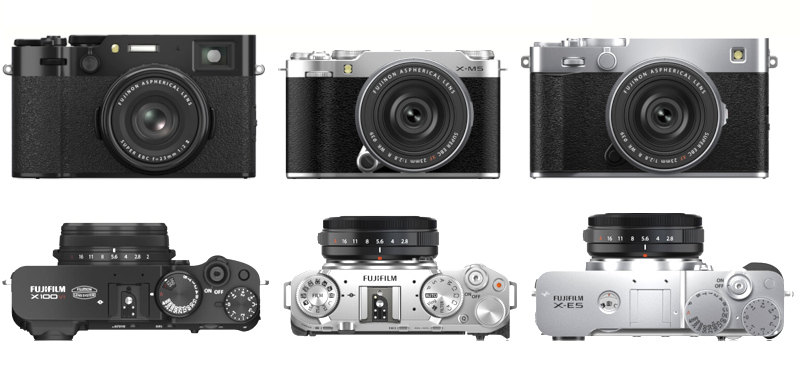
As you may know, the Fujifilm X100VI is a massively (over-)hyped camera to a degree that it was difficult to get your hands on one. The X100VI has a fixed lens – admittedly with a 23mm f/2 rather than a 23mm f/2.8. Even so, below is a comparison between the X100VI to the left and the X-M5 (center) and X-E5 (to the right) – both of the latter with the XF 23mm f/2.8 R WR. You may notice that the system cameras are actually a bit smaller. This may be unsurprising with the tiny X-M5 because it doesn’t have a viewfinder and no IBIS, but the X-E5 has both. The X-M5 is far cheaper than the X100VI, and the more feature-rich X-E5 come in at just $100 more. So unless you are after the very specifics of an X100VI and its 1 f-stop faster lens, choosing one of the system cameras feels like a more sensible approach, really.
Sample Shots


The Fujinon XF 23mm f/2.8 R WR may be tiny, but it certainly delivers. It's sharp straight from f/2.8, and lateral CAs as well as image distortions are comparatively low. The vignetting is high in untouched files, but auto-correction does a good job with reducing the issue. The sunstar rendering is Ok, but nothing to brag about. With these specs, the bokeh potential is rather underdeveloped.
The 2nd biggest (or biggest?) asset of the XF 23mm f/2.8 R WR is, of course, its cute form factor and extremely low weight - while maintaining a very good build quality, including weather sealing. The AF stepping motor is conceptually dated, but it does the job.
It's not a cheap lens, but that's the price to pay for a quality pancake lens. If you can live with the rather slow speed (for a prime lens), the XF 23mm f/2.8 R WR is certainly an interesting candidate for your camera bag. Combined with one of the smaller Fujifilm cameras, it's also a tempting option for those who want to minimize their travel gear.
The Good
- It's TINY and featherweight
- Surprisingly sharp
The Bad
- Too slow if you are after a pronounced bokeh
- The native vignetting is on the high side
- Dated AF motor
-
Optical Quality8
-
Build Quality8
-
Price/Performance8