


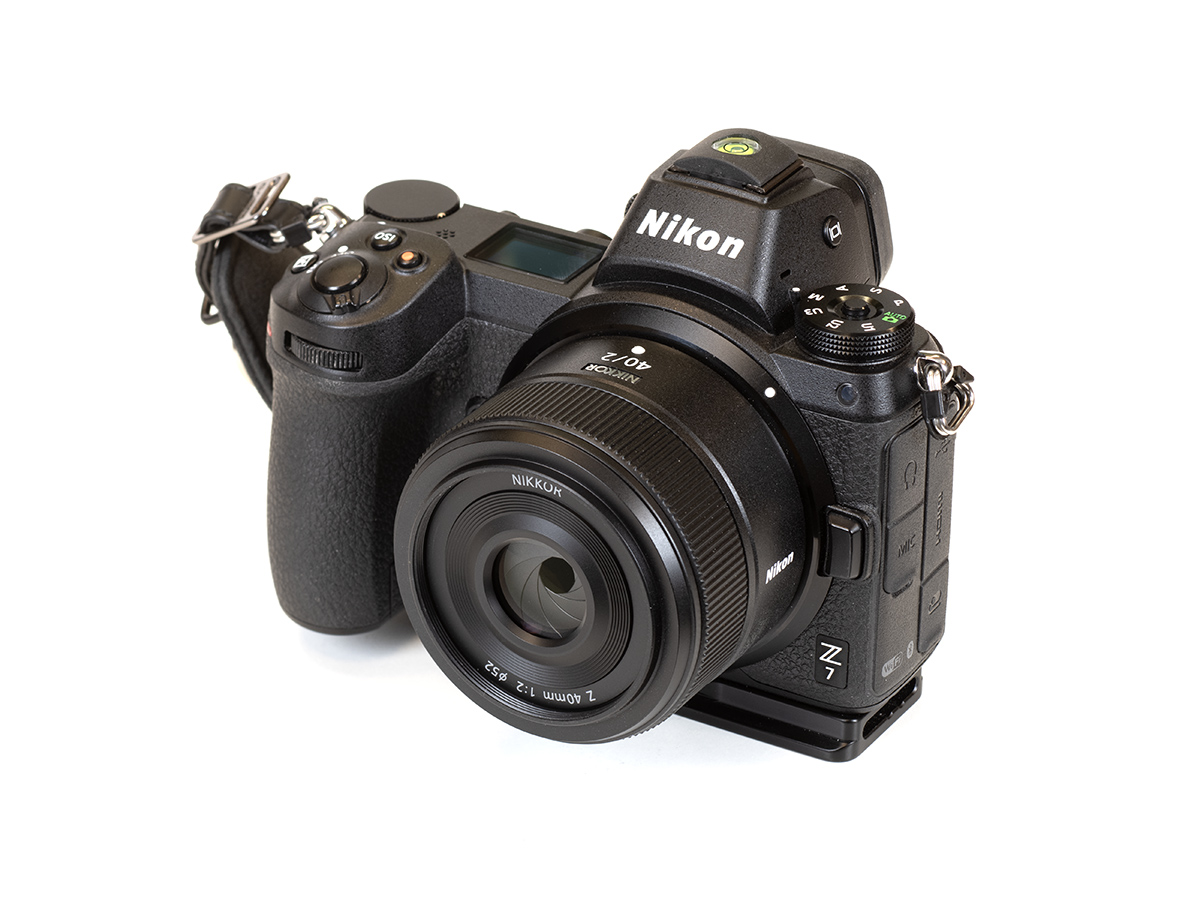
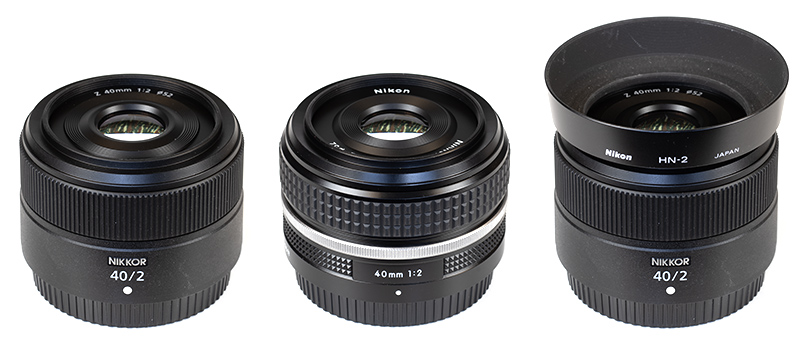
The Nikkor Z 40mm f/2 is one of the budget prime lenses in Nikon’s lens lineup. It is actually available in two different flavors: with a modern-style look as shown below or as SE (“Special Edition”) which mimics the design philosophy of the “classic” Nikon era. The SE variant (shown in the center below) costs a little more at $260 USD compared to the standard version at $230 USD, but the difference is purely cosmetic. The optical system is the same. It’s a full-format lens and thus, a standard prime lens.
The Nikkor has an all-plastic construction including the mount. It doesn’t feel overly premium but this cannot be expected at this price point. However, Nikon still managed to incorporate some degree of weather sealing. The Z 40mm f/2 is a simply thing. In terms of controls there’s just the control/focus ring. It lacks an AF/MF button. A lens hood is not included. The product image below shows the screw-in type HN-2, but Nikon doesn’t specify a dedicated lens hood.
The lens uses a stepping motor (STM) for autofocusing. It works fairly quickly and quietly.
| Specifications | |
|---|---|
| Optical construction | 6 elements in 4 groups (2x aspherical) |
| Number of aperture blades | 9 (rounded) |
| min. focus distance | 0.29m (max. magnification: 0.17x) |
| Dimensions | 70 x 45.5mm |
| Weight | 170g |
| Filter size | 52mm |
| Hood | optional |
| Other features | control ring dust- and drip-resistant |
| Mounts | Nikon Z |
Distortion
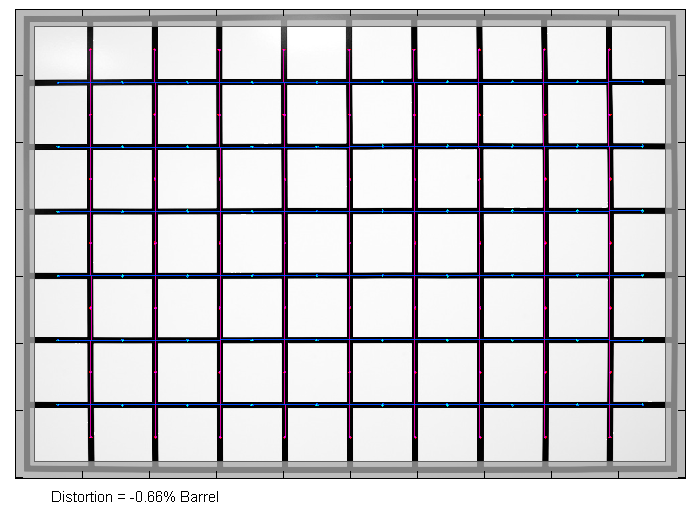
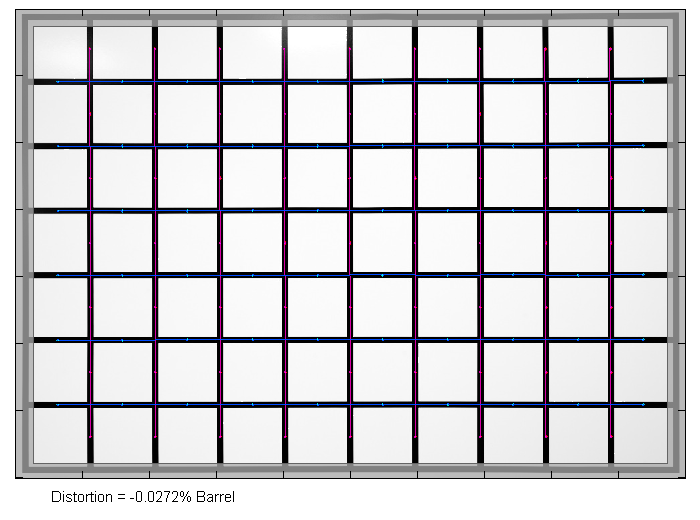
The Nikkor Z 40mm f/2 produces only a marginal degree of barrel distortion in RAW images. Autocorrection can eliminate this completely.
Vignetting
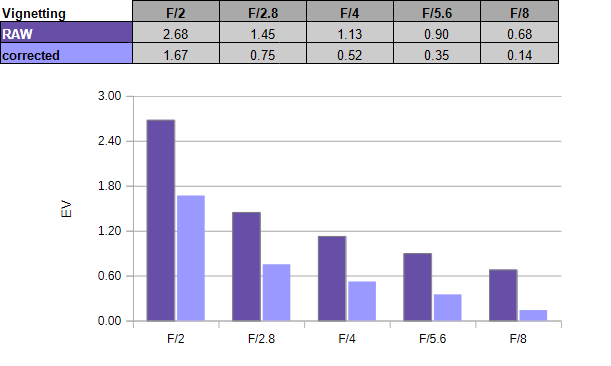
The RAW vignetting is on the high side, reaching 2.7 EV (f-stops) at f/2. Stopping down to f/2.8 reduces this substantially by more than 1 EV (f-stop). The light falloff can still be visible at f/4 and f/5.6. Slight vignetting remains even at f/5.6. Activated autocorrection reduces the vignetting by 1 EV (f-stop) at maximum aperture and the issue is practically gone from f/4 onward.
MTF (resolution at 45 mp)
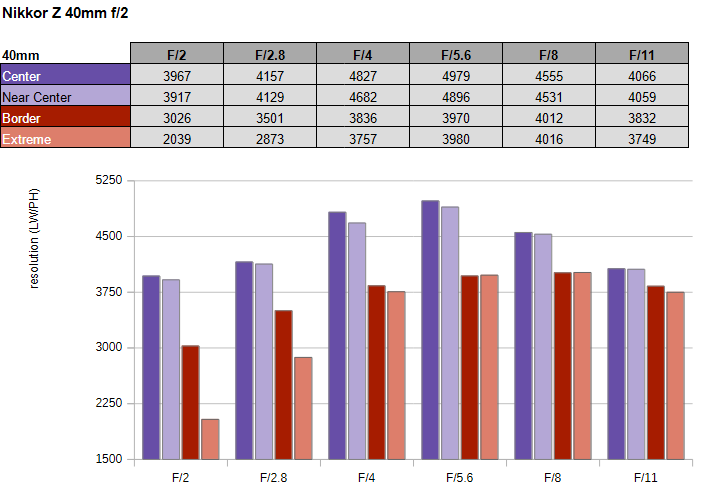
The Nikkor Z 40mm f/2 disappoints a bit. At f/2, the broader center quality is very good (just) but the borders are only good and the corners are falling off the cliff. The contrast level is also reduced. Stopping down to f/2.8 improves this a bit, but for the best results you should stop down to f/4 or f/5.6. The center quality is excellent here and the outer image field reaches good to very good results. Diffraction limits the center quality at f/8 although the borders/corners are actually best here.
Please note that the MTF results are not directly comparable across the different systems!
Below is a simplified summary of the formal findings. The chart shows line widths per picture height (LW/PH), which can be taken as a measure of sharpness. If you would like to know more about the MTF50 figures, you may check out the corresponding Imatest Explanations.
Chromatic Aberrations (CAs)
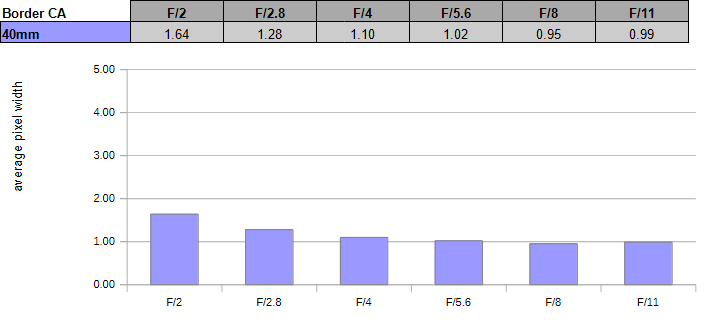
Lateral CAs are somewhat elevated at f/2 with an average pixel width of 1.6px at the image borders. The CAs decrease when stopping down and settle with a width of 1px at medium aperture settings.
Bokeh
A 40mm f/2 is quite fast and allows you to achieve a decently shallow depth-of-field in many situations. So let’s check the bokeh.
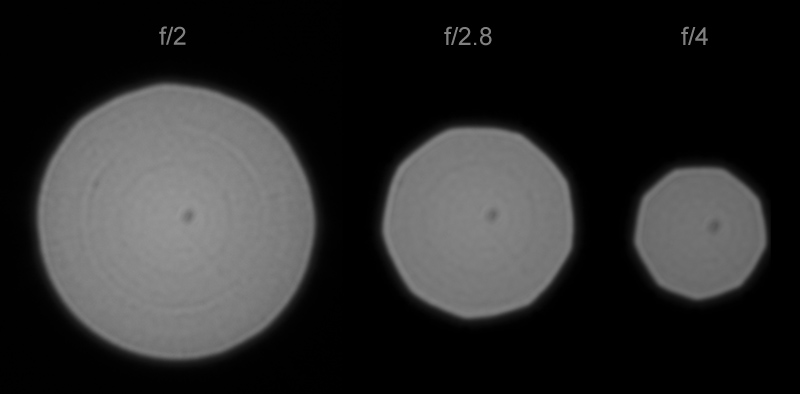
Out-of-focus highlights show a slight onion-like substructure, probably thanks to the 2 aspherical elements in the design. The disc is mostly circular at f/2 but becomes very edgy at f/2.8 already … which contradicts Nikon’s statement that the 9 aperture blades are rounded. If so, they are only marginally rounded.
Note: The dot is a dust spot.
When looking at the whole image, the circular highlight shape is maintained across the image field at f/2 already. This is quite unusual and a welcome aspect here. However, the discs show some outling from the midfield. The outlining is gone from f/2.8.
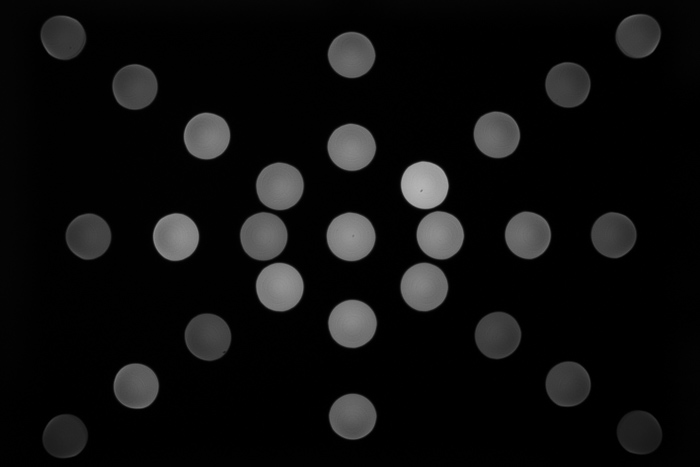
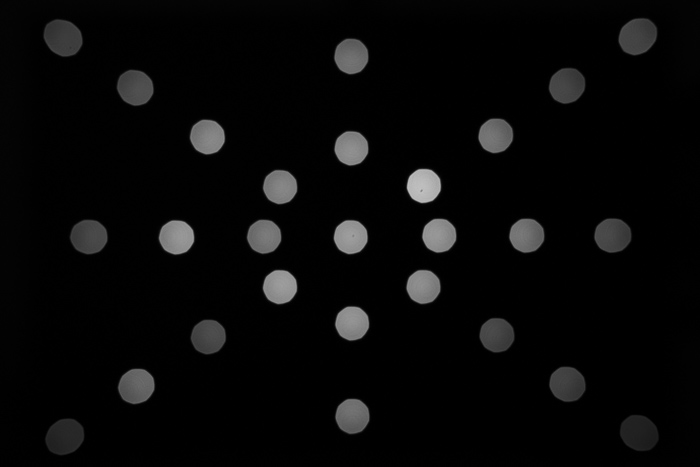
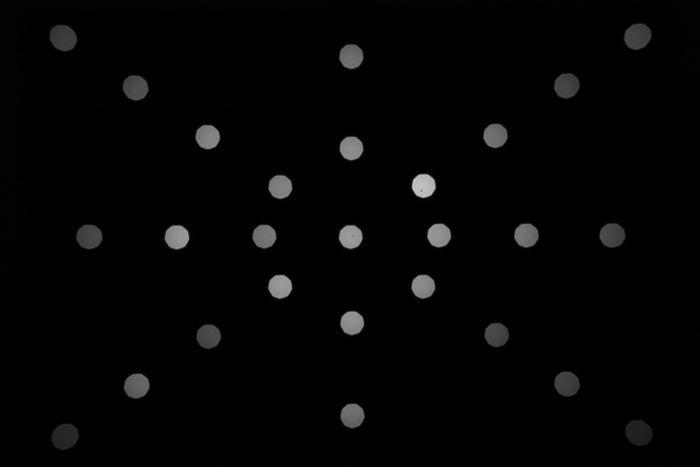
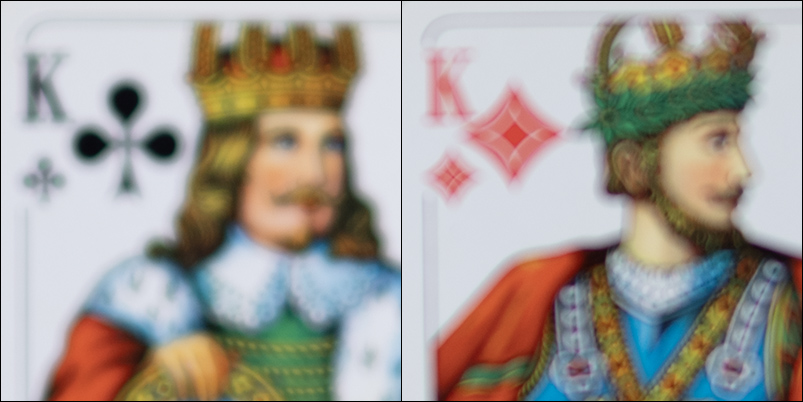
The general blur in the focus transition zone is very smooth in the image background (shown to the left below). The less important foreground blur (to the right) is nervous with double-edged halos.
Bokeh Fringing (LoCA)
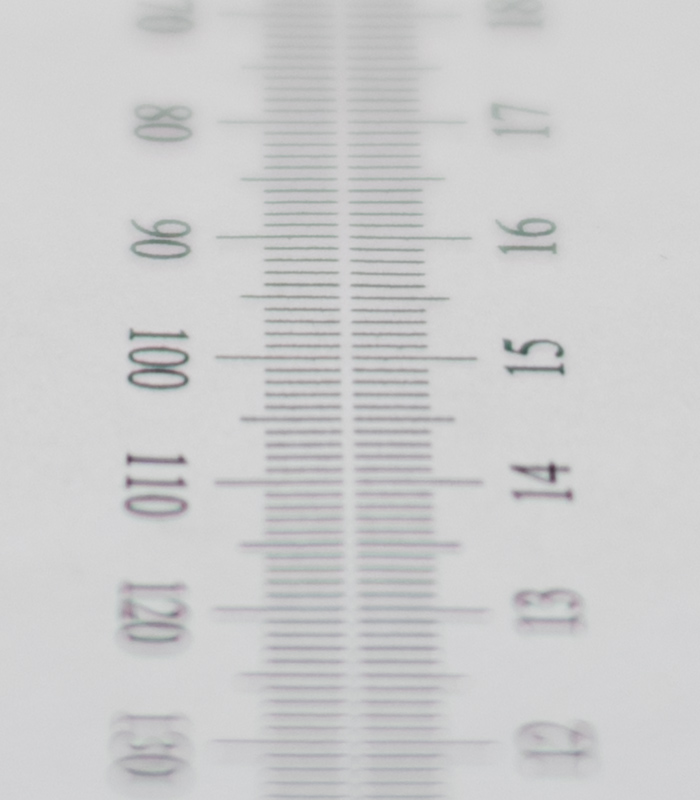
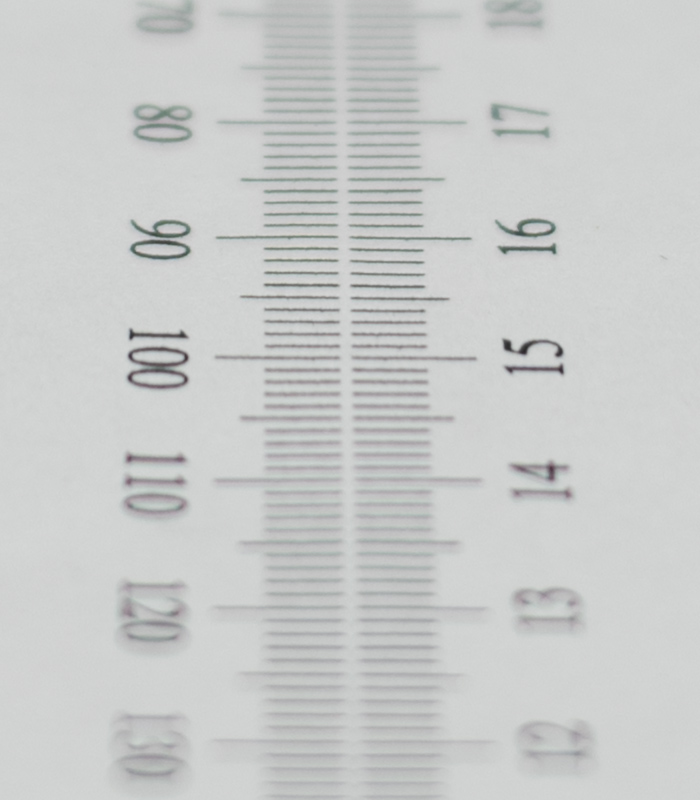
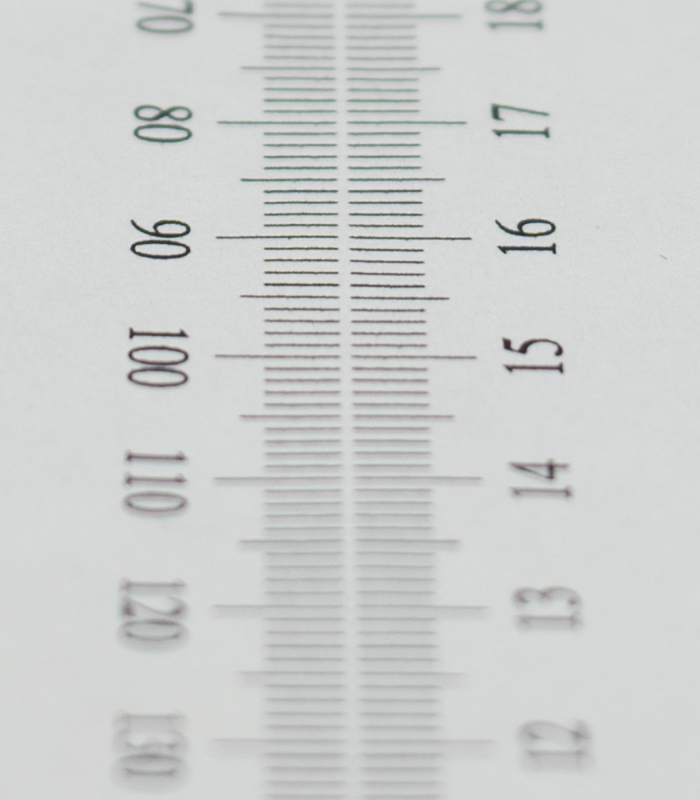
LoCAs (axial CAs) are a color-fringing effect on the Z-axis. They show up as purplish/yellowish halos in front of the in-focus zone and greenish/bluish beyond.
The Nikkor Z 40mm f/2 shows some fringing at f/2 (and it’s rather soft at the rather close focus setting we used below). As usual, this is reduced when stopping down with only traces remaining at f/4.
When scrolling through the aperture range below, you may also notice some focus shift towards the rear (=RSA or Residual Spherical Aberration).
Flare
A weird characteristic of the Nikkor Z 40mm f/2 can be seen below. In certain light conditions, the lens renders a darker edge on the left or right side of the image frame (here: to the left).
This is related to a flare-cutting diaphragm positioned near the rear elements and mount – probably because Nikon omitted its advanced lens coating in this lens.

Competition
There are a couple of alternatives to the Nikkor Z 40mm f/2. The Viltrox AF 40mm f/2.5 comes into mind. It’s a bit better but much cheaper. If you want to treat yourself with a much better-quality item, the Viltrox AF 55mm f/1.8 EVO should be on your list for only $100 USD more. Among the more affordable options are the TTArtisan 40mm f/2 and 7Artisans 40mm f/2.5. The Meike AF 55mm f/1.8 Pro is another option with better specs while not breaking the bank.
Sample Images
Countryside Germany here rather than the usual sights of Australia.


In an ideal world, we would indulge ourselves with nice products but nice products can be expensive, especially in the photographic world. Nikon's Z 40mm f/2 is an affordable option for budget-minded photographers - and there are many of them. It carries a well-known brand name but this alone doesn't guarantee quality. Optically, it is a bit of a mixed bag. If your main subject is near the center, and with such a lens that's admittedly a typical scenario, the quality is actually fine at f/2, although at a slightly reduced contrast. However, if you want to have good sharpness across the image frame you have to stop down to at least f/4. Autocorrection handles imperfections of the secondary aspects such as vignetting, distortions and lateral CAs. The background bokeh is actually pretty good and out-of-focus highlights are decently rendered at f/2. You have to be a bit careful with stray light which can result in a weird flare effect.
You can feel the budget constraints when it comes to build quality. It's an all-plastic construction. On the positive side, it features some weather sealing and the AF is actually quite good.
Overall, it's not the most impressive lens of them all but if you know what you are doing it can produce decent results - especially on lower-megapixel Nikon cameras.
If you'd like to support our work, please consider shopping for this or other lenses via one of the following partners:
* Amazon (US)
* Amazon (Europe)
* B&H (US)
* Adorama (US)
The Good
- It's cheap
The Bad
- Optically a bit mediocre for a prime lens
- Internal reflections in certain scenes
- Very plasticky
-
Optical Quality5
-
Build Quality5
-
Price Performance6