


Introduction
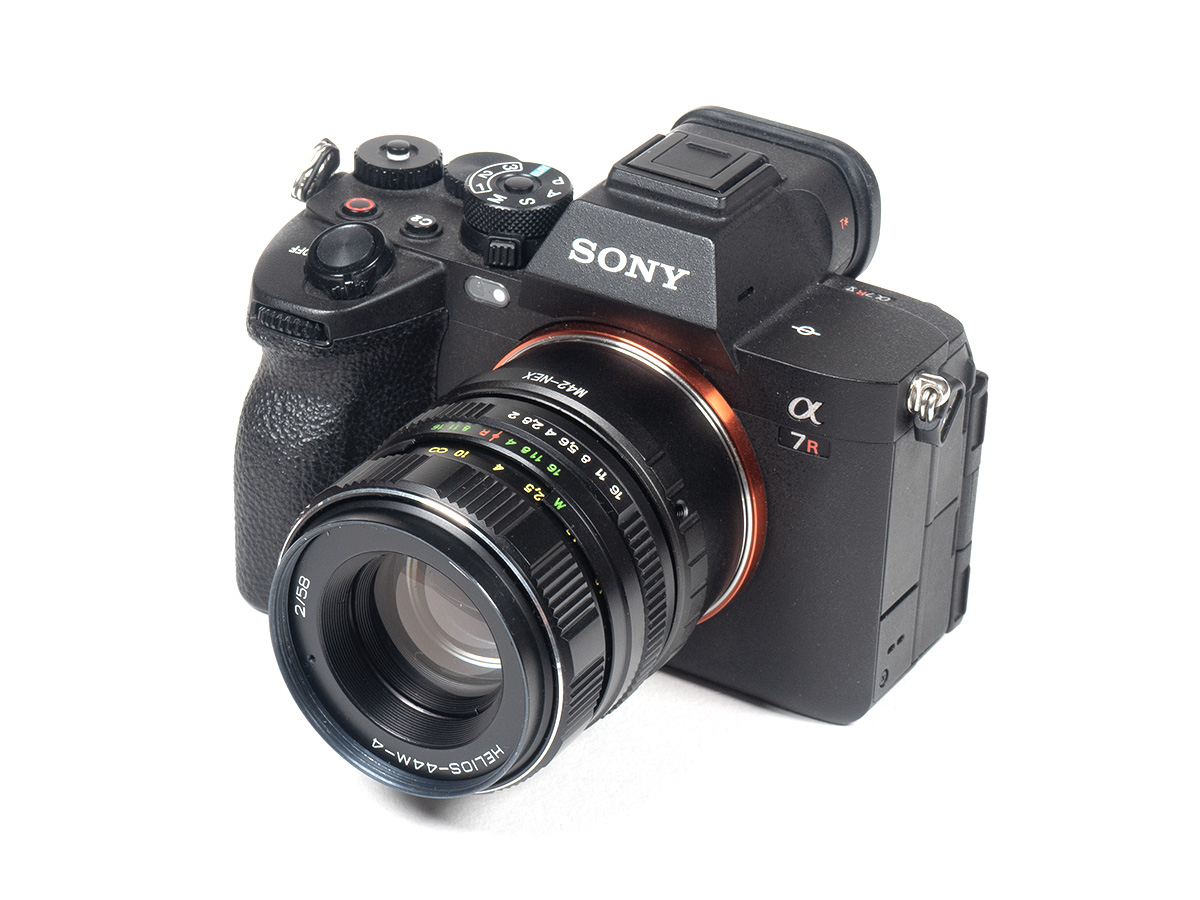
The Helios 44M-4 58 mm f/2 is a classic Soviet-era standard-prime lens that sits within the long-running Helios-44 family—one of the most mass-produced and recognizable vintage optics ever made. The Helios-44 line originated in 1958 as a Soviet copy of the German Carl Zeiss Biotar 58 mm f/2 design, produced initially by the Krasnogorskiy Mechanical Factory (KMZ) and later by other manufacturers such as MMZ and Jupiter—a production span that stretched to 1999 (!!!) across all variants.
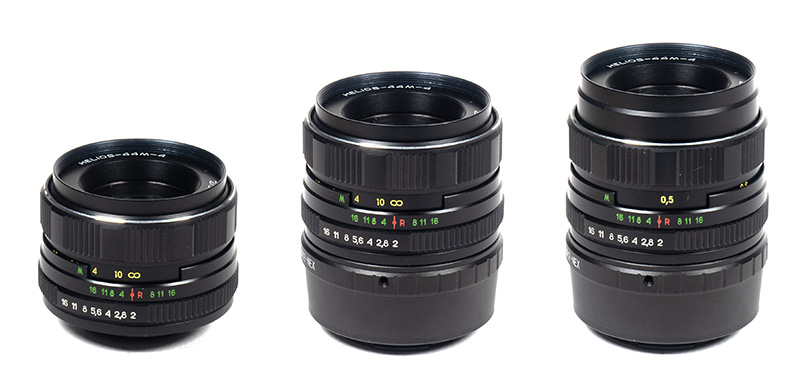
The 44M-4 variant itself emerged in the late 1970s as part of a generational update to the original Helios-44 and 44M designs. It represents a refinement of the standard formula with a 6-element-in-4-group optical construction, an f/2 maximum aperture, typical M42 screw mount, and a minimum focusing distance of around 0.5 m. M42 adapters are available for all mirrorless camera systems. The number “4” in its designation refers to an internal resolution index used later in production to differentiate optical performance levels within the 44M series.
Mechanically and cosmetically, the Helios-44M-4 reflects the evolution of Soviet lens design at the time: it dropped the older two-ring preset aperture system of the earliest Helios models in favor of a single clicked aperture ring and a simple automatic diaphragm that made it more user-friendly on 35 mm SLRs like the various Zenit bodies it originally shipped with. Of course, mounted on today’s mirrorless cameras, the lens is fully manual, including the aperture. It’s mostly made of metal, giving it heft and durability that helped many copies survive to today.
In the broader Helios-44 family, the 44M-4 sits between some of the older and newer variants:
- Helios-44 and Helios-44-2: Older predecessors with preset aperture rings and simpler external controls. They tend to feel mechanically more rudimentary and often have eight-blade diaphragms.
- Helios-44M: The immediate forebear to the 44M-4, introducing automatic diaphragm coupling and an eight-blade iris, but otherwise close optically.
- Helios-44M-5, -6, -7): Produced around the same era as the 44M-4 at the Jupiter Valdai plant but sorted by measured optical resolution, with higher numbers nominally indicating better resolution. The latest versions also feature multi-coating (MC) for improved flare control and contrast compared with the plain-coated 44M-4.
Compared with these siblings, the Helios-44M-4 often strikes a balance of build, price, and classic Helios image characteristics—including its famous “swirly” bokeh.
| Specifications | |
|---|---|
| Optical construction | 6 elements in 4 groups |
| Number of aperture blades | 6 |
| min. focus distance | 0.5m (max. object magnification ?) |
| Dimensions | 63 x 52mm |
| Weight | 242g |
| Filter size | 52mm |
| Hood | – |
| Other features | – |
| Mount | M42 |
Distortions
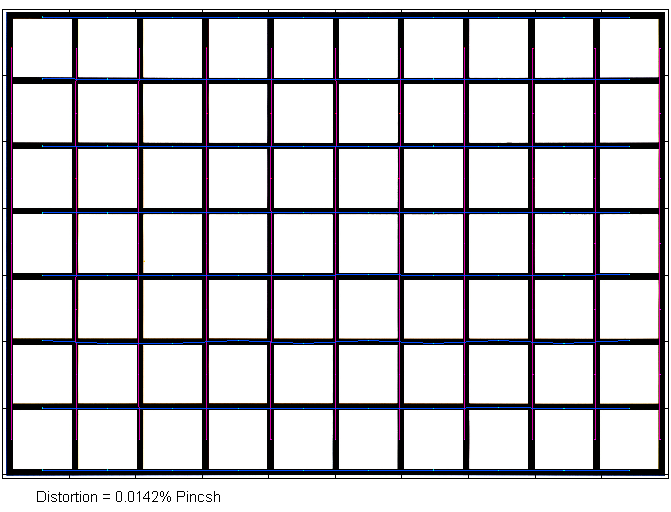
Unlike most modern lenses, the designers of this past era tried to correct distortions via the optical construction, and it shows – images are free of distortions.
Vignetting
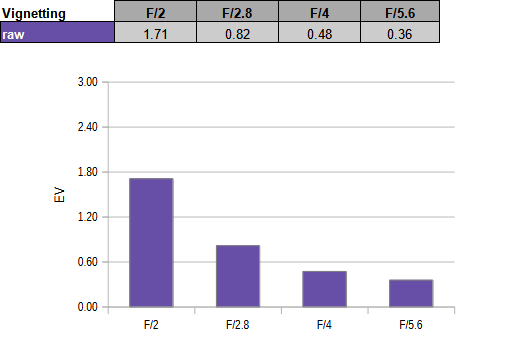
The vignetting is moderate for a fast-ish prime lens. The light falloff peaks at ~1.7EV (f-stops) at f/2. Stopping down to f/2.8 reduces this by almost a stop, and it’s mostly negligible from f/4 onward.
MTF (@ 42mp on Sony Full Format)
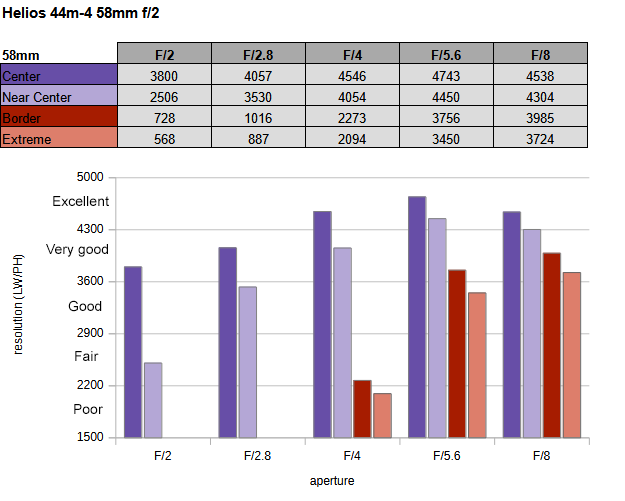
The Helios 44m-4 is actually not too bad when in cameras to resolution. At f/2 the dead center has a pretty good resolution, although contrast suffers here, of course. The resolution drops rapidly, and it’s rather poor in the outer image field. At f/2.8 the broader center improves quite a bit, especially the contrast. A bit more so at f/4. The borders/corners finally enter the show at f/5.6 with very decent quality. The center quality is even excellent here. The best performance across the frame is reached at f/8. Diffraction is the usual limiter beyond.
Field curvature is quite high at large aperture settings. The centering of the tested sample was Okay.
Please note that the MTF results are not directly comparable across the different systems!
Below is a simplified summary of the formal findings. The chart shows line widths per picture height (LW/PH) which can be taken as a measure of sharpness. If you want to know more about the MTF50 figures, you may check out the corresponding Imatest Explanations.
Chromatic Aberrations (CAs)
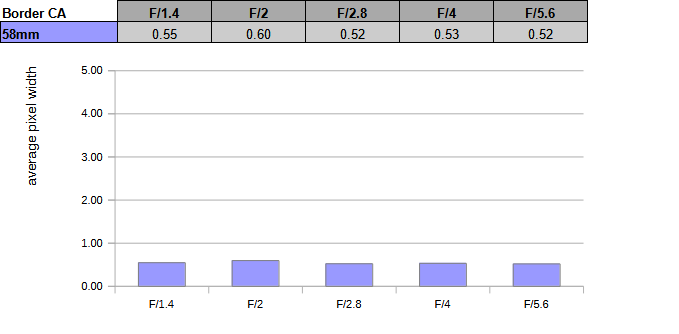
Lateral CAs are surprisingly good, with an average CA pixel width of just 0.5px at the image borders. That’s in line with good modern lenses, actually.
Bokeh
Nobody should really purchase a vintage lens for its technical performance. It’s all about character, and one aspect here is the bokeh.
The Helios lenses are renowned for the bubble bokeh, or in other words – a very pronounced outlining of the bokeh discs. As you can see below, this is most pronounced at f/2. The edgy aperture sets in at f/2.8 already, and the disc outlining is much reduced here.
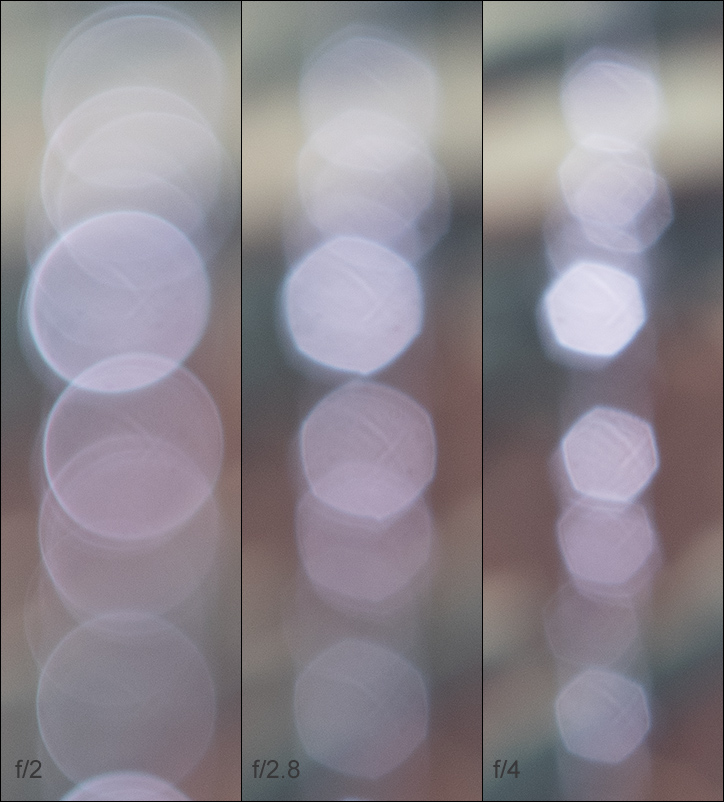
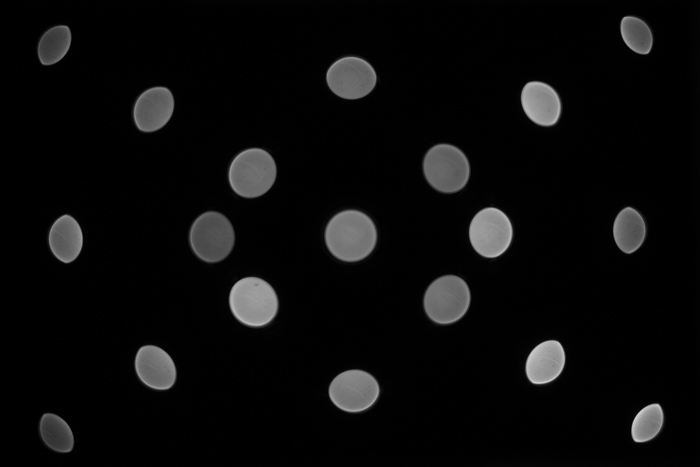
The bubble bokeh at f/2 isn’t just visible near the image center – it continues up into the corners. It’s barely present in the dead center, but that’s where you’d usually position your main subject (when using a vintage lens). The discs deteriorate to cat eyes the more they are located towards the corners. Once again, the bubbles are mostly gone at f/2.8, although the (edgy) discs are somewhat restored.
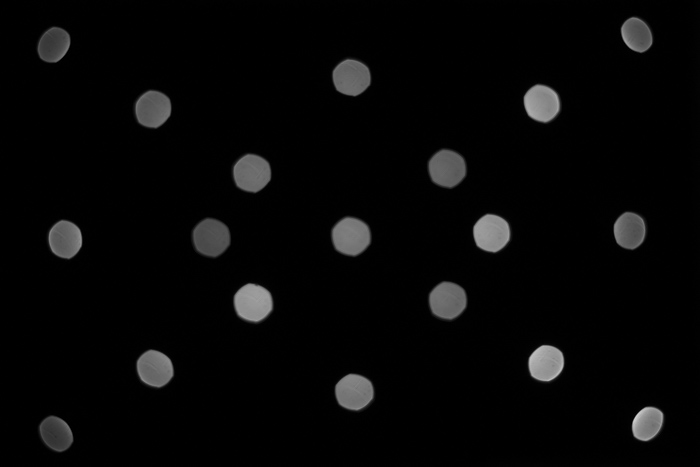
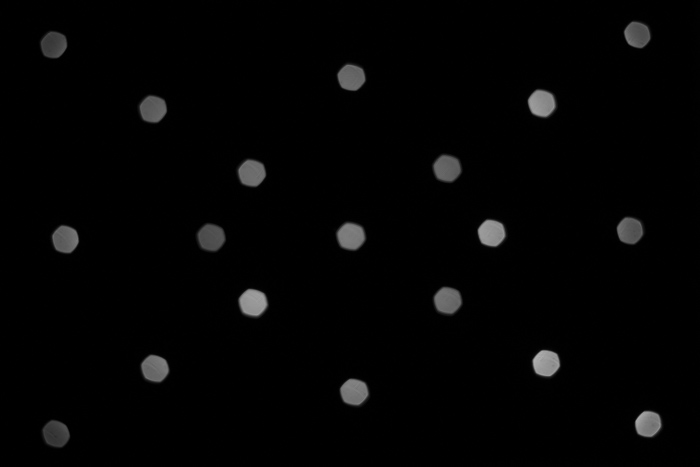
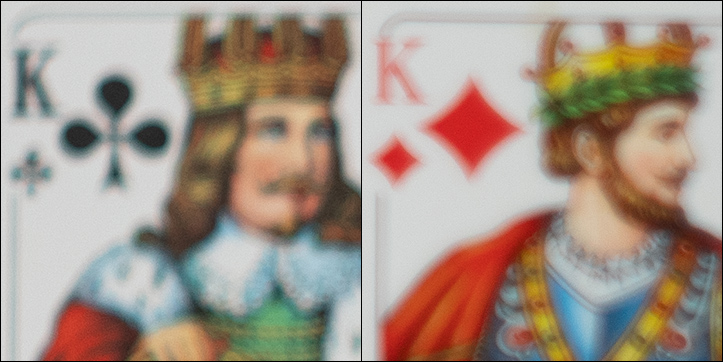
The quality of the general blur in the focus transition zone is fairly good in the background (shown to the left). The foreground blur (to the left) has a hazy, shadowy flair.
About the “Swirly Bokeh”
First of all, what are we talking about (image crop taken from the gallery below):
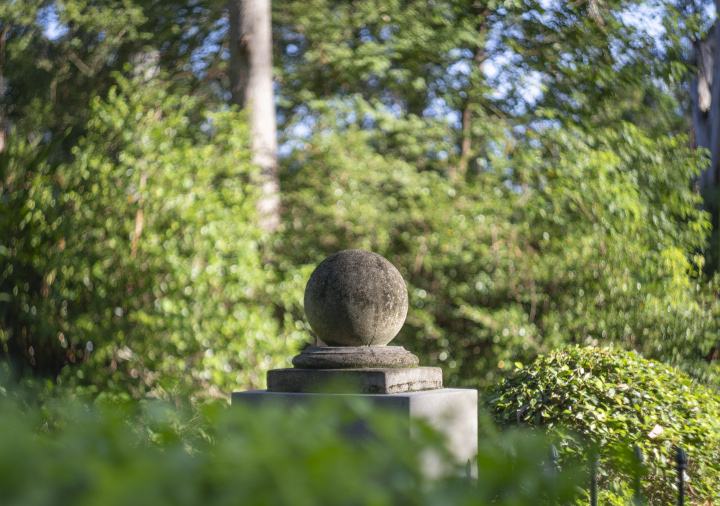
This effect is primarily caused by a combination of two optical phenomena:
- Mechanical Vignetting
- Spherical Aberration.
Mechanical Vignetting (The “Cat’s Eye” Effect) is the main driver behind the “swirly” orientation. In a perfect world, out-of-focus highlights (bokeh balls) would be perfect circles across the entire frame. However, in most lens designs, the physical barrel of the lens or the edges of the internal lens elements partially block the light coming in at steep angles.
- At the center: The light has a clear path, so the bokeh highlights are circular.
- At the edges: The light is “clipped” by the lens housing, turning the circles into oval “cat’s eye” shapes.
Because these ovals always point toward the center of the image, they create a visual circular pattern that we perceive as a “swirl.”
In a lens with “under-corrected” Spherical Aberration, the light rays passing through the edges of the lens focus at a different distance than the rays passing through the center. This causes the light to distribute unevenly across the bokeh disc, pushing more light to the outer edge of the circle. Instead of a soft, creamy blur, you get a sharp, bright ring around the perimeter of each highlight – aka “the Bubbles”.
Note: The bubbles require harsh local contrasts to produce distinctive bokeh balls. You will barely notice the effect in low-contrast scenes.
When you combine these sharp-edged “bubbles” with the cat’s eye stretching from the vignetting, the swirl becomes much more defined and textured.
Side note: Petzval Lenses: If the swirl is extremely aggressive, it’s likely due to field curvature. In older designs like the Petzval lens, the plane of focus isn’t flat; it’s curved like a bowl. As the background falls away into the corners, the focus transitions rapidly and unevenly, which exaggerates the stretching of the bokeh and makes the center subject feel like they are “popping” out of a whirlpool.
The Helios 44 is NOT a Petzval lens – it’s a Double Gauss. Despite the more sophisticated design that tries to fix some of the Petzval flaws, the corrections aren’t “good enough” at f/2, so the bubble bokeh is similar.
Bokeh Fringing / LoCA
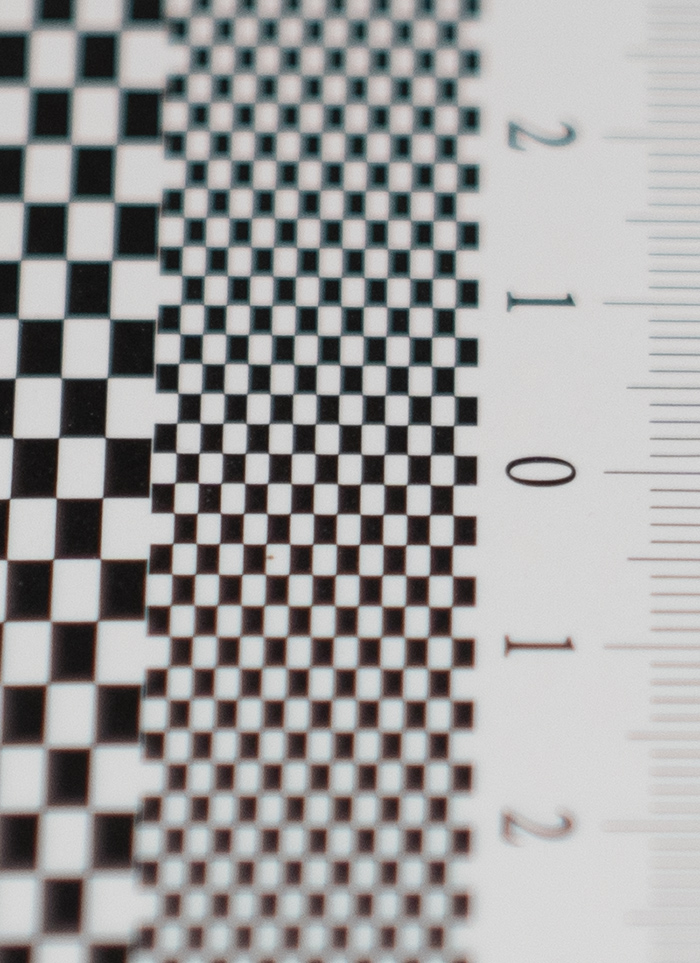
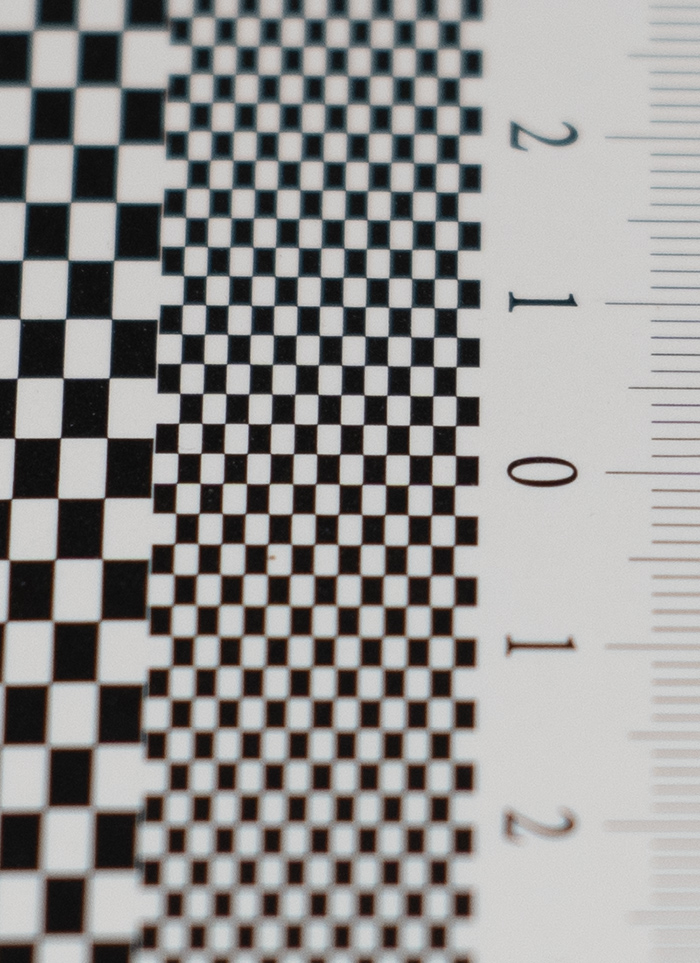
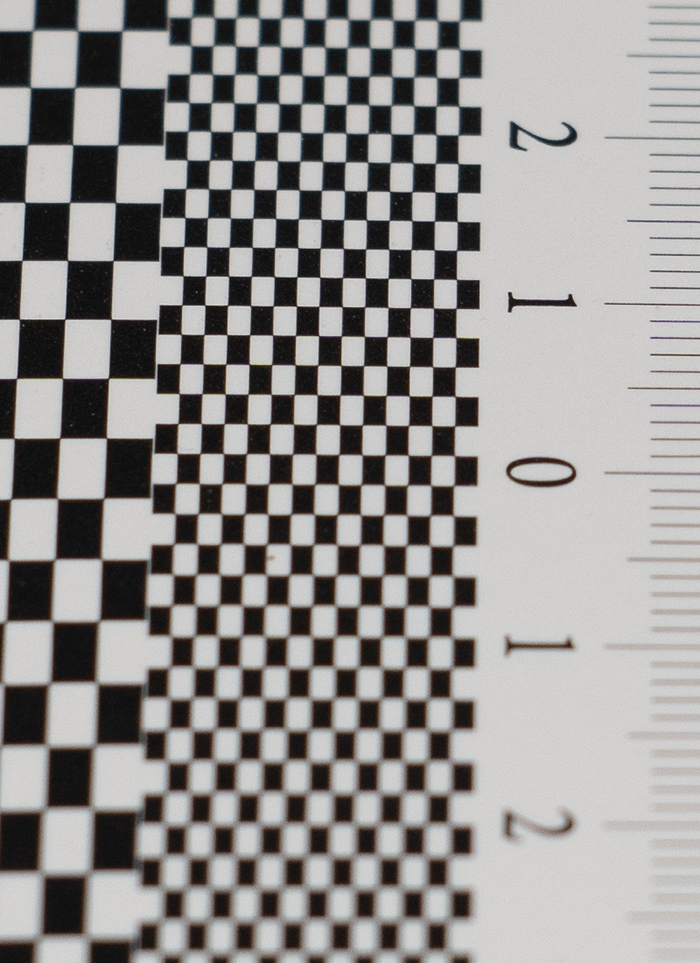
Boheh fringing/LoCA is an axial color fringing effect with purplish halos in front of the focus point and greenish beyond.
Due to the lack of special elements, it’s not surprising that axial CAs are rather massive at f/2. that there’s LOTS of color fringing happening at f/2. It’s better at f/2.8, and there are still traces left at f/4.
You may also notice that the focus shifts towards the rear (“Residual spherical aberrations”).
Sample Gallery
I can’t spend too much time on these reviews, so I’m afraid … just some backyard photos here.
The typical “swirly” bokeh is clearly visible in the first image.


Just from a pure technical standpoint, the Helios 44m-4 58mm f/2 isn't a good lens. This applies to all vintage lenses when compared to today's standards. But I reckon this conclusion isn't what you came here for. 🙂 Having said that, the Helios is actually usable at f/2. The resolution is fairly high in the center, albeit with a contrast penalty. The borders/corners ... well ... Stopping down helps, of course, and the overall quality is pretty good in the f/5.6 to f/8 range. Image distortions are absent, and the vignetting is low for such a lens. Lateral CAs aren't a problem, whereas, unsurprisingly, axial CAs (LoCAs) are very high. However, more important than any of this is the bokeh. The Helios is a master of swirly bokeh. Of course, you don't ALWAYS want this, but the effect can be exciting. A word of caution here, though - this is, obviously, an f/2 lens, thus not quite as fast as some other vintage 50s. This is a bit of a limiting factor for the bokeh.
The mechanical quality of the tested 44m-4 variant is pretty good. Its all-metal construction feels sturdy, and the focus ring has this nice dampened action that we associate with pre-AF lenses. The aperture "clicks" are nicely distinctive.
If you are a fan of vintage-style lenses, this is another one with lots of "character". Just don't expect it to be a replacement for a modern 50.
-
Optical Performance3
-
Build Quality8
-
Vintage "Character"9