


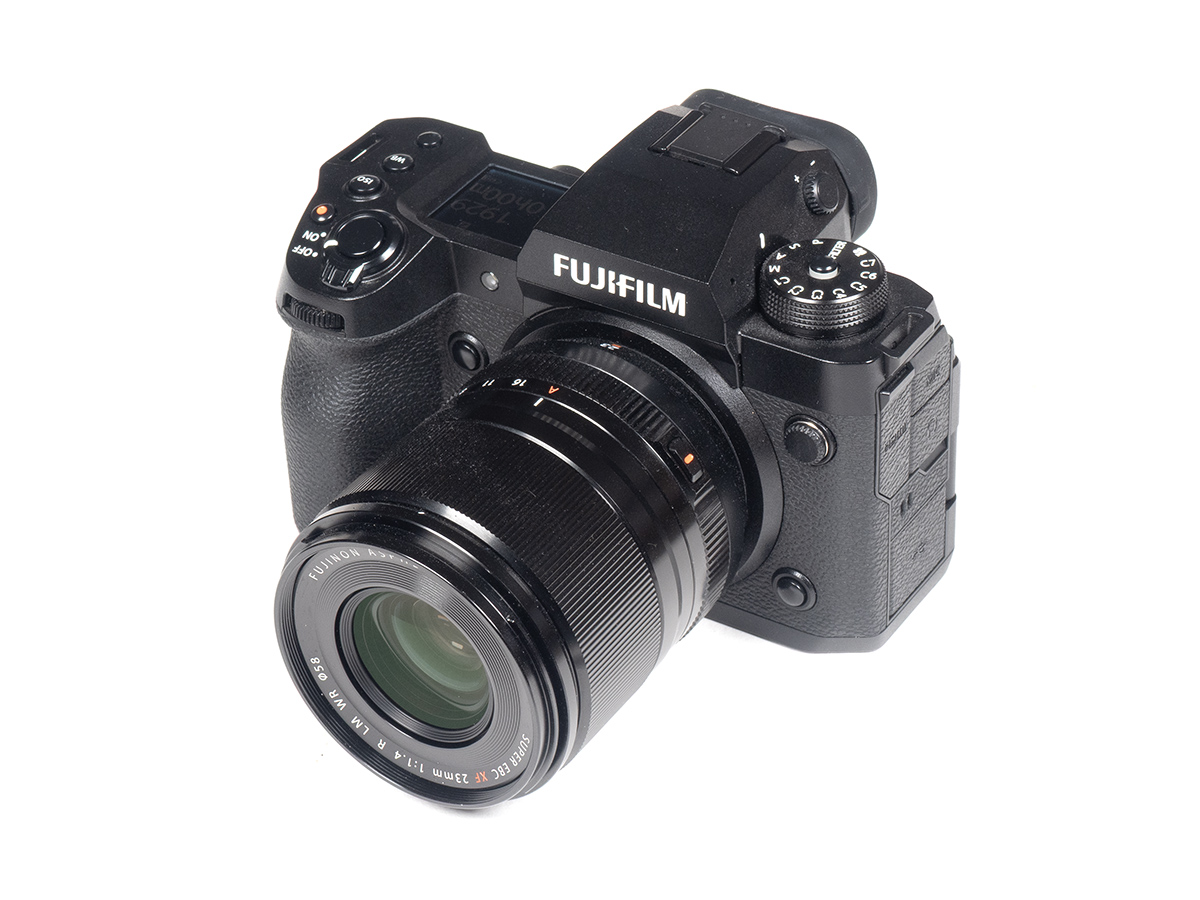
The Fujinon XF 23mm f/1.4 R LM WR is a wide-angle prime lens designed for Fujifilm’s X-Mount cameras. With a 23 mm focal length (equivalent to roughly 35 mm on full-frame systems) and a maximum f/1.4 aperture, it sits in a classic focal range often used for street, documentary, landscape, and general-purpose photography. Unsurprisingly, the Fujinon isn’t cheap at around $1000 USD but that’s unsurprising given the large aperture.
Differences Compared to the Predecessor
This WR version replaces the earlier Fujifilm XF 23mm f1.4 R prime, first released in 2013. Key changes include:
- Autofocus System: The newer model uses a linear motor (LM) for autofocus drive, providing faster and smoother focus action compared with the older design’s motor configuration
- Weather Resistance: Weather sealing is added in the WR version, allowing operation in dusty or damp conditions when paired with a weather-sealed body
- Minimum Focus Distance: The newer lens offers a somewhat closer focus distance (0.19m vs 0.23m)
- Aperture Lock: The WR version includes an aperture ring lock to help prevent accidental changes when shooting in automatic exposure modes
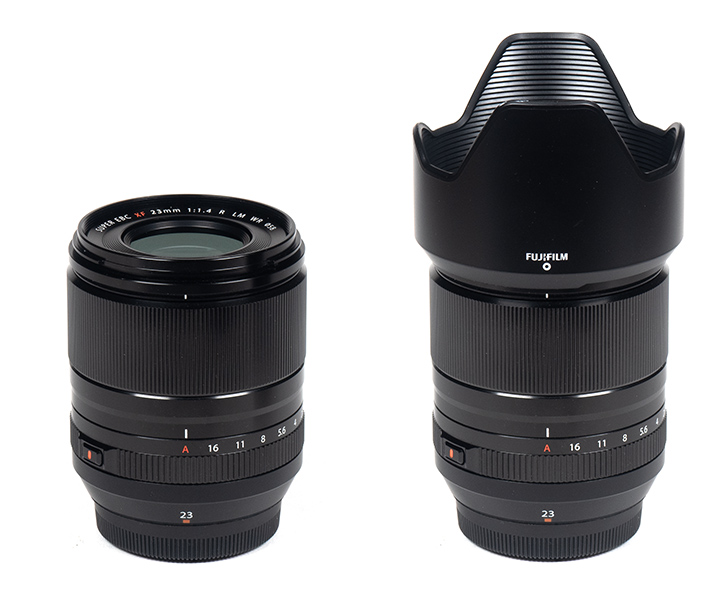
| Specifications | |
|---|---|
| Equiv. focal length | “35mm” (full format equivalent) |
| Equiv. aperture | “f/2.1” (full format equivalent, in terms of depth-of-field) |
| Optical construction | 15 elements in 10 groups (2x aspherical and 3xED) |
| Number of aperture blades | 9 (circular) |
| min. focus distance | 0.19m (max. magnification ratio 1:5) |
| Dimensions | 67 x 77.8mm |
| Weight | 375g |
| Filter size | 58mm |
| Hood | petal-shaped (bayonet mount, supplied) |
| Other features | weather sealing aperture ring |
Distortion
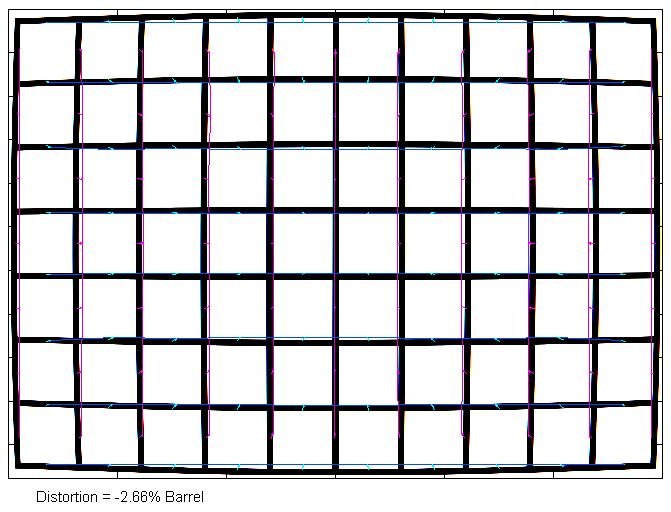
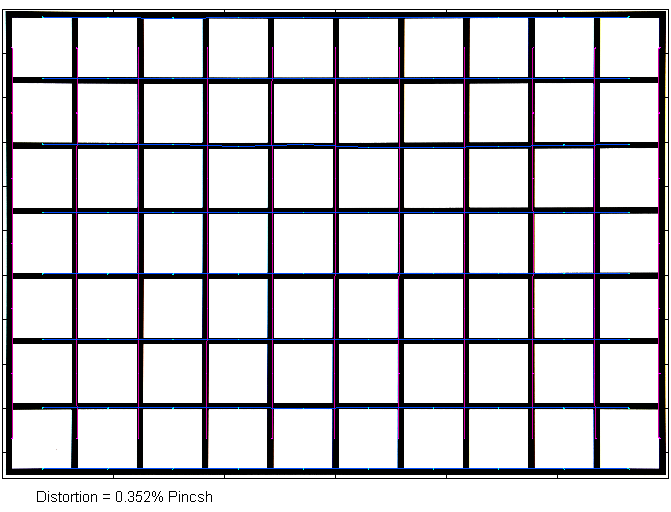
The Fujinon produces a native barrel distortion of ~2.7%. In the grand scheme of things, this is comparatively moderate. Surprisingly, auto-corrected images are somewhat over-corrected with a pincushion distortion of 0.4% – at least at the tested focus distance.
Vignetting
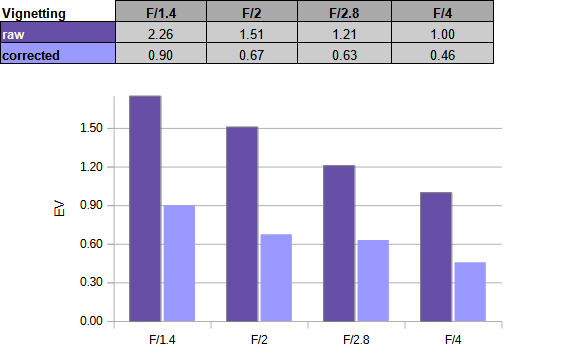
The light falloff in RAW mode is very heavy at f/1.4. A vignetting of ~2.3 EV (f-stops) may be normal on full-format cameras, but it’s beyond our usual scale for APS-C cameras. It’s still very high at f/2 and f/2.8, and 1 EV (f-stop) at f/4 is still not overly well corrected.
Digital auto-correction shaves off ~1.4 EV at max. aperture, and the vignetting is acceptable from f/2 and low from f/4.
Please note that vignetting compensation is lossy – it comes at the cost of higher sensor noise in the image corners due to the required “amplification”.
MTF (resolution)
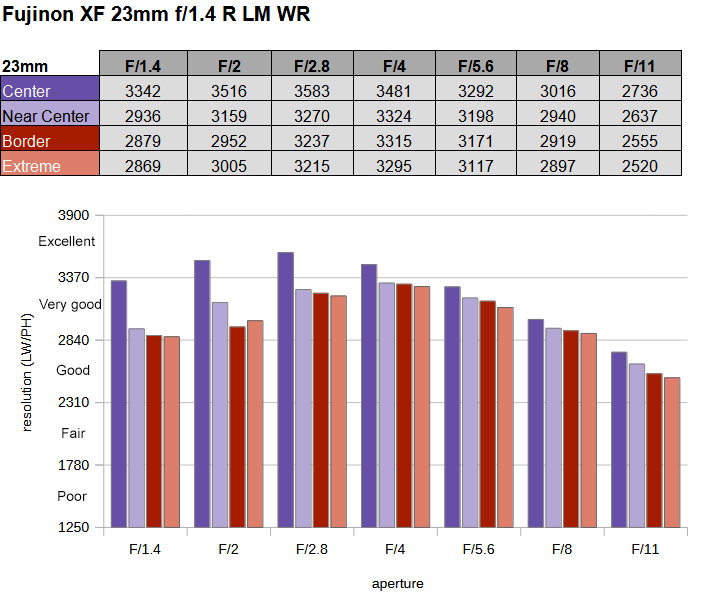
The Fujinon XF 23mm f/1.4 R LM WR produced an interesting resolution characteristic in the lab. Generally, the lens doesn’t show any weakness, but for whatever reason, the center quality doesn’t set the world on fire (for a prime lens). However, this doesn’t mean that the lens is bad in this respect in any way or form. The center quality is very good to excellent at f/1.4. There’s a fairly strong drop just beyond the dead center, with good to very good quality across the rest of the image field. Stopping down to f/4 improves this slightly. The peak performance is reached between f/2.8 and f/4. The center quality is excellent, with the outer image field following in the high very-good range. Diffraction sets in at f/5.6. Good results are still possible at f/8, but f/11 should be avoided.
The centering quality of tested sample was good. The field curvature is slightly uneven.
Please note that the MTF results are not directly comparable across the different systems!
Below is a simplified summary of the formal findings. The chart shows line widths per picture height (LW/PH) which can be taken as a measure for sharpness. If you are keen to know more about the MTF50 figures, you may check out the corresponding Imatest Explanations
Chromatic Aberrations (CAs)
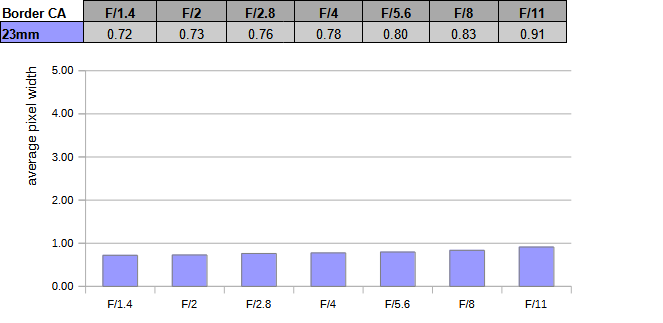
The lateral CAs (color shadows at hard contrast transitions) are already quite low with an average pixel width of around 0.8px at the image borders.
The camera (JPEGs) or your favorite RAW converter should be able to correct this anyway.
Bokeh
Fast lenses aren’t just about their sharpness but also about how they can render out-of-focus areas in your images. Wide-angle lenses are usually not overly good at this, but let’s see what the Fujinon can do for us here.
Out-of-focus highlights are nicely rendered with a smooth inner zone and only a slight outlining of the disc’s rim. The discs are perfectly circular at f/1.4 and f/2. A minor edginess creeps in at f/2.8.
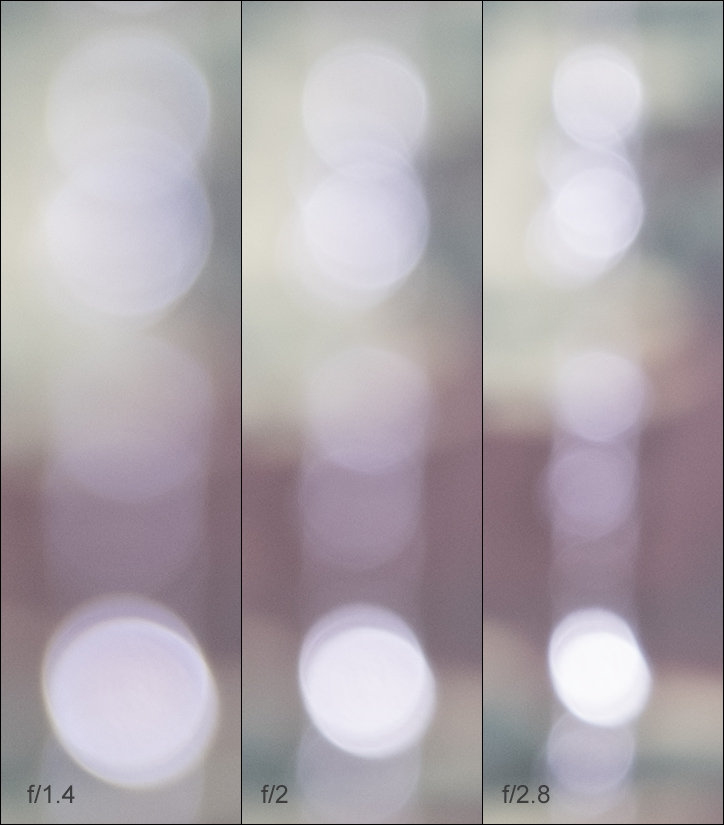
When looking at the whole image field instead of just the center, we can spot a moderate deterioration of the circular discs to “cat eye” in the image corners. If you look closely, the outlining of the rim increases a bit as well. The rim outlining vanishes at f/2, and most of the discs are back to their circular shape. At f/2.8, they are fully restored.
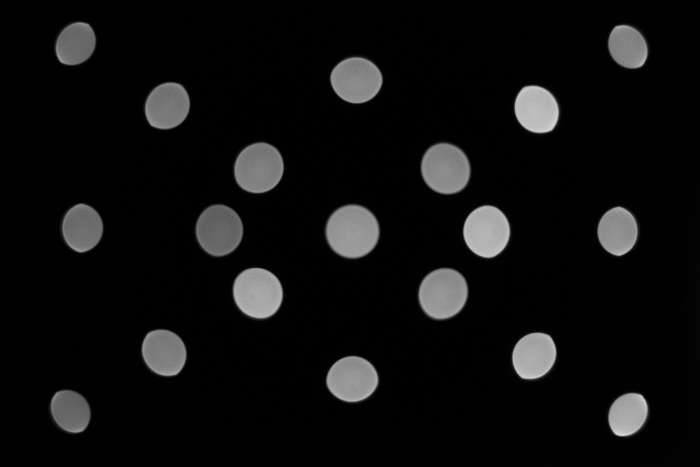
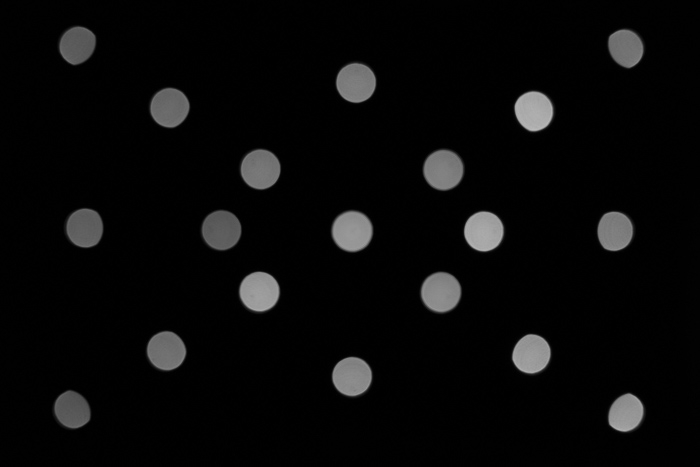
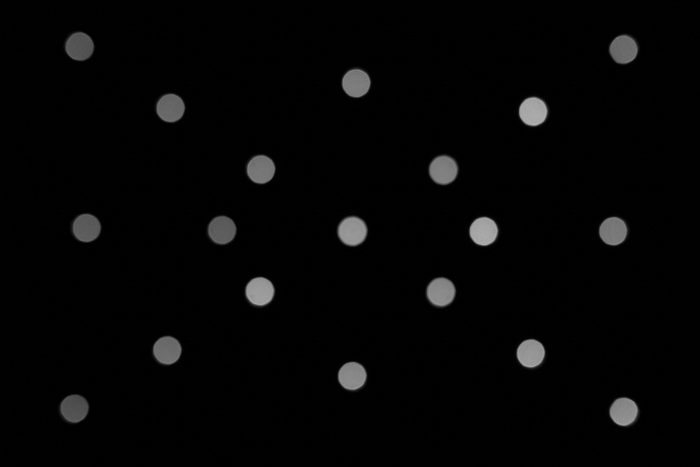
The general rendering in the focus transition zone is surprisingly good for such a lens. The background blur – shown to the left – is nicely symmetrical with only slightly harsher edges here and there. The less important foreground blur (to the right below) is a bit more “shadowy” as so often, but it’s not bad either.

Bokeh Fringing / LoCA
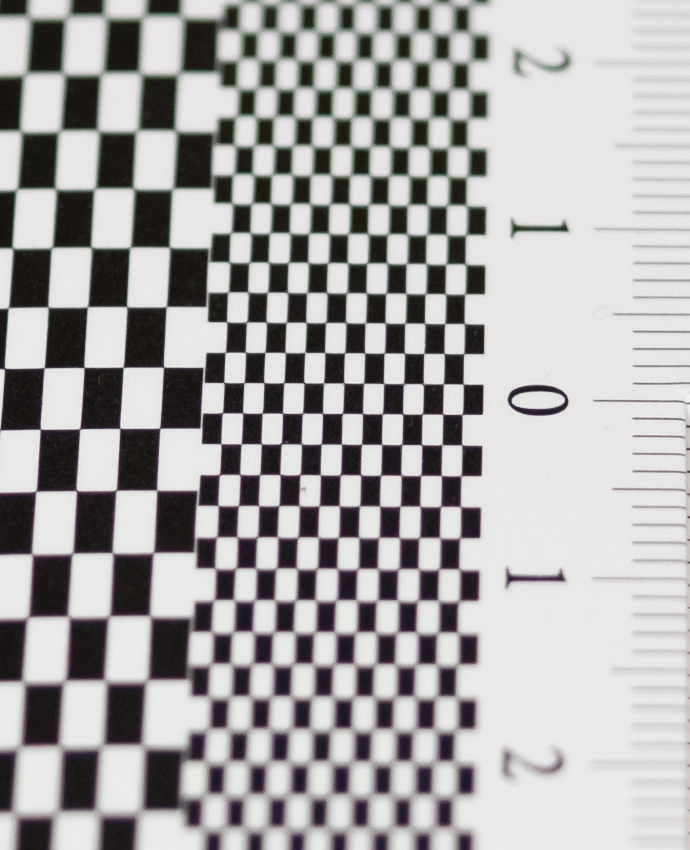
Bokeh fringing is an axial color fringing effect. It can show up as purple halos in front of the focus point and greenish halos in the background. Just like most ultra-large aperture lenses, the Fujinon is also affected.
As to be expected, the effect is most pronounced at f/1.4 and decreases the more you stop down. You can still spot some traces at f/2.8, but this is not relevant anymore from f/4 onward.

Competition
Fujifilm isn’t alone anymore in this lens class. The most obvious competitor is the Sigma 23mm f/1.4 DC Contemporary. We haven’t tested this lens yet, but if it’s as good as the other Sigma prime lenses, it should be pretty much comparable to the Fujinon – at half the price. However, it does lack weather-sealing other than a simple mount sealing.
Then there’s the Viltrox/Tokina 23mm f/1.4. It’s even more affordable but not quite as good optically – and probably ripe for an update. A more exotic option is the Sirui Sniper 23mm f/1.2. Obviously, a bit faster still, but we haven’t tested this one yet.
Sample Shots


Fujifilm's prime lenses have always been their source of pride and one of the reasons why they have been successful with the X-mount system. The Fujinon XF 23mm f/1.4 R LM WR is reinforcing this tradition. The lens is perfectly usable straight from f/1.4, even in the image corners. Stopped down, it is very sharp indeed. Image distortions are only moderate, so auto-correction doesn't introduce any relevant smearing effects. Lateral CAs are quite low as well. This can't be said about the native vignetting, but that's mostly hidden via auto-correction. The bokeh is pretty good for a wide-angle lens.
The Fujinon XF 23mm f/1.4 R LM WR has also been improved mechanically. The base construction was already of high quality in its predecessor. This new version adds weather sealing and, finally, a modern AF motor.
The Fujifilm lens is fairly pricey but worth the money.
The Good
- Nicely sharp for such a lens
- Good bokeh
- Solid build quality
The Bad
- The raw vignetting is a bit much
-
Optical Quality
-
Build Quality
-
Price Performane